When the tray comes out of the oven, the soy-and-ginger glaze smells warm and savory, with just enough honey to soften its edges. I brush it over the tops and sides of the salmon rather than turning the fish into a separate marinating project, which keeps Ginger and Sesame Salmon straightforward while giving every portion a little of that sesame-ginger coating.
This is a short list of ingredients, so each one has a clear job. Low-sodium soy sauce brings savory depth, rice vinegar keeps the glaze from tasting heavy, and fresh ginger gives it a bright, unmistakable bite. The salmon bakes on parchment with its skin underneath, then gets sesame seeds and scallions at the finish. The result is tender fish with a glossy, lightly sweet-savory top and a fresh oniony crunch.
Kitchen Note
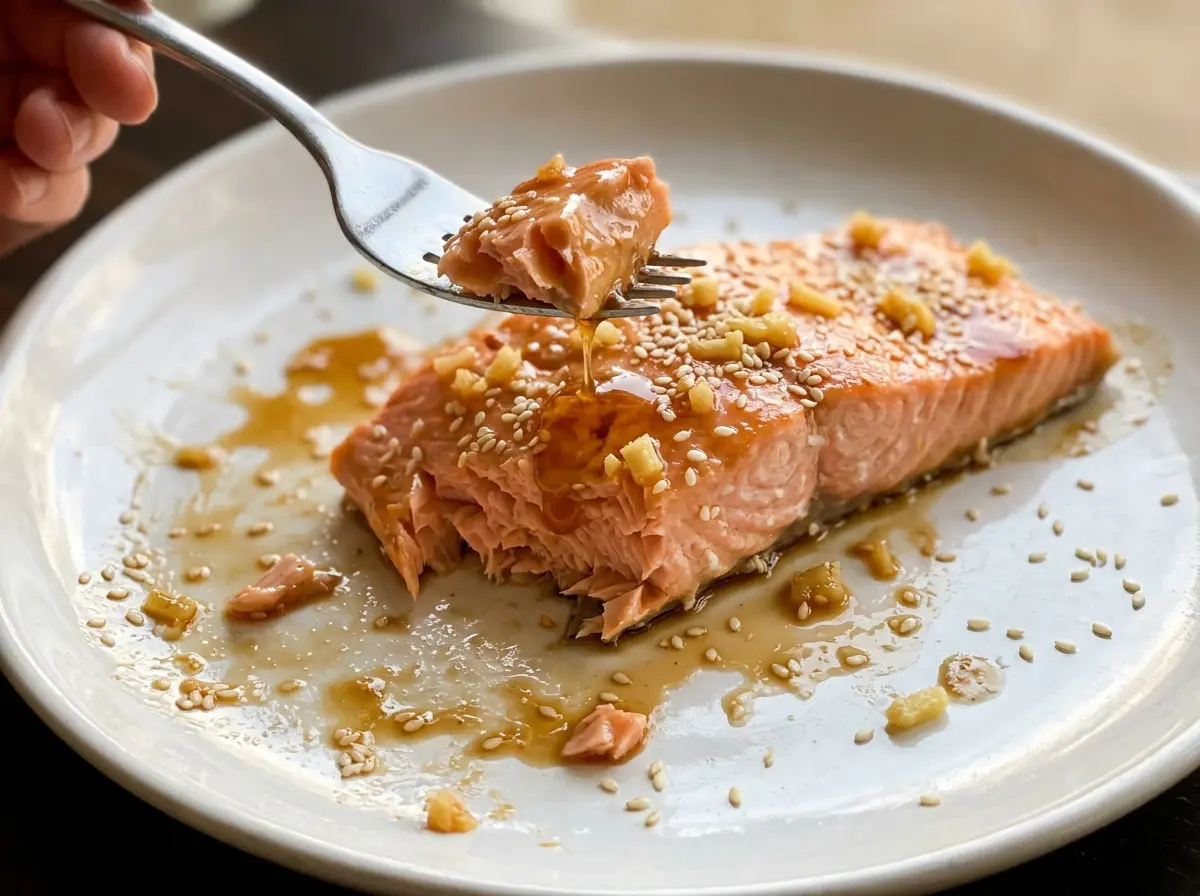
Finely grate the fresh ginger so it blends into the glaze instead of leaving you with chewy little pieces. The fine shreds spread their flavor through the soy, honey, and vinegar in every brushful.
Save Ginger and Sesame Salmon for a night when you want tender baked fish with a sweet-savory ginger glaze and a fresh sesame-scallion finish.
Why This Salmon Gets a Quick Glaze, Not a Long Marinade
The sauce is brushed over the fish right before it goes into the oven. That matters because the glaze already has a balanced mix of salty soy, sweet honey, and bright rice vinegar; it doesn’t need a long soak to bring those flavors to the surface. A quick coating lets the salmon stay the center of the dish instead of turning the fish into something intensely salty or sweet.
Whisking the ingredients together first also gives you a more even coating than adding each flavor separately to the fillets. The honey can blend through the soy sauce, while the ginger and garlic get distributed instead of landing in one concentrated patch. Brush the tops and sides, where the glaze can cling during baking, and keep the salmon skin side down on the lined pan. You get the same flavor across the portions without a separate pan or an extra cooking step.
There’s a useful balance in the finish, too. The sesame seeds add a little nutty crunch, while the thinly sliced scallions bring a fresh, sharp note. Adding both after baking keeps them distinct against the warm glaze rather than burying their texture in the oven.
What Each Part of the Ginger-Sesame Glaze Brings
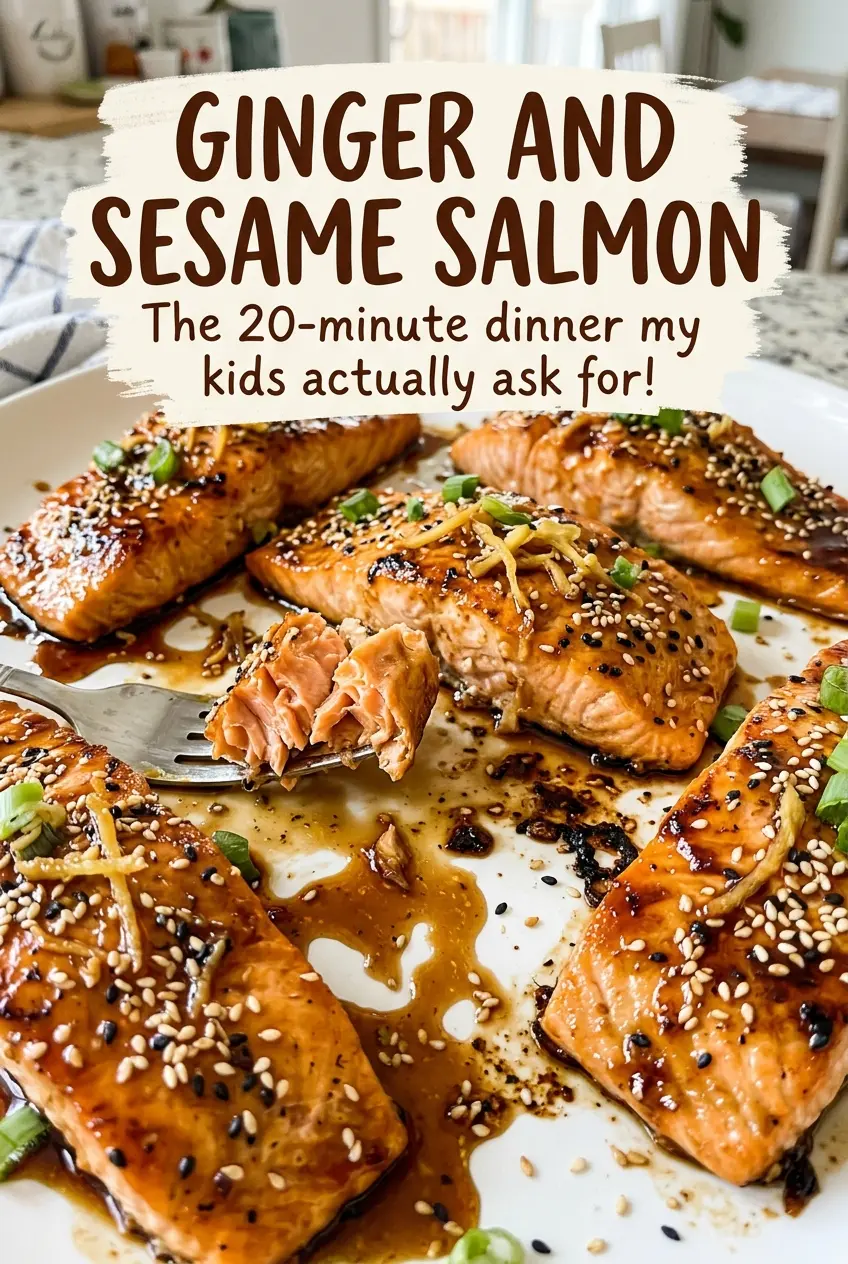
- Low-sodium soy sauce — This is the salty, savory base, and using a low-sodium version keeps it from overwhelming the honey and vinegar. Regular soy sauce will make the finished glaze taste saltier, so choose low-sodium for the intended balance.
- Toasted sesame oil — Its roasted aroma is one of the defining notes here. Use toasted oil for that unmistakable nutty character; plain sesame oil doesn’t give the same depth.
- Honey and rice vinegar — Honey rounds out the soy sauce, while rice vinegar adds a clean tang that keeps the glaze lively. Rice vinegar is gentle enough to support the ginger without taking over.
- Fresh ginger and garlic — Fresh ginger has a bright, warm bite, and minced garlic gives the sauce a savory backbone. Finely grate the ginger and mince the garlic so neither is left in large pieces on top of the fish.
- Skin-on salmon — Ask for a fillet cut into four portions, or cut it into four pieces yourself. The skin stays underneath on the baking sheet, and the thickest part of each portion is the best place to judge doneness.
- Sesame seeds and scallions — These go on at the end, when their textures and flavors stay easy to notice. Thinly slice the scallions so they’re light enough to scatter across the portions.
How to Coat and Bake the Salmon Without Losing the Glaze
Whisk the Sweet-Savory Glaze
Heat the oven to 400°F and line a rimmed baking sheet with parchment paper. In a small bowl, whisk together the soy sauce, toasted sesame oil, honey, rice vinegar, ginger, and garlic. Keep whisking until the honey is no longer sitting in a thick streak at the bottom of the bowl. The mixture should look evenly combined before it goes onto the fish.
Set the Portions Skin Side Down
Arrange the four salmon portions on the prepared sheet with the skin against the parchment. Brush the glaze over the tops and sides, letting it coat the exposed flesh rather than pouring it all in one spot. If a portion is especially thick, give its sides a careful brush as well. Keeping the fish in a single layer leaves the glaze on the salmon instead of pooling around crowded pieces.
Bake to the Temperature Cue
Bake for 12 to 15 minutes, checking the thickest part of the salmon with an instant-read thermometer. It’s ready when that center reaches 145°F; the exact point in the time window depends on the thickness of the portions. Don’t judge only by the color on top, since the glaze can make the surface look done before the middle is ready. Avoid leaving the fish in the oven after it reaches the target.
Add the Fresh Finish
Sprinkle the sesame seeds and thinly sliced scallions over the salmon before serving. Scatter them across the portions rather than piling them in the center, so each piece gets some crunch and a bit of the fresh onion flavor. The seeds and scallions are the final touch; there’s no need to return the pan to the oven.
Two Simple Swaps for a Different Version
Make It Gluten-Free with Tamari
Replace the low-sodium soy sauce with the same amount of gluten-free tamari. The glaze keeps its savory depth, though tamari can taste a little rounder and less sharp, so the rice vinegar remains important for balance.
Use Maple Syrup Instead of Honey
Swap in the same amount of maple syrup for a slightly earthier sweetness. It blends into the sauce just as easily, but the glaze will have a maple note rather than honey’s mild floral character.
Storage and Reheating
- Refrigerator: Store cooked salmon in an airtight container for 3 to 4 days. The fish will be less tender after chilling, and the scallions will lose their fresh crunch.
- Freezer: It freezes well for up to 2 months for best quality. Wrap portions individually or pack them airtight to limit freezer burn.
- Reheating: Reheat covered in the microwave at reduced power in short bursts until the center reaches 165°F. High power can dry out the edges before the middle warms through.
Questions That Come Up When Baking Ginger and Sesame Salmon
Ginger and Sesame Salmon
Ingredients
Equipment
Method
- Heat the oven to 400°F and line a rimmed baking sheet with parchment paper.
- Whisk the soy sauce, sesame oil, honey, rice vinegar, ginger, and garlic in a small bowl.
- Arrange the salmon skin side down on the prepared baking sheet and brush the sauce over the tops and sides.
- Bake for 12 to 15 minutes, until the thickest part of the salmon reaches 145°F.
- Sprinkle with the sesame seeds and scallions before serving.