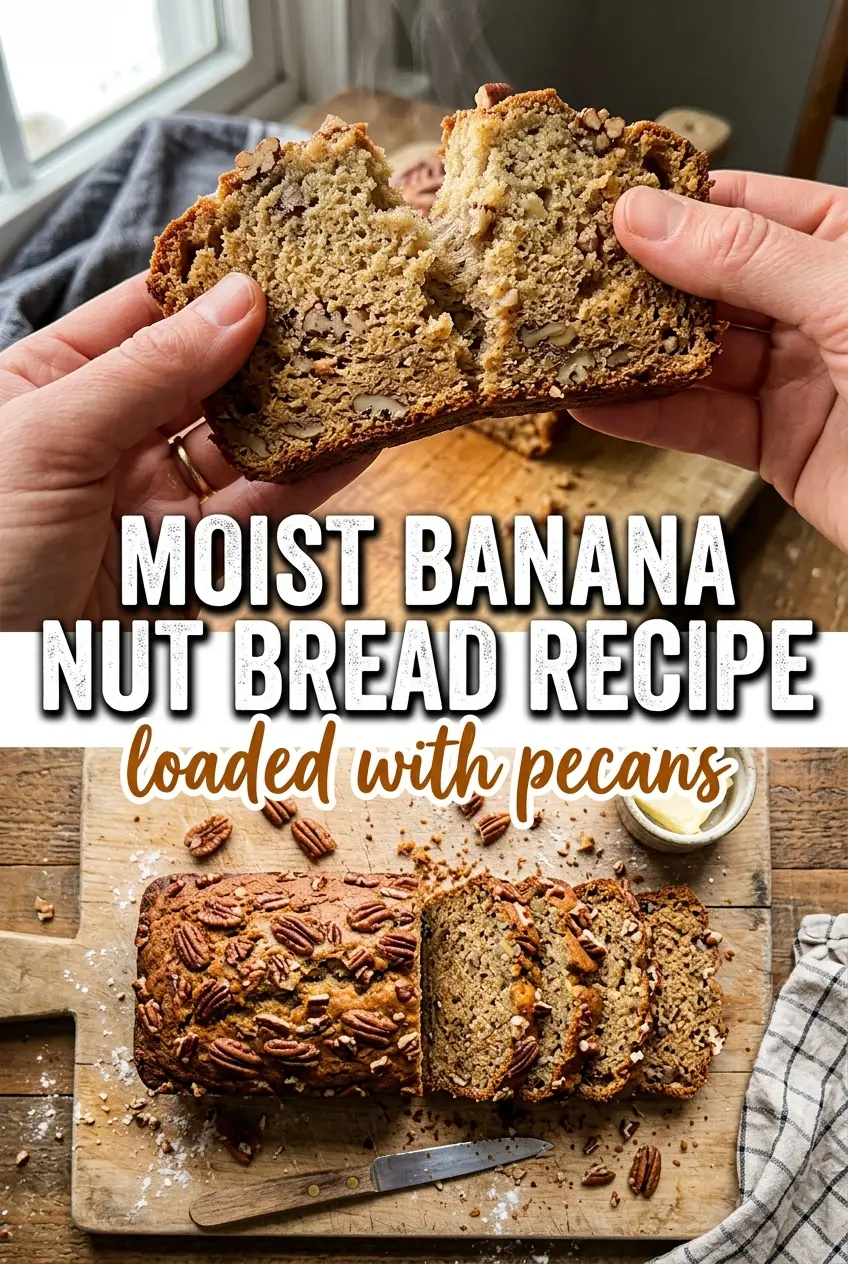
Banana nut bread should be moist, tender, and packed with enough pecan crunch to keep every slice interesting. The best loaves don’t taste like sweet banana cake pretending to be bread. They have a deep banana flavor, a soft crumb that stays plush for days, and toasted nuts on top that give you a little crackle when the knife goes through the crust.
This version keeps the method simple, but a few small choices matter. Melted butter gives you a denser, more flavorful crumb than oil, and the bananas should be deeply spotted so they bring both sweetness and moisture. The pecans do better when they’re divided between the batter and the top, because that keeps the loaf from feeling heavy while still giving you nutty flavor in every bite.
Below, I’ll show you why overmixing is the fastest way to lose that tender texture, how to tell when the loaf is baked through without drying it out, and a few easy swaps if you want to adjust the nuts or make the bread fit what you’ve got on hand.
The loaf came out incredibly moist and the pecans on top toasted up perfectly. I loved that the crumb stayed tender even the next day, and the banana flavor was spot on.
Love this banana nut bread with pecans? Save it to Pinterest for the days when you’ve got overripe bananas and want a loaf with a tender crumb and toasty crunch.
The Banana Bread Mistake That Leaves the Crumb Heavy
Banana bread gets dense for two main reasons: the batter gets overmixed, or the loaf is underbaked in the center and has to sit too long in the pan. Both problems happen fast with quick breads because once the flour goes in, the gluten starts developing and the batter only needs a few folds before it’s ready. Stirring until the bowl looks perfectly smooth is where a lot of loaves go wrong.
The other trap is moisture. Very ripe bananas are a gift here, but they also make the batter soft enough that the center can look done while still being a little gummy. That’s why the toothpick test matters, and why a loaf should rest in the pan for just 10 minutes before moving it out. Too long and the bottom steams; too soon and the bread can break apart.
The goal is a loaf that slices cleanly after cooling and still feels plush, not wet, in the middle. That texture comes from stopping as soon as the flour disappears and baking until the top is deeply golden with a cracked crown.
What the Bananas and Pecans Are Doing in This Loaf
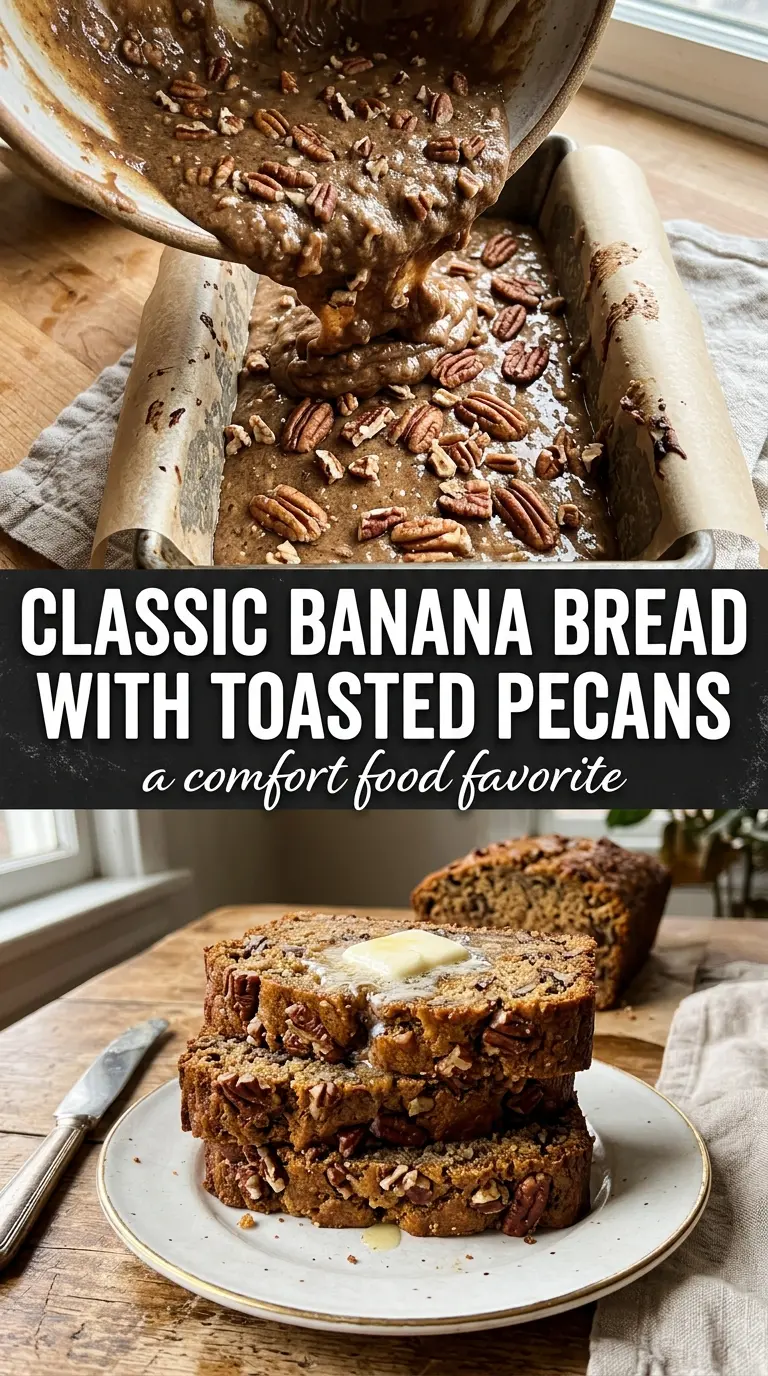
- Bananas — Three large ripe bananas give you the sweetness, moisture, and flavor that define the loaf. The darker and spottier they are, the better the bread tastes. If yours are a little short, mash and measure carefully rather than guessing, because too little banana gives you a dry loaf and too much can make the center sink.
- Melted butter — Butter brings a richer, rounder flavor than oil and helps the crumb stay tender without feeling greasy. It should be melted and cooled slightly before mixing so it doesn’t scramble the eggs. If you need a swap, neutral oil works, but you’ll lose some of that classic bakery-style flavor.
- Pecans — A full cup gives the loaf its crunch and that toasty finish on top. Chopping them by hand leaves a better mix of pieces than pre-ground nuts, which can disappear into the batter. If the pecans taste flat, toast them for a few minutes first; that small step makes the loaf smell and taste warmer.
- All-purpose flour — This keeps the bread sturdy enough to slice while still staying tender. Bread flour is too strong here and makes the loaf chewy. If you need gluten-free bread, use a 1:1 baking blend, but expect a slightly softer, more delicate crumb.
Building the Batter Without Losing the Tender Crumb
Mix the Wet Ingredients First
Whisk the mashed bananas, melted butter, sugar, eggs, and vanilla until the mixture looks smooth and glossy with no streaks of egg white. The batter will still look a little loose, and that’s fine. This first bowl carries the flavor and moisture, so give it enough mixing to fully combine before the flour goes in.
Fold in the Flour Only Until It Disappears
Add the flour, baking soda, and salt in a separate bowl, then fold the dry ingredients into the wet mixture just until you stop seeing pockets of flour. A few small streaks are better than overworking the batter. Overmixing tightens the crumb and turns a soft loaf into something rubbery and heavy.
Keep the Pecans Divided
Stir three-quarters of the pecans into the batter, then scatter the rest over the top before baking. That keeps the interior nutty without making the loaf dense, and the top layer turns lightly toasted in the oven. Press the top pecans in gently so they stay put instead of rolling off after baking.
Bake Until the Center Sets
Slide the pan into a 350°F oven and bake until the top is deep golden, the center springs back lightly, and a toothpick comes out clean or with a few moist crumbs. If the top browns too quickly before the middle is done, lay a loose piece of foil over it for the last 10 to 15 minutes. Let the loaf sit in the pan for 10 minutes, then lift it out so the bottom doesn’t trap steam.
Three Ways to Change the Loaf Without Losing What Works
Make It Dairy-Free
Swap the butter for an equal amount of neutral oil or melted plant-based butter. Oil gives the softest crumb and keeps the loaf moist for days, while plant-based butter keeps a more familiar flavor. Either way, let the fat cool before mixing so the eggs don’t cook on contact.
Use Walnuts Instead of Pecans
Walnuts work in the same amount and give the bread a slightly earthier, more bitter edge. They’re a good swap if that’s what you have, but they don’t taste as buttery as pecans. Toast them first if you want the flavor to stay bold in the finished loaf.
Make It Less Sweet
Drop the sugar to 2/3 cup if your bananas are extremely ripe and you like a more bread-like loaf. The texture stays the same, but the banana flavor comes through more clearly and the crust will be a touch less caramelized. Go much lower than that and the bread starts to taste flat.
Storage and Reheating
- Refrigerator: Keep the cooled loaf wrapped or in an airtight container for up to 4 days. The crumb firms up a little in the fridge, but the flavor holds well.
- Freezer: Banana bread freezes well. Wrap individual slices or the whole loaf tightly in plastic and then foil, and freeze for up to 3 months. Thaw at room temperature so the crumb doesn’t turn damp and gummy.
- Reheating: Warm slices in a 300°F oven for a few minutes or toast them lightly. Microwaving for too long makes banana bread rubbery, so use short bursts only if you need to. A little butter on a warm slice goes a long way.
Answers to the Questions Worth Asking
Banana Nut Bread With Pecans
Ingredients
Equipment
Method
- Preheat the oven to 350°F and grease a 9x5-inch loaf pan.
- Set the pan aside so it’s ready to fill when the batter is mixed.
- Whisk together the mashed bananas, melted butter, sugar, eggs, and vanilla in a large bowl until smooth.
- In a separate bowl, whisk together the flour, baking soda, and salt until evenly combined.
- Fold the dry ingredients into the wet ingredients until just combined, with no visible dry streaks.
- Fold in ¾ cup of the chopped pecans.
- Pour the batter into the prepared loaf pan and sprinkle the remaining pecans on top.
- Bake at 350°F for 55–60 minutes, until a toothpick inserted comes out clean.
- Cool in the pan for 10 minutes before slicing, so the loaf sets and holds its shape.