When the beef has browned, little dark bits cling to the bottom of the Dutch oven, and the pot already smells deeper than it did a few minutes ago. Those browned bits are worth keeping. They dissolve into the broth when the wine goes in and give this beef stew with mushrooms its rich, savory base.
I brown the beef and mushrooms in batches rather than crowding them together. It takes a little patience, but crowded pieces steam instead of developing the browned surfaces that make the finished stew taste full and hearty. The vegetables soften in the same pot, then the beef gets a long, gentle simmer before the potatoes join it.
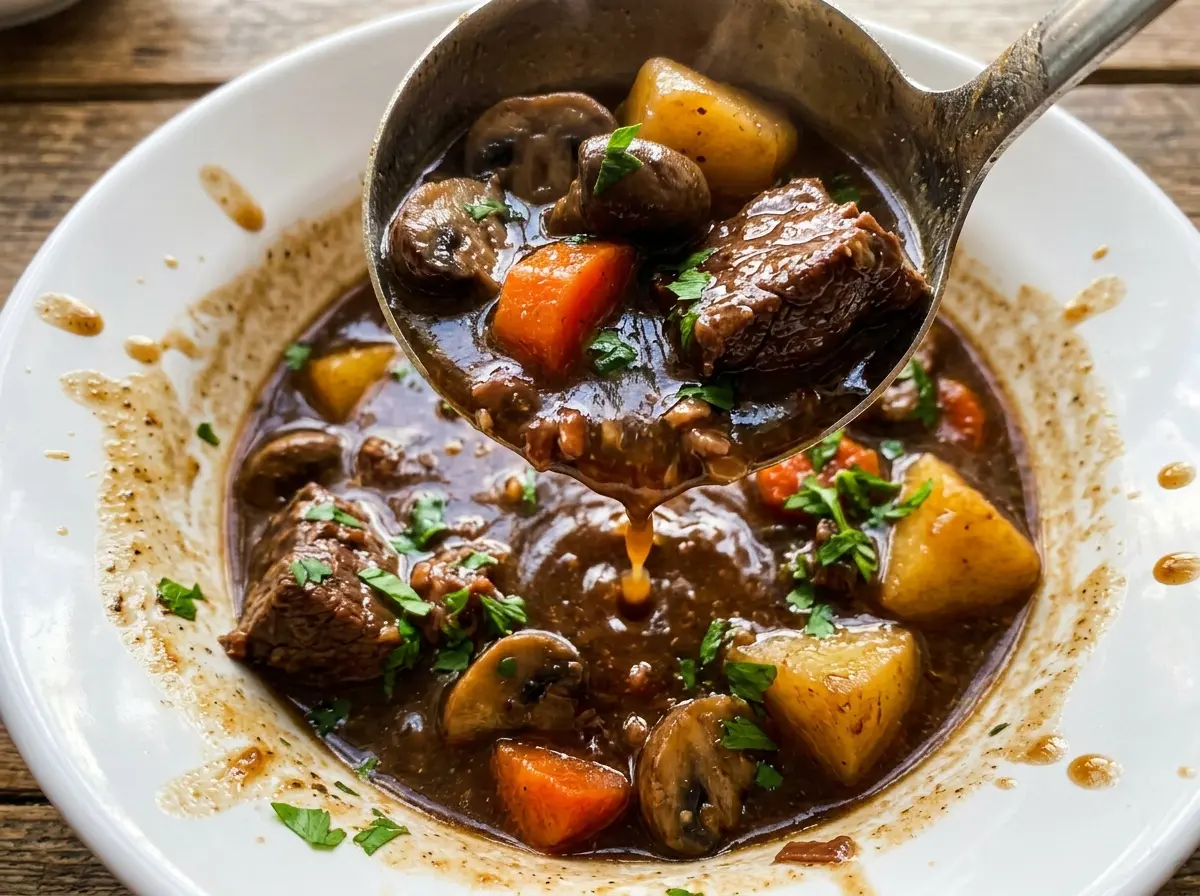
That timing matters: the beef has time to turn fork-tender, while the potatoes stay in pieces instead of disappearing into the broth. By the time the lid comes off, you have tender chuck, browned cremini mushrooms, and a thick, savory stew that serves six.
Kitchen Note
After you take the pot off the heat, give the stew its full five-minute rest before serving. It’s a small pause, but it lets the bubbling settle so the tender potatoes and beef are easier to ladle without breaking apart.
Save this beef stew with mushrooms for a cozy dinner: tender chuck, browned cremini mushrooms, and a deep red-wine broth.
Why the Potatoes Wait Until the Beef Has a Head Start
Chuck needs time in the pot before potatoes are added. Its connective tissue softens during the long, gentle simmer, and that’s what changes the beef from firm cubes into meat you can pull apart with a fork. Potatoes don’t need that much time. If they simmer alongside the beef from the beginning, their edges can soften and break down while the chuck is still getting tender.
Adding the potatoes later gives each ingredient the cooking time it needs without asking you to compromise on either texture. Yukon Gold potatoes hold their shape nicely, but even they benefit from joining the pot only after the beef has had its first stretch of cooking. The second simmer lets their centers turn tender while the broth continues to deepen around them.
There’s another payoff to keeping the pot at a gentle simmer instead of letting it boil hard: the beef cooks steadily, and the potatoes are less likely to tumble apart. Look for occasional small bubbles rather than a rolling boil. If the beef needs longer, give it longer; the fork-tender cue matters more than the clock.
What the Chuck, Mushrooms, and Wine Bring to This Pot

- Beef chuck — Chuck is suited to a long braise: the slow cooking gives its connective tissue time to soften and keeps the finished pieces succulent. Cut the beef into evenly sized 1½-inch cubes so the pieces cook at a similar pace. Lean cuts don’t bring the same payoff to this cooking time and can turn dry.
- All-purpose flour — The flour coating helps the beef brown and gives the broth some body as the stew cooks. Pat the beef dry first so the flour adheres in a thin, even layer instead of clumping on damp spots. For a wine-free version, the flour still serves its purpose; use beef broth in place of the wine as described below.
- Cremini mushrooms — Cremini have a savory, earthy taste that stands up to the beef and broth. Choose firm mushrooms without slimy spots; quartering them leaves substantial pieces that remain distinct in the finished stew.
- Dry red wine — Wine loosens the browned bits from the pot and adds acidity and depth to the broth. A dry red works better here than a sweet wine, which can make the stew taste unexpectedly sweet. If you’re skipping wine, beef broth is the practical replacement, though the broth will taste less layered.
- Yukon Gold potatoes — These potatoes have a buttery texture and hold their shape during the final simmer. Cut them into pieces close to the size of the carrots so they cook evenly. Their tender edges also lend a little body to the broth without a separate thickener.
- Yellow onion, carrots, and garlic — The onion softens into the base, carrots bring sweetness, and garlic adds a savory note. Cut the carrots into 1-inch pieces so they can stand up to the stew’s long cook rather than turning too soft.
- Beef broth, Worcestershire sauce, thyme, and bay leaves — Together, these build a savory cooking liquid with herbal depth. Dried thyme is convenient for the long simmer, and the bay leaves are easy to remove before serving. Worcestershire adds a concentrated savory note, so it’s used alongside the broth rather than as the main liquid.
Brown in Batches, Then Let the Stew Simmer in Stages
Coat and brown the chuck
Pat the beef dry, season it with the kosher salt and black pepper, then toss it with the flour until evenly coated. Heat 2 tablespoons of vegetable oil in a 6-quart Dutch oven over medium-high heat. Brown the beef in batches, turning each piece to brown several sides, then transfer it to a plate. Leave room between pieces; if the pot is crowded, the beef releases moisture and won’t brown as well.
Brown the mushrooms and soften the vegetables
Add the remaining tablespoon of oil and cook the quartered mushrooms in batches until browned, about 4 minutes per batch, moving each batch to a plate. Add the chopped onion and carrots to the pot and cook, stirring occasionally, until the onion is softened, about 5 minutes. Stir in the minced garlic and tomato paste and cook for 1 minute. Keep stirring at this point so the garlic and paste don’t catch on the bottom.
Deglaze and give the beef its first simmer
Pour in the dry red wine and scrape the bottom of the pot to lift the browned bits. Let it simmer for 2 minutes, then stir in the beef broth, Worcestershire sauce, dried thyme, and bay leaves. Return the beef and any juices on the plate to the pot. Bring everything to a gentle simmer, cover, and cook over low heat for 1 hour and 15 minutes, keeping the liquid at that gentle simmer.
Add the potatoes and finish tenderizing
Stir in the potatoes and browned mushrooms, cover the pot, and simmer for 40 to 50 minutes. The potatoes should be tender, and the beef should yield easily to a fork. If the beef is still firm, keep simmering and check it every 15 minutes rather than turning up the heat. Remove and discard the bay leaves before serving.
Simple Changes for a Different Pot of Beef Stew
Skip the wine without losing the stew
Leave out the cup of red wine and use 1 additional cup of beef broth instead, for 5 cups total. Use the broth to scrape up the browned bits, then continue with the same simmering method. The result is savory and comforting, though it won’t have quite the same acidity or depth as the wine version.
Make it without mushrooms
Leave out the cremini mushrooms and proceed with the rest of the ingredients and method. You’ll lose their earthy, browned flavor, and the stew will feel more focused on the beef, carrots, and broth. There’s no need to change the simmering stages.
Make a lower-starch bowl
For a lower-starch version, leave out the potatoes. The stew will be brothier and less filling, with the carrots still adding sweetness and texture. Keep the beef and mushrooms on their original cooking schedule.
Storage and Reheating
- Refrigerator: Store leftovers in a covered container for 3 to 4 days. The potatoes may soften further as they sit in the broth.
- Freezer: Freeze in airtight containers for up to 3 months. The stew is safe to freeze, though potatoes can become softer or a little grainy after thawing.
- Reheating: Warm gently in a covered saucepan over low heat, stirring occasionally, until hot throughout. Avoid a hard boil, which can break up the potatoes and beef; reheat leftovers to 165°F.
Questions That Come Up While the Stew Simmer
Beef Stew with Mushrooms
Ingredients
Equipment
Method
- Pat the beef dry, season it with the salt and pepper, and toss it with the flour until evenly coated.
- Heat 2 tablespoons of the oil in a 6-quart Dutch oven over medium-high heat.
- Brown the beef in batches, turning to brown several sides, then transfer it to a plate.
- Add the remaining 1 tablespoon oil to the pot and cook the mushrooms in batches until browned, about 4 minutes per batch; transfer them to a plate.
- Add the onion and carrots to the pot and cook, stirring occasionally, until the onion is softened, about 5 minutes.
- Stir in the garlic and tomato paste and cook for 1 minute.
- Pour in the wine and scrape up the browned bits from the bottom of the pot.
- Simmer for 2 minutes, then stir in the broth, Worcestershire sauce, thyme, and bay leaves.
- Return the beef and any accumulated juices to the pot.
- Bring the stew to a gentle simmer, cover, and cook over low heat for 1 hour and 15 minutes, keeping it at a gentle simmer.
- Stir in the potatoes and browned mushrooms.
- Cover and simmer for 40 to 50 minutes, until the potatoes are tender and the beef is fork-tender.
- If the beef is still firm, continue simmering and check every 15 minutes.
- Remove and discard the bay leaves.
- Let the stew rest off the heat for 5 minutes before serving.