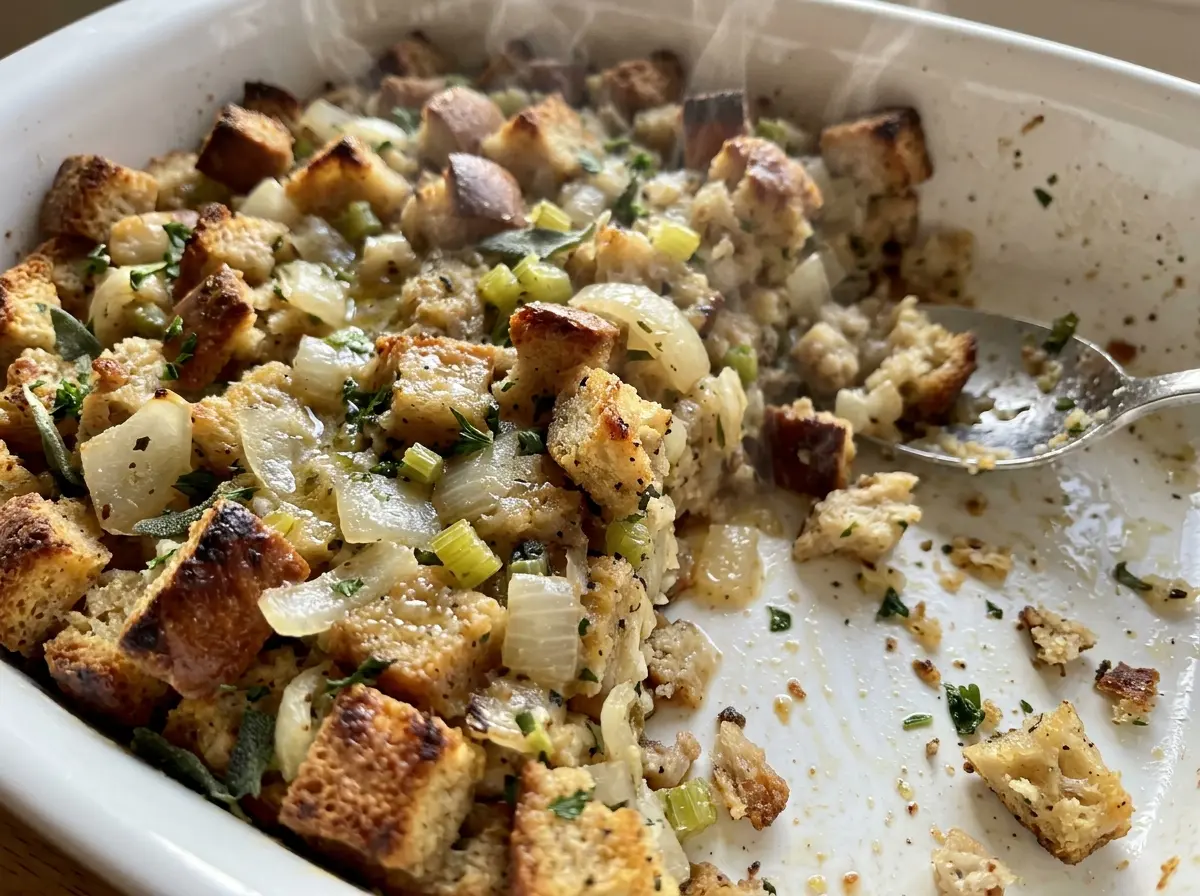
When the top of stuffing is golden but the middle is damp, the bread usually went into the bowl too soft. For Best Stuffing, I dry sturdy white bread cubes in a low oven until crisp, then let the onion, celery, butter, and herbs coat every piece before the broth goes in. That gives the casserole a tender center without turning the bottom into a paste.
I like that the vegetables soften slowly in butter before the herbs join them; the onion turns sweet, and the celery loses its raw crunch. Eggs whisked into the broth help the soaked bread hold together as it bakes, while an uncovered finish brings back the crisp top. Each serving has a soft middle, a browned surface, and enough sage and thyme to make the whole pan smell like stuffing should.
Kitchen Note
Let the bread sit for the full 5 minutes after you toss it with the broth and eggs. That short pause gives the cubes time to absorb the liquid evenly before baking.
Save Best Stuffing for a crisp-topped, herb-scented holiday side with a soft, savory center.
Why the Bread Has to Be Dry Before the Broth Goes In
Fresh bread can feel sturdy in your hands and still collapse once it meets broth. The low oven dries the cubes before they soak, so they can take in the seasoned liquid without losing all their shape. That’s the difference between stuffing with distinct, tender pieces and a heavy, damp layer at the bottom of the dish.
Drying the bread is not the same as browning or toasting it. At 300°F, the cubes lose moisture gradually and turn crisp, but they shouldn’t be deeply colored. A sturdy loaf matters here because its crumb can handle the broth, eggs, and butter without dissolving as you toss everything together. Give the cubes a stir halfway through so the pieces on the edges of the baking sheets dry at the same pace as those in the middle.
Once the bread is dry, the vegetable mixture and broth have room to do their jobs: the butter carries the herbs across the cubes, and the eggs help the baked mixture set. Starting with dry bread gives you control over that balance. It can absorb the liquid while still giving the finished dish some structure.
The Bread, Butter, and Herbs That Set This Stuffing’s Texture

- Sturdy white bread — A loaf with a firm crumb stays in cubes through drying and tossing; a soft, fluffy loaf is more likely to slump when it absorbs broth. Fresh bread is fine because the oven dries it, so there’s no need to wait for it to go stale. For a different flavor, sturdy whole wheat bread works, though its nuttier taste will come through.
- Unsalted butter — Butter gives the onion and celery a rich base and helps carry the fresh herbs through the bread. Unsalted butter lets the measured kosher salt do the seasoning, and a standard grocery-store butter works well here.
- Yellow onion and celery — These soften together and give the stuffing its savory, aromatic foundation. Dice them evenly so they cook at the same pace; the celery should be tender rather than crunchy when it goes into the bowl.
- Fresh sage, thyme, and parsley — Fresh herbs bring a clear, leafy aroma that dried herbs won’t quite match. Chop them before they hit the skillet so they can be stirred through the softened vegetables quickly.
- Low-sodium chicken broth — Low-sodium broth keeps the stuffing savory without competing with the measured salt. Choose one you enjoy drinking; there’s no need for a premium brand because the herbs and butter add plenty of character.
- Eggs — Whisking the eggs into the broth helps the stuffing hold together as it bakes. Whisk until the yolks and whites are blended before pouring, so the liquid coats the bread evenly.
Drying, Dressing, and Baking the Stuffing Without a Soggy Center
Dry the cubes until crisp
Heat the oven to 300°F and divide the bread cubes between two rimmed baking sheets. Bake them for 30–40 minutes, stirring once halfway through, until the pieces feel dry and crisp rather than soft in the center. Keep an eye on color: they should dry out without taking on a deep toast. If a few cubes still feel pliable, give them the time they need in the oven.
Soften the vegetables in butter
Melt the butter in a 12-inch skillet over medium heat, then add the diced onion and celery. Cook for 8–10 minutes, stirring occasionally, until both vegetables have softened; the onion should look translucent, and the celery should no longer seem raw. Stir in the sage, thyme, parsley, salt, and pepper, then cook for 1 minute. The herbs will smell fragrant, but they shouldn’t brown.
Coat the bread evenly
Increase the oven temperature to 350°F and grease a 9×13-inch baking dish. Toss the dried bread cubes with the vegetable mixture in a large bowl, distributing the butter and vegetables across the bread before adding liquid. Whisk the broth and eggs together, pour them over the cubes, and toss until the bread is evenly moistened. Let the mixture stand for 5 minutes, then transfer it to the prepared dish.
Cover first, then brown the top
Cover the dish with foil and bake for 30 minutes; the covered time lets the center cook without the surface drying too quickly. Remove the foil and bake for another 20–25 minutes, until the top is golden and the center reaches 160°F. If the top looks pale, give it the full uncovered baking time; if it browns early, use the center temperature to judge when it’s ready. Rest the stuffing for 10 minutes before serving so it settles and scoops neatly.
How to Adapt This Stuffing Without Losing Its Structure
Make It Vegetarian With Vegetable Broth
Replace the chicken broth with the same amount of low-sodium vegetable broth. The stuffing keeps its buttery herbs and tender texture, though the broth gives it a slightly lighter savory base.
Use a Sturdy Gluten-Free White Loaf
Swap in a 16-ounce sturdy gluten-free white loaf and cut it into the same-size cubes. Dry the cubes until crisp before adding the vegetables and liquid; gluten-free bread can be more delicate, so toss gently to keep as many cubes intact as possible.
Choose Whole Wheat for a Toastier, Nutty Edge
A sturdy whole wheat loaf can replace the white bread at the same weight. It gives the dish a more robust, nutty flavor and a slightly heartier bite while keeping the same bread-cube method.
Storage and Reheating
- Refrigerator: Store leftovers covered for 3–4 days. The crisp top softens in the refrigerator, while the center stays tender.
- Freezer: Freeze portions in an airtight container for up to 1 month for best quality. Thaw overnight in the refrigerator before reheating.
- Reheating: Cover the dish with foil and reheat in a 325°F oven until the center reaches 165°F. Uncover near the end if you want to bring back some crispness; reheating uncovered the whole time can dry out the top before the middle is hot.
Questions That Come Up Before the Stuffing Goes in the Oven
Best Stuffing
Ingredients
Equipment
Method
- Heat the oven to 300°F.
- Divide the bread cubes between 2 rimmed baking sheets.
- Bake for 30–40 minutes, stirring once halfway through, until dry and crisp.
- Melt the butter in a 12-inch skillet over medium heat.
- Add the onion and celery and cook for 8–10 minutes, stirring occasionally, until softened.
- Stir in the sage, thyme, parsley, salt, and pepper, and cook for 1 minute.
- Increase the oven temperature to 350°F.
- Grease a 9x13-inch baking dish.
- Put the bread cubes and vegetable mixture in a large bowl and toss to combine.
- Whisk the broth and eggs together, pour over the bread, and toss until evenly moistened.
- Let stand for 5 minutes.
- Transfer the mixture to the prepared dish and cover with foil.
- Bake for 30 minutes.
- Uncover and bake for 20–25 minutes more, until golden on top and the center reaches 160°F.
- Let the stuffing rest for 10 minutes before serving.