When the edges turn lightly golden, the centers of these cookies still look soft, and that’s exactly the point. Brown sugar Pop Tart cookies have a cinnamon-sugar pocket inside each round, with a thin powdered sugar glaze on top. They bring the familiar toaster-pastry combination of brown sugar and cinnamon into a tender, thick cookie.
I use a whole egg plus an extra yolk in the dough. The white helps the dough hold together around the filling, while the yolk adds richness without making the cookies cakey. A short chill makes the dough easier to handle, and the baked cookies cool into soft rounds with a defined cinnamon center and a smooth, sweet finish.
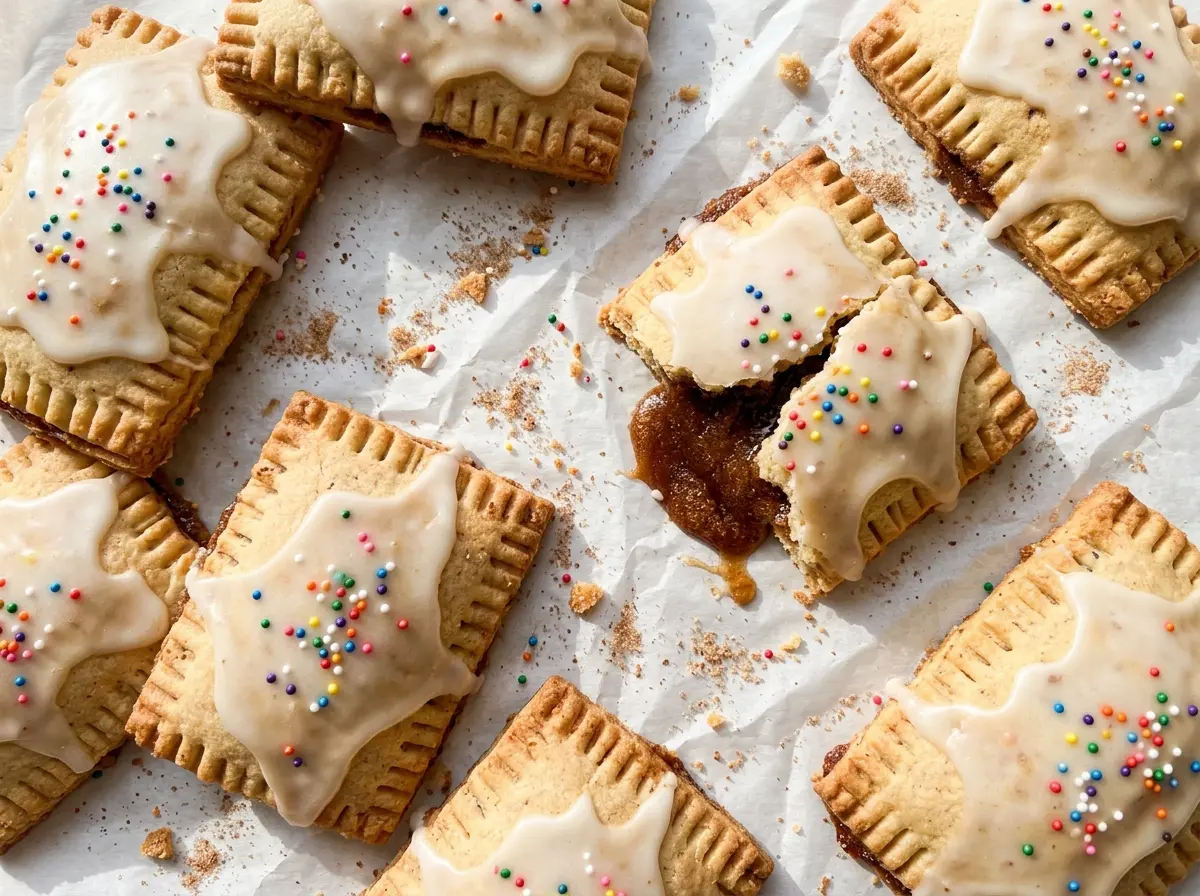
Kitchen Note
Pinch the dough seam completely closed before you flatten each round. If cinnamon filling is visible at the seam, it has an opening to escape while the cookies bake.
Save these Brown Sugar Pop Tart Cookies for a bake day when you want a cinnamon-sugar center tucked inside every soft round.
Why the Cinnamon Center Needs Butter, Not Just Brown Sugar
Brown sugar and cinnamon on their own make a loose, sandy filling. Stirring softened butter into them changes the texture: the mixture holds together in a compact portion that’s easier to wrap in cookie dough. It also gives the center a softer, richer bite instead of a pocket of dry sugar.
That little filling portion still needs a complete dough covering. If the dough is stretched thin over the center, it can split as you shape or bake the cookie. Keep the dough round thick enough to surround the filling, then press it gently into shape rather than flattening it hard against the counter. The result is a defined cinnamon middle without turning the outside into a thin shell.
The filling is deliberately simple, so the cinnamon comes through clearly. You don’t need to cook it beforehand or dissolve the sugar; combine the softened butter, brown sugar, and cinnamon until the mixture looks even, then portion it for the cookies.
What the Brown Sugar, Butter, and Eggs Bring to These Cookies

- Light brown sugar — Its molasses notes give the dough and filling their warm, caramel-like flavor. Packed brown sugar measures consistently; dark brown sugar works in the same amount for a deeper molasses taste, though the cookies will be a little richer.
- Unsalted butter — Softened butter creams smoothly with the sugars and is divided between the dough and filling, so set aside the filling portion before you start mixing. Unsalted butter lets the measured salt stay in control; if salted butter is all you have, omit the added salt.
- Egg and egg yolk — The whole egg binds the dough, and the extra yolk adds richness. Use a large egg, as the dough’s moisture balance matters when you need it to close around a filling.
- All-purpose flour and baking powder — All-purpose flour gives the cookies enough structure to hold their centers, while baking powder provides lift. Spoon flour into the measuring cup and level it rather than packing it down, which can leave the dough dry and difficult to shape.
- Cinnamon and vanilla — Ground cinnamon gives the filling its familiar warm flavor, and vanilla rounds out the brown sugar in the dough. Use fresh, fragrant cinnamon if yours has been sitting in the cupboard for years.
- Powdered sugar and milk — Powdered sugar makes a smooth glaze, and milk loosens it to a spreadable or drizzly consistency. Any plain milk you keep on hand works; add nothing beyond the measured ingredients if you want to keep the glaze at the intended texture.
How to Enclose the Filling and Bake Evenly
Cream the Sugars, Then Bring the Dough Together
Whisk the flour, baking powder, and salt in a medium bowl. In a large bowl, beat the cookie portion of the softened butter with the cookie portion of the brown sugar and the granulated sugar on medium speed until creamy, about 2 to 3 minutes. Beat in the egg, egg yolk, and vanilla, then mix in the flour mixture on low just until no dry streaks remain. Cover the dough and refrigerate it for 30 minutes.
Mix a Filling That Holds Its Shape
Stir the remaining brown sugar with the remaining softened butter and the cinnamon in a small bowl. Keep mixing until the butter is distributed evenly and you no longer see dry patches of cinnamon or sugar. Divide the dough and filling into 12 equal portions each. Setting up those portions before assembly makes it easier to give every cookie a similar amount of filling.
Seal the Rounds and Chill the Pans
Flatten each dough portion into a disk and enclose one portion of filling inside it. Pinch the seam closed, then gently flatten the dough into a thick round. Arrange six cookies on each parchment-lined 18×13-inch sheet pan, leaving at least 2 inches between them. Refrigerate the pans for 15 minutes while the oven heats to 350°F, with racks in the upper-middle and lower-middle positions.
Bake Until the Edges Are Lightly Golden
Bake the cookies for 14 to 17 minutes, switching the pans’ positions halfway through. Look for lightly golden edges and tops that appear set; the centers will still be soft when the pans come out. Let the cookies cool on the pans for 10 minutes before transferring them to a wire rack. Moving them too soon can break the warm rounds.
Glaze Only After the Cookies Cool
Whisk the powdered sugar and milk until smooth. Spread the glaze over the cookies or drizzle it across the tops once they’ve cooled completely; warm cookies will thin the glaze. Leave the finished cookies undisturbed for 15 minutes so the glaze can set before stacking or storing them.
Two Simple Ways to Change the Cookie
Use Dark Brown Sugar for a Deeper Molasses Note
Replace the light brown sugar with the same amount of packed dark brown sugar in both the dough and filling. The cookies take on a more pronounced molasses flavor and a slightly darker color, while keeping the same cinnamon-filled format.
Skip the Glaze for a Less-Sweet Finish
Leave the powdered sugar and milk glaze off and serve the cooled cookies plain. You’ll still get the brown sugar dough and cinnamon filling, but the cookie’s sweetness will be less pronounced and the tops will stay soft rather than covered in a set glaze.
Storage and Reheating
- Room temperature: Keep glazed cookies in an airtight container for up to 3 days. The glaze may soften slightly as the cookies sit.
- Freezer: Freeze the cooled, unglazed cookies in a sealed freezer-safe container for up to 2 months, with parchment between layers. Thaw at room temperature, then glaze if you’d like.
- Reheating: These cookies are best at room temperature. If you want a warm cookie, microwave an unglazed one briefly, then let it settle before adding glaze; heating a glazed cookie will melt the topping.
Questions That Come Up While Making These Cookies
Brown Sugar Pop Tart Cookies
Ingredients
Equipment
Method
- Whisk the flour, baking powder, and salt together in a medium bowl.
- In a large bowl, beat 12 tablespoons of the butter with 3/4 cup of the brown sugar and the granulated sugar on medium speed until creamy, about 2 to 3 minutes.
- Beat in the egg, egg yolk, and vanilla.
- Mix in the flour mixture on low until no dry streaks remain.
- Cover and refrigerate the dough for 30 minutes.
- Stir the remaining 1/4 cup brown sugar, the remaining 1 tablespoon butter, and the cinnamon together in a small bowl until evenly combined.
- Preheat the oven to 350°F with racks in the upper-middle and lower-middle positions.
- Line two 18x13-inch sheet pans with parchment paper.
- Divide the dough and filling into 12 equal portions each.
- Flatten each dough portion into a disk.
- Enclose one portion of filling inside each disk and pinch the seam closed.
- Gently flatten each filled portion into a thick round.
- Arrange 6 cookies on each pan, at least 2 inches apart.
- Refrigerate the pans for 15 minutes.
- Bake for 14 to 17 minutes, switching the pans’ positions halfway through, until the edges are lightly golden and the tops look set.
- Let the cookies cool on the pans for 10 minutes.
- Transfer the cookies to a wire rack to cool completely.
- Whisk the powdered sugar and milk until smooth.
- Spread or drizzle the glaze over the cooled cookies.
- Let the glaze set for 15 minutes.


