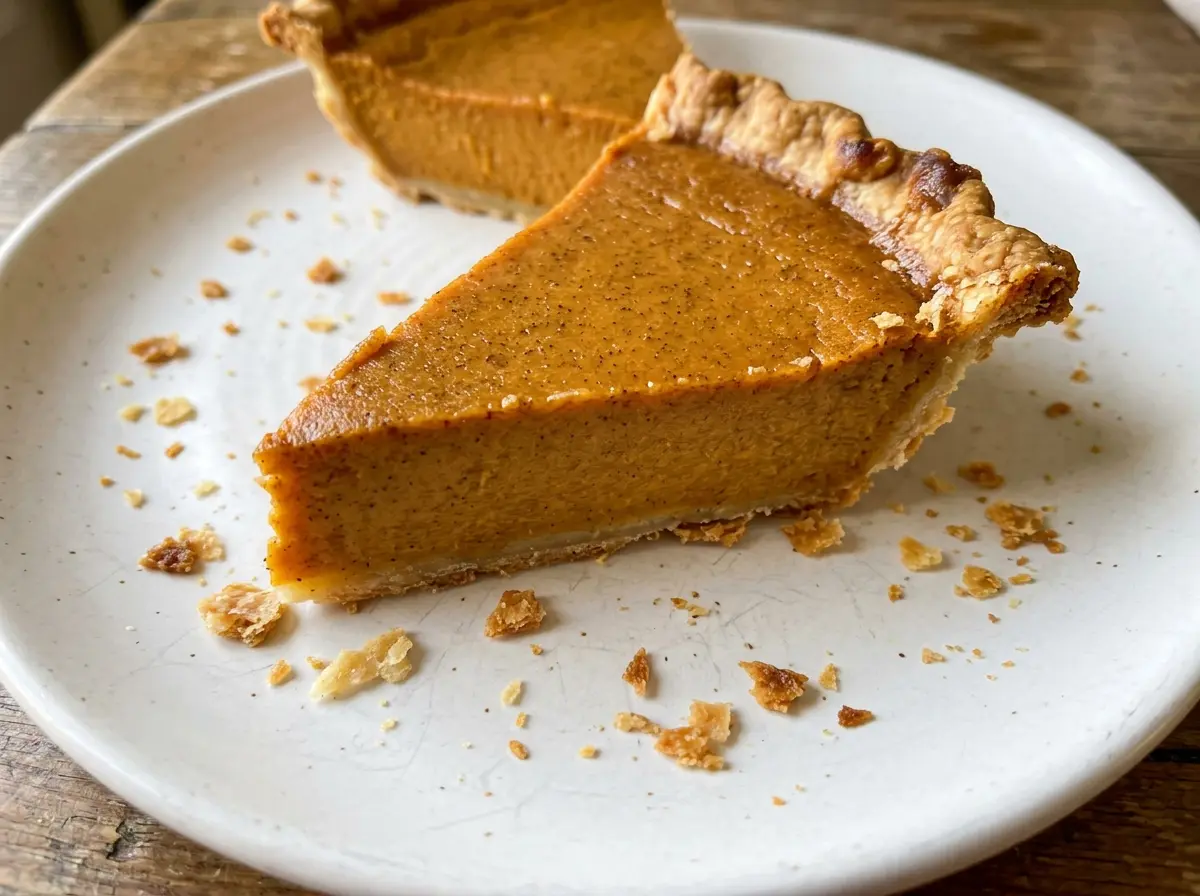
The filling should still have a little movement in the middle when the pie comes out of the oven. I used to wait for the center to look completely firm, which left the custard dry around the edges. Now I look for a slight jiggle and check the temperature before calling this Brown Sugar Pumpkin Pie done.
Using pure pumpkin puree lets the brown sugar and measured spices bring their own balance, instead of starting with a sweetened, pre-seasoned filling. I whisk the eggs in before gradually adding the evaporated milk; that order keeps the mixture smooth and easy to pour. After a slow cool and a good chill, each slice holds its shape with a tender, gently spiced center.
Kitchen Note
Set the oven rack in the lower third before preheating. Reaching into a hot oven to move a rack is awkward, and this pie is easier to handle when the plate can go straight onto its baking spot.
Save this Brown Sugar Pumpkin Pie for its soft, gently spiced custard and brown-sugar warmth.
Why Pumpkin Pie Filling Throws Off This Brown Sugar Custard
Pure pumpkin puree and canned pumpkin pie filling may sit beside each other on the grocery shelf, but they aren’t interchangeable here. Pure puree is pumpkin without the added sugar and spice blend. The pie filling already has sweetener and seasoning, so using it would layer those flavors on top of the brown sugar and spices in this pie. The result could taste too sweet or have a spice balance you didn’t intend.
That distinction matters especially in a custard pie, where the filling is the whole story. The brown sugar supplies sweetness and a mellow molasses note, while cinnamon, ginger, nutmeg, and cloves give the pumpkin its familiar warmth. Starting with plain puree leaves room for those ingredients to do their jobs. Check the can label for pure pumpkin rather than a prepared pie filling; the two products can look nearly identical once they’re poured into a bowl.
There’s no need to strain or season the canned puree before mixing. Whisk it with the brown sugar and spices until smooth, then add the eggs and milk in order. Keeping the base simple makes the final custard taste balanced rather than overly sweet or muddled.
How Brown Sugar, Eggs, and Evaporated Milk Shape the Filling
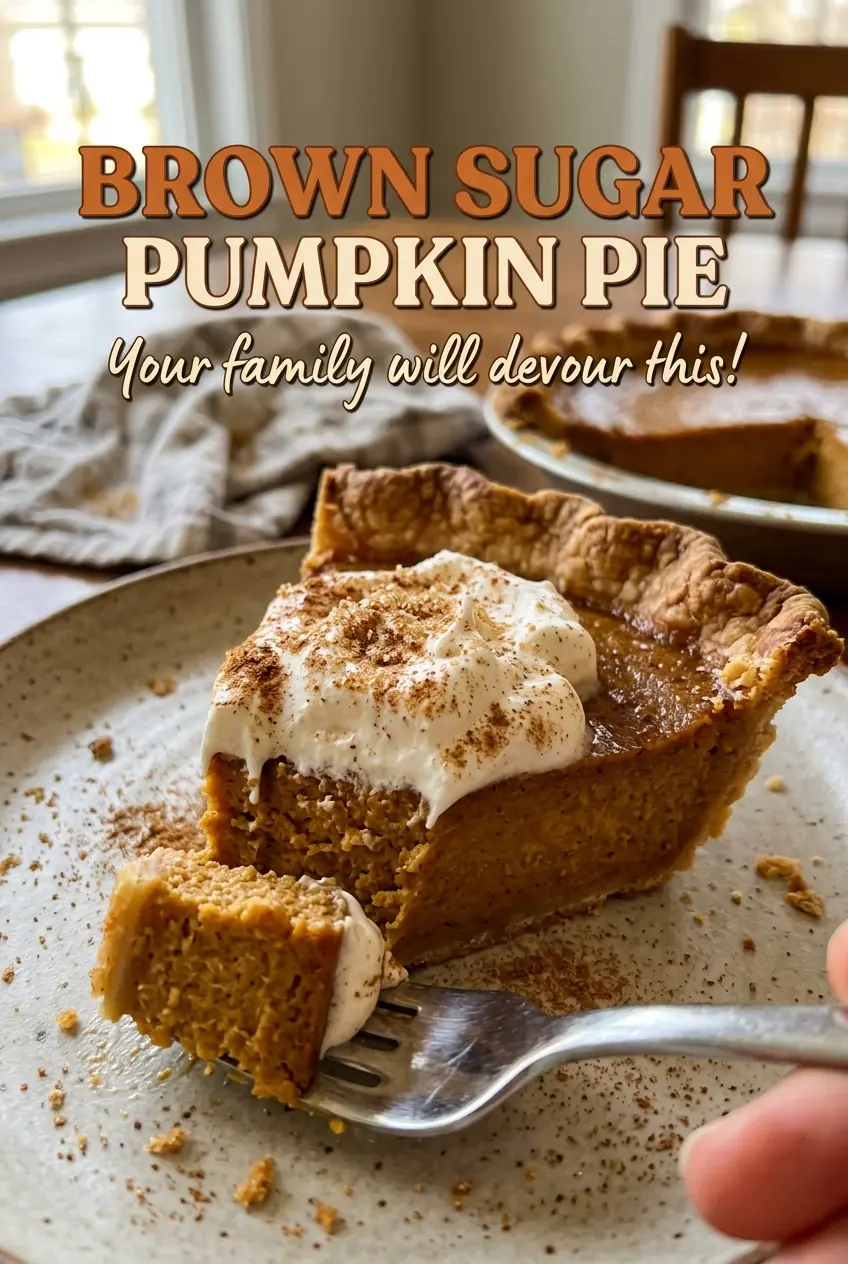
- Light brown sugar — Its molasses gives the custard a rounder, less sharp sweetness than plain granulated sugar. Dark brown sugar works in the same amount if you want a deeper molasses flavor and a slightly darker filling.
- Ground spices — Cinnamon and ginger lead, while nutmeg and a small amount of cloves add depth. Fresh, fragrant spices make a noticeable difference; if your jars have been open for years and smell faint, replace them rather than adding extra and throwing off the balance.
- Eggs — They set the pumpkin mixture into a sliceable custard. There isn’t a direct egg-free swap that keeps the same texture, so I wouldn’t use a flax mixture or applesauce and expect the same clean slices.
- Evaporated milk — This concentrated milk gives the filling body without making it as heavy as a cream-based custard. If you don’t have it, an equal volume of half-and-half is a workable substitute; expect a richer filling and use the center temperature and visual cues to judge doneness.
- Refrigerated pie crust — A ready-to-use crust keeps this pie straightforward, and a fresh, pliable crust is easier to fit without tearing. A gluten-free refrigerated crust sized for a 9-inch pie plate is a practical option if you need to avoid wheat, though its edge may be more delicate to crimp.
From Chilled Crust to Set Pumpkin Custard
Fit the Crust Without Stretching It
Heat the oven to 425°F, with the rack in the lower third. Fit the refrigerated crust into a 9-inch pie plate, fold the excess under, and crimp the edge; ease the dough into the plate rather than pulling it tight. Stretching can make the edge shrink as it bakes. Refrigerate the shaped crust while you mix the filling.
Whisk the Filling Until Smooth
In a large bowl, whisk the pumpkin puree with the brown sugar, cinnamon, ginger, nutmeg, cloves, and salt until no dry pockets remain. Whisk in the eggs, then pour in the evaporated milk gradually while continuing to whisk. Adding the milk in stages helps the thinner liquid blend evenly into the thick pumpkin base. Stop once the mixture looks smooth; vigorous beating isn’t needed.
Use Two Oven Temperatures
Pour the filling into the chilled crust and set the pie plate on the oven rack. Bake for 15 minutes at 425°F, then reduce the oven temperature to 350°F and continue baking for 35 to 45 minutes. The edges should look set while the center still jiggles slightly when the plate moves. Check the center with an instant-read thermometer; it should read 175°F.
Cool the Custard Before Slicing
Move the pie to a wire rack and let it cool for 2 hours. The filling continues to settle as it cools, so don’t try to cut it while it’s warm. Refrigerate it for at least 2 hours before slicing. A fully chilled pie cuts more neatly and keeps the custard from slumping onto the plate.
Three Small Changes That Put a Different Spin on This Pie
Use dark brown sugar for deeper molasses notes
Replace the light brown sugar with the same amount of dark brown sugar. Its stronger molasses flavor makes the filling taste a little more caramel-like and gives it a deeper color, while the spice blend stays familiar.
Choose a gluten-free crust
Use a refrigerated, unbaked gluten-free crust made for a 9-inch pie plate. It keeps the pumpkin filling and spice mixture unchanged, though the crust may be more fragile when you fold and crimp the edge, so handle it gently.
Leave out the cloves for a gentler spice
Omit the ground cloves and leave the cinnamon, ginger, and nutmeg as they are. The pie will have a softer, less assertive spice finish without losing its pumpkin-pie character.
Storage and Reheating
- Refrigerator: Cover leftover pie and refrigerate it for 3 to 4 days. The crust gradually softens as it sits.
- Freezer: Freeze fully chilled slices or the whole pie, wrapped airtight, for up to 1 month for best quality. Thaw overnight in the refrigerator; the custard may be a little softer after freezing.
- Reheating: This pie is best served chilled or brought to room temperature, so it doesn’t need reheating. Avoid microwaving a slice, which can warm the custard unevenly and soften the crust.
Questions That Come Up When Baking Pumpkin Pie
Brown Sugar Pumpkin Pie
Ingredients
Equipment
Method
- Heat the oven to 425°F with a rack in the lower third.
- Fit the pie crust into a 9-inch pie plate.
- Fold the excess under and crimp the edge.
- Refrigerate the crust while you make the filling.
- In a large bowl, whisk the pumpkin, brown sugar, cinnamon, ginger, nutmeg, cloves, and salt until smooth.
- Whisk in the eggs.
- Gradually whisk in the evaporated milk.
- Pour the filling into the chilled crust and set the pie plate on the oven rack.
- Bake for 15 minutes at 425°F, then reduce the oven temperature to 350°F and bake for 35 to 45 minutes, until the edges are set, the center still jiggles slightly, and an instant-read thermometer inserted in the center reads 175°F.
- Cool on a wire rack for 2 hours.
- Refrigerate for at least 2 hours before slicing.