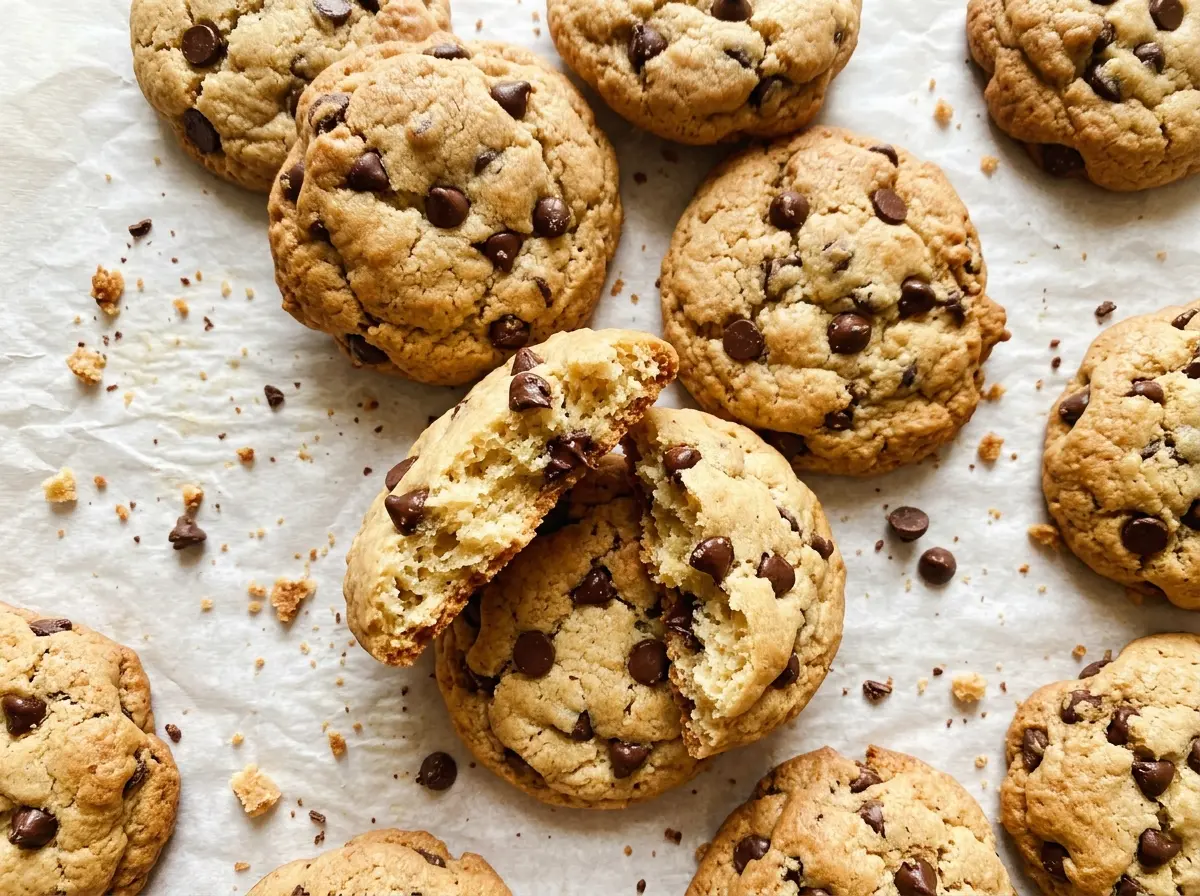
When the dough comes together, it feels different from a butter-cookie dough: soft, smooth, and easy to stir rather than something you cream with a mixer. That’s the vegetable oil at work. I chill it before baking so the scoops hold their shape, then pull the cookies when the edges are lightly golden and the centers still look a little soft. These butterless chocolate chip cookies bake up with tender middles and plenty of semisweet chocolate in every bite.
The small details matter more than fancy equipment here. Spoon the flour into the measuring cup and level it instead of scooping straight from the bag, and stop mixing as soon as the dry streaks disappear. That keeps the dough from getting heavy. The 30-minute chill gives it time to firm up, making the dough easier to portion and helping each batch bake evenly. Let the cookies settle on the baking sheet before moving them, and you’ll have soft-centered cookies with lightly golden edges.
Kitchen Note
Don’t wait for the centers to look fully baked in the oven. They should still seem slightly soft when you take the pan out; five minutes on the hot sheet gives them time to set without drying out.
Save these butterless chocolate chip cookies for a soft-centered batch made with vegetable oil and semisweet chocolate.
Why These Oil-Based Cookies Need a Short Chill Before Baking
Butter cookies often start with creaming softened butter and sugar. This dough doesn’t use that method: vegetable oil and the two sugars are whisked together, then the egg and vanilla go in. The mixture won’t look like fluffy creamed butter, and it doesn’t need to. Once the flour mixture is stirred in, the dough becomes cohesive enough to scoop.
Because oil stays fluid rather than firming up like chilled butter, the dough benefits from a brief rest in the refrigerator before it goes into the oven. That 30-minute chill firms the portions and gives you a more manageable dough. It also makes batch baking easier: scoop what you need for the lined sheet, then keep the rest chilled while the first batch bakes. If you skip the rest, the dough will be softer to handle, so don’t judge its texture while it’s still warm from mixing.
There’s no need to beat air into the mixture or keep whisking once everything is combined. Stir the flour in just until no dry streaks remain, then fold in the chips. A gentle hand protects the tender texture this oil-based dough is meant to have.
What Each Ingredient Does in a Butterless Chocolate Chip Cookie

- All-purpose flour — It gives the cookies their structure, so measuring it lightly is worth the extra few seconds. Spoon it into the cup and level the top; packing flour into the cup can leave you with a stiffer dough. Regular all-purpose flour works well here, so there’s no need for a specialty brand.
- Vegetable oil — Oil supplies the fat without butter and keeps the mixing simple. Use a neutral-tasting vegetable oil so it doesn’t compete with the chocolate. I wouldn’t swap in a strongly flavored oil, since its taste will come through in the finished cookie.
- Light brown sugar and granulated sugar — Using both gives the dough sweetness with brown sugar’s deeper, molasses-like note. Pack the brown sugar into its measuring cup; the granulated sugar is measured normally. Keeping both preserves the balance this dough is built around.
- Large egg — The egg brings the oil and dry ingredients together and helps the cookies hold their shape. Use a large egg, as listed, rather than guessing with a different size. I don’t recommend leaving it out or making an untested egg swap for this dough.
- Vanilla extract — Vanilla rounds out the brown sugar and chocolate. A standard bottle works; there’s no need to use an expensive extract for the cookies to turn out well.
- Semisweet chocolate chips — Semisweet chocolate keeps each bite sweet without overwhelming the dough. Use the chips you enjoy eating on their own. For a dairy-free batch, choose semisweet chips made without dairy ingredients; the vegetable-oil dough itself contains no butter.
- Baking soda and salt — Baking soda helps the cookies rise and brown, while salt keeps the sweetness from tasting flat. Whisk them with the flour so they’re distributed through the dough instead of clumping in one spot.
Mixing and Baking the Dough Without Overworking It
Whisk the dry ingredients evenly
Whisk the flour, baking soda, and salt together in a medium bowl until the small white and tan streaks are evenly dispersed. This takes care of the dry mixture before it meets the oil and sugars. If baking soda stays in one patch, you can get an uneven rise or a bitter spot in a cookie. Set the bowl aside while you mix the wet ingredients.
Build the oil-and-sugar base
In a large bowl, whisk the vegetable oil with the packed light brown sugar and granulated sugar until combined. The mixture will look glossy rather than airy, which is normal for this dough. Whisk in the large egg and vanilla until they’re blended through. Scrape the bottom of the bowl with the whisk as you go so no sugar is left behind.
Fold in the flour and let the dough chill
Stir the flour mixture into the oil mixture just until the last dry streaks disappear. If you keep stirring after that point, the cookies can turn out tougher than they need to be. Fold in the semisweet chocolate chips, cover the bowl, and chill the dough for 30 minutes. Near the end of that rest, heat the oven to 350°F so it’s ready when the dough is.
Scoop, bake, and cool in two stages
Line a large baking sheet with parchment paper and scoop the dough into 1 1/2-tablespoon portions, leaving about 2 inches between them. Bake in batches rather than crowding the sheet, and keep the remaining dough chilled while each batch is in the oven. Bake each batch for 10–12 minutes, until the edges are lightly golden and the centers still look slightly soft. Leave the cookies on the baking sheet for 5 minutes, then move them to a wire rack to cool completely.
Two Simple Ways to Adapt These Chocolate Chip Cookies
Make the batch dairy-free
Replace the semisweet chocolate chips with the same amount of semisweet chips made without dairy ingredients. The vegetable-oil dough already contains no butter, so the chocolate is the ingredient to check for a dairy-free adaptation. The cookie’s texture stays close to the original, with the flavor depending on the chips you choose.
Use chopped semisweet chocolate
Swap the chips for an equal volume of chopped semisweet chocolate. The uneven pieces give you a mix of small chocolate flecks and larger melted pockets, though the pieces won’t distribute as uniformly as chips. Fold the chopped chocolate in gently at the same point as the chips.
Storage and Reheating
- Room temperature: Keep completely cooled cookies in an airtight container for up to 5 days. They’ll soften a little as they sit.
- Freezer: Freeze cooled cookies in an airtight container for up to 2 months, separating layers with parchment. Thaw at room temperature before serving.
- Reheating: These cookies are good at room temperature. To warm one, microwave it briefly, just until the chocolate softens; longer heating can make the cookie tough.
Questions That Come Up When Baking Without Butter
Butterless Chocolate Chip Cookies
Ingredients
Equipment
Method
- Whisk the flour, baking soda, and salt together in a medium bowl.
- Whisk the oil, brown sugar, and granulated sugar in a large bowl until combined.
- Whisk in the egg and vanilla.
- Stir the flour mixture into the oil mixture just until no dry streaks remain.
- Fold in the chocolate chips.
- Cover and chill the dough for 30 minutes.
- Near the end of chilling, heat the oven to 350°F.
- Line a large baking sheet with parchment paper.
- Scoop the dough into 1 1/2-tablespoon portions, spacing them about 2 inches apart.
- Bake in batches, keeping the remaining dough chilled.
- Bake each batch for 10–12 minutes, until the edges are lightly golden and the centers still look slightly soft.
- Cool the cookies on the baking sheet for 5 minutes.
- Transfer the cookies to a wire rack to cool completely.