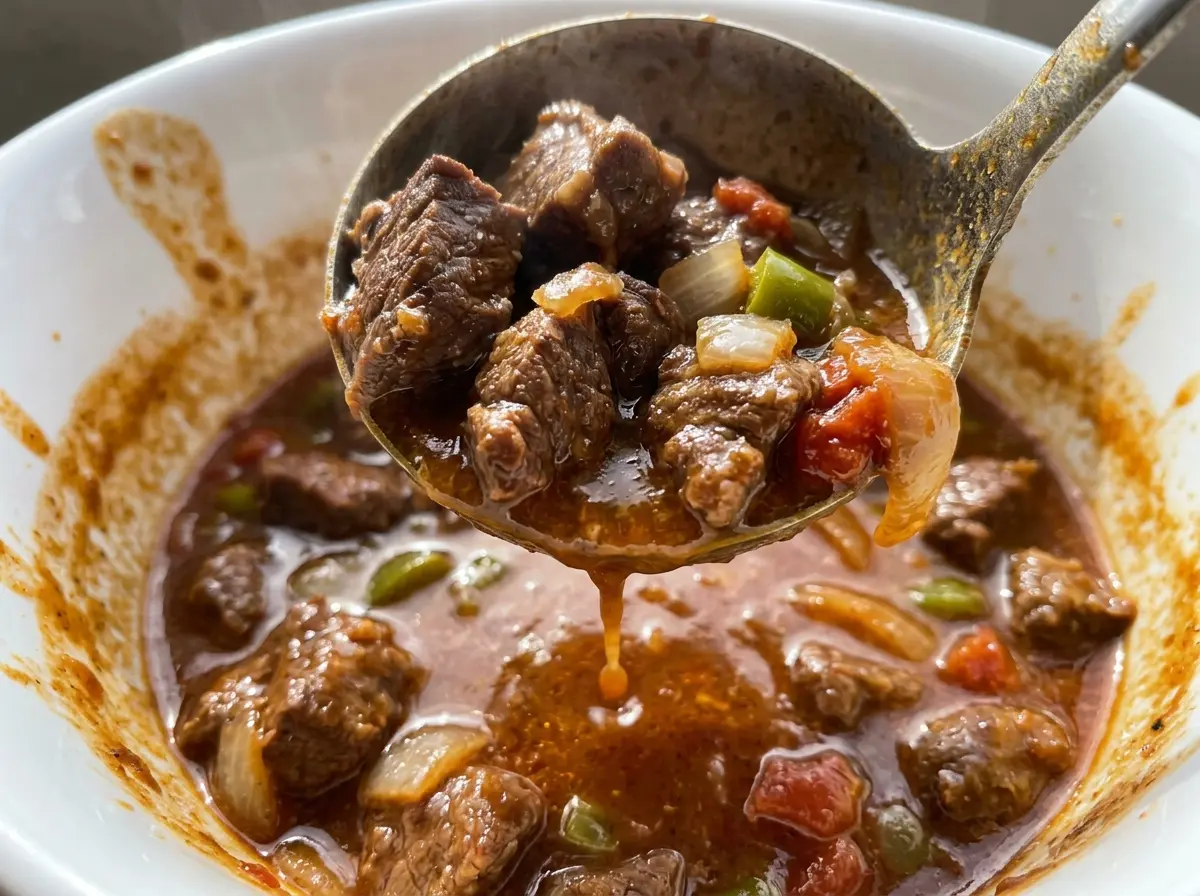
Beef cubes should hiss as they hit the hot oil, not sit in a crowded pot and steam. I brown them in batches so each piece gets color on its edges, then build the gravy right in the same Dutch oven. That’s the start of carne guisada with tender chunks of beef and a savory, spoonable sauce.
The light flour coating does two jobs: it helps the beef brown, and it gives the gravy a head start on thickening while everything simmers. I shake off any loose flour before the beef goes into the pot; too much clinging to the meat can scorch during browning. Once the tomato sauce and beef broth go in, all those browned bits get scraped into the gravy, where they belong.
Kitchen Note
Keep the lid on between your scheduled stirs. That gives the beef a steady, gentle braise instead of letting the pot lose heat every few minutes.
Save this carne guisada for a slow-simmered pot of tender beef and rich, tomato-spiced gravy.
Why the Flour-Dusted Beef Builds a Better Gravy Than a Bare Sear
That thin coating of flour isn’t meant to make a crust like fried chicken. It helps the beef brown, then quietly thickens the liquid later as the stew cooks. Because the coating is light, the finished gravy stays cohesive rather than pasty. Shaking off the excess matters: loose flour left in the pot can darken too quickly in the hot oil and leave a scorched taste behind.
The other part of the equation is giving each cube room in the Dutch oven. Beef releases moisture as it heats, and a packed pot traps that moisture around the meat. The pieces steam before they get the chance to brown. Work in batches, turn the cubes so their sides color, and transfer each batch to a plate while the next one cooks. You’ll get more even browning, and the browned fond left on the bottom becomes part of the gravy when the onion and broth loosen it.
What the Beef, Flour, and Broth Each Bring to Carne Guisada

- Beef chuck — Chuck is well suited to a long, covered simmer: it starts firm and turns fork-tender as it cooks. Cut it into even 1-inch cubes so the pieces finish at about the same time. A lean steak isn’t an equal replacement here; it won’t give the stew the same tender, slow-cooked texture.
- All-purpose flour — This is both the light coating on the beef and part of the gravy’s thickening. Toss it over dry, seasoned cubes, then shake off what doesn’t cling. I wouldn’t swap in a different thickener without changing the method and gravy texture.
- Tomato sauce and beef broth — Tomato sauce brings a smooth tomato base, while beef broth supplies the savory liquid for braising. Use plain tomato sauce rather than a seasoned pasta sauce, which would add flavors that aren’t part of this stew. A good everyday beef broth works well; the browned bits in the pot add plenty of depth.
- Cumin, chili powder, and oregano — These dried seasonings bloom briefly in the hot pot after the onion softens. Use fresh-smelling spices; old ones lose their fragrance and can make the gravy taste flat. Keep the listed blend together for the balanced, gently spiced result.
Building Carne Guisada in the Dutch Oven, One Layer at a Time
Dry and Coat the Chuck
Pat the beef dry, then toss it with the kosher salt and black pepper. Sprinkle on the flour and toss again until the cubes are lightly coated, shaking off the excess. Dry surfaces brown more readily than damp ones, so take a moment with the paper towels before seasoning. Keep the coating thin and even rather than leaving flour gathered in the bottom of the bowl.
Brown the Beef in Batches
Heat the vegetable oil in a 5-quart Dutch oven over medium-high heat. Add enough beef for a single layer, then turn the cubes so all sides brown; each batch takes about 8 minutes. If the pieces are crowded, they’ll release moisture and steam instead of coloring, so cook several batches rather than forcing them all in at once. Move browned beef to a plate as you work.
Soften the Onion and Wake Up the Spices
Add the diced onion to the pot over medium heat. Stir and scrape up the browned bits until the onion softens, about 5 minutes. Stir in the minced garlic, cumin, chili powder, and oregano, and cook just until fragrant, about 30 seconds. The garlic and spices should smell aromatic; don’t leave them sitting in the hot pot long enough to burn.
Simmer Until the Beef Gives Easily
Stir in the tomato sauce and beef broth, scraping the bottom of the pot, then return the beef and any juices from the plate. Bring everything to a gentle simmer, cover, and cook over low heat for 2 to 2 1/2 hours. Stir every 30 minutes, then check that a fork slips easily into the beef and that the gravy has thickened. If the beef still feels firm, it needs more time within that cooking window.
Make-Ahead Formats That Keep the Stew Practical
Cook the Pot Ahead for an Easier Dinner
Carne guisada works well as a cook-ahead main: prepare the full Dutch-oven batch, chill it, then warm it gently when you’re ready to eat. The beef and gravy stay together as one dish, so there’s no separate sauce or finishing component to prep at serving time.
Freeze Individual Portions Instead of One Large Batch
For a freezer-ready format, cool the finished stew and divide it into meal-size airtight containers. Smaller portions are easier to thaw evenly than one deep container, and each one includes both tender beef and gravy. Leave a little room at the top of each container for expansion.
Storage and Reheating
- Refrigerator: Store in a covered container for 3 to 4 days. The gravy may thicken as it chills.
- Freezer: Freeze in airtight containers for up to 3 months. Thaw overnight in the refrigerator for more even reheating.
- Reheating: Warm gently in a covered saucepan over low heat, stirring occasionally, until the center reaches 165°F. Avoid a hard boil, which can make the beef seem stringy and reduce the gravy too much.
Questions That Come Up While Making Carne Guisada
Carne Guisada
Ingredients
Equipment
Method
- Pat the beef dry and toss it with the kosher salt and black pepper. Sprinkle with the flour and toss to coat, shaking off excess flour.
- Heat the vegetable oil in a 5-quart Dutch oven over medium-high heat.
- Brown the beef in batches, turning to brown all sides, about 8 minutes per batch. Transfer the browned beef to a plate.
- Add the onion to the pot and cook over medium heat, stirring and scraping up browned bits, until softened, about 5 minutes.
- Stir in the garlic, cumin, chili powder, and oregano and cook until fragrant, about 30 seconds.
- Stir in the tomato sauce and beef broth, scraping the bottom of the pot. Return the beef and any accumulated juices to the pot.
- Bring to a gentle simmer, cover, and cook over low heat for 2 to 2 1/2 hours, stirring every 30 minutes, until the beef is fork-tender and the gravy has thickened.