When the onion, carrots, and celery start to soften in the pot, the kitchen already smells like chicken soup. I like that this version builds its flavor in one pot, with the vegetables gently cooking in olive oil before the broth goes in. The chicken noodle feel better soup comes together from familiar ingredients, but the order gives each one time to do its job.
The chicken simmers right in the broth, so it adds flavor as it cooks. Then it comes out before the egg noodles go in, which gives you control over how tender they get instead of leaving them to cook through the entire chicken simmer. A little fresh parsley stirred in at the end keeps each bowl bright against the savory broth and soft noodles.
Kitchen Note
Give the chicken its full five-minute rest before shredding. The short pause makes it easier to handle, and the meat pulls into strands cleanly instead of breaking into tiny bits.
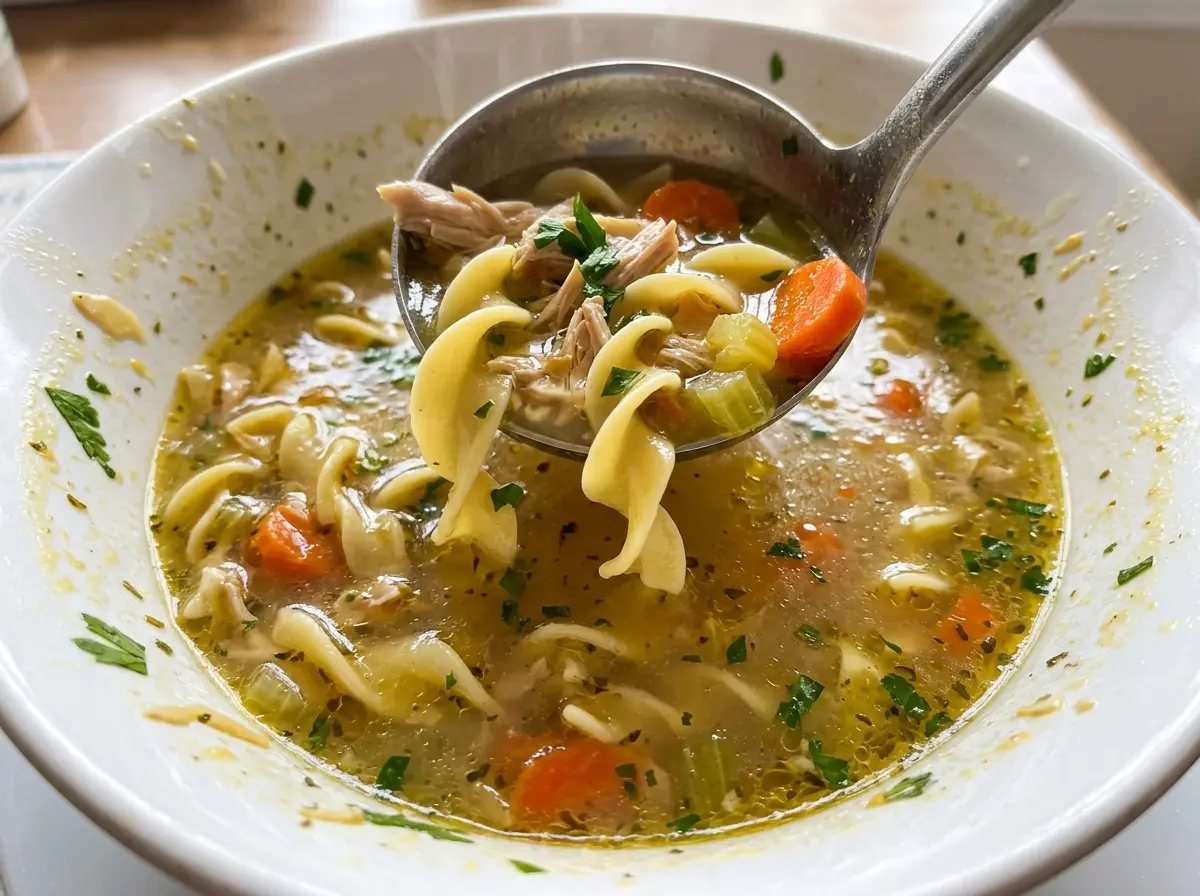
Save Chicken Noodle Feel Better Soup for a cozy bowl of tender chicken, wide egg noodles, and savory broth made in one pot.
Why the Noodles Go In After the Chicken Comes Out
The chicken needs a longer, gentler simmer than the noodles do. If both went into the broth at the same time, the egg noodles would sit in hot liquid while the chicken finished cooking and could turn overly soft. Cooking the chicken first gives it time to flavor the broth without asking the noodles to wait around in it.
Once the chicken is out, the noodles cook directly in that broth and take on its savory flavor. Keep the simmer steady rather than letting the pot boil hard; a rolling boil can jostle the noodles and vegetables while the liquid reduces faster. The short noodle-cooking window also makes it easier to judge tenderness by tasting one, rather than relying on a guess. This order keeps the chicken, vegetables, and noodles from competing for the same timing.
What Each Ingredient Brings to This Chicken Soup

- Yellow onion, carrots, and celery — Together they give the broth a savory, gently sweet base. Slice the carrots and celery evenly so they soften at about the same pace; standard grocery-store vegetables are all you need. White onion can replace yellow onion in the same quantity, though it tastes a little sharper.
- Garlic — Minced garlic brings a warm savory note, but it needs only a brief turn in the pot before the broth goes in. Mince it before you start cooking so it can go straight in after the vegetables soften; garlic left to brown can taste bitter.
- Low-sodium chicken broth — Since broth is the main liquid, choose one you enjoy sipping. Low-sodium broth lets the onion, thyme, chicken, and measured salt come through without the soup tasting overly salty. A low-sodium chicken stock works in its place.
- Boneless, skinless chicken breasts — They cook directly in the broth and are easy to shred once tender. Choose pieces that are similar in size so they cook at a more even pace; no trimming beyond removing any obvious excess fat is needed.
- Dried thyme and bay leaves — Thyme gives the broth an earthy, herby note, while the bay leaves add a quieter background aroma. Dried thyme is convenient and holds up well during simmering. Remember to lift out the bay leaves before adding the noodles; they aren’t meant to stay in the finished bowls.
- Wide egg noodles and fresh parsley — The wide noodles make the soup hearty and give you a tender, substantial bite. Fresh chopped parsley has a cleaner finish than dried parsley, so it’s worth using fresh here and stirring it in at the very end.
Build the Broth, Cook the Chicken, Then Finish the Noodles
Soften the vegetables before adding garlic
Heat the olive oil in a 6-quart pot over medium heat, then add the diced onion, sliced carrots and celery, kosher salt, and black pepper. Cook for 6–8 minutes, stirring occasionally, until the vegetables begin to soften. They should look glossier and lose their raw, firm edges, but they don’t need to brown. Stir in the minced garlic and cook for 30 seconds, just until fragrant.
Simmer the chicken gently in the broth
Add the chicken broth, chicken breasts, dried thyme, and bay leaves to the pot. Bring the broth to a boil, then reduce the heat and simmer uncovered for 15–20 minutes. Keep the bubbles gentle rather than letting the pot churn; a hard boil can make the chicken tougher and cause the broth to reduce too quickly. Check the thickest part of each breast with a thermometer and take the chicken out when it reaches 165°F.
Cook the noodles while the chicken rests
Transfer the chicken to a plate and remove the bay leaves before the noodles go into the pot. Simmer the wide egg noodles for 6–8 minutes, tasting near the end so you can catch them when they’re tender rather than soft. While they cook, let the chicken rest, then shred it with two forks. If the noodles still have a firm center, give them another short simmer and check again.
Return the chicken for a quick finish
Stir the shredded chicken and chopped fresh parsley into the pot. Simmer for 1 minute to warm the chicken through and let the parsley mingle with the broth. The finished soup should have tender noodles, distinct strands of chicken, and vegetables that are soft without falling apart. Serve while the noodles still have a little structure.
Simple Swaps for a Different Bowl
Make it gluten-free with wide gluten-free noodles
Replace the egg noodles with the same amount of wide gluten-free noodles. Their cooking time and texture vary by brand, so use the package timing as a guide and taste for tenderness; some gluten-free noodles soften faster than wheat-based egg noodles.
Use boneless, skinless chicken thighs
Swap in the same weight of boneless, skinless thighs for the breasts. Thigh meat has a richer taste and stays moist easily, but the pieces may need a little longer in the broth; use the thermometer rather than the clock to tell when they’re ready.
Storage and Reheating
- Refrigerator: Refrigerate in an airtight container within 2 hours and use within 3–4 days. The noodles will keep absorbing broth and soften as the soup sits.
- Freezer: Freeze in airtight, freezer-safe containers for up to 2 months. The soup freezes safely, though the noodles will be softer after thawing.
- Reheating: Warm only the portion you need in a saucepan over medium-low heat, stirring gently until hot throughout. Avoid a hard boil, which can make the noodles softer and the chicken less tender.
Questions That Come Up With Chicken Noodle Soup
Chicken Noodle Feel Better Soup
Ingredients
Method
- Heat the olive oil in a 6-quart pot over medium heat, then add the onion, carrots, celery, salt, and pepper. Cook for 6–8 minutes, stirring occasionally, until the vegetables begin to soften.
- Stir in the garlic and cook for 30 seconds, until fragrant.
- Add the chicken broth, chicken breasts, thyme, and bay leaves. Bring to a boil, then reduce the heat and simmer uncovered for 15–20 minutes, until the chicken reaches 165°F in the thickest part.
- Transfer the chicken to a plate and remove the bay leaves.
- Stir the egg noodles into the pot and simmer for 6–8 minutes, until tender.
- Let the chicken rest for 5 minutes, then shred it with two forks.
- Return the shredded chicken to the pot and stir in the parsley.
- Simmer for 1 minute to warm through.


