When the pan comes out of the oven, the crackers are nearly hidden beneath a layer of bubbling toffee. The chocolate chips look stubbornly intact at first, but a few minutes on that hot surface turns them soft enough to spread into a smooth top. That quick change is part of what makes Christmas Crack Cracker Toffee Cookies such a satisfying treat to put together.
I like that there’s no dough to mix or chill. Saltines form the crisp base, and the butter-and-brown-sugar toffee cooks right on top of them. The crackers need to sit snugly across the pan, so the toffee covers the base rather than disappearing through wide gaps.
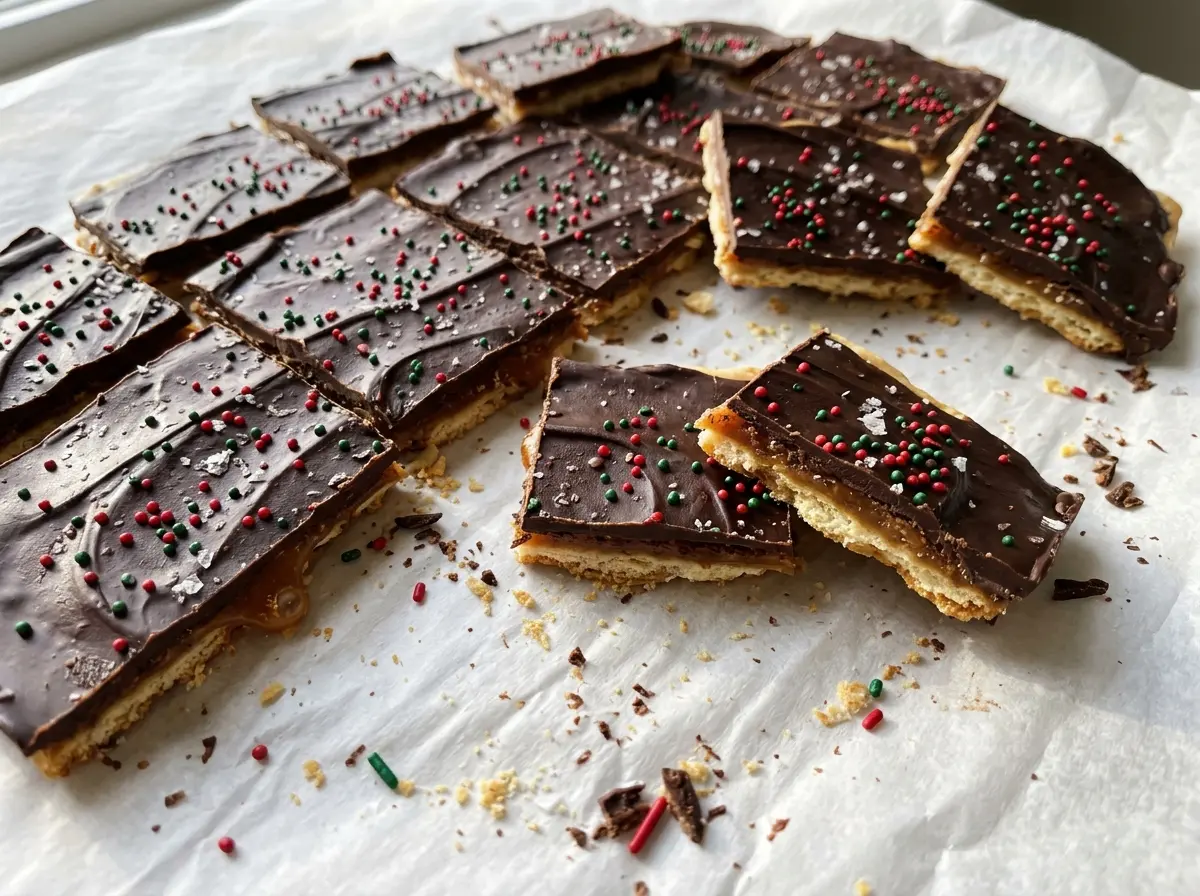
Once the chocolate sets, you lift the whole slab by its parchment and break it into pieces. Expect crisp, buttery layers with a little salt under the chocolate—not a soft, chewy cookie. Each bite snaps before the toffee gives way.
Kitchen Note
Keep the saltines in a snug single layer, with only narrow seams between them. When the crackers are spread too far apart, toffee can run into the gaps and leave parts of the base thin.
Save these Christmas Crack Cracker Toffee Cookies for a crisp, salty-sweet treat with a glossy chocolate top and buttery toffee underneath.
Why These “Cookies” Snap Instead of Chew
These are closer to a thin toffee bark than a traditional cookie. There’s no flour or leavening to make a tender, chewy center; the saltines stay crisp under a layer of cooked sugar, and the chocolate firms into a clean top. Knowing that texture is part of the appeal helps you judge the result correctly: a sharp snap is what you’re after once the slab has chilled.
The toffee’s boil is the part that determines whether the base gets a properly set layer. Melted butter and brown sugar aren’t ready just because they look combined. Bring them to a full boil, then let them boil for the full 3 minutes without stirring. Starting the timer before the mixture boils across the surface can leave the toffee softer than you want once it cools.
Keep an eye on the pan while the crackers bake, too. The toffee should be bubbling across its surface after 5 minutes in the 400°F oven. That bubbling is a useful visual cue that the layer has heated through; a few quiet spots are different from a surface that’s bubbling throughout. The chilled finish brings the layers together into pieces that break cleanly rather than slumping.
What the Saltines, Brown Sugar, and Chocolate Each Bring

- Saltine crackers — They provide a thin, crisp base and a salty contrast to the sweet toffee. A fresh, crisp box is a better choice than crackers that have gone stale, since the base should still have some crunch after baking. For a gluten-free version, use gluten-free saltine-style crackers and arrange them in the same snug layer; the finished base may be a little more delicate.
- Unsalted butter — Butter gives the toffee its richness and helps the brown sugar melt into a pourable mixture. Standard grocery-store butter works well here; there’s no need for a specialty brand. Salted butter is a workable swap, though the finished pieces will taste saltier alongside the crackers.
- Packed light brown sugar — Its molasses notes give the toffee a warm caramel taste. Pack it into the measuring cup so you get a consistent amount. Packed dark brown sugar can replace it in the same quantity for a deeper molasses flavor.
- Semisweet chocolate chips — Chips make it easy to scatter an even layer over the hot toffee, and their sweetness balances the salty base. Regular baking chips are fine; an expensive brand isn’t necessary. Chopped semisweet baking chocolate also works, though it may melt more quickly, so watch the resting time before spreading.
Build the Layers Without Rushing the Set
Arrange the Cracker Base
Heat the oven to 400°F and line a 13×18-inch rimmed baking sheet with parchment paper. Arrange the saltines in a snug single layer, filling the pan without stacking them. A rimmed pan keeps the hot toffee contained as you pour and bake. Take a moment to check the arrangement before you start the stovetop mixture, since moving crackers once they’re coated is awkward.
Boil the Brown-Sugar Toffee
Melt the butter in a medium saucepan over medium heat, then stir in the packed light brown sugar. Bring the mixture to a full boil and boil without stirring for 3 minutes. Start timing once it’s boiling, not while the butter is still melting or the sugar is just beginning to bubble. The mixture will be hot, so pour carefully when the timer is up.
Coat and Bake Until Bubbling
Pour the toffee evenly over the crackers and spread it to the edges. Get it into a reasonably even layer so the crackers bake beneath a consistent coating. Bake for 5 minutes, looking for bubbles across the surface rather than relying only on the oven timer. If it isn’t bubbling throughout yet, give it a close look before moving to the chocolate stage.
Spread the Chocolate and Chill Firm
Remove the pan from the oven and scatter the chocolate chips over the hot toffee. Let them stand for 3 to 5 minutes, then spread the softened chocolate evenly across the top. Cool the pan at room temperature for 20 minutes, then refrigerate it for at least 1 hour, until completely firm. Lift the slab using the parchment and break it into 24 pieces; if the center still feels soft, give it more time in the refrigerator before breaking.
Two Easy Ways to Change the Crackers or Chocolate
Make a Gluten-Free Batch
Replace the saltines with gluten-free saltine-style crackers, keeping them in a snug single layer on the parchment. The toffee and chocolate stay the same, while the base may break more delicately depending on the crackers you use. Choose crackers that are crisp and sturdy enough to arrange flat before you pour on the toffee.
Use a More Bittersweet Chocolate Top
Swap the semisweet chips for bittersweet chocolate chips if you want the topping less sweet against the toffee. Scatter them over the hot surface and use the same standing time before spreading. The darker chocolate makes the contrast with the buttery, brown-sugar layer more pronounced.
Storage and Reheating
- Refrigerator: Store the firm pieces in an airtight container for up to 1 week. The cold can make the toffee feel harder; let pieces sit briefly at room temperature before serving.
- Freezer: Freeze in an airtight container with parchment between layers for up to 2 months. Thaw the sealed container at room temperature to limit condensation on the chocolate.
- Reheating: These pieces don’t need reheating. Keep them away from heat, which softens the chocolate and can make the layers slide.
Questions That Come Up When Making Cracker Toffee
Christmas Crack Cracker Toffee Cookies
Ingredients
Equipment
Method
- Heat the oven to 400°F and line a 13x18-inch rimmed baking sheet with parchment paper.
- Arrange the saltine crackers in a snug single layer.
- Melt the butter in a medium saucepan over medium heat.
- Stir in the brown sugar, bring to a full boil, and boil without stirring for 3 minutes.
- Pour the toffee evenly over the crackers and spread it to the edges.
- Bake for 5 minutes, until bubbling across the surface.
- Remove the pan from the oven and scatter the chocolate chips over the hot toffee.
- Let stand for 3 to 5 minutes, then spread the melted chocolate evenly.
- Cool the pan at room temperature for 20 minutes.
- Refrigerate for at least 1 hour, until completely firm.
- Lift the toffee from the pan using the parchment and break it into 24 pieces.