The piped shells look so smooth on the tray that it’s easy to think the hard part is over. Then comes the wait: their surfaces need to dry before they go into the oven, or the tops can crack instead of lifting neatly. I make these cranberry macarons with a little patience built into each stage, so the crisp-looking almond shells have time to form and the filling is ready when they cool.
The filling starts with cranberries simmered down to a concentrated puree. That step gives the ganache a clear tart-fruit flavor without leaving it watery, which matters when you’re piping it between delicate shells. Fresh or frozen cranberries both work, so the filling isn’t tied to a short season.
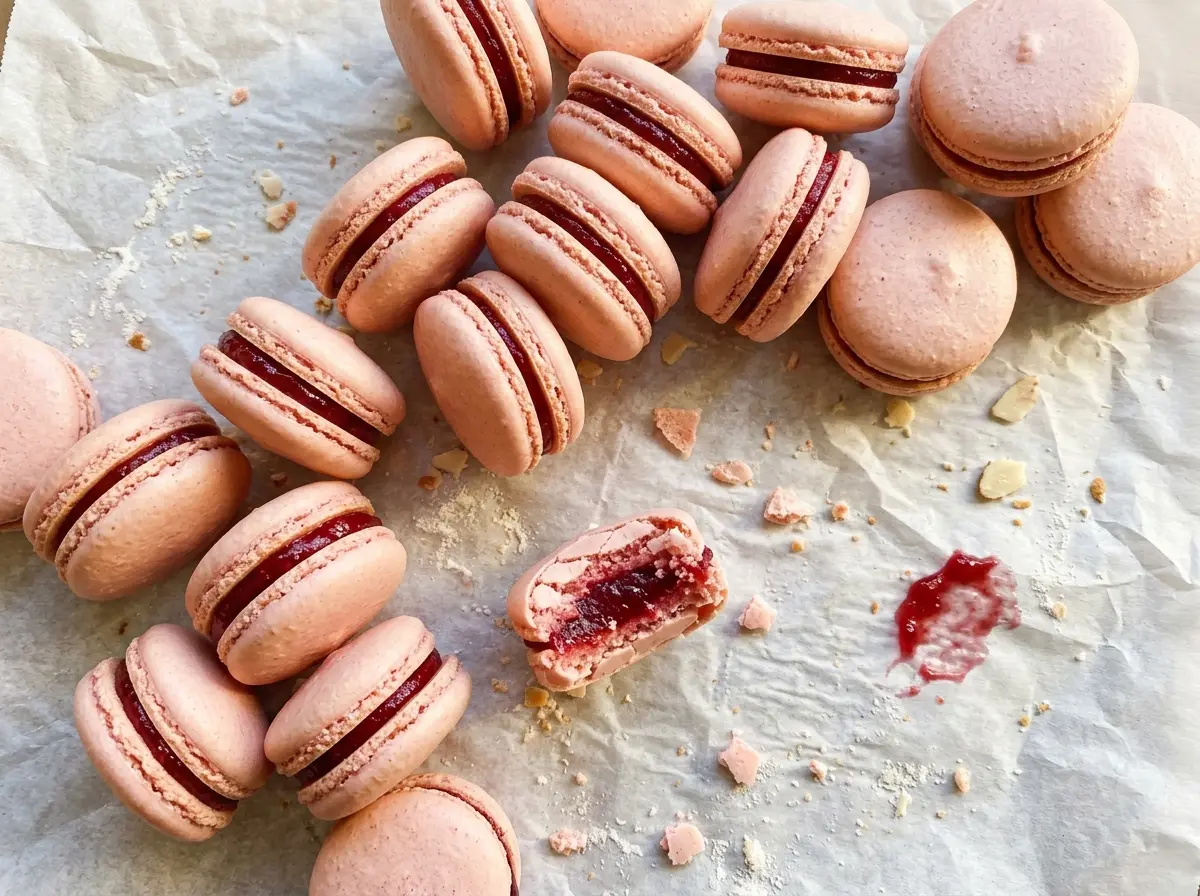
After assembling, the macarons rest in the refrigerator for 12 to 24 hours, then come to room temperature for serving. That pause brings the shell and cranberry-white chocolate center together into a tender, tangy bite.
Kitchen Note
Tap each baking sheet firmly on the counter after piping. It brings hidden air bubbles to the surface; pop any you can see with a toothpick before the shells rest.
Save these cranberry macarons for a bake with crisp almond shells and a tart cranberry-white chocolate center.
Why the Shells Need a Dry Skin Before They Go Into the Oven
Macaron batter has to do two things at once: keep enough air to rise, then hold its shape as it bakes. A dry outer surface gives the expanding shell a place to lift from, helping it rise at the base instead of splitting across the top. The rest isn’t busywork; it’s part of how the shells get their familiar shape.
Humidity can make the wait longer, so use the surface, not the clock alone, to judge readiness. The shells should feel dry and shouldn’t stick to a fingertip. If they still feel tacky at the end of 30 minutes, keep waiting and check again; the full rest can take up to 60 minutes. Starting the bake before that surface dries is the shortcut most likely to undo an otherwise careful batch.
There’s another reason to work patiently: the finished shells are small and delicate. Give them time to cool completely on their baking sheets before you handle them. Once they’re cool, pairing them by size makes assembly tidier and helps each sandwich close evenly.
Why Cranberry Macarons Use a Cooked-Down Cranberry Puree

- Almond flour — It gives the shells their distinctive almond character and delicate structure; all-purpose flour won’t make an equivalent macaron shell. A finely milled flour is helpful, while an expensive brand isn’t necessary if the flour sifts smoothly. Sift it with the powdered sugar so larger pieces don’t leave rough spots in the batter.
- Powdered sugar — This blends with the almond flour to form the dry base. A standard grocery-store bag works well; sifting matters more than choosing a premium brand. There isn’t a direct pantry-sugar swap that keeps the same fine texture.
- Egg whites — The whites are the foundation of the meringue that holds air in the shells. Bring them to room temperature before beating, as cold whites are harder to whip to the intended consistency. There’s no like-for-like replacement in this formula.
- Granulated sugar — Added gradually to the foamy whites, it supports the glossy meringue. Regular granulated sugar is the right choice here; powdered sugar doesn’t behave the same way in the meringue.
- Cranberries — Fresh or frozen berries both make the tart puree. The fine-mesh sieve removes skins and seeds, leaving a smoother filling; simmering the puree down concentrates it before it meets the chocolate.
- White chocolate and heavy cream — Together they make the creamy base that carries the cranberry. Finely chopped chocolate melts more evenly when the steaming cream is poured over it. Use actual white chocolate and heavy cream rather than substituting a thinner milk, which would change the ganache’s texture.
From Stiff Meringue to a Pipeable Cranberry Center
Sift and Combine the Dry Ingredients
Heat the oven to 300°F and line two 18×13-inch rimmed baking sheets with parchment paper. Sift the almond flour and powdered sugar through a fine-mesh sieve into a medium bowl, then whisk them together. Don’t skip the sieve: it catches coarse bits that are difficult to fold smoothly into the meringue. Set the bowl aside while you beat the whites.
Beat the Meringue, Then Fold with a Light Hand
Use a clean large bowl and a hand mixer to beat the room-temperature egg whites until foamy. Add the granulated sugar gradually, then beat on high until the meringue looks glossy and holds stiff peaks. Fold in the dry mixture in three additions rather than tipping it all in at once. Stop when the batter drops from the spatula in a thick ribbon and settles back into itself within about 10 seconds; batter that stays in a mound needs more folding, while batter that runs freely has gone too far.
Pipe, Rest, and Bake One Sheet at a Time
Transfer the batter to a piping bag fitted with a 1/2-inch round tip and pipe 1 1/4-inch rounds about 1 inch apart. Let the shells rest at room temperature for 30 to 60 minutes, until their surfaces feel dry and don’t stick to a fingertip. Bake one sheet at a time for 14 to 16 minutes, rotating the sheet halfway through so it bakes evenly. The shells are ready when set; leave them on the sheets until completely cool.
Reduce the Cranberries and Finish the Ganache
Simmer the cranberries with the water in a small saucepan over medium heat for 8 to 10 minutes, mashing the berries as they burst. Press the mixture through a fine-mesh sieve, return the puree to the saucepan, and simmer until it has reduced to 1 tablespoon; let it cool completely. Put the finely chopped white chocolate in a heatproof bowl, heat the heavy cream in the saucepan until steaming, and pour it over the chocolate. Let it stand for 2 minutes, stir until smooth, then stir in the cooled cranberry reduction. Refrigerate the ganache for 30 to 45 minutes, stirring every 10 minutes, until thick enough to pipe; pair the cooled shells by size, pipe about 1/2 teaspoon onto half, and gently top with the remaining shells.
Small-Batch Choices That Keep the Macarons Balanced
Choose Fresh or Frozen Cranberries
Both work in the puree, so use fresh berries or frozen ones depending on what you have. Keep the same simmering, mashing, straining, and reduction method; the filling stays focused on cranberry either way.
Make a Half Batch for a Smaller Yield
Weigh half of every ingredient, including the egg whites, and pipe the same 1 1/4-inch rounds. Keeping the shell size the same means you can use the same oven temperature and bake-time range; you’ll simply have fewer macarons to fill.
Storage and Reheating
- Refrigerator: Keep assembled macarons in an airtight container in the refrigerator for 12 to 24 hours before serving.
- Freezer: Freezing isn’t part of this method, so I don’t have a freezer timeline to recommend.
- Reheating: Don’t reheat them. Let the macarons stand at room temperature for 20 minutes before serving.
Questions That Come Up While Making Cranberry Macarons
Cranberry Macarons
Ingredients
Equipment
Method
- Heat the oven to 300°F and line two 18x13-inch rimmed baking sheets with parchment paper.
- Sift the almond flour and powdered sugar through a fine-mesh sieve into a medium bowl, then whisk to combine.
- In a clean large bowl, beat the egg whites with a hand mixer until foamy.
- Gradually add the granulated sugar, then beat on high until the meringue is glossy and holds stiff peaks.
- Fold the dry ingredients into the meringue in three additions until the batter falls from the spatula in a thick ribbon and settles back into itself within about 10 seconds.
- Transfer the batter to a piping bag fitted with a 1/2-inch round tip and pipe 1 1/4-inch rounds about 1 inch apart on the prepared sheets.
- Tap each sheet firmly on the counter and pop visible air bubbles with a toothpick.
- Let the shells rest at room temperature for 30 to 60 minutes, until their surfaces feel dry and do not stick to a fingertip.
- Bake one sheet at a time for 14 to 16 minutes, rotating the sheet halfway through, until the shells are set.
- Cool completely on the sheets.
- Simmer the cranberries and water in a small saucepan over medium heat for 8 to 10 minutes, mashing the berries as they burst.
- Press the mixture through a fine-mesh sieve.
- Return the puree to the saucepan and simmer until reduced to 1 tablespoon, then cool completely.
- Put the white chocolate in a heatproof bowl.
- Heat the heavy cream in the saucepan until steaming, pour it over the chocolate, and let stand for 2 minutes.
- Stir until smooth, then stir in the cooled cranberry reduction.
- Refrigerate the ganache for 30 to 45 minutes, stirring every 10 minutes, until thick enough to pipe.
- Pair the shells by size.
- Pipe about 1/2 teaspoon ganache onto the flat side of half the shells, and gently top with the remaining shells.
- Store the macarons in an airtight container in the refrigerator for 12 to 24 hours.
- Let them stand at room temperature for 20 minutes before serving.