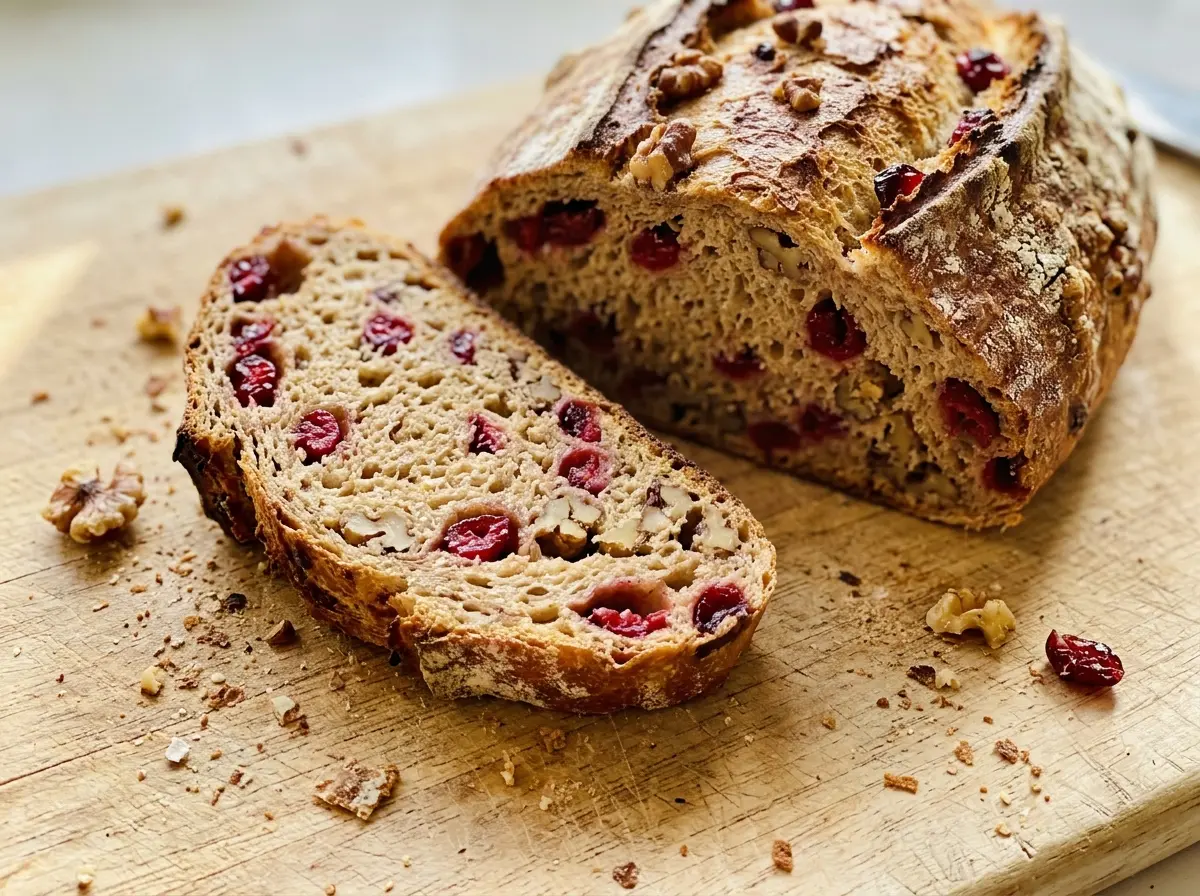
When the chopped cranberries hit the batter, their sharp, fresh smell cuts through the sweetness before the loaf even goes into the oven. I like that first hint of orange, too; the juice and finely grated zest give this cranberry walnut bread a bright center that keeps each bite from feeling heavy.
This is a quick bread, so there’s no yeast to wait on and no mixer to pull out. The batter comes together with a few bowls and a spoon, and the walnuts give the soft crumb a little crunch. Once it’s baked and fully cooled, the slices hold together well enough for breakfast or an afternoon snack.
Kitchen Note
Use frozen cranberries straight from the freezer; don’t thaw them first. Thawed berries release extra juice as you fold them in, which can streak the batter.
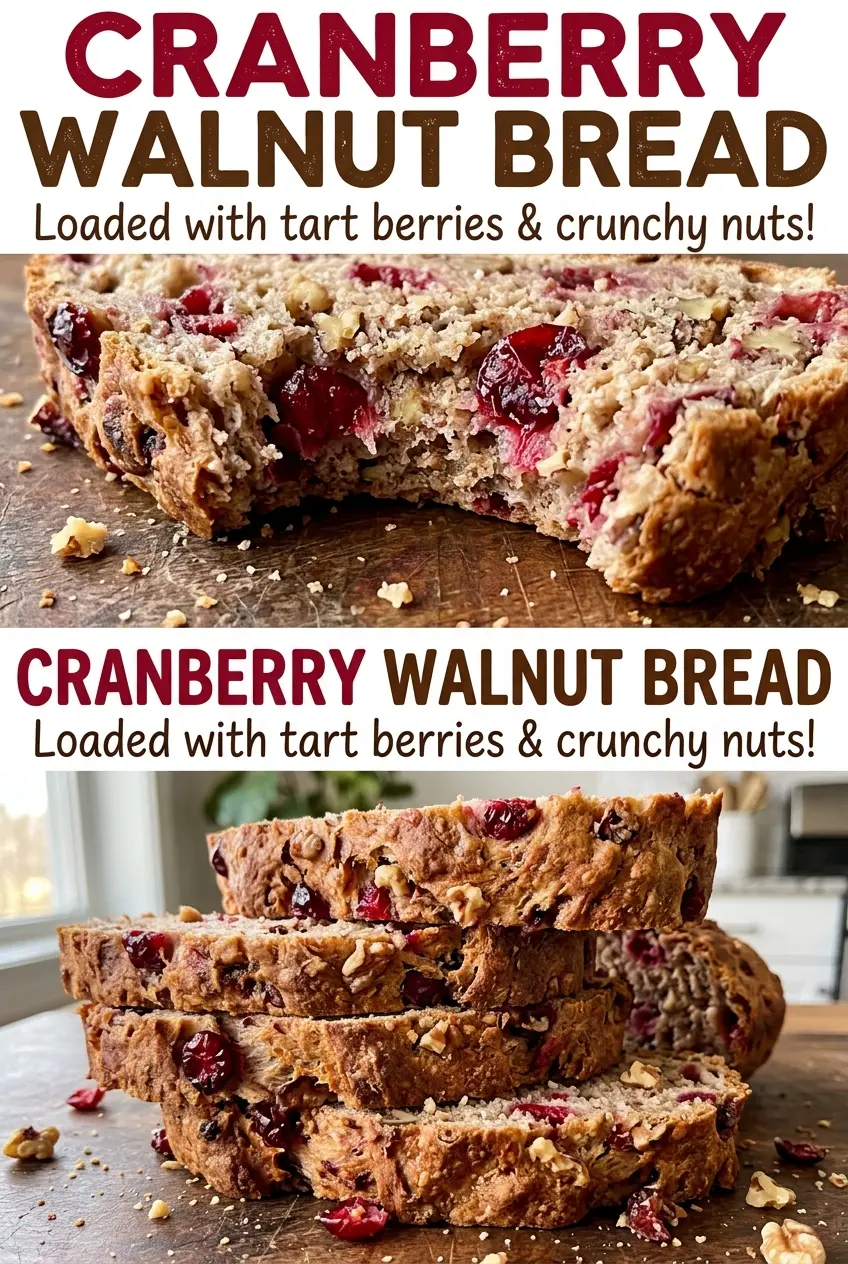
Save this cranberry walnut bread for its tart cranberry bites, orange lift, and crunchy walnuts.
Why This Loaf Uses Both Baking Powder and Baking Soda
Those two leaveners aren’t interchangeable here. Orange juice brings acidity to the batter, and baking soda reacts with that acidity to help the loaf rise. Baking powder adds another source of lift, so the center doesn’t have to rely on the soda alone.
That balance matters in a loaf packed with chopped cranberries and walnuts. The fruit and nuts add weight, and a quick bread needs enough lift to bake into a tender slice instead of a tight, heavy one. The soda also helps keep the orange juice’s tartness from taking over, while the sugar rounds out the cranberries.
Don’t leave one leavener out just because the other is already in the bowl. The amounts are balanced with the juice and the rest of the batter; changing that balance can affect both the rise and the flavor. Whisking the dry ingredients together before adding the wet mixture helps spread the leaveners through the flour, so you don’t end up with a bitter pocket in one bite and a dense patch in another.
What the Orange, Cranberries, and Walnuts Bring to the Loaf
- All-purpose flour — It gives the loaf enough structure to hold the fruit and nuts without turning it into a cake-like crumb. Regular all-purpose flour is the right choice here; a direct gluten-free swap would need its own tested liquid and texture adjustments.
- Granulated sugar — The sweetness balances the tart cranberries and supports a soft quick-bread crumb. Cutting it back changes that balance, so I wouldn’t reduce it if you want the loaf’s intended sweet-tart character.
- Baking powder and baking soda — Both contribute to the rise, with the soda working alongside the acidity in the orange juice. Keep both in the batter rather than trying to replace one with more of the other.
- Orange juice and zest — The juice supplies moisture and a citrus note throughout, while finely grated zest gives the loaf a more fragrant orange aroma. Grate only the colored outer peel; the white pith underneath tastes bitter.
- Cranberries — Fresh or frozen berries both work, and coarsely chopping them gives you distinct tart pockets without leaving the fruit in oversized pieces. Dried cranberries aren’t a direct substitute because they bring less moisture and a different texture.
- Walnuts — Chopped walnuts bring a gentle crunch against the soft crumb. Fresh-tasting nuts matter more than fancy ones; if you prefer a nut-free loaf, leave them out rather than replacing them with another ingredient.
- Egg and melted butter — The egg helps bind the batter, and butter adds richness. Let the melted butter cool before mixing it with the egg so the egg stays smooth instead of cooking from the heat.
Mixing and Baking the Loaf Without a Tough Crumb
Whisk the Dry Ingredients Evenly
Heat the oven to 350°F and grease a 9×5-inch loaf pan before you start mixing. In a large bowl, whisk the flour, sugar, baking powder, baking soda, and salt until the mixture looks uniform. Breaking up any little clumps now makes it easier to combine everything later. Set the bowl aside while you prepare the wet ingredients.
Bring the Orange Mixture Together
In a medium bowl, whisk the egg, orange juice, melted butter, and finely grated zest until combined. The butter should be melted but cooled, not hot; hot butter can make the egg mixture look uneven. You don’t need to beat it until foamy. A smooth, blended mixture is ready to pour into the dry ingredients.
Stir Just Until the Flour Disappears
Pour the egg mixture into the flour mixture and stir until no dry flour remains. Stop there, even if the batter looks a little lumpy. If you keep stirring to make it perfectly smooth, the loaf can turn tougher than it needs to be. Fold in the cranberries and walnuts gently so the fruit stays distributed without overworking the batter.
Fill the Pan and Check the Center
Spread the batter evenly in the prepared pan so it bakes at a consistent depth. Bake for 55 to 65 minutes, then check the center with a toothpick. It should come out clean or with a few moist crumbs; wet batter on the toothpick means the middle needs more time. If the top is browning before the center is ready, keep baking until the center passes that test.
Cool Before You Slice
Leave the loaf in the pan for 10 minutes after baking, then turn it out onto a wire rack. Let it cool completely before slicing; the crumb is still settling while the loaf is hot, and an early cut can leave the center gummy or make slices break apart. A serrated knife works well for neat slices once the loaf has cooled.
Two Simple Ways to Adapt the Cranberry Walnut Loaf
Make It Nut-Free
Leave out the walnuts for a nut-free loaf with a softer, more even texture. The cranberry and orange still give each slice plenty of character, though you’ll lose the walnuts’ crunch. If you’re baking for someone with an allergy, avoid cross-contact from bowls, utensils, and the loaf pan.
Choose Fresh or Frozen Cranberries
Fresh berries give you firm, distinct tart bites, while frozen cranberries are handy when fresh ones aren’t available. Both fit this loaf; frozen berries go in without thawing. Keep the pieces coarsely chopped so the fruit is easy to find in each slice.
Storage and Reheating
- Refrigerator: Keep the fully cooled loaf in an airtight container for up to 5 days; the crumb firms up and dries faster in the refrigerator.
- Freezer: It freezes well for up to 2 months. Wrap the whole cooled loaf or individual slices tightly, then thaw at room temperature before serving.
- Reheating: Warm an individual slice in a toaster or microwave for about 10 seconds. Avoid repeatedly warming the whole loaf, which dries it out faster.
Questions That Come Up When Baking Cranberry Walnut Bread
Cranberry Walnut Bread
Ingredients
Equipment
Method
- Heat the oven to 350°F and grease a 9x5-inch loaf pan.
- In a large bowl, whisk together the flour, sugar, baking powder, baking soda, and salt.
- In a medium bowl, whisk the egg, orange juice, melted butter, and orange zest until combined.
- Pour the egg mixture into the flour mixture and stir just until no dry flour remains.
- Fold in the cranberries and walnuts, then spread the batter evenly in the prepared pan.
- Bake for 55 to 65 minutes, until a toothpick inserted into the center comes out clean or with a few moist crumbs.
- Cool the bread in the pan for 10 minutes, then turn it out onto a wire rack.
- Cool completely before slicing.