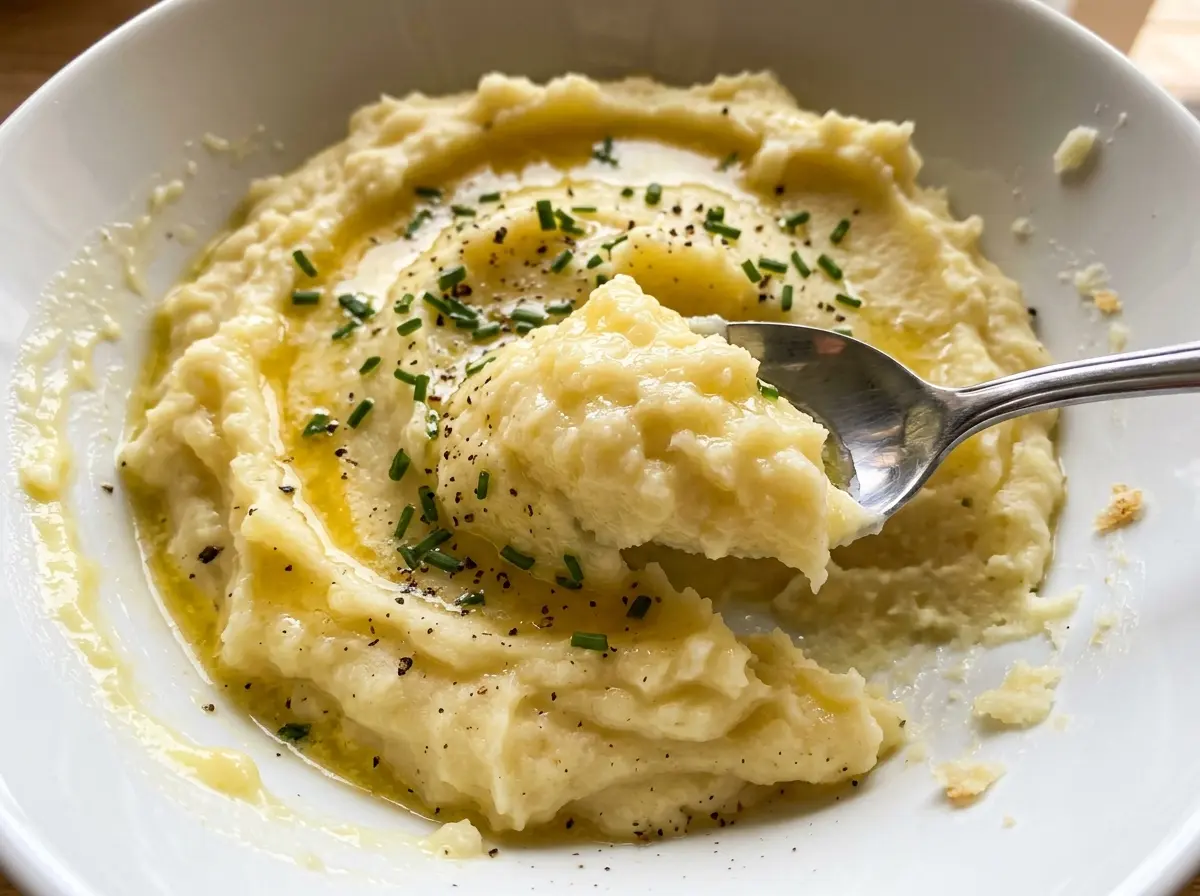
The garlic cloves soften right alongside the potatoes, and once mashed, they disappear into every bite instead of leaving a sharp raw-garlic edge. That’s the small detail that makes these Creamy Garlic Mashed Potatoes taste balanced rather than just buttery potatoes with garlic stirred in at the end. Yukon Golds give them a naturally rich, smooth texture that doesn’t need much coaxing.
I keep the butter and heavy cream together in a small saucepan while the potatoes cook, then stir that warm mixture in gradually. Cold cream can cool the potatoes down before the butter has a chance to blend in, and pouring everything in at once makes it harder to control the texture. Add it in stages, and you can stop when the mash looks creamy and soft, not loose or glossy. Each spoonful comes out silky, with mellow garlic and just enough black pepper.
Kitchen Note
Warm the butter and cream only until the butter melts and the mixture is steaming. If it starts to boil, take it off the heat; boiling isn’t needed, and gentle warmth is all the potatoes need for an easy, creamy finish.
Save these Creamy Garlic Mashed Potatoes for a meal that needs a smooth, buttery side with mellow garlic in every bite.
Why Starting Potatoes in Cold Water Helps Them Cook Evenly
Potato pieces don’t heat through all at once. If the outside gets a head start in rapidly boiling water, it can soften and begin breaking apart while the center is still firm. Starting with cold water gives the pieces time to warm more gradually, which helps the centers and edges finish closer together. That matters when the goal is a smooth mash rather than a pot of soft edges mixed with stubborn lumps.
Cutting the potatoes into even pieces helps with the same problem. Pieces around the same size reach tenderness at roughly the same time, so you’re not fishing out one done piece while another needs several more minutes. Yukon Golds are a good fit here because they mash up creamy without needing an elaborate technique. The garlic cooks in the same pot, softening as the potatoes simmer, and gets mashed right into them rather than added raw at the end. Together, those choices give the potatoes a consistent texture and a gentle garlic flavor throughout.
What the Potatoes, Garlic, and Cream Each Bring to the Mash

- Yukon Gold potatoes — Their naturally buttery flavor and creamy texture are what make this mash feel rich without needing an extra step. Choose firm potatoes without soft spots or green patches. Peel them and cut them into even pieces so they cook at a similar pace; another potato variety works, but the finished texture won’t be quite as creamy.
- Fresh garlic cloves — Whole peeled cloves simmer with the potatoes, then mash in easily once tender. This gives the garlic time to mellow. Garlic powder isn’t a direct replacement because it doesn’t soften in the pot or blend into the mash in the same way.
- Unsalted butter — Butter adds richness, while using unsalted keeps the seasoning easier to control because kosher salt goes into both the cooking water and the finished potatoes. A standard grocery-store butter works well; there’s no need for a specialty brand.
- Heavy cream — Cream gives the mash a fuller, silkier feel than a thinner liquid. Warm it with the butter before adding it, and pour it in gradually so you can judge the texture as you go. For a less rich result, whole milk is a workable swap, though the mash will be looser.
From Cold Pot to Creamy Mash Without Waterlogged Potatoes
Bring the Potatoes and Garlic Up to a Boil Together
Put the peeled, 1 1/2-inch potato pieces and garlic cloves in a 5-quart pot, cover them with 8 cups of cold water or enough to cover, and add 2 teaspoons of the kosher salt. Bring the pot to a boil over high heat. Starting everything together gives the potato pieces time to heat through gradually. Check that the water covers the potatoes rather than leaving pieces exposed at the top.
Simmer Until a Knife Slides In Easily
Once the water boils, reduce the heat to maintain a steady simmer and cook for 15 to 20 minutes. You’re looking for a knife to slide easily into a potato piece, without a firm center resisting the blade. A rolling boil can knock the pieces around and rough up their edges, so keep the heat steady rather than high. Begin checking toward the earlier end of the cooking window, since piece size can affect how quickly they become tender.
Warm the Butter and Cream While the Potatoes Cook
As the potatoes simmer, combine the butter and heavy cream in a small saucepan over low heat. Warm them just until the butter melts and the mixture is steaming; it doesn’t need to boil. Keep an eye on the pan while you check the potatoes, since cream can bubble up quickly once it gets hot. Having the mixture ready means you can move straight from draining to mashing.
Let the Steam Escape Before You Mash
Drain the potatoes and garlic well, return them to the pot, and let them sit for 1 minute. That brief pause lets excess steam escape instead of leaving extra moisture in the mash. Mash the potatoes and garlic, then gradually stir in the warm butter-cream mixture, the remaining 1 teaspoon kosher salt, and the black pepper. Stop when the mixture looks creamy and the garlic is evenly worked through.
Three Ways to Change the Texture or Make These Potatoes Dairy-Free
Make the Garlic More Subtle
Use 3 garlic cloves instead of 6. They’ll still soften and mash in with the potatoes, but the finished flavor will be gentler and let the buttery potato taste come forward more.
Leave the Skins On for a Rustic Finish
Scrub the potatoes well and leave the peel on before cutting them into even pieces. The mash will have more texture and visible flecks of skin instead of the smooth finish you get from peeled potatoes. Keep the pieces similar in size so they cook evenly.
Make a Dairy-Free Version
Replace the unsalted butter with the same amount of dairy-free butter and the heavy cream with the same amount of plain, unsweetened oat-based cooking cream. Warm them together gently as you would the dairy version. The mash will be a little less buttery, so choose an unsweetened product with a mild taste.
Storage and Reheating
- Refrigerator: Store in an airtight container for 3 to 4 days. The mash will firm up as it chills.
- Freezer: Freeze in an airtight container for up to 1 month for the best texture. Thaw overnight in the refrigerator; it may be a little less smooth after freezing.
- Reheating: Warm in a saucepan over low heat, stirring often, and add a splash of cream if the potatoes seem stiff. Heat to 165°F, and avoid high heat, which can scorch the dairy and make the mash greasy.
Questions That Come Up While Making Garlic Mashed Potatoes
Creamy Garlic Mashed Potatoes
Ingredients
Equipment
Method
- Put the potatoes and garlic in a 5-quart pot and cover with the cold water; add 2 teaspoons of the salt.
- Bring to a boil over high heat.
- Reduce the heat to maintain a steady simmer and cook for 15 to 20 minutes, until a knife slides easily into the potatoes.
- While the potatoes cook, warm the butter and heavy cream in a small saucepan over low heat until the butter melts and the mixture is steaming; do not boil.
- Drain the potatoes and garlic well.
- Return the potatoes and garlic to the pot.
- Let them sit for 1 minute to release excess steam.
- Mash the potatoes and garlic.
- Gradually stir in the warm butter-cream mixture, the remaining 1 teaspoon salt, and the pepper until creamy.