The first popper into the oil tells you whether the coating is ready: it should turn golden while the goat cheese stays tucked inside. I learned not to rush the chilling time with these crispy goat cheese poppers with honey. Soft chèvre is easy to shape, but it needs time in the refrigerator to firm up before it meets hot oil.
The double coating gives each popper a sturdy, craggy shell, and the honey keeps the sharp, tangy cheese in balance. I serve them warm, with honey on the side for dipping or drizzled over the top. Each bite has a crisp panko crunch, a soft center, and just enough sweetness.
Kitchen Note
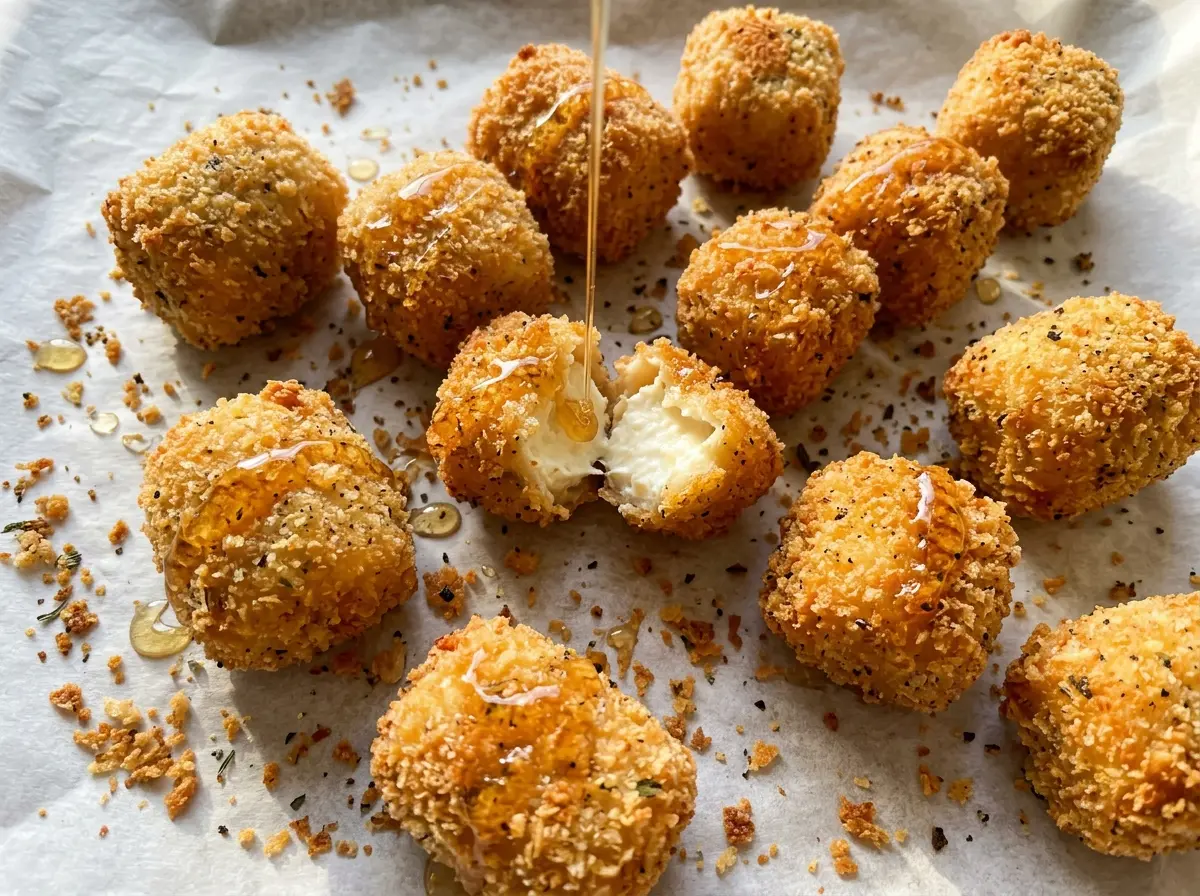
Give the fried poppers their full 2-minute rest before arranging them on the serving plate. The coating is at its most delicate straight out of the oil, and that short pause makes them easier to move while the centers stay warm and soft.
Save these crispy goat cheese poppers with honey for a party bite with a crunchy shell and a warm, tangy center.
Why a Second Panko Coat Keeps the Goat Cheese Inside
Goat cheese softens quickly once it warms, so a thin, patchy crust leaves little protection between the cheese and the oil. The first pass through flour and egg gives the crumbs a surface to cling to; the second dip in egg and panko fills in bare spots and builds a more complete shell. Press gently so the crumbs stick without flattening the balls.
That thicker coating works together with the two chilling rests. The first firms the shaped cheese so you can bread it without squashing it. The second helps the breading stay in place when you lower the poppers into the oil. Skip either rest and the soft cheese is harder to handle, which makes an even crust harder to get. You want a secure coating, not a heavy layer of crumbs.
What Chèvre, Panko, and Honey Bring to Each Bite
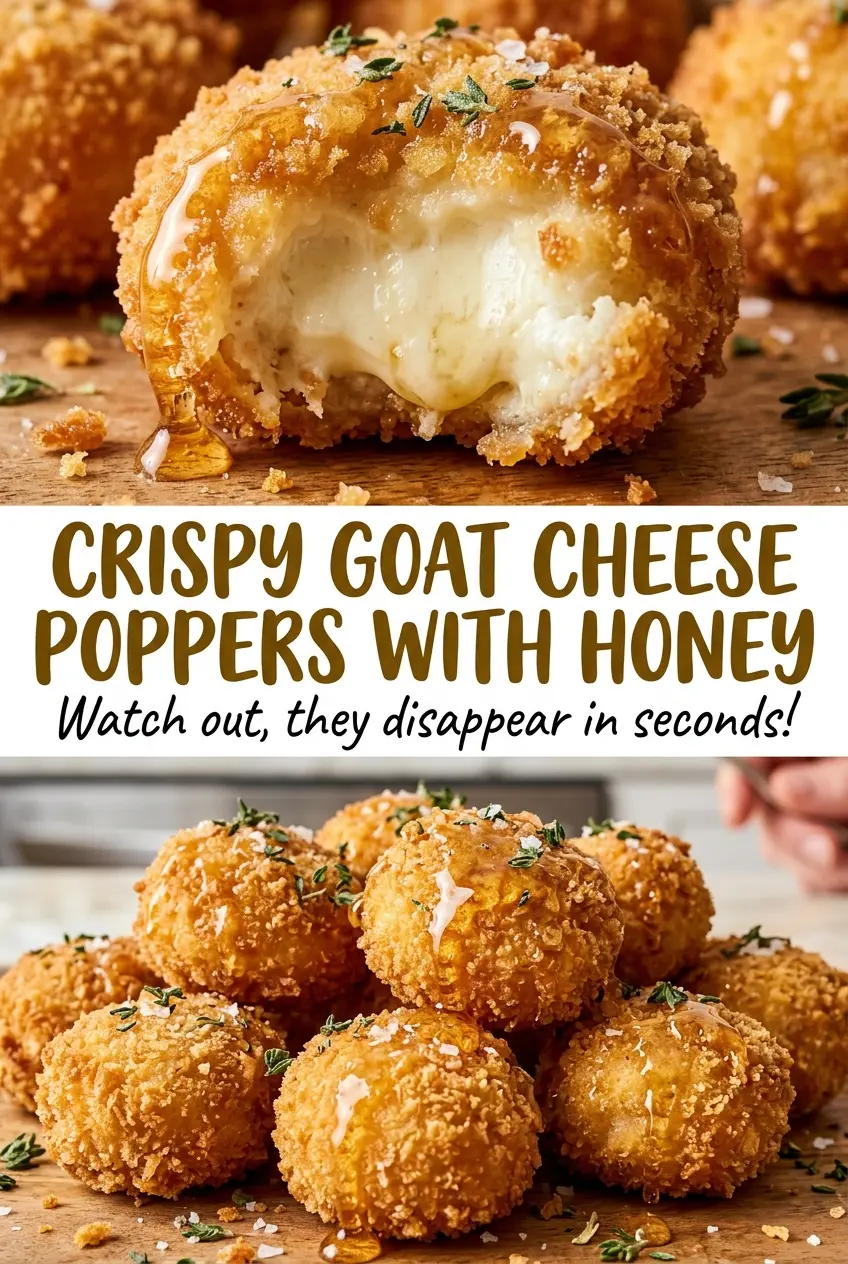
- Soft goat cheese — Plain chèvre has the tangy, creamy center that makes these poppers distinctive. Choose a fresh, mild cheese if you want the honey to stand out; a stronger chèvre gives each bite more tang. Keep it chilled until you’re ready to shape it, since warm cheese gets sticky and difficult to roll.
- Panko breadcrumbs — Their larger, airy flakes fry into a crisp, uneven crust rather than a fine, compact coating. Regular breadcrumbs can work in a pinch, but the outside will be denser and less craggy. Choose dry panko that feels light and loose, not damp or clumped.
- Honey — Honey is the sweet counterpoint to the cheese’s tang, so its taste comes through clearly. A mild everyday honey is a good choice when you want the chèvre to lead; a darker, more robust honey brings a deeper sweetness. Use a pourable honey so it drizzles easily or is simple to serve for dipping.
- Eggs and flour — Flour gives the egg something to grip, and the beaten egg helps the panko adhere. All-purpose flour is all you need here; there’s no advantage to using a specialty flour for the coating.
How to Shape, Coat, and Fry Poppers Without a Mess
Chill the Shaped Goat Cheese
Shape the chilled chèvre into 16 balls about 1 inch wide and set them on a plate. Keep the size consistent so they fry at about the same pace. Chill the balls for 20 minutes before breading; the cheese should feel firmer and hold its shape when picked up. If it starts to soften in your hands, return it to the refrigerator before continuing.
Build the Double Panko Crust
Set up three shallow bowls: flour in the first, beaten eggs in the second, and panko stirred with salt in the third. Roll each cheese ball in flour, dip it in egg, and coat it in panko, pressing gently so the crumbs adhere. Dip each ball in egg and panko a second time, then return the coated poppers to the refrigerator for 20 minutes. Keep the coating intact as you move them; bare patches are the places most likely to let cheese escape.
Fry Gently at 350°F
Heat the canola oil in a 3-quart heavy saucepan over medium heat, checking the temperature with a thermometer until it reaches 350°F. Fry the poppers in batches rather than crowding the pan, and turn them gently as they cook. They need 2 to 3 minutes to become golden brown. Keep the oil near 350°F between batches; if the temperature drops, the crust can take longer to brown and absorb more oil.
Rest Briefly, Then Serve Warm
Transfer each batch to a paper towel-lined plate. Once the poppers have rested for 2 minutes, arrange them on a serving plate. Serve them warm with the honey for drizzling or dipping. Set out the honey separately if you want the crisp coating to stay uncovered until each popper is picked up.
Easy Ways to Change the Honey or Make a Gluten-Free Batch
Choose a More Robust Honey
Swap a mild honey for buckwheat or another dark, full-bodied honey. Its deeper, less delicate sweetness stands up to the tang of chèvre, though it will taste more assertive than a light honey.
Make the Poppers Gluten-Free
Replace the all-purpose flour with a cup-for-cup gluten-free flour blend and use gluten-free panko in place of regular panko. The crust may be a little different depending on the crumb size, but the double coating still gives the soft cheese a protective shell.
Add a Little Heat to the Honey
Stir a pinch of red pepper flakes into the honey before serving. The gentle heat cuts through the richness of the fried coating; start with a small pinch so the chile doesn’t overpower the goat cheese.
Storage and Reheating
- Refrigerator: Refrigerate leftovers within 2 hours and keep them in an airtight container for up to 3 days. The panko will soften as it sits.
- Freezer: Freezing the fried poppers isn’t ideal; the coating loses its crispness and the goat cheese can become grainy after thawing.
- Reheating: Warm them in a 350°F oven for 5 to 8 minutes, until hot and crisp. Skip the microwave, which softens the crust and can make the cheese ooze out.
Questions That Come Up When Frying Goat Cheese Poppers
Crispy Goat Cheese Poppers with Honey
Ingredients
Equipment
Method
- Shape the goat cheese into 16 balls about 1 inch wide.
- Arrange the balls on a plate and chill for 20 minutes.
- Set the flour in one shallow bowl and the beaten eggs in a second shallow bowl.
- Stir the panko and salt together in a third shallow bowl.
- Roll each ball in flour, dip it in egg, and coat it in panko, pressing gently so the crumbs adhere.
- Dip each ball in egg and panko a second time, then chill for 20 minutes.
- Heat the canola oil in a 3-quart heavy saucepan over medium heat to 350°F, checking with a thermometer.
- Fry the poppers in batches, turning gently, for 2 to 3 minutes until golden brown, keeping the oil near 350°F.
- Transfer each batch to a paper towel-lined plate.
- Let the poppers rest for 2 minutes.
- Arrange the poppers on a serving plate.
- Serve the poppers warm with the honey for drizzling or dipping.


