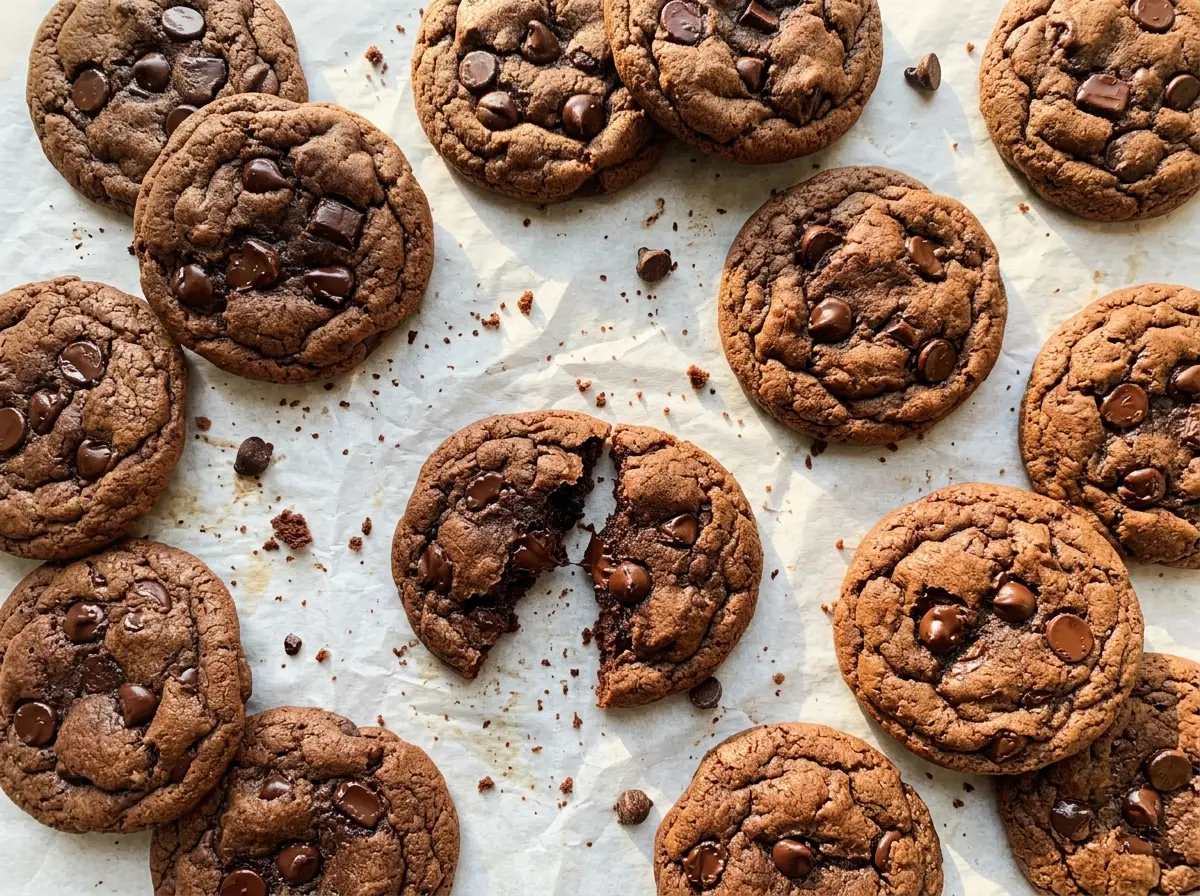
At about the 9-minute mark, the edges of these cookies may look set while the centers still look soft. That’s not a cue to leave them in the oven until every bit looks firm. Double chocolate chip cookies finish setting on the hot baking sheet, and pulling them while the middle is still soft keeps the texture tender instead of dry. I judge this batch by the edges, not by the glossy center.
I beat the butter with both sugars until the mixture is light and fluffy before adding the eggs. That full two minutes gives the dough a good start, and stopping the mixer as soon as the flour and cocoa are combined keeps the cookies from turning tough. The cocoa makes a deep, dark dough, while semisweet chips leave little pockets of chocolate in every bite.
Kitchen Note
Leave the cookies on the baking sheet for the full 5 minutes before moving them. They’re fragile straight from the oven, and that short rest lets the bottoms set without baking the centers any further.
Save these double chocolate chip cookies for the next time you want soft cocoa centers and semisweet chocolate in every bite.
Why This Cocoa Dough Benefits From a 30-Minute Chill
Cocoa changes the feel of cookie dough. It adds dry ingredients without the stretchy structure that flour develops, so the mixed dough can feel dense and less pliable than a vanilla cookie dough. That’s normal; adding extra butter or egg to make it feel softer would throw off the balance and can leave the baked cookies greasy or cakey.
The covered 30-minute chill firms the butter back up after mixing. That makes the dough easier to portion cleanly and gives the cookies a better chance of baking into neat rounds instead of spreading too quickly. It also gives the dry ingredients time to absorb moisture, so the dough feels more cohesive when you scoop it. The goal isn’t a rock-hard dough: after chilling, it should still be easy to portion with a spoon. Stick to the stated chill rather than judging the dough by its dark color or trying to correct its texture with extra ingredients.
What the Cocoa, Sugars, and Chocolate Each Bring
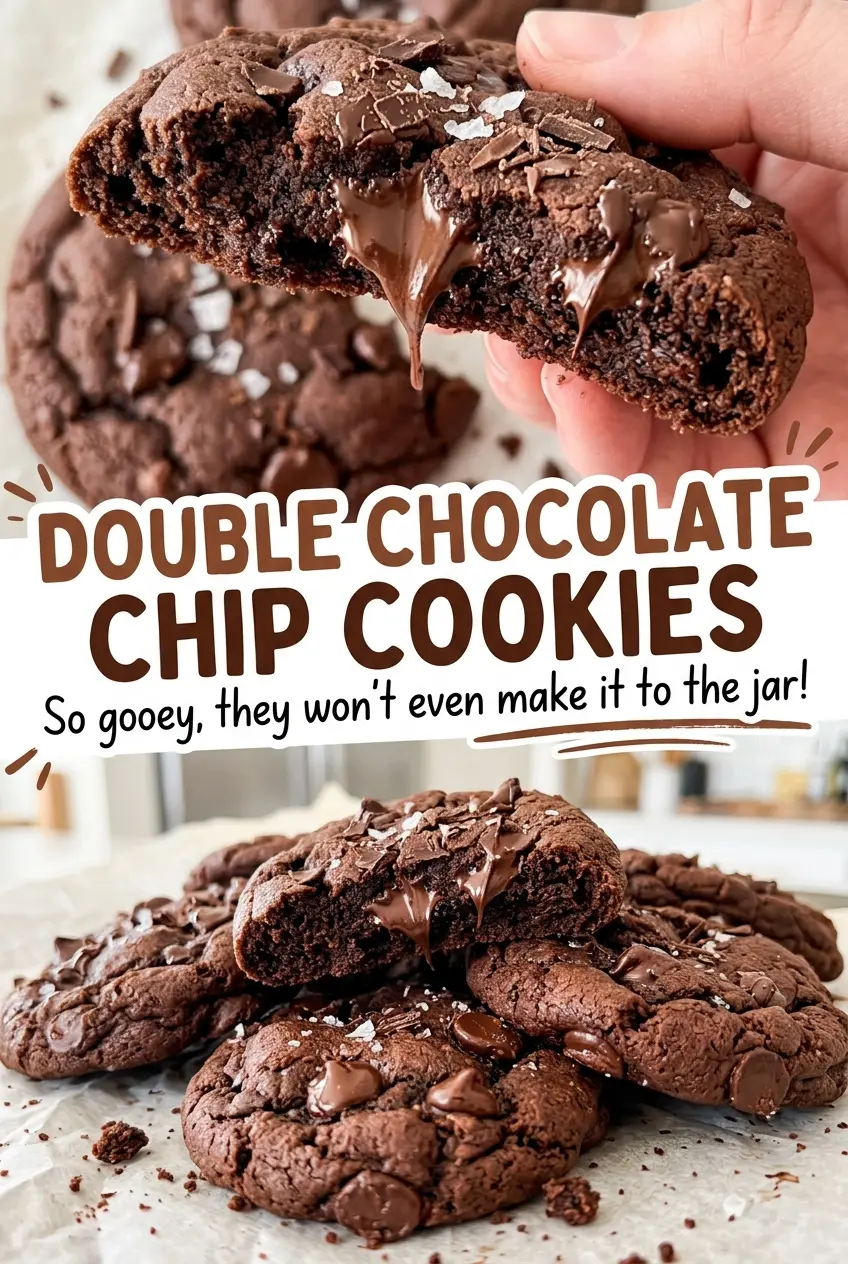
- Unsalted butter — Unsalted butter lets the measured salt stay in control, and softened butter creams smoothly with the sugars. Choose a fresh butter you like the taste of; there’s no need for a premium brand in a cocoa-forward cookie.
- Granulated and light brown sugars — The granulated sugar helps the cookies spread and gives the edges structure, while packed light brown sugar brings moisture and a deeper caramel note. Keeping both matters more here than choosing a specialty sugar.
- Large eggs — Eggs bind the dough and add moisture. Use large eggs for the intended balance; smaller eggs can leave a cocoa dough drier and harder to bring together.
- Vanilla extract — Vanilla rounds out the cocoa and chocolate without making the cookies taste like vanilla cookies. Pure extract is lovely, but a standard vanilla extract works well here.
- All-purpose flour — This gives the cookies enough structure to hold their shape. Fluff flour before measuring so it doesn’t get packed into the cup; a cup-for-cup gluten-free blend is the most practical alternative, with a slightly more delicate result.
- Unsweetened cocoa powder — This provides the chocolate base without adding more sugar. Use cocoa powder rather than sweetened hot cocoa mix, which contains other ingredients and would change the dough.
- Baking soda and salt — Baking soda helps the cookies rise and spread, while salt keeps the sweetness from tasting flat. Both are pantry basics, so fresh baking soda matters more than buying a particular brand.
- Semisweet chocolate chips — Semisweet chips balance the sweet dough and hold distinct chocolate pockets as they bake. A regular grocery-store bag is fine; if you want a less uniform bite, chop some of the chips before folding them in.
From Fluffy Butter to Soft-Centered Cookies
Cream the Butter and Sugars Until Light
Beat the softened butter, granulated sugar, and packed light brown sugar in a large bowl with a mixer on medium speed for about 2 minutes. The mixture should look lighter and fluffy rather than heavy and grainy. If the butter is still cold and firm, it won’t cream evenly, so let it soften before you begin. Stop once the mixture has the light, airy look you’re after.
Add the Eggs One at a Time
Beat in the eggs one at a time, letting each blend into the butter mixture before adding the next. Then mix in the vanilla extract. Adding the eggs gradually helps the mixture stay cohesive instead of looking slick or separated. If it looks a little uneven, continue mixing just until the ingredients come together.
Mix the Cocoa Dough Without Overworking It
Whisk the flour, cocoa powder, baking soda, and salt in a medium bowl so the cocoa and leavener are evenly distributed. Add that mixture to the butter mixture and mix on low just until combined. The dough will be dark and thick, so look for the point where the dry streaks disappear rather than waiting for a fluffy appearance. Once no loose flour remains, stop the mixer.
Fold in the Chips and Chill the Covered Bowl
Stir in the semisweet chocolate chips, distributing them through the dough without beating them with the mixer. Cover the bowl and chill the dough for 30 minutes. Keep it covered so the surface doesn’t dry out in the refrigerator. When the chill is over, the dough should scoop into portions without slumping flat in the bowl.
Bake One Sheet at a Time, Then Let the Centers Set
Heat the oven to 350°F and line two baking sheets with parchment paper. Scoop the dough into 2-tablespoon portions, setting them about 2 inches apart, and bake one sheet at a time for 9 to 11 minutes. Pull the cookies when the edges are set and the centers still look soft; waiting for the middles to look firm can leave them overbaked. Cool each sheet for 5 minutes, then transfer the cookies to a wire rack to cool completely.
Three Ways to Change the Chocolate-Cookie Texture
Make the dough gluten-free
Replace the all-purpose flour with the same volume of a cup-for-cup gluten-free baking blend that includes xanthan gum. The cookies may be a little more delicate and less chewy, so let them complete their full baking-sheet rest before moving them.
Trade some chips for chocolate flecks
Measure the semisweet chips, then chop part of them before stirring everything into the dough. The smaller pieces spread chocolate more evenly through the cocoa base, while the whole chips still give you distinct pockets.
Put a few chips on top
Reserve a small portion of the semisweet chips and press them onto the dough portions just before baking. The cookies come out with chocolate visible on top, while the total amount of chips stays the same.
Storage and Reheating
- Refrigerator: Keep the cooled cookies in an airtight container for up to 5 days. The cold firms the butter, so the cookies won’t feel as soft straight from the refrigerator.
- Freezer: Freeze completely cooled cookies in an airtight container for up to 2 months, with parchment between layers to prevent sticking. Thaw at room temperature.
- Reheating: They don’t need reheating; thaw frozen cookies at room temperature. Avoid heating them for too long, which can make the cookies tough as they cool.
Questions That Come Up When Baking Double Chocolate Cookies
Double Chocolate Chip Cookies
Ingredients
Equipment
Method
- Beat the butter, granulated sugar, and brown sugar in a large bowl with a mixer on medium speed until light and fluffy, about 2 minutes.
- Beat in the eggs one at a time, then mix in the vanilla extract.
- Whisk the flour, cocoa powder, baking soda, and salt in a medium bowl.
- Add the flour mixture to the butter mixture and mix on low just until combined.
- Stir in the chocolate chips, cover the bowl, and chill the dough for 30 minutes.
- Heat the oven to 350°F.
- Line two baking sheets with parchment paper.
- Scoop the dough into 2-tablespoon portions and place them about 2 inches apart on the prepared baking sheets.
- Bake one sheet at a time for 9 to 11 minutes, until the edges are set and the centers still look soft.
- Cool the cookies on the baking sheet for 5 minutes.
- Transfer the cookies to a wire rack to cool completely.


