Tender shrimp wrapped in a garlic cream sauce disappear fast because the whole dish lands in that narrow sweet spot between fast and special. The sauce clings to every curve of the shrimp, the Parmesan adds body without turning the pan heavy, and the lemon at the end keeps the richness from tasting flat. Served over pasta or with bread for dipping, it eats like a dinner you had to work for, even though it comes together in about 15 minutes.
What makes this version work is the order. The shrimp cook first and come out early, so they stay juicy instead of turning rubbery while the sauce finishes. Garlic only gets 30 seconds in the pan because it should smell fragrant, not brown; once garlic darkens, the sauce tastes sharp instead of round. The cream needs a gentle simmer, not a hard boil, and the Parmesan goes in gradually so it melts into the sauce instead of turning grainy.
Below you’ll find the small details that matter here: how to keep the shrimp tender, what to do if your sauce looks thin at first, and a few easy ways to adapt the dish when you’re serving it with pasta, rice, or just a big piece of crusty bread.
The sauce thickened up right in the skillet and the shrimp stayed perfectly tender. I served it over linguine and my husband went back for seconds before I even sat down.
Save this creamy garlic shrimp for the nights when you want a fast skillet dinner with a rich sauce and almost no cleanup.
The Trick to Keeping Shrimp Tender While the Sauce Finishes
Shrimp go from perfect to tight and springy fast, and that happens when they sit too long in heat. Pulling them out after the first quick cook gives you room to build the sauce without overcooking the seafood. They go back in at the end for just long enough to warm through and pick up the cream sauce.
The other place people get into trouble is rushing the sauce. If the cream boils hard, it can lose that smooth, glossy texture. A gentle simmer lets the Parmesan melt in cleanly and gives the sauce enough time to thicken without splitting.
What Each Ingredient Is Actually Doing in This Dish

- Large shrimp — Bigger shrimp stay juicier through the quick sear and the final toss in sauce. If you’re using frozen shrimp, thaw them completely and pat them dry so they brown a little instead of steaming in the pan.
- Butter and olive oil — Butter gives the sauce its round, rich base, while olive oil keeps the butter from scorching during the shrimp sear. You need both here; all butter can brown too fast, and all oil loses some of the flavor the sauce needs.
- Garlic — Fresh minced garlic is the backbone of the dish, and pre-minced jarred garlic won’t taste as sweet or clean. If that’s all you have, use it, but cut the quantity back a little because it can read harsher in a cream sauce.
- Heavy cream — This is what turns the skillet juices into a sauce that coats instead of pools. Half-and-half can work in a pinch, but it won’t thicken as much and is more likely to look thin unless you simmer it a little longer.
- Parmesan — Finely grated Parmesan melts into the sauce and gives it body. Use the real stuff if you can, because the shelf-stable powdery version doesn’t melt as smoothly and can leave the sauce grainy.
- Lemon juice and parsley — The lemon wakes everything up at the end, and the parsley gives the whole dish a fresh finish. Add both right before serving so the lemon stays bright and the herbs don’t wilt into the sauce.
Building the Sauce in the Same Pan Without Overcooking Anything
Sear the Shrimp Briefly
Heat the butter and olive oil over medium heat, then add the shrimp in a single layer. Cook for 1 to 2 minutes per side, just until they turn pink and curl into a loose C shape. If they coil into a tight O, they’ve gone too far. Pull them out as soon as they look done so they don’t keep cooking while the sauce comes together.
Cook the Garlic Without Browning It
Add the garlic to the same skillet and stir for about 30 seconds, just until it smells fragrant. The pan should still look glossy, not dark. If the garlic starts to brown, lower the heat right away, because browned garlic turns bitter and can throw off the whole sauce.
Let the Cream and Parmesan Thicken Gently
Pour in the heavy cream and bring it to a gentle simmer, not a boil. Stir in the Parmesan, red pepper flakes, salt, and pepper, and keep the sauce moving until it looks slightly thicker and coats the back of a spoon. If it seems thin at first, give it another minute; cream sauce usually tightens as the heat settles and the cheese melts fully.
Finish with Shrimp and Lemon
Return the shrimp to the skillet and toss them through the sauce for 1 to 2 minutes, just until they’re hot again. Stir in the lemon juice at the very end so the sauce stays smooth and bright. The parsley goes on right before serving, when the sauce is glossy and the shrimp are coated instead of swimming.
How to Adapt This for Pasta, Bread, or a Dairy-Free Version
Serve It Over Pasta
Toss the finished shrimp and sauce with linguine, fettuccine, or spaghetti and loosen it with a splash of pasta water if needed. The starch helps the cream sauce cling, which turns a skillet dinner into a full meal without changing the flavor.
Make It Dairy-Free
Use a full-fat unsweetened coconut cream or a cashew cream substitute, then skip the Parmesan or replace it with a dairy-free grated alternative that melts well. The sauce will be a little less sharp and more mellow, but it still coats the shrimp nicely if you keep the heat gentle.
Add More Heat or Keep It Mild
The 1/2 teaspoon of red pepper flakes gives a light kick, not a burn. Cut it back for a milder pan sauce, or add an extra pinch at the end if you want the garlic and cream to land with more heat.
Storage and Reheating
- Refrigerator: Store leftovers in an airtight container for up to 2 days. The shrimp stay safe, but the sauce will thicken as it chills.
- Freezer: I don’t recommend freezing this one. Cream sauces can separate after thawing, and shrimp turn mealy once they’ve been frozen, cooked, and reheated again.
- Reheating: Warm it slowly in a skillet over low heat with a splash of cream or water to loosen the sauce. High heat is what makes the shrimp tough and can break the cream, so take your time.
Answers to the Questions Worth Asking
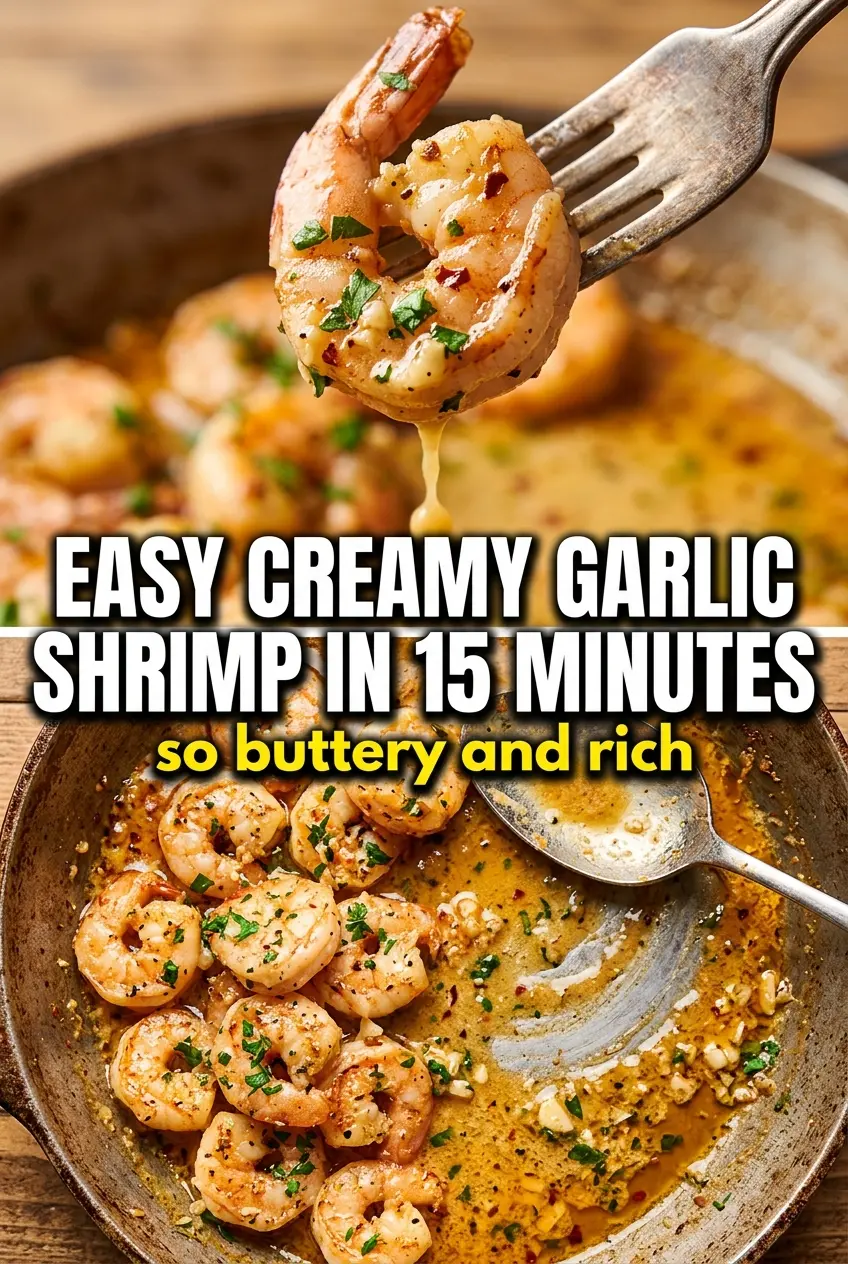
Easy Creamy Garlic Shrimp
Ingredients
Equipment
Method
- Heat the butter and olive oil in a large skillet over medium heat until the butter is melted and the oil looks glossy.
- Add the shrimp and cook for 1–2 minutes per side, until just pink, then remove and set aside.
- Add the garlic to the skillet and cook for 30 seconds, until fragrant.
- Pour in the heavy cream and bring to a gentle simmer, stirring in the Parmesan, red pepper flakes, salt, and pepper until the sauce thickens slightly.
- Return the shrimp to the skillet and toss to coat in the sauce, cooking for 1–2 more minutes.
- Stir in the lemon juice, garnish with parsley, and serve immediately.