When the beef cubes hit the hot Dutch oven, the first thing you notice is the sound: a steady sizzle, not a hiss of crowded meat. If the pot is too full, the cubes steam and stay pale instead of leaving browned bits behind. I brown them in batches, and that bit of patience gives this Easy Homemade Beef Stew its deep, savory base without complicated prep.
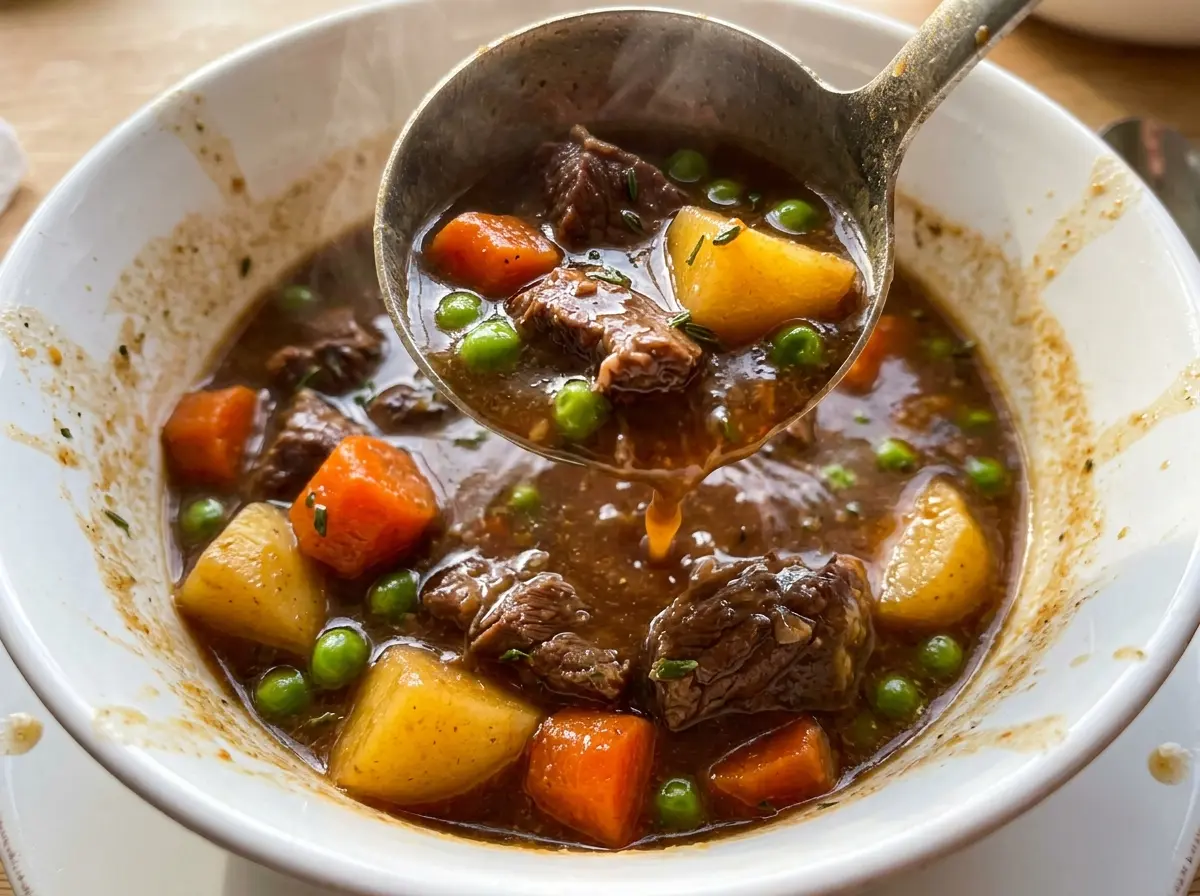
The other choice that matters is when the vegetables go in. Chuck needs a long, gentle simmer to turn tender, but carrots and Yukon Gold potatoes don’t need to stay in the pot for the whole braise. Adding them later lets them cook through without dissolving at the edges, while flour stirred into the tomato paste and aromatics gives the broth enough body to cling to each spoonful. Keep the lid on and the heat low; you want a quiet simmer, not a rolling boil. The finished stew is rich with tender beef, soft carrots, and golden chunks of potato.
Kitchen Note
Give the beef space while it browns. If you crowd the Dutch oven, the meat releases moisture and steams instead of forming those dark, flavorful patches on the bottom.
Save this Easy Homemade Beef Stew for a cozy dinner with fork-tender beef, golden potatoes, and a broth built from browned bits.
Why the Carrots and Potatoes Wait Through the First Braise
It’s easy to assume every stew ingredient should go into the pot at once. That works against this particular combination: chuck benefits from a long, slow cook, while cut carrots and potatoes become tender much sooner. If they spend the entire beef-braising time in the broth, their edges can soften too far before the meat is ready.
Let the beef simmer by itself first, then add the vegetables for the final stretch. The timing gives the chuck room to become fork-tender while the carrots and Yukon Gold chunks keep enough shape to feel like distinct pieces in the bowl. Cut them into even, one-inch pieces so they cook at a similar pace. Start checking near the shorter end of the vegetable simmer; the right stopping point is tender vegetables and beef that yields easily to a fork, not potatoes breaking apart as you stir.
This staggered approach also keeps the broth from turning cloudy and starchy from overworked potatoes. Stir gently once the vegetables are in, especially near the bottom of the pot, where the flour-thickened broth can settle.
The Ingredients That Build a Dark, Full-Bodied Broth

- Beef chuck — Chuck has enough connective tissue to become tender during a slow simmer, which gives the stew its satisfying, substantial bites. A whole boneless roast is easy to trim and cut into even cubes; keep the pieces close to the specified size so they cook evenly. Boneless beef shoulder is a useful alternative with a similar braising character, though chuck is the dependable choice here.
- Onion, celery, and garlic — These aromatics make the savory base beneath the beef and broth. Ordinary fresh produce works well; dice the onion and celery evenly so they soften together, and mince the garlic so it disperses instead of leaving large sharp pieces.
- Tomato paste — A little concentrated tomato adds color and savory depth without making the stew taste like tomato soup. Any standard canned or tube tomato paste is fine. Let it cook briefly with the garlic before adding flour so its raw, tinny edge cooks off.
- All-purpose flour — Flour thickens the broth and helps it coat the beef and vegetables. If you need to avoid gluten, use an equal amount of a gluten-free 1:1 flour blend in the same step; the finished gravy may be a little less silky depending on the blend. For a flour-free option, mash a few tender potato pieces into the broth near the end to add body.
- Beef broth and Worcestershire sauce — Beef broth supplies the stew’s main savory liquid, while Worcestershire adds a concentrated, tangy depth. A good-quality boxed broth is perfectly useful; choose low-sodium broth if you want more control over saltiness. Stir it in gradually to loosen the flour mixture smoothly.
- Thyme and bay leaf — Dried thyme holds up during the long simmer, and the bay leaf gently perfumes the broth. Check that dried herbs still smell fragrant; old, faded thyme contributes little. Remove the bay leaf before serving.
- Yukon Gold potatoes — Their creamy texture and ability to hold their shape suit a stew where you want tender chunks rather than a pot full of broken-down potato. Choose potatoes that feel firm, and cut them into even pieces. Their thin skins don’t need peeling for this recipe.
Brown the Beef First, Then Let the Chuck Turn Tender
Dry the Beef and Build a Brown Crust
Pat the beef dry with paper towels, then season it with kosher salt and black pepper. Heat the vegetable oil in a 6-quart Dutch oven over medium-high heat and brown the cubes in batches for 3 to 4 minutes per side. Transfer each batch to a plate once the surfaces are well browned. If the meat sticks at first, give it another moment; it will release more readily after the crust forms.
Soften the Aromatics and Cook the Flour
Add the diced onion and celery to the pot and cook over medium heat for 5 minutes, stirring occasionally, until softened. Stir in the minced garlic and tomato paste for 30 seconds, then add the flour and cook for 1 minute. The mixture will look thick and pasty, which is what you want before the broth goes in. Keep stirring so the flour cooks without scorching on the bottom.
Loosen the Pot and Start the Gentle Braise
Pour in the beef broth gradually, stirring and scraping up the browned bits from the bottom as you go. Once the broth is smooth, add the Worcestershire sauce, dried thyme, bay leaf, and browned beef with any juices from the plate. Bring the stew just to a boil, then cover and lower the heat to maintain a gentle simmer for 1 1/2 hours. A hard boil can make the beef tighten and the liquid reduce too quickly, so adjust the burner until you see only occasional small bubbles.
Add the Vegetables and Let the Stew Rest
Stir in the carrots and potatoes, cover the pot, and simmer for 35 to 45 minutes, until the vegetables are tender and the beef is fork-tender. Stir occasionally, carefully lifting from the bottom so nothing catches. Remove and discard the bay leaf, then let the stew rest for 10 minutes before serving. The broth settles and thickens slightly as it rests.
Two Smart Swaps Without Losing the Stew’s Character
Make It Gluten-Free With a 1:1 Flour Blend
Replace the all-purpose flour with the same amount of a gluten-free 1:1 flour blend, stirring it into the aromatics and cooking it for 1 minute before adding the broth. The stew keeps its familiar thick, savory character, though the gravy’s finish can vary a little by brand.
Use Red Potatoes for a Firmer Chunk
Swap the Yukon Gold potatoes for red potatoes and cut them into the same one-inch pieces. Red potatoes have a waxier bite and tend to hold their shape well in the broth, so the stew will feel a touch firmer and less creamy.
Storage and Reheating
- Refrigerator: Cool and refrigerate in shallow airtight containers within 2 hours. The stew keeps for 3 to 4 days; the potatoes will soften and absorb some broth.
- Freezer: Freeze in airtight containers for up to 3 months. Thaw overnight in the refrigerator; the potatoes may be softer after freezing.
- Reheating: Warm gently on the stovetop, stirring occasionally, until the stew reaches 165°F. If it has thickened in the refrigerator, stir in a splash of beef broth; avoid a vigorous boil, which can break up the potatoes.
Questions That Come Up While the Stew Simmer
Easy Homemade Beef Stew
Ingredients
Equipment
Method
- Pat the beef dry with paper towels and season it with the salt and pepper.
- Heat the vegetable oil in a 6-quart Dutch oven over medium-high heat.
- Brown the beef in batches for 3 to 4 minutes per side, then transfer the browned beef to a plate.
- Add the onion and celery to the pot and cook over medium heat for 5 minutes, stirring occasionally, until softened.
- Stir in the garlic and tomato paste and cook for 30 seconds.
- Stir in the flour and cook for 1 minute.
- Gradually stir in the beef broth, scraping up browned bits from the bottom of the pot.
- Add the Worcestershire sauce, thyme, bay leaf, and browned beef with any accumulated juices.
- Bring the stew just to a boil, cover, and simmer gently over low heat for 1 1/2 hours, stirring occasionally.
- Stir in the carrots and potatoes, cover, and simmer for 35 to 45 minutes, until the vegetables are tender and the beef is fork-tender.
- Remove and discard the bay leaf.
- Let the stew rest for 10 minutes before serving.