The sausage sizzles against the bottom of the pot while the onion softens, and the whole kitchen starts smelling like the first step of lasagna. I brown them together in a 6-quart pot, breaking the pork into small pieces so every bowl gets a little sausage. Then garlic and tomato paste go in before the tomatoes and broth turn the pot into a deeply savory, tomato-rich soup.
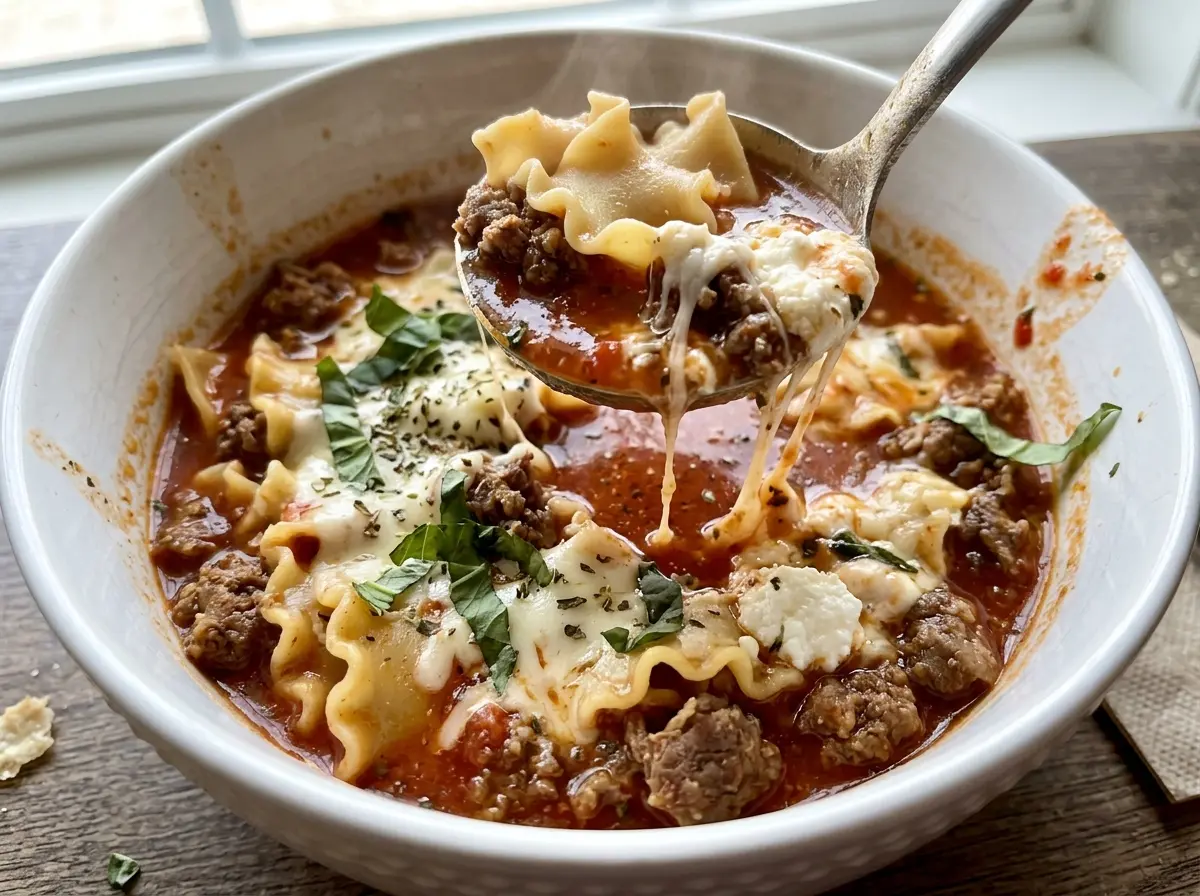
Gluten-free lasagna noodles bring their own challenge: some soften faster than others, and they keep absorbing broth as they sit. I add the broken noodles only after the soup has simmered, then cook them just until tender. A spoonful of ricotta mixed with mozzarella, Parmesan, and parsley finishes each serving without turning the whole pot creamy. The result is a hearty bowl with tomato broth, tender pasta, and a cool, cheesy topping.
Kitchen Note
Break the lasagna noodles into bite-size pieces before they go into the pot. Once they soften, it’s much easier to ladle a comfortable mix of pasta and sausage into each bowl.
Save this Gluten Free Lasagna Soup for a cozy bowl with savory sausage, tender noodles, and a creamy ricotta topping.
Why the Ricotta Belongs on Top, Not in the Pot
Lasagna soup has two distinct textures: a savory tomato broth and a creamy cheese topping. Keeping those parts separate is what lets each spoonful taste like both soup and lasagna. If you stir the ricotta mixture through the whole pot, the cheeses disappear into the broth, and leftovers can turn thicker and less defined.
I mix the ricotta, mozzarella, Parmesan, and parsley in a small bowl while the soup simmers. Then I ladle the hot soup first and add a spoonful of the cheese mixture to each bowl. The topping softens where it meets the broth but keeps its creamy, cheesy character at the center. It also lets everyone choose how much topping they want without changing the consistency of the soup in the pot.
This serving method matters even more with gluten-free pasta, which can continue to take up liquid after cooking. A topping added bowl by bowl gives the soup its lasagna finish without making the entire batch heavy. If you’re saving portions, the broth and noodles remain easy to portion separately from the cheese topping.
What the Sausage, Tomatoes, and Gluten-Free Noodles Bring

- Mild Italian pork sausage — This brings both savory pork and built-in Italian seasoning to the soup. Bulk sausage is ready to break up in the pot; if you buy links, remove the casings first. Mild sausage keeps the tomato broth warmly seasoned without making it spicy.
- Gluten-free lasagna noodles — They give the soup its recognizable lasagna shape and hearty bite. Brands vary in texture and cooking time, so use the package directions as a guide and check the noodles near the early end of the listed range. Broken pieces are easier to eat than long sheets in a bowl.
- Tomato paste and crushed tomatoes — Tomato paste adds concentrated savory depth, while canned crushed tomatoes make the broth feel full-bodied without needing a separate sauce. A standard can of crushed tomatoes works well; the paste’s short cook in the pot helps it meld with the sausage and aromatics.
- Gluten-free chicken broth — Broth turns the tomato base into a soup and carries the sausage and seasoning through each bite. Use broth that’s labeled gluten-free if that matters for your table. Lower-sodium broth is a useful choice if you prefer to control the salt yourself.
- Whole-milk ricotta and the other cheeses — Whole-milk ricotta makes the topping creamy rather than dry, while mozzarella and Parmesan add stretch and a savory finish. Freshly grated Parmesan blends easily into the mixture, but a convenient pre-grated option works here too because the topping isn’t being melted into a sauce.
Build the Tomato Broth Before the Noodles Go In
Brown the Sausage and Soften the Onion
Heat the olive oil in a 6-quart pot over medium heat, then add the sausage and diced onion. Break the meat into small pieces as it cooks so it browns throughout instead of forming large clumps. Cook for 6–8 minutes, until the pork reaches 160°F and the onion has started to soften. If the sausage is still pink, give it more time in the pot rather than moving on early.
Cook the Garlic and Tomato Paste Briefly
Stir in the minced garlic and tomato paste, and cook for 1 minute. Keep stirring so the garlic doesn’t sit against the hot pot and scorch. The paste will coat the sausage and onion, making a concentrated base before the liquid goes in. Add the crushed tomatoes, chicken broth, Italian seasoning, kosher salt, and black pepper, then bring the mixture to a boil.
Simmer the Broth, Then Add the Pasta
Once the soup reaches a boil, reduce the heat and simmer it for 15 minutes. This gives the tomato base time to settle into a cohesive broth before the noodles are added. Stir in the broken lasagna noodles and simmer for 8–12 minutes, or follow the package directions, until they’re just tender. Start checking early if your noodles have a shorter cooking time; gluten-free pasta can go from pleasantly firm to soft quickly.
Mix the Cheese Topping and Serve
While the soup simmers, stir the ricotta, shredded mozzarella, grated Parmesan, and chopped parsley together in a small bowl. The mixture should be thick enough to sit on a spoon, not pour like a sauce. Ladle the soup into bowls and finish each serving with a spoonful of the ricotta mixture. The warm broth loosens the cheese at the edges while leaving a creamy pocket on top.
Easy Ways to Adapt This Lasagna Soup
Give It a Spicier Sausage Base
Replace the mild Italian pork sausage with hot Italian pork sausage in the same amount. The soup will have a noticeable kick, while the tomato broth and creamy ricotta topping still balance the heat. Keep the rest of the seasoning the same, then taste the broth before serving.
Make the Topping Dairy-Free
Use dairy-free ricotta-style, mozzarella-style, and Parmesan-style replacements in place of the cheeses. Keep each replacement in the same amount as the corresponding cheese in the topping. The soup stays hearty, though the topping may taste less rich and melt differently than the dairy version.
Use Gluten-Free Short Pasta
Swap the broken lasagna noodles for the same amount of gluten-free short pasta, such as a shape that’s easy to scoop. Add it at the same point in the cooking process and use its package directions to judge the simmer time. You’ll lose the lasagna-sheet look, but the bowls are simple to eat and keep the same sausage-and-tomato character.
Storage and Reheating
- Refrigerator: Store leftovers in an airtight container for 3–4 days. The noodles will continue to absorb broth and soften, so the soup will be thicker the next day.
- Freezer: Freeze cooled soup in airtight containers for up to 2–3 months. The noodles may soften further after thawing, but the soup is still practical to freeze; freeze the ricotta topping separately only if you’re comfortable with a grainier texture after thawing.
- Reheating: Warm leftovers gently in a saucepan, stirring occasionally, until they reach 165°F. Add a splash of gluten-free chicken broth if the noodles have absorbed more liquid than you’d like, and add fresh topping to each bowl rather than stirring it into the pot.
Questions That Come Up When Making Lasagna Soup
Gluten Free Lasagna Soup
Ingredients
Method
- Heat the olive oil in a 6-quart pot over medium heat, then add the sausage and onion and cook for 6–8 minutes, breaking up the sausage, until browned and the pork reaches 160°F.
- Stir in the garlic and tomato paste and cook for 1 minute.
- Add the crushed tomatoes, chicken broth, Italian seasoning, salt, and pepper and bring to a boil.
- Reduce the heat and simmer for 15 minutes, then stir in the broken lasagna noodles and simmer for 8–12 minutes, or according to the package directions, until just tender.
- While the soup simmers, stir together the ricotta, mozzarella, Parmesan, and parsley in a small bowl.
- Ladle the soup into bowls and top each serving with a spoonful of the ricotta mixture.