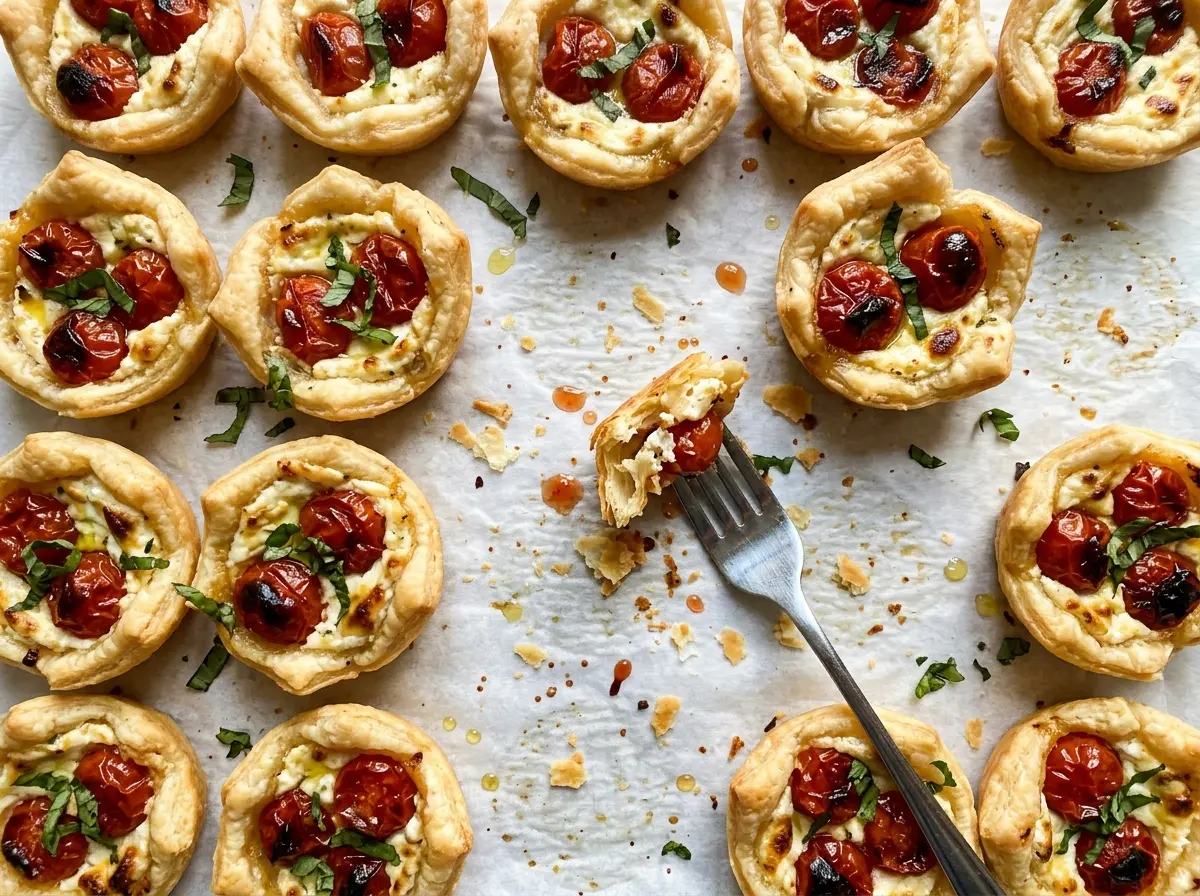
Cherry tomatoes change quickly in a hot oven: their skins wrinkle, the cut sides soften, and the sweet juices collect in the dish. That concentrated tomato flavor is what makes these goat cheese and roasted tomato puff pastry tartlets feel special without asking much of the cook. Each square gets a creamy center and a border that bakes up flaky and golden.
I like how the soft goat cheese gives the tomatoes something tangy to sit against, while a little fresh thyme keeps the filling fragrant rather than heavy. The pastry needs to stay cold when it’s cut and shaped; warm pastry is harder to handle and won’t give you the same clean layers. Once the tartlets come out of the oven, the contrast is right there: crisp edges, tender tomatoes, and a smooth, savory center.
Kitchen Note
Let the tartlets rest on the baking sheet for the full five minutes before lifting them. The pastry is delicate straight from the oven, and that short pause helps the bases firm up without losing their crisp edges.
Save these goat cheese and roasted tomato tartlets for a flaky, savory appetizer with sweet roasted tomatoes and a tangy cheese center.
The Score-and-Dock Pattern Is What Gives These Tartlets Their Shape
These little pastries need to puff, but not everywhere. Scoring a border gives the outer edge a place to rise into a defined frame, while pricking the center gives steam an escape route. Skip either part and the shape changes: an unscored square can puff without a clear rim, and an undocked center can lift under the toppings.
Keep the score shallow. You want to mark a border about half an inch from each edge, not slice the square into a separate frame and center. Then prick the inner area several times with a fork. The border can rise around the filling, and the center stays flatter enough to hold the goat cheese and tomatoes.
The balance matters because the filling is moist. A little lift around the outside keeps the tartlets looking crisp and structured, while the fork holes help the middle bake evenly beneath the toppings. It’s a small bit of pastry handling, but it’s what makes each square read as a tartlet instead of a puffed-up pillow.
Why the Tomatoes, Goat Cheese, and Pastry Need Different Handling

- Cherry tomatoes — Halving them exposes the cut side to the heat, so they soften and concentrate as they roast. Choose tomatoes that are ripe but still hold their shape; the least expensive pint is fine if the tomatoes are fresh and unbruised. Grape tomatoes work in their place when that’s what you have, though their skins can stay a little firmer.
- Puff pastry — The layers are what make the edges rise and turn flaky, so thaw the sheet according to its package directions and work with it while it’s still cold. A familiar brand is useful if you know how it handles, but there’s no need to seek out a premium one. For a gluten-free adaptation, use a sheet of gluten-free puff pastry; the layers may bake up a little differently, so rely on the golden color cue.
- Soft goat cheese and heavy cream — Goat cheese brings the tangy, savory base, and the cream loosens it into a smooth spread. Room-temperature cheese stirs more easily than cold cheese, so give it time to soften before mixing. No other cheese duplicates that particular tang; cream cheese would make a milder, denser filling.
- Fresh thyme — Finely chopped leaves spread their woodsy flavor through the cheese without adding much moisture. Look for fresh, green sprigs, but don’t worry about finding a specific variety. If you don’t have fresh thyme, leaving it out gives you a simpler cheese-and-tomato tartlet rather than a direct flavor match.
- Egg — Beaten with water, it brushes onto the exposed pastry border and helps it bake to a deeper golden finish. Use the large egg called for here; the water thins it so it’s easier to brush in a light, even coat.
Roast First, Then Let the Pastry Take Its Turn
Soften and Concentrate the Tomatoes
Heat the oven to 425°F, then toss the halved cherry tomatoes with olive oil, kosher salt, and black pepper in an 8×8-inch baking dish. Roast them for 20–25 minutes, until softened and beginning to collapse. Don’t wait for every tomato to burst; the soft, wrinkled look is the cue to take them out. Let them cool for 10 minutes, then lower the oven temperature to 400°F.
Shape the Pastry and Add the Filling
Line a 13×18-inch rimmed baking sheet with parchment paper, then unfold the cold puff pastry and cut it into 9 roughly equal squares. Arrange the squares on the sheet and score a 1/2-inch border around each without cutting all the way through. Prick the centers several times with a fork, then stir the goat cheese, heavy cream, and finely chopped thyme until smooth. Spread the cheese inside the borders and top with tomatoes, leaving the roasting juices behind so they don’t run onto the pastry.
Brush the Borders and Bake Until Golden
Beat the egg with the water and brush it over the pastry borders, keeping the filling clear of the wash. Bake at 400°F for 18–22 minutes, until the pastry has puffed and turned golden brown. If the borders still look pale, give them a little longer rather than pulling the tray early. Rest the tartlets on the baking sheet for five minutes before serving.
Two Ways to Change the Shape or Flavor
Bake One Larger Tomato Tart
Instead of cutting the pastry into 9 squares, keep the sheet whole and score a 1/2-inch border around it. Dock the center, spread on the cheese, and arrange the roasted tomatoes over the filling. You’ll get a shareable tart with fewer crisp edges per bite; bake at 400°F until the pastry is puffed and golden, since a single tart may need a different amount of time than the smaller pieces.
Make the Filling Without Thyme
Leave out the thyme for a milder version that puts the goat cheese and roasted tomatoes up front. The filling will still spread smoothly with the heavy cream, but it won’t have the same herbal note. This is an easy adjustment if you’re cooking for someone who prefers a simpler savory flavor.
Storage and Reheating
- Refrigerator: Keep leftover baked tartlets in an airtight container for up to 3 days. The pastry softens as it sits, but reheating brings back some crispness.
- Freezer: Freeze the cooled tartlets in a single layer until firm, then transfer them to a freezer-safe container for up to 1 month. Thaw them in the refrigerator before reheating.
- Reheating: Warm them in a 350°F oven for 8–10 minutes, until heated through and crisp at the edges. The microwave softens the pastry, so it’s not the best choice if you want flaky layers.
Questions That Come Up Before Baking These Tartlets
Goat Cheese and Roasted Tomato Puff Pastry Tartlets
Ingredients
Equipment
Method
- Heat the oven to 425°F.
- Toss the tomatoes with the olive oil, salt, and pepper in an 8x8-inch baking dish.
- Roast for 20–25 minutes, until softened and beginning to collapse.
- Let the tomatoes cool for 10 minutes.
- Reduce the oven temperature to 400°F.
- Line a 13x18-inch rimmed baking sheet with parchment paper.
- Unfold the cold puff pastry and cut it into 9 roughly equal squares.
- Arrange the squares on the baking sheet.
- Score a 1/2-inch border around each square without cutting all the way through.
- Prick the centers several times with a fork.
- Stir the goat cheese, heavy cream, and thyme together until smooth.
- Spread the mixture inside the borders.
- Top with the roasted tomatoes, leaving any roasting juices behind.
- Beat the egg with the water.
- Brush the egg mixture over the pastry borders.
- Bake for 18–22 minutes, until the pastry is puffed and golden brown.
- Let the tartlets rest on the baking sheet for 5 minutes before serving.