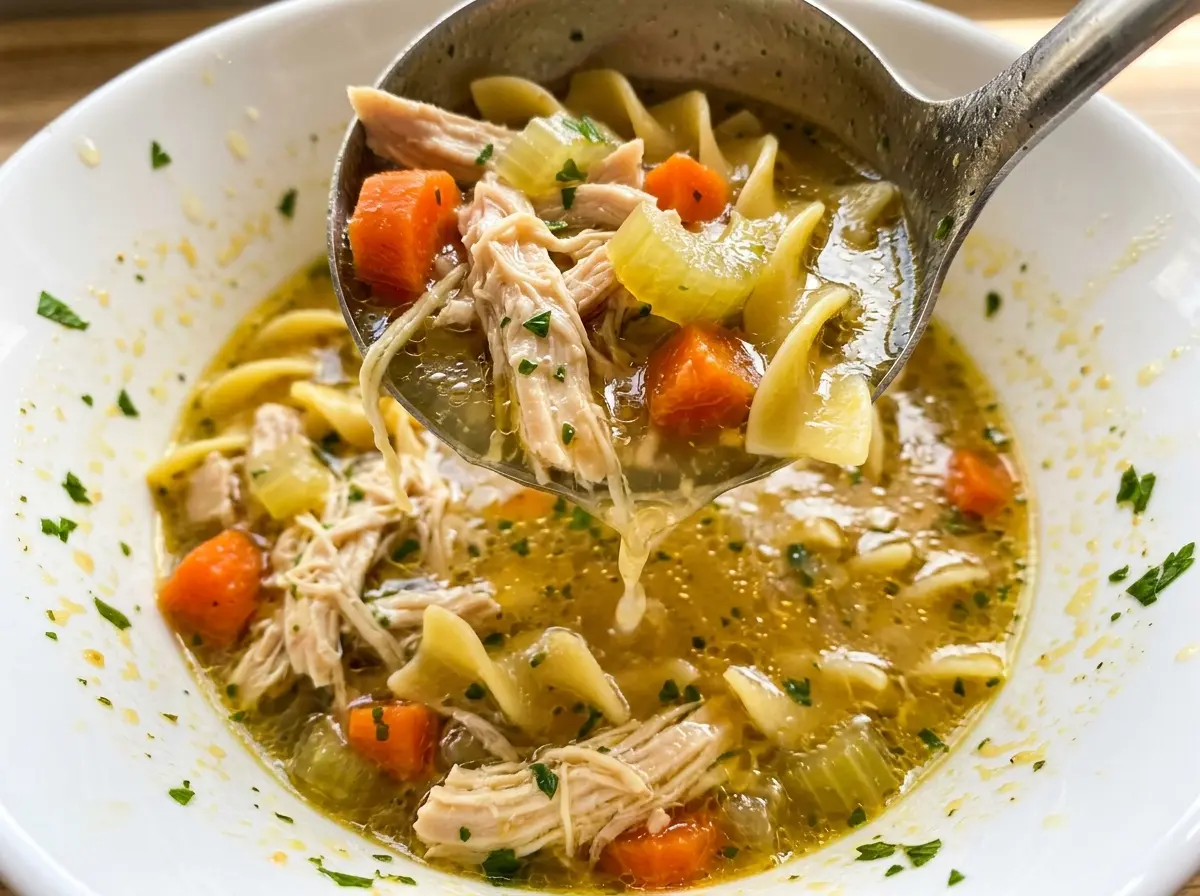
The onion and carrots start to sweeten in the pot before the broth even goes in, and that’s when this soup already smells like it’s on the right track. Chicken noodle soup can turn into a timing problem: the chicken needs to cook through, but the noodles don’t need nearly as long. I take the chicken out before the noodles go in, so the breasts aren’t left simmering while the pasta cooks.
Here, the vegetables soften in olive oil first, then the chicken gently simmers in low-sodium broth with thyme and a bay leaf. Cooking the noodles in that same pot means they pick up the savory broth as they turn tender. Keep the simmer gentle rather than letting the pot boil hard; the chicken stays more tender, and the broth doesn’t get churned up.
With 2 1/2 pounds of chicken breast in the pot, each bowl has a generous amount of chicken alongside the egg noodles and vegetables. It’s a satisfying, familiar soup with a clear broth and enough substance for dinner, without needing a separate pan for the noodles.
Kitchen Note
I take the bay leaf out before the noodles go into the pot. Once the shredded chicken and noodles are in there, it’s easy to lose track of it in a bowl.
Save this High Protein Chicken Noodle Soup for a cozy dinner with tender chicken, wide egg noodles, and thyme-scented broth.
Why the Chicken Comes Out Before the Noodles
Chicken breasts and egg noodles have different cooking clocks. The breasts need a steady simmer long enough for the thickest part to reach a safe temperature, while the noodles generally take only a few minutes to become tender. Leaving the chicken in the pot for both jobs can push it past the point where it’s juicy, especially if the noodles need the full time on their package.
Taking the chicken out gives you control over each part. The chicken rests on a plate while the noodles cook in the broth, and you can shred it at a comfortable pace without trying to handle it in a steaming pot. Then it goes back in just long enough to warm through with the parsley. If the broth is bubbling vigorously, turn the heat down; a gentle simmer is the texture cue to aim for, not a rolling boil. That measured pace helps keep the chicken tender and the broth calm.
Why Wide Egg Noodles and Low-Sodium Broth Suit This Soup

- Low-sodium chicken broth — It gives the chicken and vegetables room to season the soup without starting with a salty base. A standard grocery-store carton works well; choosing low-sodium broth matters more than paying extra for a specialty brand.
- Boneless, skinless chicken breasts — These cook directly in the broth and are easy to shred once they’re tender. Choose breasts that are similar in thickness when you can, since they’re more likely to finish at about the same time.
- Wide egg noodles — Their broad shape makes each spoonful feel substantial and gives the soup its classic noodle texture. Different brands can vary in thickness, so use the package directions as your guide rather than relying only on the usual cooking time.
- Onion, carrots, celery, and garlic — The onion, carrot, and celery form the savory-sweet base, while garlic adds a sharper note. Cut the carrots and celery into fairly even slices so they soften at a similar pace.
- Dried thyme and fresh parsley — Thyme flavors the broth as it simmers; parsley goes in at the end, where it keeps a fresher, greener taste. Fresh parsley is worth choosing for that finish, while ordinary dried thyme works just fine from the spice cabinet.
How to Simmer the Chicken and Cook the Noodles in One Pot
Soften the Vegetables Without Browning Them
Warm the olive oil in a 6-quart Dutch oven over medium heat, then add the diced onion, sliced carrots, and sliced celery. Cook for 6 to 8 minutes, stirring occasionally, until the onion has softened. You’re looking for vegetables that have begun to relax, not deeply browned edges. If they’re catching on the bottom before the onion softens, lower the heat a little.
Let the Garlic Turn Fragrant
Stir in the minced garlic and cook for 30 seconds. Keep it moving so it gets fragrant without browning; garlic can turn bitter if it scorches. It should smell savory and warm when you’re ready to add the broth. Pour in the broth promptly once that aroma comes up.
Simmer the Chicken Until It’s Cooked Through
Add the chicken breasts, bay leaf, dried thyme, kosher salt, and black pepper. Bring the pot to a gentle boil over medium-high heat, then reduce the heat and simmer uncovered for 18 to 22 minutes. Check the thickest part of each breast with an instant-read thermometer; each should reach 165°F. If the pot is boiling hard, lower the heat so the chicken simmers rather than tumbles around.
Cook the Noodles, Then Return the Shredded Chicken
Transfer the cooked chicken to a plate and remove the bay leaf from the pot. Add the wide egg noodles and simmer according to the package directions, usually 6 to 8 minutes, until tender. While they cook, shred the chicken with two forks, then return it to the pot and stir in the chopped parsley. Simmer for 1 minute to heat everything through, then serve.
Three Simple Ways to Adapt This Chicken Noodle Soup
Use gluten-free noodles
Replace the egg noodles with gluten-free noodles and cook them according to their package directions. The soup stays hearty, though noodle texture and cooking time vary by brand, so taste a noodle before deciding it’s ready.
Make it a chicken-and-vegetable soup
Leave out the noodles for a lighter, brothier bowl built around the chicken, carrots, celery, and onion. The rest of the soup keeps its usual savory, thyme-scented character, but it won’t have the starchy body or filling bite of the noodle version.
Give the parsley a fresher finish
Hold back a little of the chopped parsley and sprinkle it over the bowls instead of stirring all of it into the pot. You’ll get a brighter parsley flavor right at the surface, with the rest still warming into the broth.
Storage and Reheating
- Refrigerator: Keep leftovers covered and refrigerated for 3 to 4 days. The noodles will continue to absorb broth and soften, so the soup will be thicker the next day.
- Freezer: Freeze cooled portions in airtight, freezer-safe containers for up to 2 to 3 months. The soup freezes safely, but the noodles may soften further after thawing.
- Reheating: Warm a portion in a saucepan over medium-low heat, stirring occasionally, until steaming hot throughout. Avoid a hard boil, which can break up the noodles and make the chicken less tender.
Questions That Come Up While Making Chicken Noodle Soup
High Protein Chicken Noodle Soup
Ingredients
Equipment
Method
- Heat the olive oil in a 6-quart Dutch oven over medium heat.
- Add the onion, carrots, and celery and cook for 6 to 8 minutes, stirring occasionally, until the onion softens.
- Add the garlic and cook for 30 seconds, stirring, until fragrant.
- Add the broth, chicken breasts, bay leaf, thyme, salt, and pepper; bring to a gentle boil over medium-high heat.
- Reduce the heat and simmer uncovered for 18 to 22 minutes, until the thickest part of each chicken breast reaches 165°F.
- Transfer the chicken to a plate.
- Remove the bay leaf.
- Add the egg noodles to the pot and simmer according to the package directions, usually 6 to 8 minutes, until tender.
- Shred the chicken with two forks.
- Return the chicken to the pot and stir in the parsley.
- Simmer for 1 minute to heat through.
- Serve.