When the first pressure release is over, the beef is sitting in a broth made from the browned bits left behind in the pot. That’s the start of the deep, savory flavor in this Instant Pot Beef Stew, and it’s worth taking a moment to scrape the bottom clean before you lock the lid. I brown the chuck in batches, then let the pressure cooker do the slow, tenderizing work without tying up the stove all afternoon.
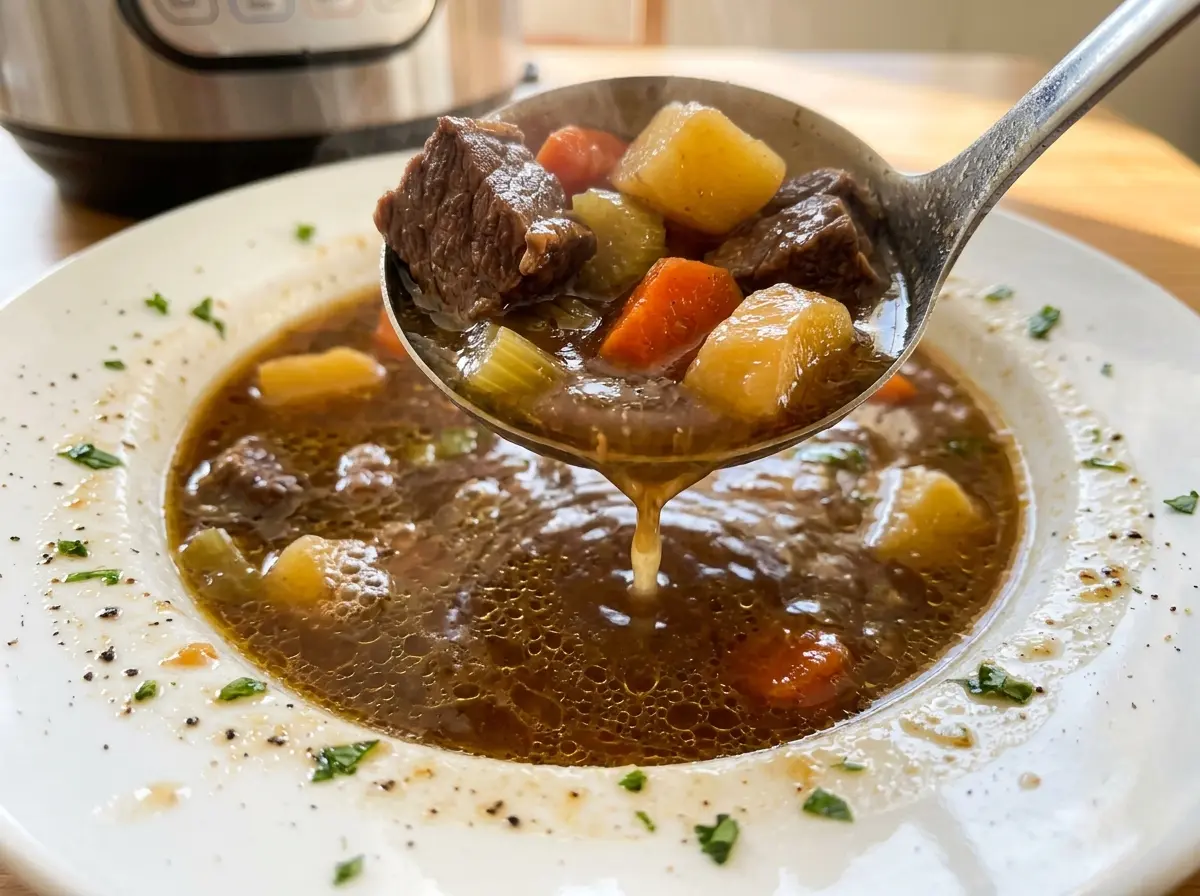
The vegetables get their own, much shorter pressure-cooking turn. Potatoes and carrots added at the beginning would have to endure the beef’s full cook time, leaving them too soft by the time the meat is ready. Adding them after the beef gives you a thick, satisfying stew with fork-tender chunks of meat and vegetables that still hold their shape.
Kitchen Note
I give the finished stew its full 5-minute rest after turning off the Instant Pot. The broth thickens a little more as it stands, so it’s worth waiting before you decide it needs extra thickener.
Save this Instant Pot Beef Stew for a cozy dinner with fork-tender beef, vegetables that keep their shape, and a broth that thickens right in the pot.
Why the Beef Gets a Head Start Before the Potatoes
Beef chuck needs a longer stretch under pressure than potatoes and carrots do. Its connective tissue softens as it cooks, turning the broth rich while the meat becomes easy to pull apart. The vegetables need only a short second cook to become tender. Putting everything in together asks the potatoes and carrots to stay intact through both jobs, and they’re likely to come out too soft.
This two-stage timing also gives you a useful checkpoint. After the beef’s first pressure cycle, you can add the vegetables to the broth without worrying that they’ll spend the entire beef-cooking time in the pot. Cut the potatoes into even chunks and the carrots into even pieces, and they’ll cook at a similar pace. The result is a stew where a spoonful can hold a piece of beef, potato, and carrot instead of dissolving into a uniform mash.
It’s a small change in order, but it’s what lets one pot handle ingredients with different cooking needs. The beef builds the base first; the vegetables finish the bowl.
The Ingredients That Keep This Broth Savory and Spoon-Thick

- Beef chuck — Chuck has enough connective tissue to become tender under pressure and enrich the broth as it cooks. Choose pieces with some marbling; very lean beef won’t give the stew the same succulent texture. Boneless short ribs cut into similar-sized cubes are a richer alternative, while packaged stew meat works best when the pieces are fairly even.
- Yukon Gold potatoes — Their creamy texture and ability to hold together make them a good fit for the short pressure-cooking stage. Red potatoes are a useful swap; cut them to a similar size so they cook evenly. Skip very small pieces, which soften quickly.
- Beef broth and Worcestershire sauce — Together they make the liquid taste rounded and savory rather than like plain stock. A good everyday beef broth is fine; homemade broth isn’t necessary. For a gluten-free version, use gluten-free tamari in place of the Worcestershire sauce. It brings savory depth but is less tangy.
- Tomato paste — Tomato paste adds concentrated savory flavor without making the broth taste like tomato soup. A tube is handy, but an ordinary can works just as well. Cook it briefly with the garlic so its flavor blends into the onion and celery base.
- Cornstarch — This thickens the broth after pressure cooking, keeping the potatoes and carrots from being stirred around in a thickened liquid while they cook. Arrowroot can stand in; whisk it with cold water into a smooth slurry and add it at the same stage, knowing the finished broth may look glossier.
How to Layer the Pressure-Cooking Stages
Brown the Chuck in Manageable Batches
Patting the beef dry helps it brown instead of giving off surface moisture in the hot pot. Set a 6-quart Instant Pot to Sauté, heat some of the oil, and brown the beef in batches for about 3 to 4 minutes per batch, adding the remaining oil as needed. Transfer each browned batch to a plate rather than crowding it back into the pot. The batches take a little patience, but they leave the pot ready to build a flavorful base.
Build the Broth on the Browned Bits
Cook the onion and celery in the pot for 3 minutes, stirring, then add the garlic and tomato paste for 1 minute. Pour in the beef broth and scrape the bottom thoroughly so the browned bits loosen into the liquid. Stir in the Worcestershire sauce and dried thyme, then add the bay leaf, browned beef, and any juices from the plate. Clearing the pot bottom now helps avoid leaving stuck-on bits under the pressure-cooking liquid.
Cook the Beef First, Then the Vegetables
Lock the lid, set the valve to Sealing, and cook on High Pressure for 35 minutes. Let the pressure release naturally for 10 minutes, then carefully quick-release what remains before opening the lid. Remove the bay leaf, stir in the potatoes and carrots, and lock the lid again. Cook on High Pressure for 4 minutes, then carefully quick-release and check that the vegetables are tender and the beef is fork-tender.
Thicken the Stew After the Pressure Is Gone
Whisk the cornstarch and cold water together in a small bowl until the mixture is smooth, with no dry pockets. Set the Instant Pot to Sauté, stir in the slurry and frozen peas, and simmer for 2 to 3 minutes while stirring. The broth should thicken and the peas should be hot; keep stirring so the thickener disperses through the stew. Turn off the pot and let the stew stand before serving.
Swaps That Change the Stew Without Losing Its Character
Make the Worcestershire Swap Gluten-Free
Replace the Worcestershire sauce with the same amount of gluten-free tamari. The stew stays savory, though it loses some of Worcestershire’s tang, so expect a slightly rounder, less sharp broth.
Trade Yukon Golds for Sweet Potatoes
Use the same weight of sweet potatoes, cut into the same-sized chunks. They bring a sweeter, earthier note and soften more than Yukon Golds, so handle them gently when you stir the finished stew.
Use Parsnips in Place of Carrots
Swap in peeled parsnips cut to the same size as the carrots. They bring a more pronounced earthy sweetness and suit the broth well, with a slightly different flavor in every bite.
Storage and Reheating
- Refrigerator: Store in an airtight container for 3 to 4 days. The potatoes may soften and absorb some of the broth as the stew sits.
- Freezer: Freeze in airtight containers for up to 3 months. The stew freezes well, though thawed potatoes may be softer.
- Reheating: Warm gently on the stovetop, stirring, until the stew reaches 165°F. Avoid a hard boil, which can break up the vegetables.
Questions That Come Up While the Stew Cooks
Instant Pot Beef Stew
Ingredients
Equipment
Method
- Season the beef with the kosher salt and black pepper.
- Set a 6-quart Instant Pot to Sauté and heat 1 tablespoon of the vegetable oil.
- Brown the beef in batches, adding the remaining oil as needed, about 3 to 4 minutes per batch, then transfer it to a plate.
- Add the onion and celery to the pot and cook for 3 minutes, stirring.
- Add the garlic and tomato paste and cook for 1 minute.
- Pour in the beef broth and scrape up any browned bits from the bottom of the pot.
- Stir in the Worcestershire sauce and thyme, then add the bay leaf, beef, and any accumulated juices.
- Lock the lid, set the valve to Sealing, and cook on High Pressure for 35 minutes.
- Let the pressure release naturally for 10 minutes, then carefully quick-release the remaining pressure.
- Remove the bay leaf.
- Stir in the potatoes and carrots.
- Lock the lid and cook on High Pressure for 4 minutes.
- Carefully quick-release the pressure, then check that the vegetables are tender and the beef is fork-tender.
- Whisk the cornstarch and cold water together in a small bowl until smooth.
- Set the Instant Pot to Sauté; stir in the cornstarch mixture and peas and simmer for 2 to 3 minutes, stirring, until the stew thickens and the peas are hot.
- Turn off the Instant Pot and let the stew stand for 5 minutes before serving.