The beef gives off a deep, savory smell as it browns, and the little dark bits stuck to the bottom of the pot are exactly what you want. Kokkinisto Greek Beef Stew builds its sauce around those browned pieces, then lets chuck soften slowly with tomatoes, red wine, and warm spices. It’s the kind of stovetop stew that rewards a patient simmer without asking you to fuss over it every few minutes.
I keep the beef in generous cubes and brown it in batches, so each piece gets color instead of steaming in a crowded pot. Then the wine loosens all that flavor from the bottom before the tomatoes and broth go in. Cinnamon and allspice give the sauce a gentle warmth; they should be present, not overpowering.
Once the pot is covered, a low simmer does most of the work. The beef is ready when a fork slips in easily, and the tomato-rich sauce has had time to take on the flavor of the meat and spices.
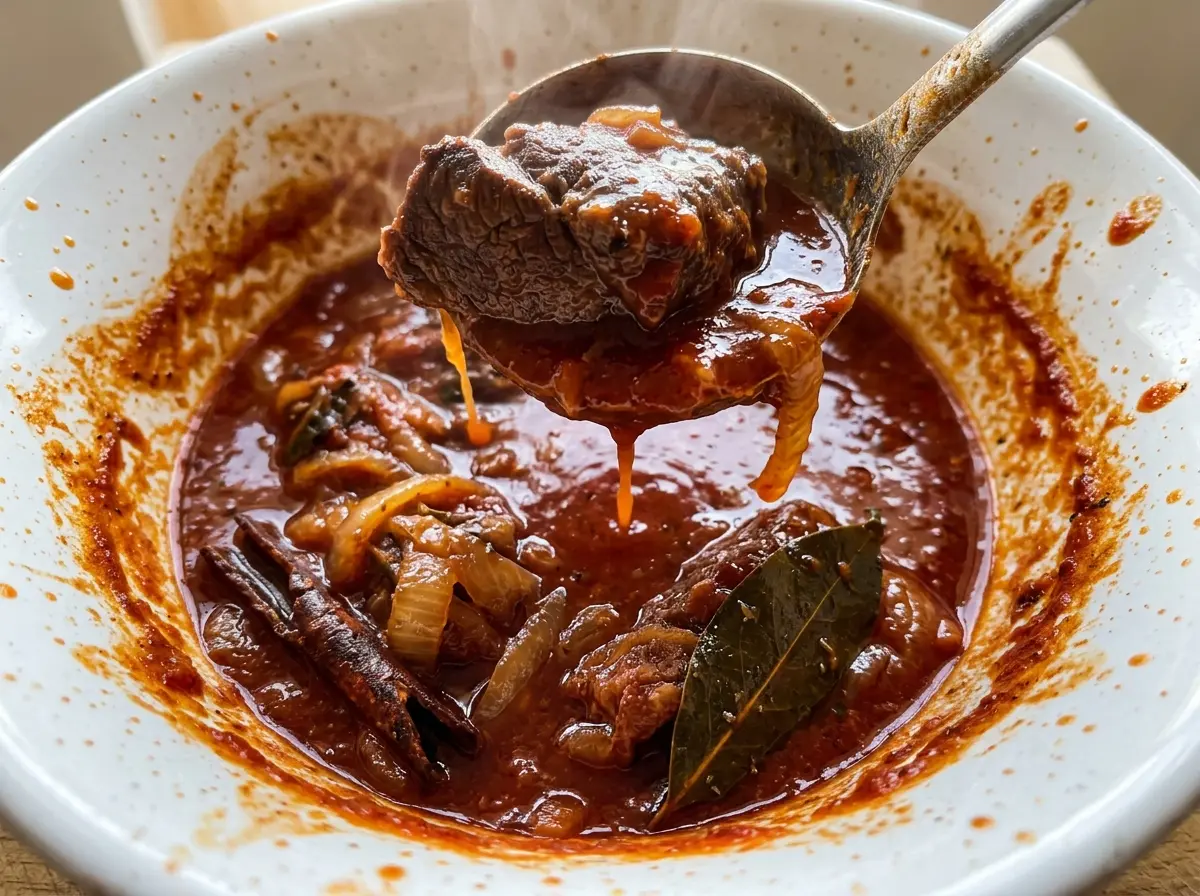
Kitchen Note
A cinnamon stick can split while it simmers, so I check for loose pieces when I lift it out with the bay leaf. Its job is to perfume the sauce, not hide in someone’s bowl.
Save this Kokkinisto Greek Beef Stew for a slow-simmered dinner with tender chuck, a tomato-rich sauce, and a hint of cinnamon.
Why Kokkinisto Isn’t a Thickened Beef Gravy
This stew gets its body from the tomatoes and the juices released by the beef, not from flour or a starch slurry. That gives the sauce a different feel from a classic brown gravy: it’s tomato-forward and savory, with enough liquid to surround the meat rather than set up like a thick coating. If you’re expecting a gravy-heavy stew, the texture may surprise you in a good way.
Keeping the pot covered matters here. The beef braises gently in the tomato, wine, and broth mixture instead of losing too much liquid to evaporation. The goal isn’t to boil the sauce down into a paste; it’s to give the chuck time to turn fork-tender while the flavors mingle. Stir occasionally so the bottom doesn’t catch, especially as the sauce thickens slightly during the long cook.
That balance is what makes this style satisfying: plenty of rich sauce, but no separate thickening step to mask the beef and tomato. Give the chuck the time it needs, and let the sauce stay supple enough to ladle.
Why Chuck, Crushed Tomatoes, and Dry Wine Shape the Pot
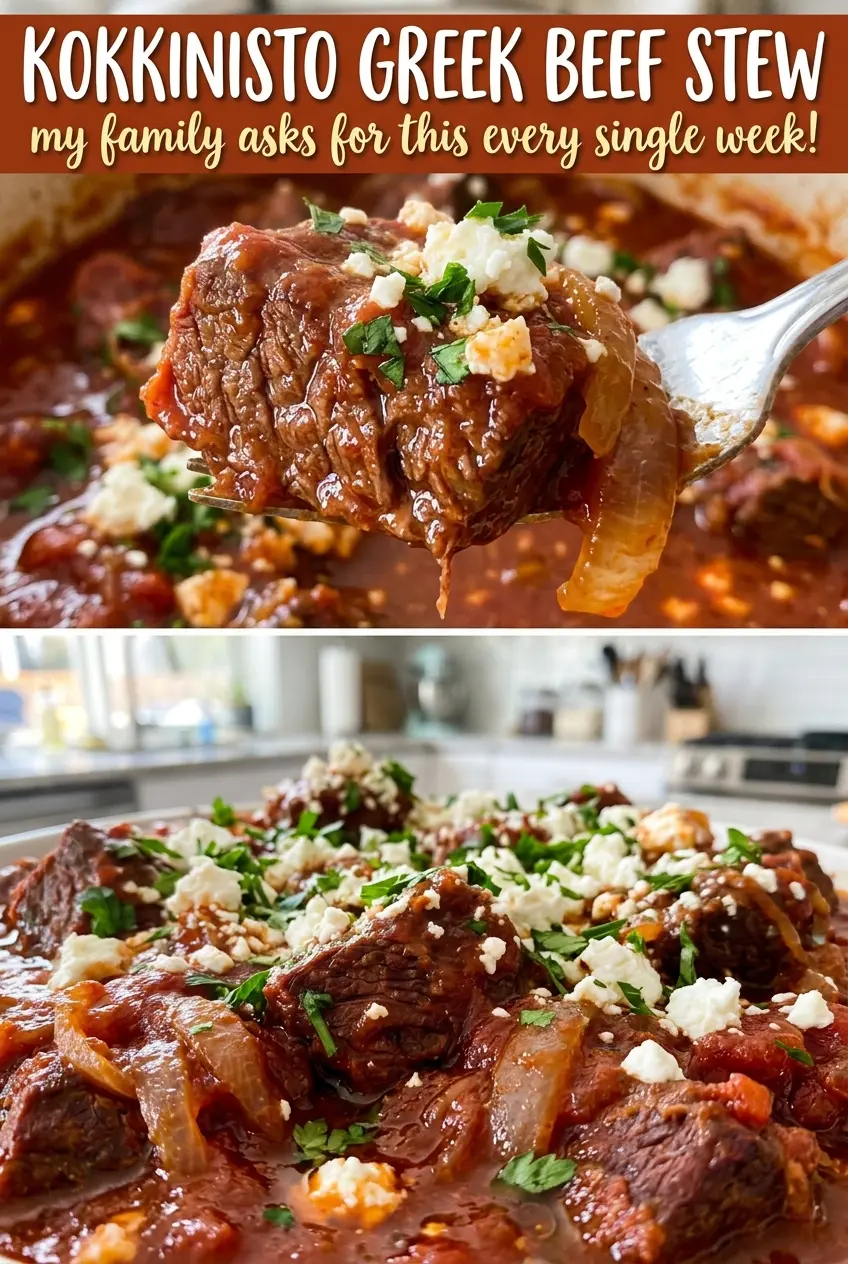
- Beef chuck — Its connective tissue suits a long, gentle braise and turns tender with time. Choose evenly cut pieces so they cook at a similar pace; very lean beef tends to become dry before it develops the same stew texture.
- Crushed tomatoes — They bring both tomato flavor and a ready-made, spoonable base. A good-quality can makes a difference because tomatoes are central to the sauce, while there’s no need to pay extra for a specialty variety.
- Dry red wine — It contributes acidity and depth, and it lifts the browned bits from the pot. Use a dry wine you’d be comfortable drinking; a sweet red would make the finished sauce taste noticeably different. For a wine-free version, replace it with an equal volume of beef broth, though the sauce will have less acidity and wine complexity.
- Tomato paste — Cooking it briefly with the onion and garlic concentrates its savory tomato flavor before the liquids go in. Stir it around the pot for its full minute so it’s incorporated rather than left in one dense clump.
- Cinnamon stick and ground allspice — Together, they give the stew its distinctive warm aroma without turning it into a sweet dish. A whole stick is easy to remove at the end; ground allspice blends into the sauce and adds a deeper, rounder spice note.
- Yellow onion and garlic — The onion softens into the base, while the garlic adds a sharper savory note. Mince the garlic before it goes into the pot so it cooks quickly alongside the tomato paste instead of scorching in a hot pan.
Building the Tomato-Wine Braise Without Losing the Browned Flavor
Brown the Chuck in Uncrowded Batches
Pat the beef dry, then season it with kosher salt and black pepper before heating the olive oil in a 5- to 6-quart Dutch oven over medium-high heat. Brown the beef on all sides, working in batches for about 8 minutes per batch, and move each finished batch to a plate. If the pot is packed tight, the beef releases moisture and steams instead of browning. Keep the batches separate so the meat gets color.
Soften the Onion Before Adding the Garlic
Add the chopped onion to the pot and cook it over medium heat, stirring often, until softened, about 5 minutes. The onion should feel tender rather than crisp, and it will pick up some of the browned flavor left behind by the beef. Stir in the minced garlic and tomato paste, then cook for 1 minute. Keep stirring during that short stretch so the garlic and paste don’t scorch against the pot.
Use the Wine to Lift the Pot’s Fond
Pour in the dry red wine and scrape the bottom of the Dutch oven to loosen the browned bits. Let it simmer for 3 to 4 minutes, until the liquid has reduced by about half. Those dark bits dissolve into the wine and become part of the sauce, so scrape across the whole bottom rather than only the center. The reduction also keeps the wine from sitting in the stew as a sharp, separate note.
Simmer Covered Until the Beef Gives Easily
Stir in the crushed tomatoes, beef broth, cinnamon stick, bay leaf, and ground allspice, then return the beef and any juices from the plate to the pot. Bring everything to a simmer, cover, and cook over low heat for 2 to 2 1/2 hours, stirring occasionally. Keep the simmer gentle; a hard boil can make the meat tighten before it has time to soften. When a fork meets little resistance in the beef, remove and discard the cinnamon stick and bay leaf.
Three Simple Ways to Shift the Flavor of Kokkinisto
Make It Without Wine
Replace the red wine with an equal volume of beef broth. You’ll still get a savory braise, but the sauce will be less tangy and layered, with the beef and tomatoes taking the lead.
Turn Up the Tomato
For a more tomato-forward pot, replace the beef broth with an equal volume of crushed tomatoes. The sauce will taste more concentrated and less beefy, so choose this version when you want the tomato to take center stage.
Keep the Spice Milder
Leave out the ground allspice and keep the cinnamon stick. The stew will still have a gentle cinnamon aroma, but the background spice will be simpler and less pronounced.
Storage and Reheating
- Refrigerator: Cool the stew in shallow containers and refrigerate within 2 hours. It keeps for 3 to 4 days; the sauce may thicken as it chills.
- Freezer: Freeze in airtight containers for up to 2 to 3 months for best quality. Thaw overnight in the refrigerator before reheating.
- Reheating: Warm it gently in a covered saucepan over medium-low heat, stirring occasionally, until it reaches 165°F. Avoid a hard boil, which can toughen the beef.
Questions That Come Up While the Stew Simmeres
Kokkinisto Greek Beef Stew
Ingredients
Equipment
Method
- Pat the beef dry and season it with the salt and pepper.
- Heat the olive oil in a 5- to 6-quart Dutch oven over medium-high heat.
- Working in batches, brown the beef on all sides, about 8 minutes per batch, then transfer it to a plate.
- Add the onion to the pot and cook over medium heat, stirring often, until softened, about 5 minutes.
- Add the garlic and tomato paste and cook, stirring, for 1 minute.
- Pour in the red wine and scrape up any browned bits from the bottom of the pot.
- Simmer until reduced by about half, 3 to 4 minutes.
- Stir in the crushed tomatoes, beef broth, cinnamon stick, bay leaf, and allspice.
- Return the beef and any accumulated juices to the pot.
- Bring the stew to a simmer and cover.
- Cook over low heat until the beef is fork-tender, 2 to 2 1/2 hours, stirring occasionally.
- Remove and discard the cinnamon stick and bay leaf before serving.