The onion softens first, then the carrots and celery start to sweeten the broth as they simmer. That steady, savory base is what turns leftover rotisserie chicken into more than a quick clean-out-the-fridge meal. I make this soup when there’s cooked chicken ready to use and want a full pot that tastes like it had time to develop.
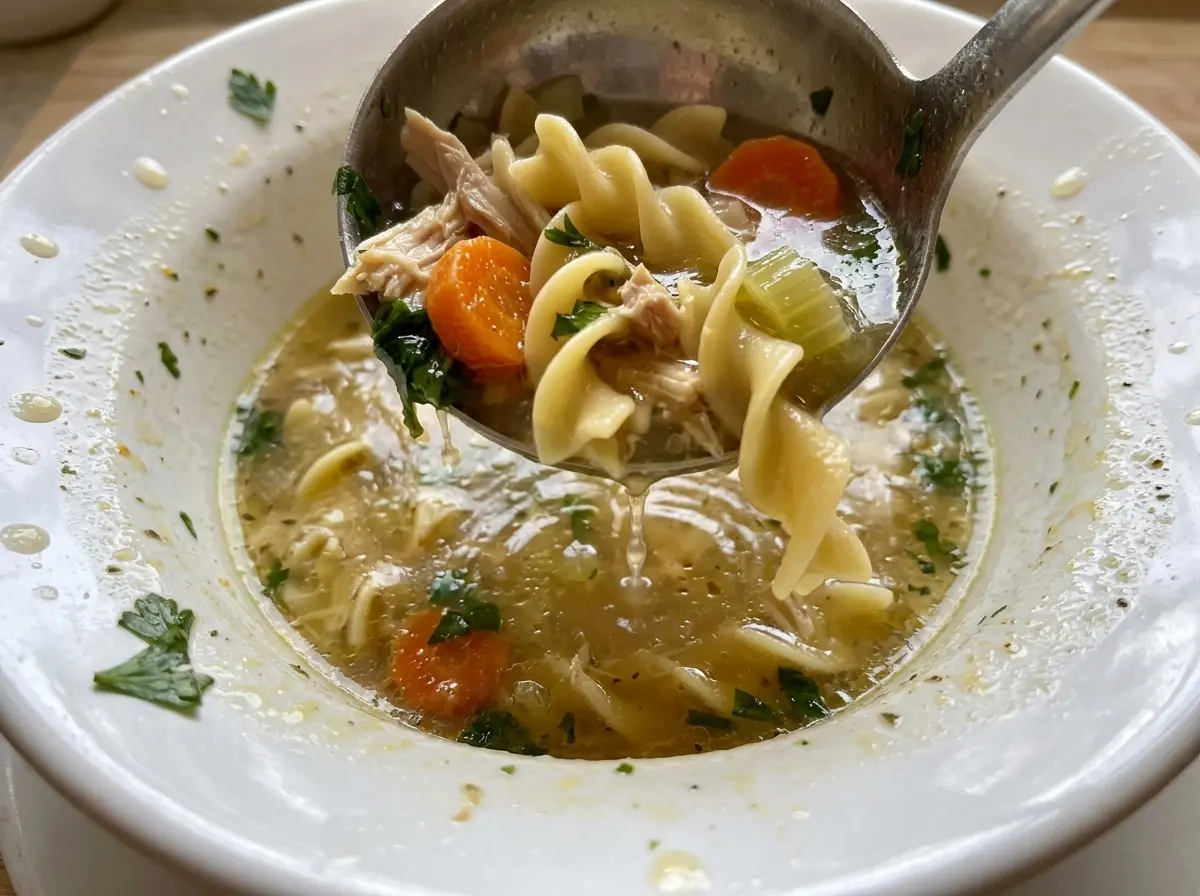
Wide egg noodles make the soup feel hearty, while thyme and a bay leaf add a gentle, familiar flavor without asking you to fuss over a long list of seasonings. The chicken goes in near the end, so it warms through without simmering alongside the vegetables for the whole cook. Each bowl has tender noodles, soft vegetables, and plenty of chicken in clear, savory broth.
Kitchen Note
I stop the first simmer when the carrots are nearly tender, not completely soft. They’ll have a little more time in the pot while the noodles cook, so this keeps them from turning mushy.
Save this leftover rotisserie chicken noodle soup for a night when you want tender egg noodles and a cozy bowl of savory broth.
Why the Rotisserie Chicken Goes In After the Noodles
Rotisserie chicken is already cooked, so it doesn’t need the long simmer that builds flavor in the vegetables and broth. Adding it at the end gives the onion, carrots, celery, thyme, and bay leaf time to season the pot first. The chicken then warms in that broth instead of spending the whole cooking time getting stirred and simmered.
That order also makes the soup easier to judge. First, the vegetables soften and the broth takes on their flavor. Then the noodles cook in the seasoned liquid, and only after they’re tender does the shredded chicken go in. Keep the final simmer gentle; a hard boil can rough up the noodles and make the chicken less tender. The finished soup should have chicken that’s hot all the way through, with each ingredient still easy to distinguish in the bowl.
It’s a small timing choice, but it suits the way this soup comes together: the broth gets its depth from the vegetables and herbs, while the leftover chicken gets just enough heat to be ready for serving.
What the Broth, Noodles, and Chicken Each Bring

- Low-sodium chicken broth — It gives the vegetables and herbs a savory base while leaving room to season the pot with kosher salt. Broth brands vary in saltiness, so low-sodium broth makes the final seasoning easier to control. The flavor of a good-quality broth comes through in a soup this simple, but a dependable store-brand carton works well.
- Wide egg noodles — Their broad shape makes the soup feel substantial and gives you a tender, soft bite alongside the shredded chicken. Follow the package timing rather than assuming every brand cooks alike. Another shape of egg noodle can work, but thinner noodles may cook faster and give the finished soup a different texture.
- Rotisserie chicken — The already-cooked meat makes this a practical way to use leftovers and brings roasted flavor without a separate cooking step. Shred it into bite-size pieces so it distributes through the pot. Other cooked, shredded chicken works in the same way; raw chicken isn’t a direct swap for this timing.
- Onion, carrots, celery, and garlic — These vegetables form the savory base, with the onion softening as the carrots and celery turn tender. Cut the vegetables into similar-sized pieces so they cook at a similar pace. Minced garlic goes in after the vegetables have softened because it needs much less time in the hot pot.
- Dried thyme, bay leaf, and fresh parsley — Thyme and bay leaf season the broth as it simmers; parsley goes in at the end for a fresh, green note. Remove the bay leaf before serving. Fresh parsley has a brighter finish than dried, and you can leave it out if you don’t have it.
Building the Soup in the Right Order
Soften the Vegetables Without Browning Them
Warm the olive oil in a 6-quart pot over medium heat, then add the diced onion, sliced carrots, and sliced celery. Cook for 5 to 7 minutes, stirring occasionally, until the onion is softened. You’re looking for vegetables that have started to relax, not deeply browned edges. Add the minced garlic and cook for 30 seconds, stirring so it doesn’t scorch.
Let the Broth Take On the Herbs
Stir in the chicken broth, dried thyme, bay leaf, kosher salt, and black pepper. Bring the pot to a boil, then lower the heat and simmer for 10 to 12 minutes. The carrots should be nearly tender when you move on; if they’re still firm in the middle, give the broth a little more time before adding the noodles. This stage gives the vegetables and herbs a chance to flavor the liquid.
Cook the Noodles, Then Warm the Chicken
Stir in the wide egg noodles and cook them according to the package directions, usually 6 to 8 minutes, until tender. Check a noodle near the end of its package range rather than letting it go by the clock alone. Stir in the shredded rotisserie chicken and simmer for 3 to 5 minutes, until it’s steaming hot and reaches 165°F. Remove the bay leaf, stir in the chopped fresh parsley, and serve.
Three Practical Ways to Adapt This Pot
A Lower-Carb Bowl Without Noodles
Leave out the egg noodles and serve the chicken and vegetables in the seasoned broth. The soup will be lighter and less filling, with more broth in each bowl, but the onion, carrots, celery, thyme, and chicken still make a complete-tasting soup.
Make It More Chicken-Forward
Use more shredded rotisserie chicken and fewer egg noodles for a bowl with a higher proportion of chicken. The broth will taste less starchy, and the chicken will stand out more in each spoonful. Keep the same late addition so the cooked meat only simmers long enough to heat through.
Keep the Seasoning Milder
For a lower-sodium version, leave out the added kosher salt and use the low-sodium chicken broth. The soup will taste less seasoned, so taste the broth before serving and adjust only if needed. The thyme, bay leaf, vegetables, and rotisserie chicken still provide savory flavor.
Storage and Reheating
- Refrigerator: Cool promptly, store in an airtight container, and use within 3 to 4 days. The noodles will absorb some broth and soften as the soup sits.
- Freezer: Freeze in airtight freezer-safe containers for up to 2 to 3 months. The soup freezes safely, though the noodles will be softer after thawing.
- Reheating: Warm gently on the stovetop, stirring occasionally, until steaming hot throughout. Avoid a hard boil; it can make the noodles overly soft and the chicken stringy.
Questions That Come Up With Chicken Noodle Soup
Leftover Rotisserie Chicken Noodle Soup
Ingredients
Method
- Heat the olive oil in a 6-quart pot over medium heat, then add the onion, carrots, and celery and cook for 5 to 7 minutes, stirring occasionally, until the onion is softened.
- Add the garlic and cook for 30 seconds, then stir in the broth, thyme, bay leaf, salt, and pepper; bring to a boil and simmer for 10 to 12 minutes, until the carrots are nearly tender.
- Stir in the egg noodles and cook according to the package directions, usually 6 to 8 minutes, until tender.
- Stir in the rotisserie chicken and simmer for 3 to 5 minutes, until the chicken is steaming hot and reaches 165°F.
- Remove the bay leaf, stir in the parsley, and serve.