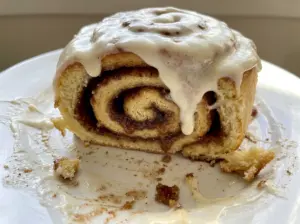
The first thing you notice is the soft dough stretching as it rolls up around the cinnamon sugar. A little filling will try to escape at the edges, but a neat spiral is easy to get when the dough is rolled evenly and the log stays snug. These maple cinnamon rolls bake into a tender center with golden edges, then get a smooth maple icing while they’re still warm.
I like that the dough is rich without being difficult to handle. Whole milk, egg, yolk, and softened butter give it softness, while kneading brings everything together into a smooth, elastic dough. The filling is classic brown sugar and cinnamon, and the maple icing adds a clear maple note without taking over. Set aside enough time for both rises, and you’ll have a pan of warm, spiraled rolls ready to share—or keep close by for breakfast.
Kitchen Note
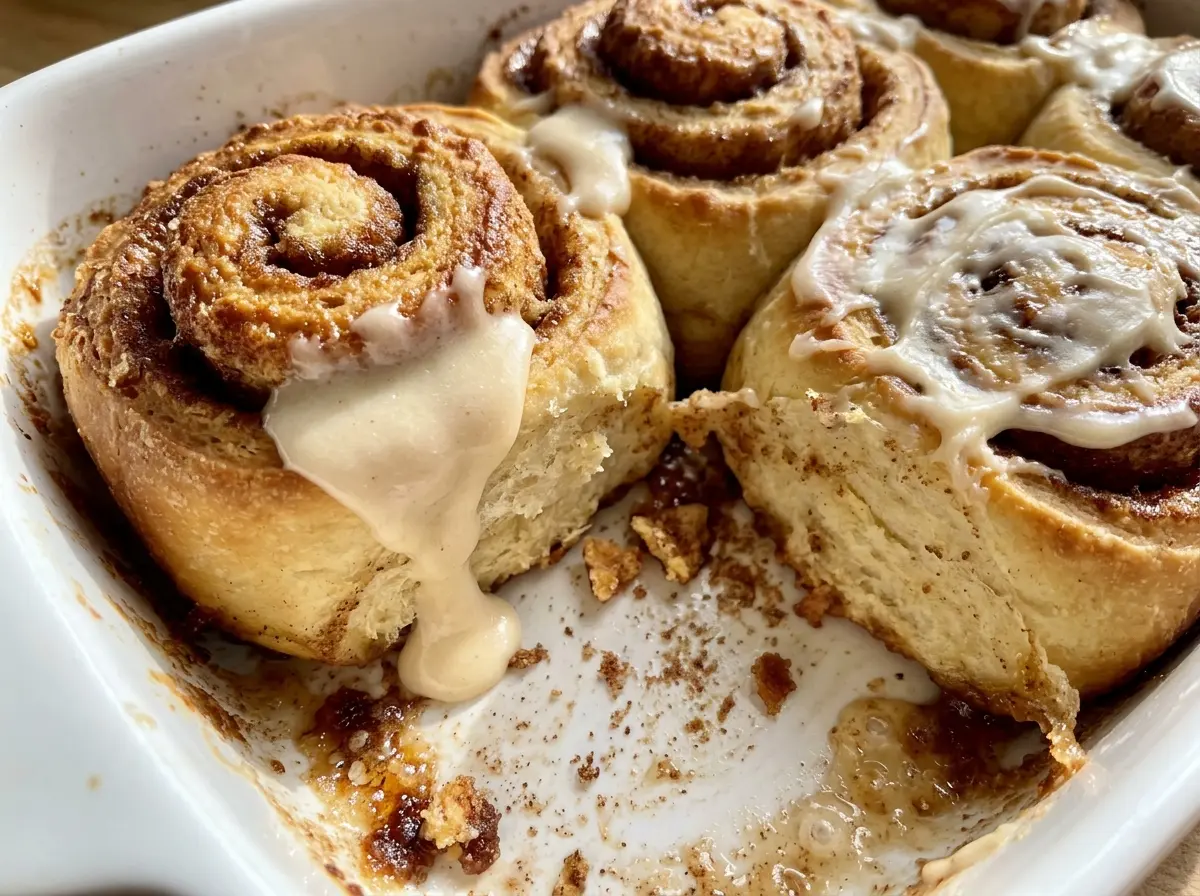
Check the milk with a thermometer rather than guessing by touch; it should be 105–110°F before it goes in with the yeast. Milk that’s too hot can interfere with the yeast, so let it cool into that range before mixing.
Save these Maple Cinnamon Rolls for a weekend bake: soft spirals, brown sugar cinnamon filling, and a smooth maple icing.
Why a Bare Edge Helps Keep the Cinnamon Spiral Together
A filled dough rectangle doesn’t roll into a tidy log automatically. If sugar and butter reach every edge, the filling can squeeze out as you roll, and the loose end has nothing clean to cling to. Leaving a narrow strip bare along one long side gives the log a better seam and keeps more of the filling tucked inside the spiral.
Even thickness matters, too. A rectangle that’s much thinner at one end makes a log with uneven rounds, so the smaller rolls can bake faster than the larger ones. Take a moment to square up the dough as you roll it; the goal is a rectangle with fairly even edges, not a perfect geometric shape. When you roll from the opposite long side toward that bare strip, keep the log snug without pulling hard enough to stretch the dough. A secure seam and evenly sized rounds make the pan bake more consistently, with a clear swirl instead of a sugary gap where the filling ran out.
What the Dough, Filling, and Maple Icing Each Bring
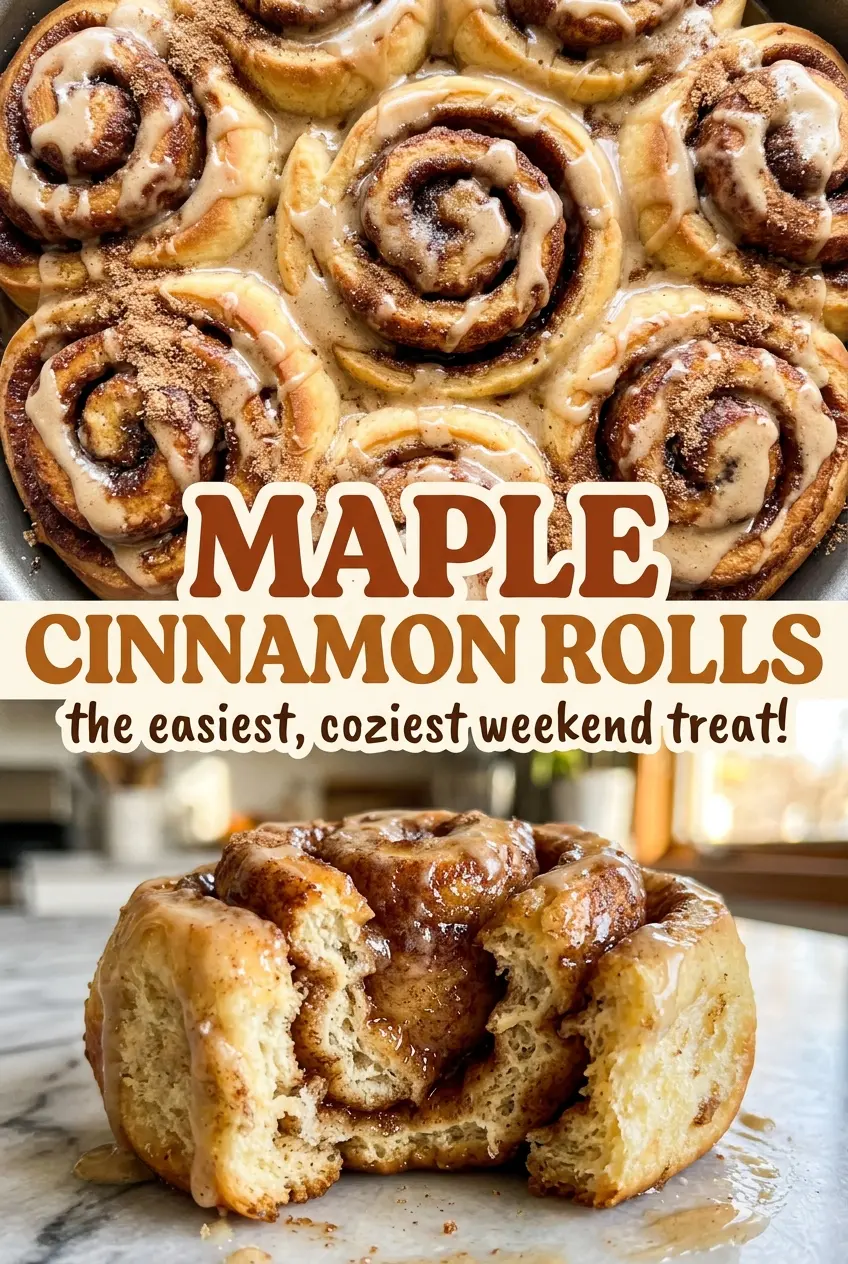
- Instant yeast — It’s designed to mix straight into the dough ingredients, which keeps the method simple. Use instant yeast here; a different yeast type may need different handling and rise timing.
- All-purpose flour — It gives these rolls a soft, tender bite without making the dough as chewy as a higher-protein flour can. Keep the extra flour for dusting the work surface, and use it lightly so the dough doesn’t become dry as you roll it.
- Whole milk and eggs — Milk enriches the dough, while the egg and yolk help it bake up tender. Bring the eggs to room temperature so they blend into the dough more easily instead of chilling the warm milk mixture.
- Unsalted butter — Softened butter needs to spread easily for both the dough and the filling. The two portions do different jobs: one is worked into the dough, and the other coats the rolled rectangle so the cinnamon sugar can cling.
- Light brown sugar and cinnamon — Packed brown sugar brings moisture and a mellow molasses note to the filling; cinnamon supplies its familiar warmth. Break up any hard brown-sugar clumps before sprinkling so you don’t get pockets of filling.
- Pure maple syrup — This is what gives the icing its maple flavor. Choose pure maple syrup rather than pancake syrup, whose flavor and consistency won’t give the icing the same character.
- Confectioners’ sugar and vanilla — Confectioners’ sugar makes a smooth drizzle, and vanilla rounds out the maple. If the sugar has compacted in its container, loosen it before whisking so the finished icing is even.
From Soft Dough to Golden Maple-Iced Rolls
Bring the Dough Together
Whisk the warm milk with the instant yeast, granulated sugar, egg, and egg yolk in a large bowl. Stir in the flour and salt until the mixture looks shaggy, then work in the softened butter. Knead for 8–10 minutes, until the dough feels smooth and elastic rather than ragged or sticky in patches. If it still looks rough, keep kneading until the surface evens out.
Give the Dough Its First Rise
Coat a large bowl with cooking spray, put the dough inside, and cover it. Let it rise in a warm place for 1–1 1/2 hours, until it has doubled in size. The dough’s size is the cue to watch, since a cooler room can slow the rise. Don’t move on while it still looks dense and hasn’t expanded fully.
Fill, Roll, and Proof the Spirals
Coat a 9×13-inch baking dish with cooking spray. Punch down the dough, turn it onto a work surface dusted with the remaining flour, and roll it into a 16×12-inch rectangle. Spread the filling butter over the dough, sprinkle on the brown sugar and cinnamon, and leave a 1/2-inch border along one long edge before rolling from the opposite edge into a tight log. Cut the log into 12 equal rolls, arrange them cut side up in the dish, cover, and let them rise for 30–45 minutes until puffy; heat the oven to 350°F near the end of this rise.
Bake Until the Center Is Ready
Bake the rolls for 25–30 minutes, until they’re golden brown and the center roll registers 190°F. Check the middle roll rather than judging the pan by the outside rolls alone; it’s the best indicator that the center is baked through. Let the rolls rest in the pan for 10 minutes. Whisk the confectioners’ sugar, maple syrup, and vanilla until smooth, then drizzle the icing over the warm rolls.
Three Ways to Adapt the Pan of Rolls
A Dairy-Free Adaptation
Use unsweetened oat milk in place of the whole milk, and use plant-based butter sticks in place of both portions of butter, keeping the same amounts. The dough and filling will still work, though the rolls will have a less buttery flavor and may brown a little differently. The eggs remain in this version, so it isn’t egg-free.
Brown Sugar Rolls Without Cinnamon
Leave the cinnamon out of the filling and keep the brown sugar and butter. You’ll get a sweeter, simpler spiral that lets the maple icing stand out more. The dough, shaping, and baking method stay the same.
Skip the Icing
Leave off the maple icing for a less sweet finish and a more prominent brown-sugar filling. The rolls are still rich from the butter in the dough and filling, so this is a good choice if you prefer your breakfast pastries without a drizzle.
Storage and Reheating
- Refrigerator: Keep covered for up to 3 days. The rolls will firm up as they chill, and the icing will soften when warmed.
- Freezer: Freeze baked rolls without icing, wrapped tightly, for up to 2 months. Thaw in the refrigerator, then add the maple icing after warming.
- Reheating: Warm an individual roll briefly in the microwave until soft. Long, high-power heating dries the edges and can make the icing run.
Questions About These Maple Cinnamon Rolls
Maple Cinnamon Rolls
Ingredients
Equipment
Method
- In a large bowl, whisk together the warm milk, yeast, granulated sugar, egg, and egg yolk.
- Stir in 4 cups flour and the salt until a shaggy dough forms, then work in 1/3 cup softened butter; knead for 8–10 minutes, until smooth and elastic.
- Lightly coat a large bowl with cooking spray, place the dough in the bowl, and cover; let rise in a warm place for 1–1 1/2 hours, until doubled in size.
- Coat a 9x13-inch baking dish with cooking spray.
- Punch down the dough, turn it onto a work surface dusted with the 2 tablespoons flour, and roll into a 16x12-inch rectangle.
- Spread the remaining 1/2 cup softened butter over the dough.
- Mix the brown sugar and cinnamon, then sprinkle evenly over the butter, leaving a 1/2-inch border along one long edge.
- Starting at the opposite long edge, roll the dough into a tight log and cut it into 12 equal rolls; arrange them cut side up in the baking dish.
- Cover and let rise for 30–45 minutes, until puffy.
- Heat the oven to 350°F near the end of the rise.
- Bake for 25–30 minutes, until golden brown and the center roll registers 190°F.
- Let the rolls rest in the pan for 10 minutes.
- Whisk the confectioners' sugar, maple syrup, and vanilla until smooth, then drizzle the icing over the warm rolls.