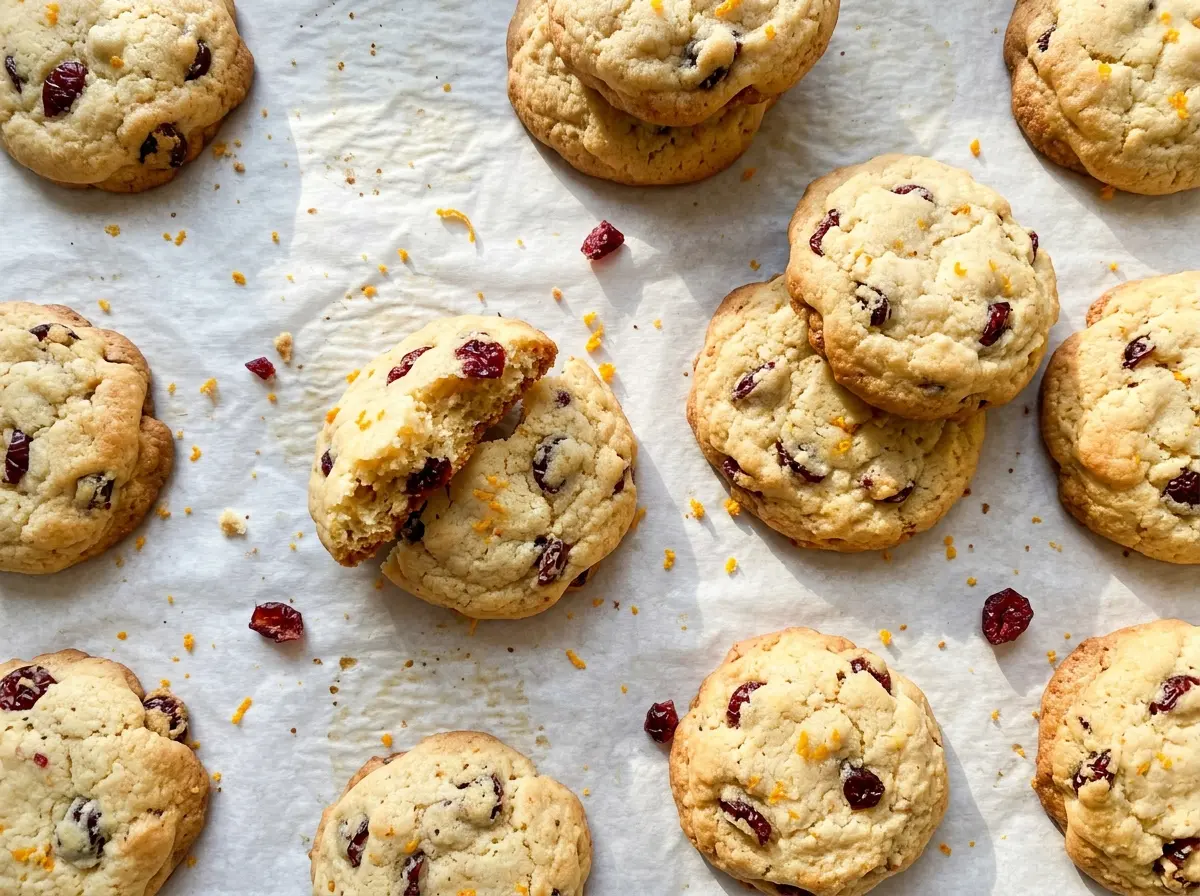
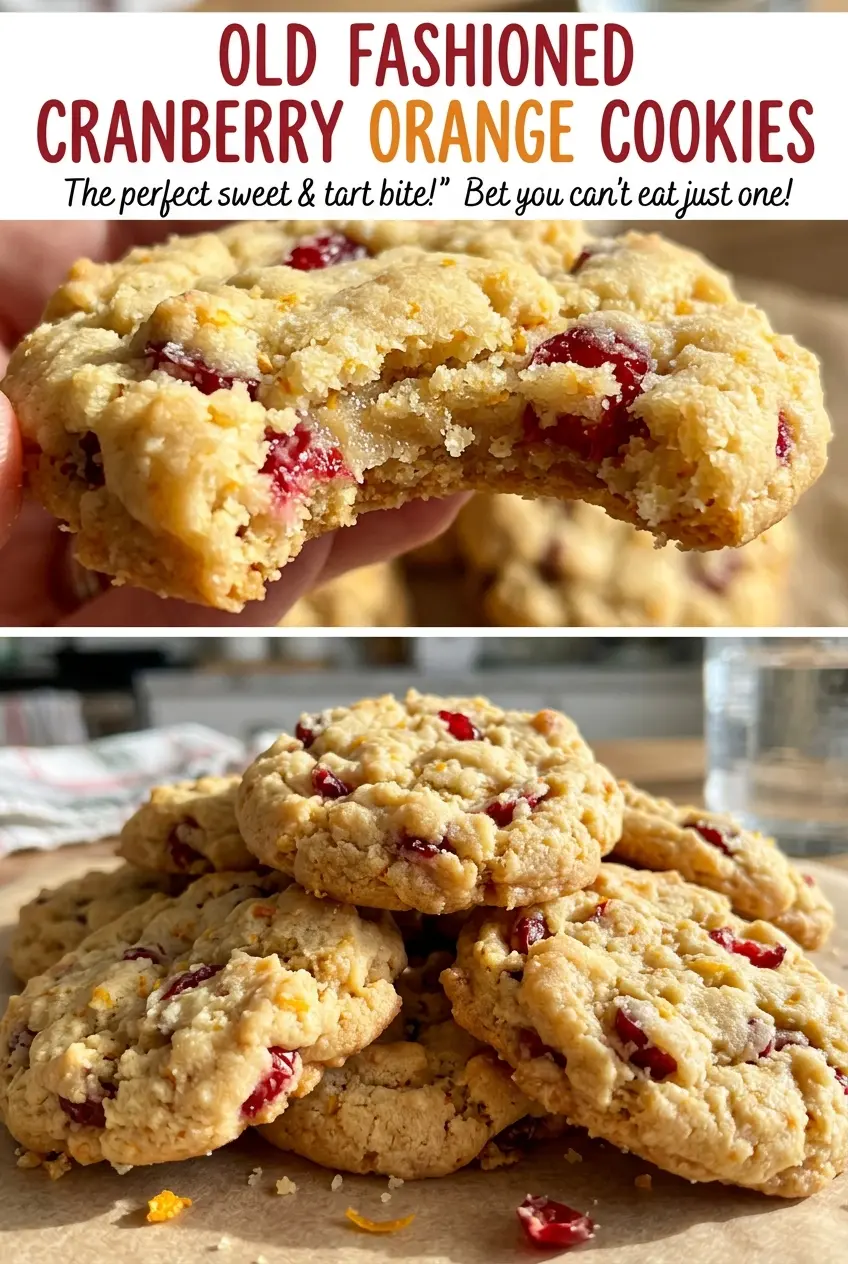
When the chopped cranberries go into the dough, they bring a sharp, fresh tartness that makes the orange smell even brighter. I like that contrast in these Old Fashioned Cranberry Orange Cookies: they’re sweet around the edges, tender in the middle, and dotted with real pieces of fruit instead of just cranberry flavor.
The dough comes together with softened butter and a quick two-minute cream with the sugar. Fresh orange zest carries most of the fragrant citrus aroma, while a little juice gives the dough a second layer of orange flavor. Coarsely chopped cranberries spread through each scoop without turning the dough into a mash, and the cookies bake on parchment-lined sheets until their edges are lightly golden. You’ll get 24 cookies with a pleasantly soft bite and little tart bursts in every one.
These are a good choice when you want a fruit cookie that doesn’t need frosting or a complicated finish. The orange is easy to notice, but it doesn’t cover up the cranberries; each cookie tastes bright, gently sweet, and full of fruit.
Kitchen Note
Give the cookies the full five minutes on the baking sheets before moving them. They’re delicate straight from the oven, and that short rest lets them firm up enough to transfer without breaking.
Save these Old Fashioned Cranberry Orange Cookies for a bake with tart fresh berries, tender centers, and plenty of bright orange zest.
Why Coarsely Chopped Cranberries Make These Cookies Better
Fresh cranberries are firm and quite tart, so the way you cut them changes how each cookie eats. Leave them whole and a rounded tablespoon of dough may hold one large, sharp bite of berry while the rest tastes mostly like orange cookie. Chop them too finely and their juice can smear through the dough, tinting it and making the fruit less distinct.
Coarse pieces land in the middle: small enough to tuck into the dough, but large enough to keep their bright flavor and juicy texture after baking. Try to keep the pieces roughly similar in size so they distribute evenly from one scoop to the next. You don’t need to make every piece identical; just break up the biggest berries and avoid turning the whole handful into tiny bits.
The dough should still look like cookie dough after the fruit is folded in, with visible cranberry pieces rather than pink streaks. That balance lets the orange come through in the dough while the berries give you a tart pop here and there. It’s what keeps the cookies from tasting uniformly sweet.
What the Orange, Butter, and Cranberries Each Bring
- All-purpose flour — It gives the cookies enough structure to hold the fruit while staying tender. A standard store-brand flour works well; specialty flour won’t improve this simple dough. For a gluten-free batch, use a measure-for-measure gluten-free baking blend made for cookies, as described below.
- Baking powder and baking soda — Using both helps the cookies rise while they spread and brown. Keep them fresh; old leaveners can leave the cookies flatter and denser than expected. There isn’t a clean one-for-one swap between the two, so use both rather than replacing one with extra of the other.
- Unsalted butter — Butter brings richness and helps create the tender texture. The brand matters less than its condition: softened butter should yield when pressed but shouldn’t look shiny or melted. If you only have salted butter, the cookies will taste saltier with the listed salt, so unsalted is the more reliable choice here.
- Granulated sugar — It sweetens the tart fruit and helps the edges take on a little color. Regular white sugar is exactly right; brown sugar would add moisture and a deeper molasses note, changing the texture and flavor rather than acting as a neutral replacement.
- Egg — The egg binds the dough and helps it bake into a soft, cohesive cookie. Use a large egg for the intended balance. A smaller egg may leave the dough drier, while a larger one adds more liquid than this dough needs.
- Orange zest and juice — Zest gives the cookies their most concentrated orange aroma, and the juice adds citrus flavor to the dough. Wash the orange before finely grating the colored peel; avoid grating into the bitter white pith. Fresh juice is a good choice because it comes from the same fruit you’re zesting.
- Fresh cranberries — They provide the tart, juicy contrast that defines these cookies. Choose berries that look firm and bright, then coarsely chop them just before folding them in. Frozen cranberries are a useful substitute when fresh ones aren’t available; the variation below explains how to handle them.
From Creamed Butter to Golden Edges: The Dough Cues That Matter
Whisk the Dry Ingredients Evenly
Heat the oven to 350°F and line two 18×13-inch baking sheets with parchment paper. Whisk the flour, baking powder, baking soda, and salt together in a medium bowl so the leaveners and salt don’t stay in concentrated pockets. Break up any flour lumps as you whisk. Set the bowl aside while you cream the butter and sugar.
Cream the Butter Before Adding the Citrus
Beat the softened butter and granulated sugar in a large bowl until creamy and light, about 2 minutes. The mixture should look paler and fluffier than the butter did at the start, not like a greasy paste. Beat in the egg, orange zest, and orange juice until combined. If the mixture looks a little uneven after the juice goes in, keep mixing just until it comes together.
Fold in the Berries Without Smearing Them
Mix the flour mixture into the butter mixture just until no dry streaks remain. Stop once you can’t see loose flour; mixing beyond that point can make cookies tougher. Fold in the coarsely chopped cranberries until they’re spread through the dough. Drop rounded tablespoons onto the prepared sheets, leaving about 2 inches between scoops so the cookies have room to bake.
Bake Until the Edges Turn Lightly Golden
Bake at 350°F for 12–15 minutes, rotating the sheets between oven racks halfway through baking. Watch for lightly golden edges and centers that look set; don’t wait for the whole top to turn deeply golden. Let the cookies cool on the baking sheets for 5 minutes, then transfer them to a wire rack to cool completely. They’ll be tender when warm and easier to handle after that short rest.
Three Useful Ways to Change the Citrus or Fruit
Use Frozen Cranberries When Fresh Ones Aren’t Around
Replace the fresh cranberries with the same volume of frozen cranberries. Let them soften just enough to chop coarsely, then fold them into the dough before they thaw completely; fully thawed berries release more juice and can streak the dough. The cookies keep their tart character, though the fruit may look less tidy after baking.
Trade the Orange for Lemon
Use finely grated lemon zest and fresh lemon juice in place of the orange zest and juice, keeping the same amounts. Lemon makes the cookies sharper and less sweet-tasting alongside the tart cranberries, so this is a good change if you want a more pronounced citrus edge.
Make a Gluten-Free Batch
Replace the all-purpose flour with the same amount of a measure-for-measure gluten-free baking blend intended for cookies. Choose a blend that includes xanthan gum or another binder so the dough holds together around the cranberries. The cookies may be a touch more delicate, so give them the full cooling rest on the baking sheets before transferring.
Storage and Reheating
- Refrigerator: Store cooled cookies in an airtight container for up to 1 week; chilling firms their texture, so let them come back to room temperature before serving.
- Freezer: Freeze fully cooled cookies in an airtight freezer-safe container for up to 2 months. Thaw at room temperature before eating.
- Reheating: For a warm cookie, microwave one briefly for about 5–8 seconds. Longer heating can dry it out, so warm only until it loses its chill.
Questions That Come Up With Cranberry Orange Cookies
Old Fashioned Cranberry Orange Cookies
Ingredients
Equipment
Method
- Heat the oven to 350°F.
- Line two 18x13-inch baking sheets with parchment paper.
- Whisk the flour, baking powder, baking soda, and salt together in a medium bowl.
- Beat the butter and sugar in a large bowl until creamy and light, about 2 minutes.
- Beat in the egg, orange zest, and orange juice until combined.
- Mix in the flour mixture just until no dry streaks remain.
- Fold in the cranberries.
- Drop rounded tablespoons of dough onto the prepared baking sheets, spacing them about 2 inches apart.
- Bake at 350°F for 12–15 minutes, until the edges are lightly golden and the centers look set.
- Rotate the sheets between oven racks halfway through baking.
- Cool the cookies on the baking sheets for 5 minutes.
- Transfer the cookies to a wire rack to cool completely.


