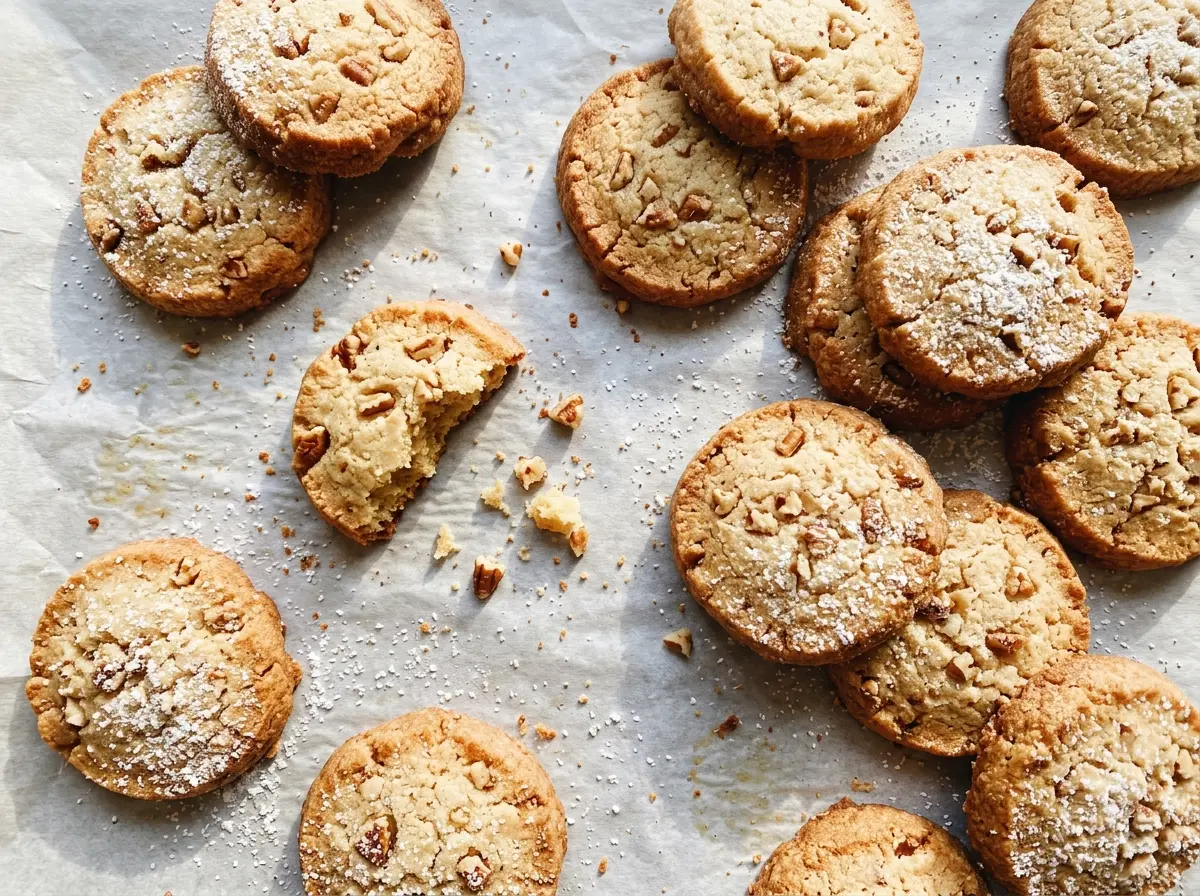
When the flour first goes into cookie dough, it can look like there’s no way it will turn into a soft, workable ball. For pecan sandies, that’s the moment to slow down rather than keep beating: the dough comes together once the dry flour disappears, and the finely chopped pecans give each bite a little crunch. These cookies bake up with lightly golden edges and a tender, buttery crumb.
I like this dough because it doesn’t ask for a complicated finish. The egg yolk gives it richness, while the butter and sugar are beaten until creamy before the flour goes in. Keep the mixing gentle after that, and you’ll have dough that’s easy to roll and flatten. The finished pecan sandies are simple, crisp at the edges, and full of toasted pecan flavor.
Kitchen Note
Give the cookies their full five minutes on the baking sheets before moving them. They’re delicate while hot, and that short rest lets them firm up enough to transfer without breaking.
Save these pecan sandies for a buttery, crisp-edged cookie with finely chopped pecans in every bite.
Why These Sandies Stay Low Instead of Puffing Up
Pecan sandies aren’t meant to rise like a soft, cakey drop cookie. This dough has no baking powder or baking soda, so the cookies keep the shape you give them rather than puffing into thick rounds. Rolling the dough into balls and flattening them to an even thickness gives you a consistent bake, with edges that turn lightly golden while the middle stays tender.
That difference also explains why adding a leavener just because it’s common in other cookie recipes isn’t a good fix. It would change the spread and texture you’re aiming for. The butter and sugar are beaten until creamy to build the base, and the single yolk brings richness without adding the extra liquid and white of a whole egg. The result is a compact cookie with a delicate crumb, not a fluffy one. Expect a modest change in shape in the oven, not a dramatic rise.
What Butter, Yolk, and Finely Chopped Pecans Bring to the Dough

- Butter — Softened unsalted butter creams smoothly with the sugar and carries the rich, buttery taste that defines these cookies. It should give slightly when pressed but shouldn’t be melted; melted butter won’t cream the same way. Salted butter varies by brand, so unsalted butter gives you more control over the salt in the dough.
- Egg yolk — The yolk helps bind the dough and adds richness. Use the yolk on its own rather than swapping in a whole egg; the white adds liquid and can change the cookie’s texture. Separate the egg before mixing so you can add the yolk cleanly.
- All-purpose flour — Flour gives the cookies their structure, so it’s worth measuring carefully rather than packing it into the cup. A direct swap to a different flour can make the dough behave differently; stick with all-purpose flour for the tender, compact crumb here.
- Finely chopped pecans — Fine pieces spread through the dough more evenly than large chunks and make the cookies easier to shape. Fresh pecans matter more than an expensive brand; taste one if they’ve been sitting in the pantry, since stale nuts can taste flat or rancid. Finely chopped walnuts are the closest easy swap, though they’ll bring a slightly different nutty flavor.
- Vanilla extract — Vanilla rounds out the butter and pecans without taking over. A good pure extract has a clear, warm aroma, but there’s no need to use a premium bottle here. If you leave it out, the cookies will still bake, but the flavor will be less full.
Mixing and Baking the Dough Without Overworking It
Cream the Butter and Sugar Until Smooth
Start with softened butter in a large bowl, then beat it with the granulated sugar using an electric mixer on medium speed. Give it about 2 minutes, stopping when the mixture looks creamy rather than greasy or separated. Beat in the egg yolk and vanilla until they’re combined. Butter that’s too firm won’t blend smoothly, so let it soften before you begin rather than trying to rush it in the mixer.
Stop Mixing as Soon as the Flour Disappears
Add the flour and fine salt, then mix on low just until you can’t see dry flour. The dough will look less like a smooth batter and more like a soft cookie dough; that’s right for this recipe. Mix in the finely chopped pecans only until they’re distributed. Beating for a long time after the flour is incorporated can make the cookies tougher, so stop as soon as the dough comes together.
Roll and Flatten Even Portions
Roll the dough into 1-inch balls and set them about 2 inches apart on parchment-lined 18×13-inch baking sheets. Flatten each ball to about 1/2 inch thick so the cookies bake evenly. Try to keep the rounds close to the same thickness; a much thicker cookie may still look pale in the middle when the edges are ready. The parchment makes it easier to lift the cookies after baking.
Bake Until the Edges Turn Lightly Golden
Bake at 350°F for 12 to 15 minutes, rotating the baking sheets halfway through. Start checking at the early end of that range, since ovens can vary; look for lightly golden edges rather than waiting for the whole cookie to brown. The centers may look pale by comparison. Let the cookies rest on the baking sheets for 5 minutes, then transfer them to a wire rack to cool completely.
Easy Pecan Sandie Swaps That Keep the Crumb Tender
Make Them with Finely Chopped Walnuts
Replace the pecans with the same volume of finely chopped walnuts. They mix into the dough and shape much like pecans, but the finished cookies have a more earthy, slightly less sweet nut flavor.
Make a Pecan-Free Batch with Sunflower Seeds
Use the same volume of finely chopped, shelled sunflower seeds in place of the pecans. The cookies will lose the pecan flavor, but the seeds still add a pleasant crunch throughout the buttery dough.
Storage and Reheating
- Room temperature: Keep completely cooled cookies in an airtight container for up to 5 days. They’ll gradually lose a little of their crisp edge.
- Freezer: Freeze cooled cookies in an airtight freezer-safe container for up to 2 months, with parchment between layers to prevent sticking. Thaw at room temperature.
- Reheating: These cookies are best at room temperature and don’t need reheating. Avoid microwaving them, which can soften the crisp edges and make the texture uneven.
Questions That Come Up While Baking Pecan Sandies
Pecan Sandies
Ingredients
Equipment
Method
- Preheat the oven to 350°F and line two 18x13-inch baking sheets with parchment paper.
- Beat the butter and sugar with an electric mixer on medium speed until creamy, about 2 minutes.
- Beat in the egg yolk and vanilla until combined.
- Add the flour and salt and mix on low just until no dry flour remains.
- Mix in the pecans.
- Roll the dough into 1-inch balls and arrange them about 2 inches apart on the prepared baking sheets.
- Flatten each ball to about 1/2 inch thick.
- Bake for 12 to 15 minutes, rotating the sheets halfway through, until the edges are lightly golden.
- Let the cookies cool on the baking sheets for 5 minutes.
- Transfer the cookies to a wire rack to cool completely.


