The cinnamon sugar goes on last, and it’s worth taking a moment to scatter it all the way to the edges. In the oven, that thin layer turns into a sweet, fragrant top while the pumpkin-rich cake underneath stays soft. Pumpkin Snickerdoodle Snack Cake gives you the cinnamon-tangy character of a snickerdoodle without rolling individual cookies or waiting for dough to chill.
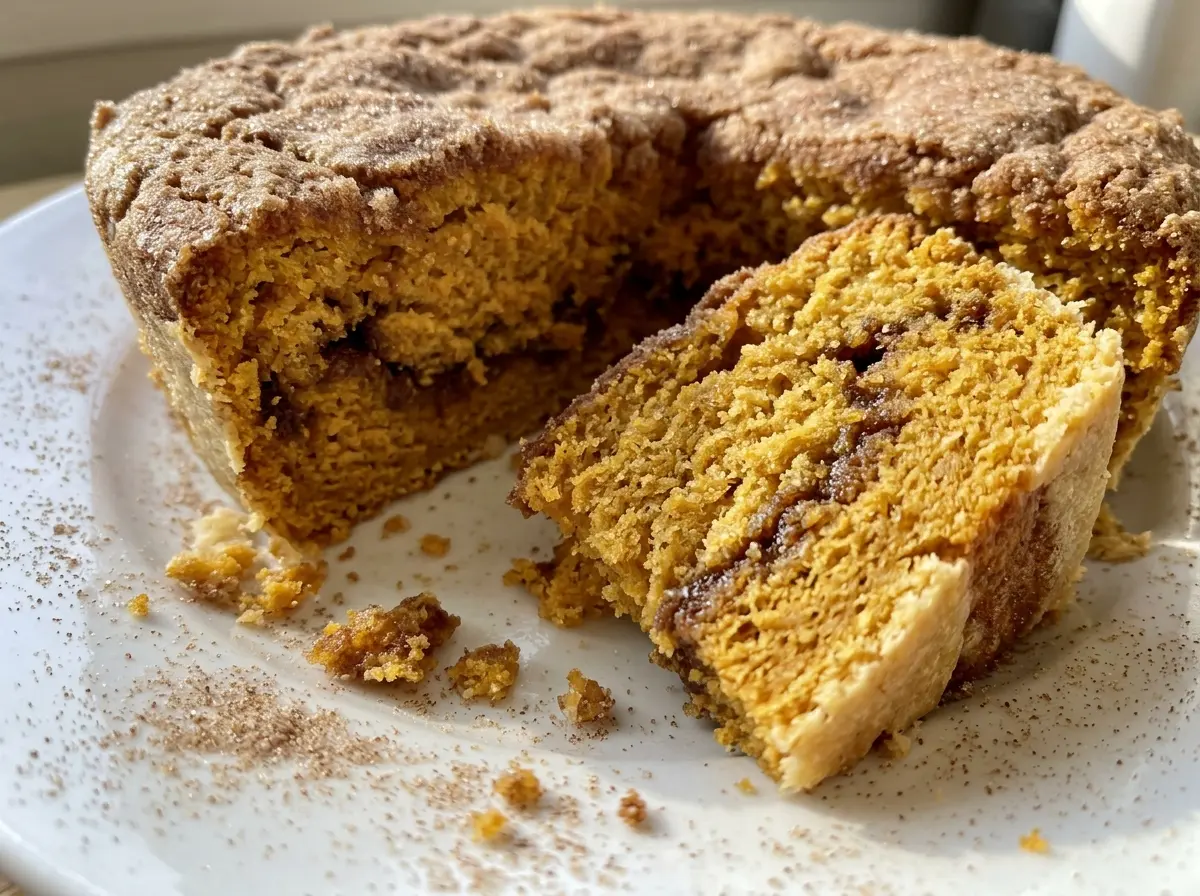
I mix the butter and sugar until they look light and fluffy, then add the pumpkin before bringing in the flour. That order gives the wet ingredients a chance to come together before the dry mixture goes in, and a gentle finish keeps the cake tender. The batter is meant to be a cake batter, not something you can roll between your hands. A few moist crumbs on the toothpick are just right; waiting for it to come out completely clean can take the cake past its best. Each square has a cinnamon-sugar lid and a soft pumpkin crumb.
Kitchen Note
Let the cake rest in its pan for at least 20 minutes before cutting. That short pause gives the soft center time to settle, so the squares hold together instead of smearing at the edges.
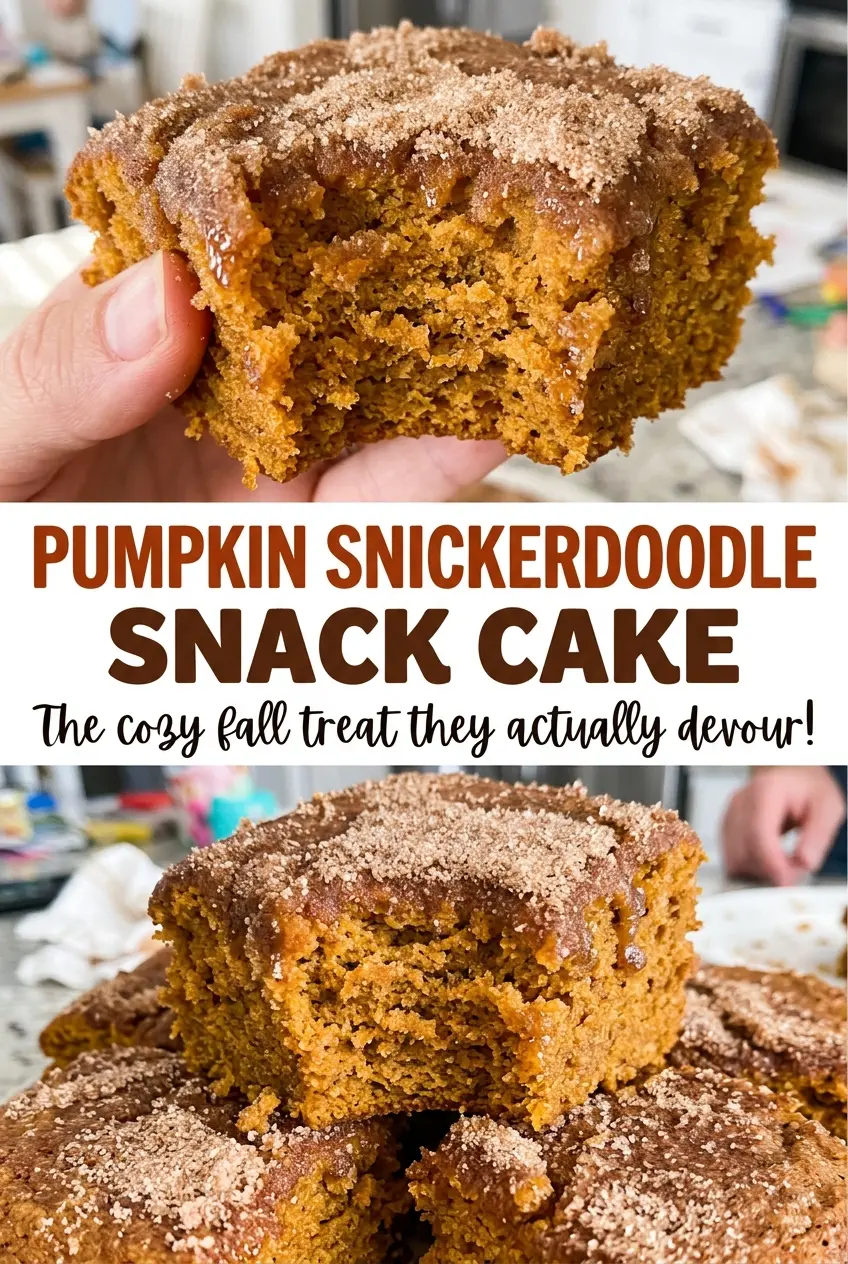
Save this Pumpkin Snickerdoodle Snack Cake for a soft pumpkin crumb under a cinnamon-sugar top, baked in one square pan.
Why Pumpkin Snickerdoodle Batter Won’t Roll Like Cookie Dough
The pumpkin changes the job of the batter. It brings moisture and body, so this mixture is soft enough to spread in a pan rather than firm enough to shape into individual cookies. If you add extra flour because it looks too loose to roll, the baked cake can turn heavy and dry. Treat it like a cake from the start: combine the wet ingredients, add the flour mixture, and stop as soon as the dry streaks disappear.
The snickerdoodle note comes from more than the cinnamon on top. Cream of tartar gives the familiar gentle tang, while baking powder and baking soda help the cake rise. They each have a role alongside the pumpkin, so leaving one out changes the balance. A square pan also gives the batter a consistent depth; spreading it thinner or piling it deeper changes how quickly the center bakes. Keep the batter in the 8-inch square pan, then use the center-set and toothpick cues to judge the finish. The result is a snack cake with a cinnamon-sugar surface, not a cookie in cake form.
What the Pumpkin, Cream of Tartar, and Cinnamon Each Bring
- Canned pumpkin puree — Use plain puree, not pumpkin pie filling, which is already sweetened and spiced. The puree brings the cake’s pumpkin flavor and moisture; canned puree is convenient because its texture is consistent. There isn’t a direct substitute that gives the same result, so choose a can labeled pumpkin puree rather than trying to replace it with another squash.
- All-purpose flour and the leaveners — Flour gives the cake its structure, while baking powder, baking soda, and cream of tartar help it rise and give the crumb its snickerdoodle character. Measure flour without packing it down. For a gluten-free version, the most useful swap is a measure-for-measure gluten-free baking blend formulated for cakes; the texture may be a little different from the all-purpose flour version.
- Unsalted butter and granulated sugar — Softened butter can trap air as it’s beaten with the sugar, which helps keep this cake from feeling dense. Use butter that yields slightly when pressed but isn’t melted. Unsalted butter lets the separately measured salt stay in control; a butter brand you enjoy is worthwhile here, while ordinary granulated sugar is all you need.
- Egg and vanilla — A room-temperature egg blends more evenly into softened butter than a cold one, and vanilla rounds out the pumpkin and cinnamon. Regular vanilla extract works well; there’s no need for a specialty bottle. If the egg is cold, set it out while you measure the other ingredients.
- Cinnamon-sugar topping — Ground cinnamon is the defining aroma on the surface, and granulated sugar makes the top sparkle and crisp slightly as it bakes. Fresh-smelling cinnamon matters more than an expensive brand. Stir the two together thoroughly before sprinkling so you don’t get a concentrated patch of cinnamon in one bite.
From Fluffy Butter to a Set, Crumb-Topped Center
Prepare the Pan and Dry Mixture
Heat the oven to 350°F and coat an 8-inch square baking pan with cooking spray. In a medium bowl, whisk together the flour, baking powder, baking soda, cream of tartar, cinnamon, and salt until the mixture looks even. Whisking now helps distribute the leaveners through the flour before they meet the wet ingredients. Set the bowl aside while you cream the butter and sugar.
Cream the Butter Before Adding Pumpkin
Beat the softened butter with the cake sugar in a large bowl until light and fluffy, about 2 minutes. Scrape the bowl if butter is clinging to the sides, then beat in the egg and vanilla. Mix in the pumpkin puree until combined; the mixture may look softer than a cookie dough, which is expected. Add the flour mixture on low and stop as soon as no dry streaks remain, since extended mixing can make the crumb tougher.
Top and Bake Until the Center Sets
Stir the topping sugar and cinnamon in a small bowl, then scatter the mixture evenly over the batter. Bake at 350°F for 32 to 38 minutes. The center should look set, and a toothpick inserted there should come out with a few moist crumbs rather than wet batter. A completely clean toothpick can mean the cake has gone further than it needs to. Cool the cake in the pan before cutting and serving.
Three Simple Ways to Change the Cinnamon-Pumpkin Balance
Use a Gluten-Free Baking Blend
Replace the all-purpose flour measure-for-measure with a gluten-free blend intended for baking cakes. A blend that includes xanthan gum helps provide structure; expect the crumb to vary a little by brand, and avoid using a single-ingredient flour such as almond flour as a direct swap.
Keep the Cinnamon Only on Top
Leave the cinnamon out of the cake’s dry mixture but keep the cinnamon-sugar topping. The pumpkin and vanilla come through more clearly in the crumb, while the top still gives each square a cinnamon finish.
Bake It Without the Sugar Topping
Skip the cinnamon-sugar mixture and bake the batter on its own. You’ll lose the lightly crisp, sweet surface, but the cake still has cinnamon in the crumb and tastes less sugary on top.
Storage and Reheating
- Refrigerator: Store covered in an airtight container for up to 4 days. The chilled crumb firms up; let a piece sit briefly at room temperature if you prefer it softer.
- Freezer: Freeze fully cooled squares in a freezer-safe airtight container, with parchment between layers, for up to 2 months. Thaw in the refrigerator or at room temperature while covered.
- Reheating: Warm an individual square in the microwave in short bursts until just warm. Long heating can dry the edges before the center is warm.
Questions That Come Up While Baking This Snack Cake
Pumpkin Snickerdoodle Snack Cake
Ingredients
Equipment
Method
- Heat the oven to 350°F.
- Coat an 8-inch square baking pan with cooking spray.
- Whisk the flour, baking powder, baking soda, cream of tartar, cinnamon, and salt in a medium bowl.
- Beat the softened butter and 3/4 cup granulated sugar in a large bowl until light and fluffy, about 2 minutes.
- Beat in the egg and vanilla.
- Mix in the pumpkin puree until combined.
- Add the flour mixture and mix on low just until no dry streaks remain.
- Stir the 2 tablespoons granulated sugar and 1 teaspoon cinnamon together in a small bowl.
- Sprinkle the cinnamon-sugar evenly over the batter.
- Bake for 32 to 38 minutes, until the center is set and a toothpick inserted in the center comes out with a few moist crumbs.
- Cool in the pan for at least 20 minutes before cutting and serving.