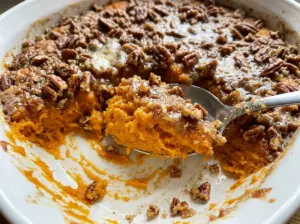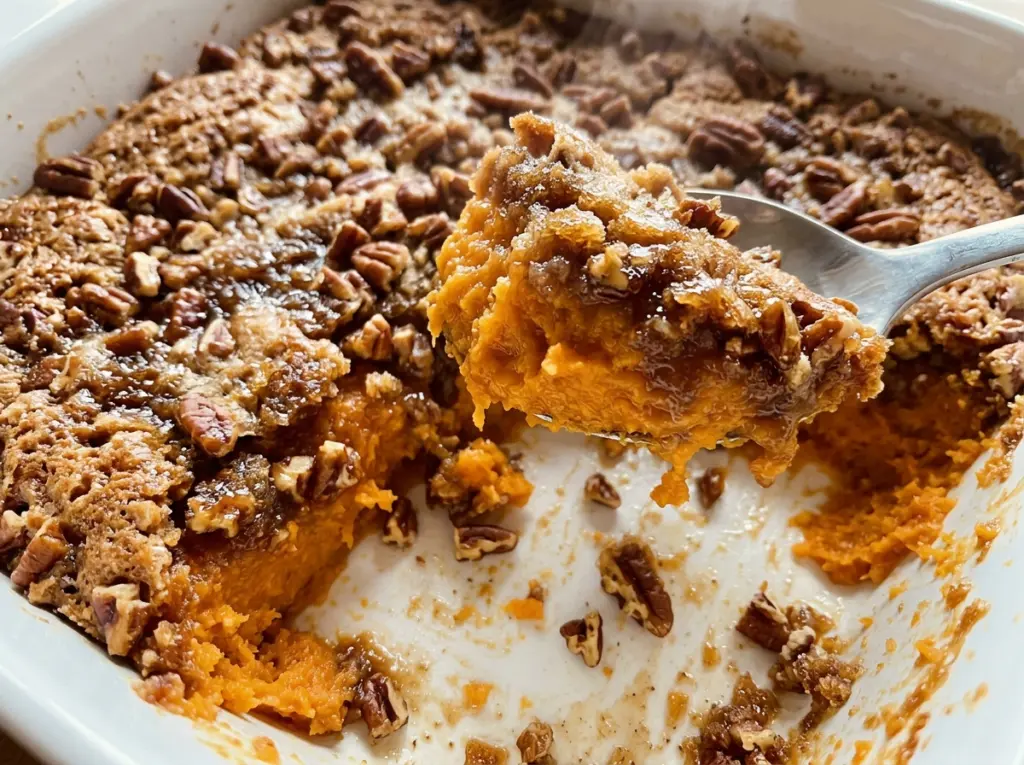

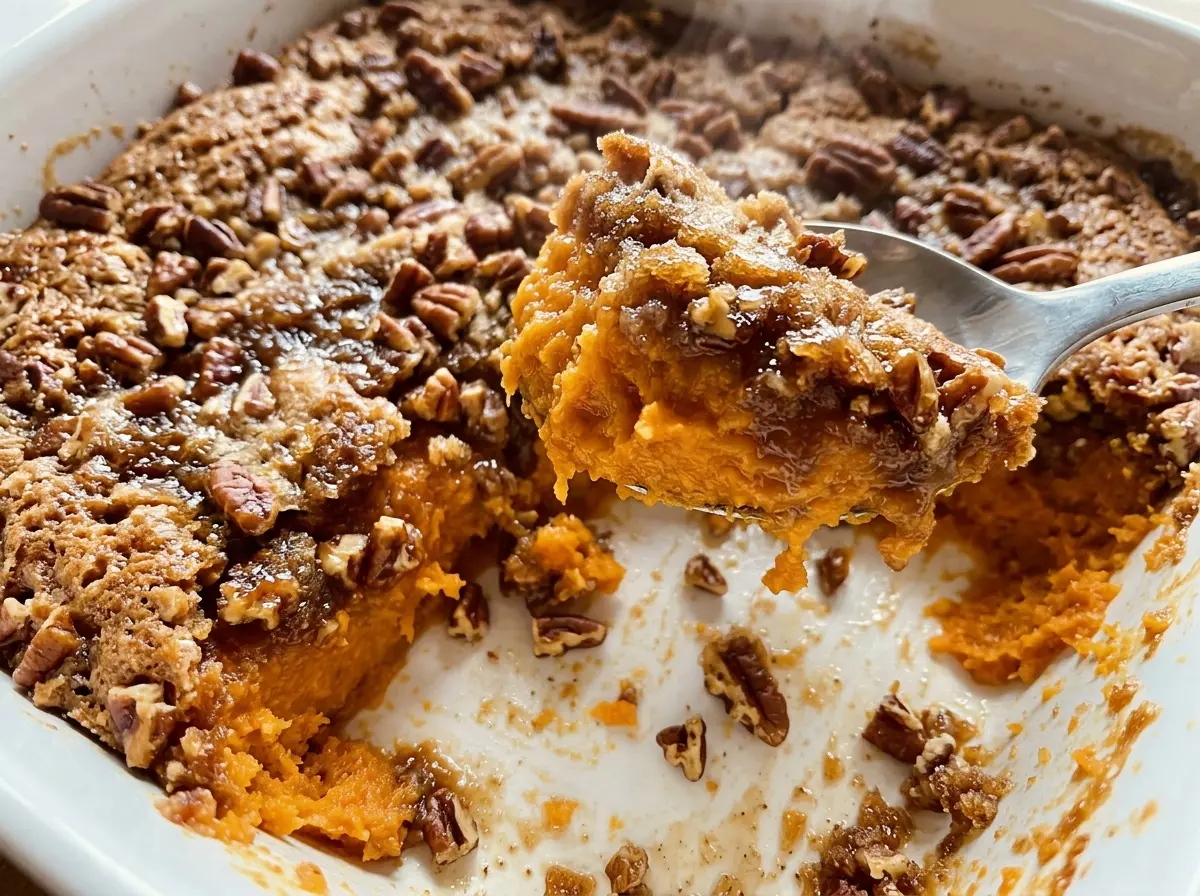
The first forkful gives you a little crunch from the pecan topping, then a soft, smooth layer of sweet potato underneath. That contrast is what makes Ruths Chris Sweet Potato Casserole more than a sweet mash with nuts sprinkled over it. The topping bakes into a buttery, brown-sugar cap, while the filling stays tender enough to scoop neatly.
I keep the filling sweet but not flat by mixing in the measured salt along with the sugar and vanilla. It brings the sweet potato flavor forward without making the casserole taste salty. There’s no need for an elaborate spice blend here; the pecans and brown sugar bring plenty of warmth on their own.
Roasting the potatoes whole keeps the hands-on work simple, and the filling comes together in one bowl once the flesh is mashed. A separate pecan mixture goes over the top, so the finished casserole has two clear textures in every serving: creamy underneath and crumbly, golden pecans above.
Kitchen Note
Measure the flesh after mashing, not before. The filling is balanced for 3 cups, so if your potatoes yield extra, save it for another use instead of adding it to the casserole.
Save Ruths Chris Sweet Potato Casserole for its smooth sweet potato filling and buttery pecan topping.
Why Roasting the Sweet Potatoes Keeps the Filling from Turning Watery
Boiling seems like the quicker route, but potatoes cooked in water can hold extra moisture. That water ends up in the mash, where it can loosen the filling and make the casserole harder to scoop cleanly. Roasting the potatoes whole keeps them out of the cooking water, so the flesh stays concentrated and the filling has a better chance of baking up tender rather than wet.
There’s another advantage to roasting them whole: the skins protect the flesh as it cooks, and you can scoop out the soft centers once the potatoes are easy to handle. Don’t judge tenderness by how the outside looks. Use a knife in the thickest part; when it slides in without resistance, the centers are ready to mash.
This matters most because the pecan topping sits right on the filling. A loose layer underneath can make the topping feel heavy instead of giving you that distinct contrast between a soft center and a golden, crumbly top. Roasting is a quiet step, but it sets up the texture of the whole dish.
What the Sweet Potato Filling and Pecan Crumble Each Need
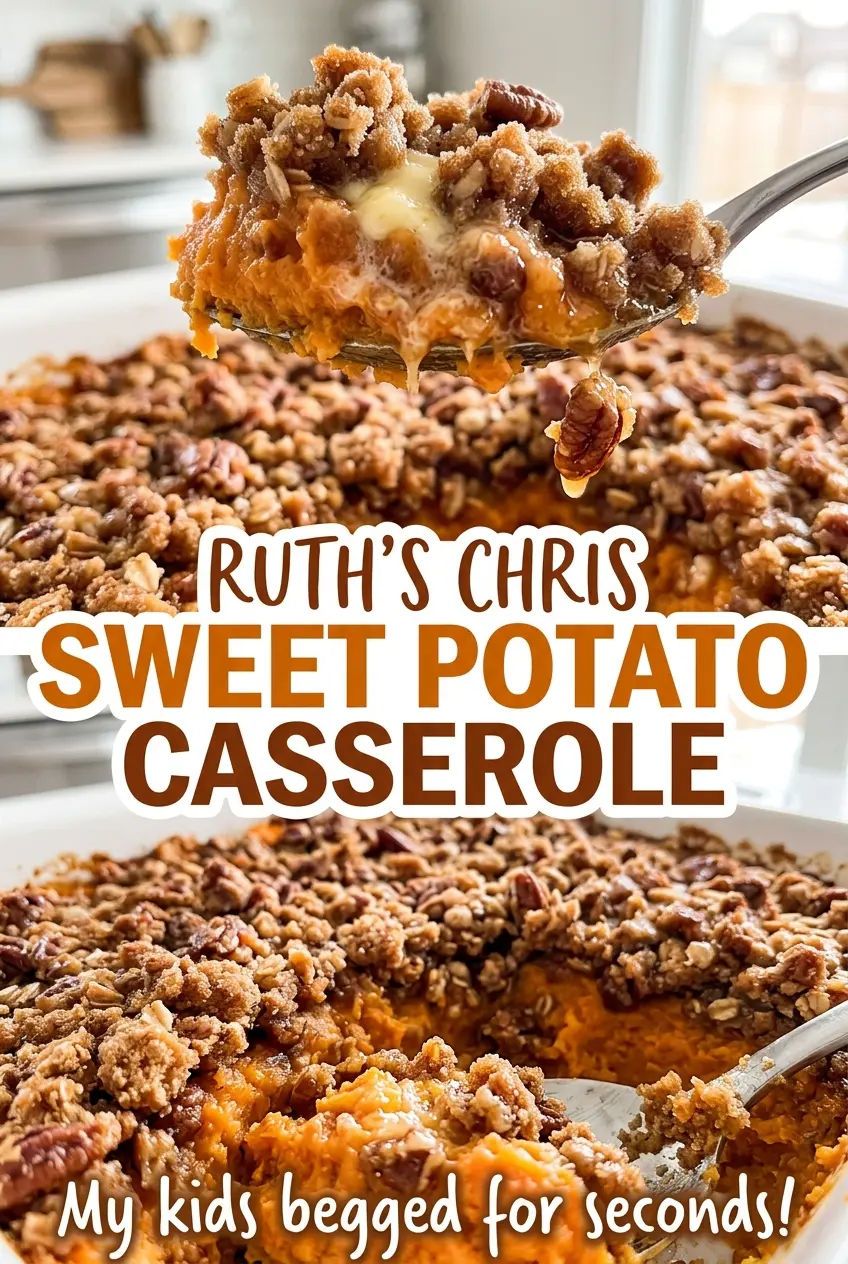
- Sweet potato flesh — Choose firm, fresh sweet potatoes without soft spots; standard orange-fleshed supermarket potatoes work well here. Their natural sweetness and smooth texture form the base, so mash the scooped flesh thoroughly rather than leaving firm pieces that will stand out in the finished filling.
- Eggs — Large eggs help the filling set as it bakes, giving it enough structure to serve in portions while keeping the middle soft. Use large eggs so the balance stays consistent; smaller eggs won’t bind the mixture in quite the same way.
- Unsalted butter — Butter enriches both the filling and the topping. Unsalted is useful because it lets you control the salt in the sweet potato mixture, and ordinary grocery-store butter is a good fit; there’s no need for a specialty brand.
- Vanilla and granulated sugar — Vanilla rounds out the sweetness, while granulated sugar dissolves into the mashed potatoes and keeps the filling smooth. A basic pure vanilla extract is plenty; a premium bottle won’t change the casserole as much as properly tender potatoes will.
- Brown sugar, flour, and pecans — Packed light brown sugar gives the topping its caramel-like sweetness, flour helps the melted butter hold the mixture together, and chopped pecans bring the crunch. Fresh pecans have a cleaner, nuttier taste; if yours smell stale or bitter, replace them before baking.
Building the Casserole in Four Stages
Roast the Potatoes Until the Centers Give Easily
Heat the oven to 400°F and place the whole sweet potatoes on a rimmed baking sheet. Roast for 45 to 60 minutes, until a knife slides easily into the centers. Let them cool until they’re easy to handle, then split them and scoop out the flesh.
Mash Smoothly and Mix the Filling
Mash the sweet potato flesh until smooth, then measure 3 cups. Reduce the oven to 350°F and grease an 8-inch square baking dish with the softened butter. In a large bowl, mix the sweet potato with the sugar, salt, vanilla, eggs, and melted butter until the filling looks even, then spread it in the dish.
Make a Topping That Clumps Around the Pecans
Stir the brown sugar, flour, and chopped pecans together in a medium bowl. Mix in the melted butter until everything is evenly moistened; you’re looking for damp, loose clumps, not a dry layer of flour at the bottom. Scatter the topping evenly over the filling without mixing the two layers together.
Bake Until Golden, Then Let the Center Set
Bake at 350°F for 30 to 35 minutes, until the topping is golden and the center reaches 160°F. If the top looks golden before the center reaches that temperature, keep baking and check the middle again. Let the casserole rest for 10 minutes before serving so the filling can settle into easier-to-scoop portions.
Three Practical Ways to Adapt the Pecan-Topped Casserole
Use Walnuts Instead of Pecans
Swap in the same amount of chopped walnuts for the pecans. The topping still bakes into a crunchy, buttery layer, but walnuts bring a slightly earthier taste and a little less sweetness.
Make the Topping Gluten-Free
Replace the all-purpose flour in the topping with the same amount of a cup-for-cup gluten-free flour blend designed for baking. The crumble may be a touch more delicate, but it will still coat the pecans and brown over the filling.
Make It Dairy-Free with Stick-Style Plant Butter
Use unsalted stick-style plant butter in place of the butter throughout, keeping the same quantities and softened or melted state for each use. Skip tub-style spreads, which tend to be softer and can leave the topping less crumbly.
Storage and Reheating
- Refrigerator: Cover and refrigerate leftovers within 2 hours; they’ll keep for 3 to 4 days. The pecan topping softens as it sits.
- Freezer: Cool completely, wrap portions tightly, and freeze for up to 2 months. Thaw overnight in the refrigerator; expect the topping to be softer than when freshly baked.
- Reheating: Cover with foil and warm in a 325°F oven until the center reaches 165°F. Uncover near the end if you’d like to crisp the top; reheating uncovered the whole time can dry the edges before the middle is hot.
Questions That Come Up When Making This Casserole
Ruths Chris Sweet Potato Casserole
Ingredients
Equipment
Method
- Heat the oven to 400°F.
- Place the whole sweet potatoes on a rimmed baking sheet and roast for 45 to 60 minutes, until a knife slides easily into the centers.
- Let the potatoes cool until easy to handle.
- Split the potatoes, scoop out the flesh, and mash until smooth; measure 3 cups.
- Reduce the oven to 350°F.
- Grease an 8-inch square baking dish with the softened butter.
- In a large bowl, mix the sweet potato, granulated sugar, salt, vanilla, eggs, and melted butter until smooth.
- Spread the mixture in the prepared dish.
- In a medium bowl, stir together the brown sugar, flour, and pecans.
- Mix in the melted butter until evenly moistened.
- Sprinkle the topping evenly over the sweet potato mixture.
- Bake at 350°F for 30 to 35 minutes, until the topping is golden and the center reaches 160°F.
- Let the casserole rest for 10 minutes before serving.