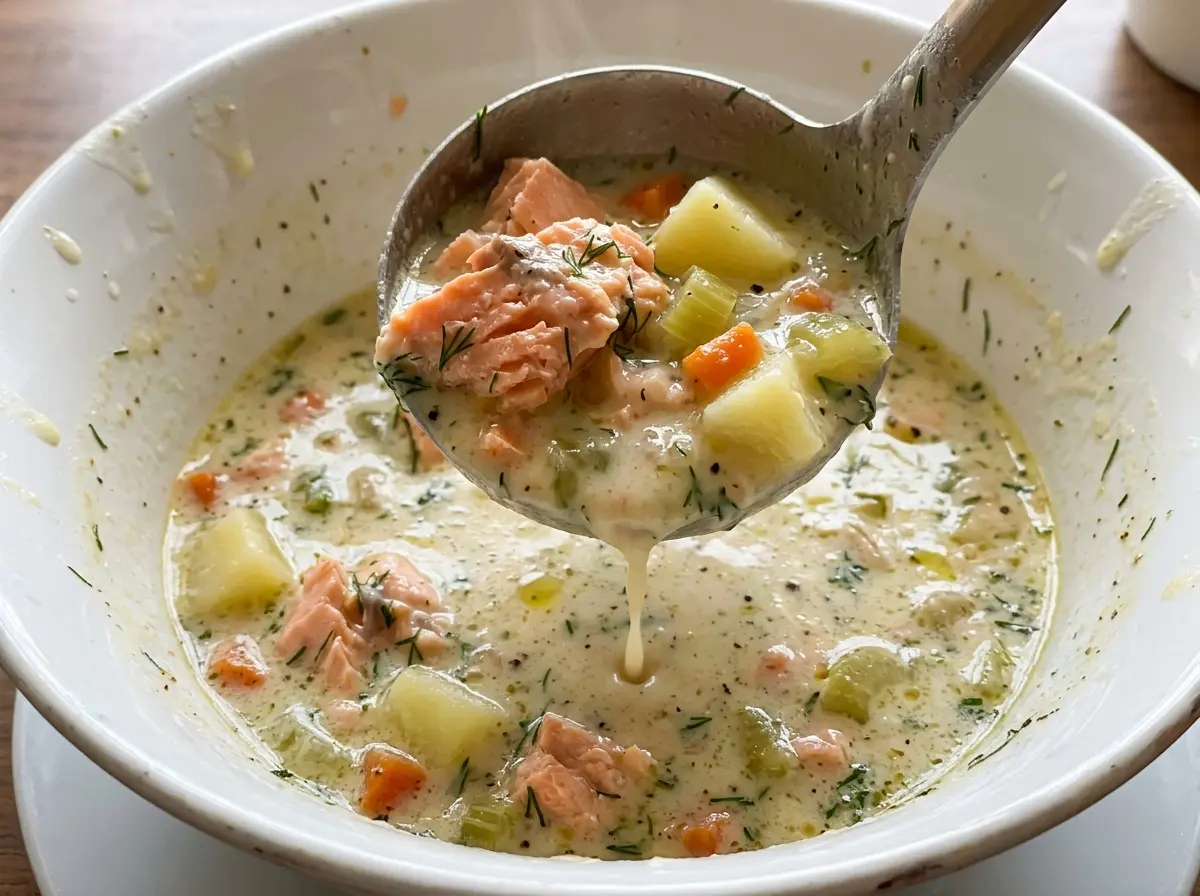
The bacon starts to crisp at the edges before the kitchen smells like chowder. I leave those drippings in the pot, then soften the onion and celery in them; by the time the potatoes are tender, the broth has a savory base without needing a long simmer. This salmon chowder soup is creamy and substantial, but it still lets the salmon taste like salmon.
Building the broth with a quick flour roux gives it body while the potatoes cook. I whisk the broth in gradually, then let the potatoes simmer until a fork slips through them easily. The milk and cream go in afterward, and the salmon gets only a few gentle minutes in the hot soup. You end up with a rich bowl, tender fish, and potatoes that hold their shape.
Kitchen Note
Cut the salmon into even chunks before you start cooking. When the pieces are close in size, they finish together, so you don’t have to keep the smaller ones simmering while a thick piece catches up.
Save this salmon chowder soup for a cozy dinner with crisp bacon, tender potatoes, and a creamy broth.
Why the Broth Needs to Go Into the Roux Slowly
A chowder can turn lumpy before the potatoes even hit the pot if the broth is poured into the flour all at once. The flour needs a moment to coat the softened onion and celery, and then the liquid needs to be whisked in gradually. That gives the roux time to loosen into a smooth base instead of forming little flour pockets that are hard to break up later.
Cook the flour for a full minute before adding broth. That brief cooking step takes away its raw taste, while the bacon drippings and butter keep the base from feeling flat. As you whisk in the broth, scrape around the bottom and corners of the Dutch oven; the mixture should look smooth before you add the potatoes. Once the soup simmers, the flour thickens the liquid as the potatoes cook, so there’s no need to reduce the broth aggressively or risk softening the vegetables too far.
This small bit of patience pays off in the finished bowl: the broth clings lightly to the potatoes and fish instead of feeling watery, and the texture stays even from the first ladle to the last.
What the Salmon, Potatoes, and Cream Each Bring to the Pot

- Salmon — Skinless, boneless salmon gives you clean, generous chunks without bones or skin in the bowl. Fresh fish with a mild smell and firm flesh is a good choice; frozen salmon works too once it’s thawed completely and patted dry. Cut it just before cooking so the pieces stay neat.
- Yukon Gold potatoes — Their naturally creamy texture helps the broth feel hearty while the cubes keep their shape. Choose potatoes that feel firm and have smooth, unwrinkled skins; a less expensive bag is fine as long as the potatoes aren’t sprouting or soft. Red potatoes can stand in, but they’ll taste less buttery and stay a little firmer.
- Bacon — The drippings season the vegetables and give the chowder its smoky backbone, while the crisp pieces add texture at the end. Regular grocery-store bacon works well here; there’s no need for thick-cut or specialty bacon. If you leave it out, use the butter to cook the onion and celery and expect a milder, less smoky soup.
- Whole milk and heavy cream — Together, they make the broth creamy without relying on cream alone. Use fresh dairy, but standard supermarket brands are perfectly good. Whole milk can replace the cream if you want a lighter soup; the broth will be thinner and less rich.
- All-purpose flour — Flour thickens the broth as the potatoes simmer, and an ordinary all-purpose flour gives a dependable roux. For a gluten-free bowl, a cup-for-cup gluten-free flour blend is the most straightforward swap; cook it with the vegetables just as you would regular flour.
Build the Chowder Base Before the Salmon Goes In
Render the Bacon, Then Soften the Vegetables
Set a 5-quart Dutch oven over medium heat and cook the chopped bacon for 6–8 minutes, stirring occasionally, until crisp. Move it to a paper towel-lined plate and leave the drippings in the pot. Add the butter, onion, and celery, then cook for 5–7 minutes, stirring now and then, until the vegetables have softened. If the onion starts to brown before it softens, lower the heat slightly so the base stays gentle rather than taking on a scorched taste.
Whisk a Smooth Roux and Broth Together
Stir the flour into the vegetables and cook it for 1 minute. Pour in the chicken broth gradually while whisking, working out any small lumps as you go. The liquid should look smooth before you add the potatoes and seasonings. If a little flour clings to the bottom, keep whisking and loosen it before the soup reaches a simmer.
Simmer the Potatoes Until Fork-Tender
Add the potatoes, bay leaf, dried thyme, kosher salt, and black pepper. Bring the pot to a simmer, then cook uncovered for 12–15 minutes, until the potatoes are fork-tender. Keep the heat at a steady simmer rather than a hard boil, which can make the outside of the cubes break down before the centers are tender. Check a few pieces from different parts of the pot before moving on.
Warm the Dairy and Gently Cook the Salmon
Stir in the whole milk and heavy cream, then heat gently for 3–4 minutes without letting the soup boil. Add the salmon and simmer gently for 4–6 minutes, until it’s opaque and reaches 145°F in the thickest pieces. Avoid a rolling boil here; it can toughen the fish and make the creamy broth less smooth. Take out the bay leaf, then stir in the parsley and crisp bacon just before serving.
Three Simple Ways to Adapt This Salmon Chowder
Make the Roux Gluten-Free
Use the same amount of a cup-for-cup gluten-free flour blend in place of the all-purpose flour. Stir it into the vegetables and cook for 1 minute before gradually whisking in the broth; the finished chowder may have a slightly different texture depending on the blend, but it still thickens the soup.
Leave Out the Bacon
For a milder bowl without pork, skip the bacon and cook the onion and celery in the butter. The chowder will lose the smoky, salty note the drippings bring, but the potatoes, thyme, salmon, and creamy broth still make a satisfying soup.
Make It Less Rich
Replace the heavy cream with an equal volume of whole milk. The soup will be lighter and less velvety, but the flour still gives the broth body. Keep the heat gentle after adding the dairy.
Storage and Reheating
- Refrigerator: Store leftovers in an airtight container for up to 3 days. The potatoes will soften a little as they sit.
- Freezer: Freeze in an airtight container for up to 2 months for best quality. The cream may separate and the potatoes may turn softer after thawing, so the texture won’t be quite as silky.
- Reheating: Warm leftovers slowly in a saucepan over low heat, stirring gently until steaming hot throughout, to 165°F. Don’t let the chowder boil; high heat can make the dairy separate and the salmon dry out.
Questions That Come Up When Making Salmon Chowder
Salmon Chowder Soup
Ingredients
Equipment
Method
- In a 5-quart Dutch oven over medium heat, cook the bacon for 6–8 minutes, stirring occasionally, until crisp.
- Transfer the bacon to a paper towel-lined plate, leaving the drippings in the pot.
- Add the butter, onion, and celery to the pot and cook for 5–7 minutes, stirring occasionally, until softened.
- Stir in the flour and cook for 1 minute.
- Gradually whisk in the chicken broth until smooth.
- Stir in the potatoes, bay leaf, thyme, salt, and pepper, then bring to a simmer.
- Cook uncovered for 12–15 minutes, until the potatoes are fork-tender.
- Stir in the milk and heavy cream and heat gently for 3–4 minutes, without boiling.
- Add the salmon and simmer gently for 4–6 minutes, until opaque and it reaches 145°F in the thickest pieces.
- Remove the bay leaf.
- Stir in the parsley and crisp bacon, then serve.