The beans hit the hot skillet with a soft hiss, then the water goes in and the lid traps just enough steam to soften them without turning them limp. That covered start is what makes these sauteed green beans practical: they get tender inside before the pan has to do the browning.
I cook them in a 12-inch skillet, starting with the oil over medium-high heat and lowering the heat to medium once the beans and water are in. After four minutes covered, the lid comes off and the water cooks away. Keep tossing now and then so the beans pick up a few browned spots instead of sitting in one place.
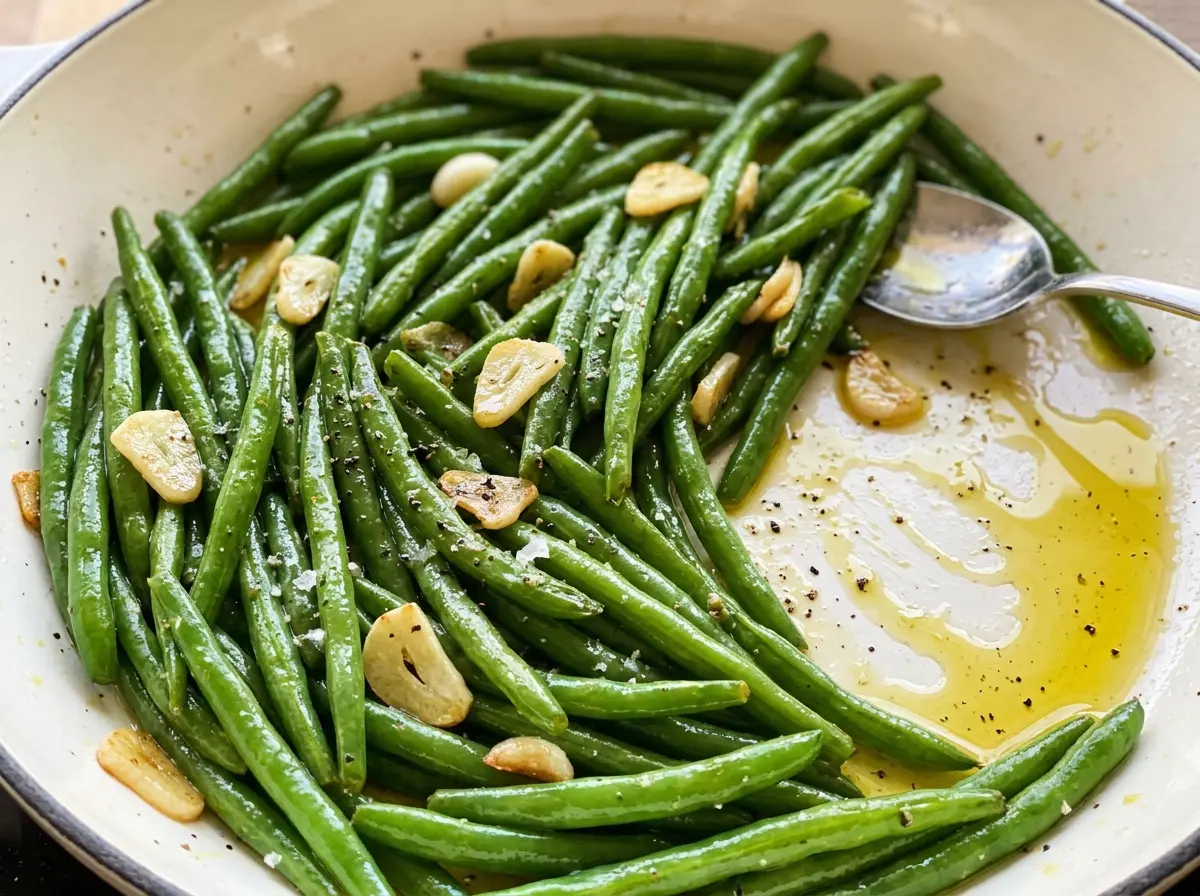
Garlic goes in only at the end, with the salt and pepper. Thirty seconds is enough for it to smell fragrant without scorching. The finished beans are crisp-tender, lightly browned, and still fresh-tasting.
Kitchen Note
Watch the garlic closely once it hits the pan. At 30 seconds, it should smell fragrant; if it starts turning brown, take the skillet off the heat so it doesn’t go bitter.
Save these sauteed green beans for a simple side with crisp-tender centers, browned spots, and garlic stirred in right at the finish.
Why These Beans Need a Covered Start Before They Can Brown
A skillet of green beans can be frustrating when the outside wrinkles or darkens before the centers turn tender. Starting with a short covered cook solves that timing problem. The small amount of water creates steam under the lid, giving the beans time to soften without needing a long stretch in oil.
Once the lid comes off, the job changes. The water needs to evaporate before the beans can brown, so leave the skillet uncovered and toss the beans occasionally as they cook. If the pan still looks wet, give the water time to cook away rather than adding the garlic early; garlic is for the finish, not the steaming stage.
That two-part approach gives you control over the texture. The covered portion softens the beans, and the uncovered portion leaves them crisp-tender with a few browned spots. It also means you can judge the finish by what you see in the skillet instead of relying on a timer alone.
Fresh Beans, Fresh Garlic, and the Small Choices That Show Up on the Plate
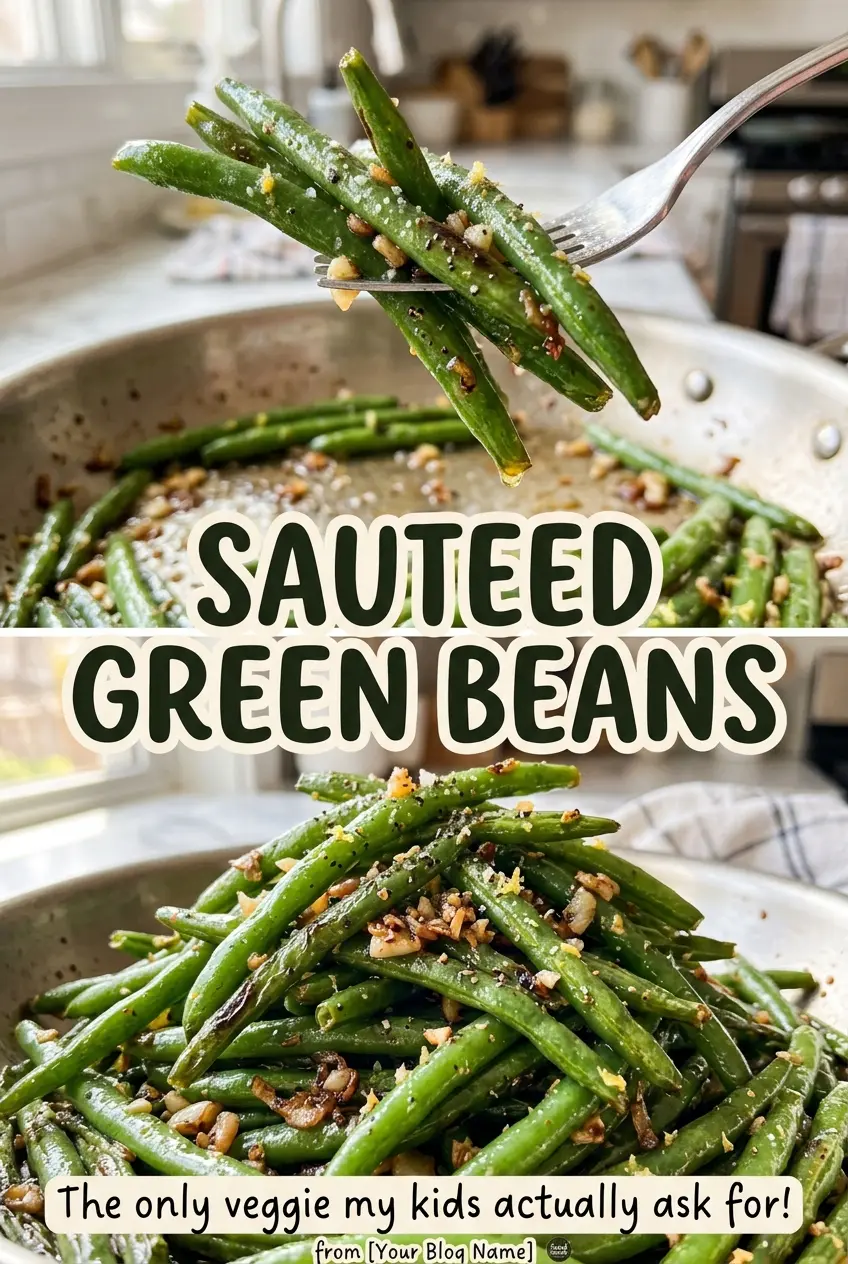
- Fresh green beans — Fresh beans are the right fit for this covered-then-uncovered skillet method; they soften in the steam and then have a chance to brown. Trim the ends before cooking, and look for beans that feel firm rather than limp. Canned beans won’t give you the same crisp-tender result, and frozen beans release water differently, so neither is a direct swap here.
- Olive oil — The oil coats the beans and helps them pick up browned spots after the water cooks away. An everyday olive oil works well; there’s no need to use an especially expensive bottle for a skillet side.
- Garlic — Freshly minced garlic gives the brief finish its sharp, fragrant aroma. Mince it before you start cooking so it’s ready to go when the beans are tender; stopping to prep it at the end makes it easy to overcook the beans while the garlic waits.
- Kosher salt — Kosher salt seasons the beans without adding another flavor. Keep the type consistent when measuring, since different salts can vary in how much salt fits in the same volume.
- Black pepper — Black pepper adds a gentle warmth that works with the garlic. Freshly ground pepper has a more pronounced aroma, while pre-ground pepper is fine for a quick weeknight side.
Steam First, Then Let the Skillet Do the Browning
Warm the oil in the skillet
Set a 12-inch skillet over medium-high heat and heat the olive oil. A wide skillet gives the beans room to spread out rather than piling into a deep mound. Add the trimmed beans and water, then cover the pan. Once they’re in, cook over medium heat for four minutes.
Uncover and cook off the water
Take off the lid after four minutes and keep cooking for three to five minutes, tossing the beans occasionally. At first, you’ll see water in the bottom of the pan; let it evaporate before judging the browning. The beans are ready for the finish when they’re crisp-tender and have a few browned spots. If they’re still firm, use the rest of that uncovered cooking window to let them soften.
Season at the very end
Stir in the minced garlic, kosher salt, and black pepper when the water has evaporated and the beans have reached the right texture. Cook for 30 seconds, stirring so the garlic meets the hot beans and oil. It should smell fragrant as it warms. Serve the beans while their browned edges and crisp-tender centers are at their best.
Simple Ways to Change the Batch Size Without Crowding the Pan
Make a half batch for a smaller table
Divide each ingredient in half for two servings. Keep the same covered-then-uncovered sequence and use the visual cues—the water evaporates, the beans turn crisp-tender, and a few browned spots appear—to decide when they’re ready, since a smaller amount may move through the stages sooner.
Double the recipe in two skillet rounds
For eight servings, double every ingredient but cook the beans in two rounds in the 12-inch skillet. Crowding two pounds of beans into one pan makes it harder for the water to evaporate and the beans to brown. Repeat the same covered and uncovered cooking sequence for each round, dividing the garlic and seasonings between them.
Storage and Reheating
- Refrigerator: Store cooled beans in a covered container for 3 to 4 days. They’ll lose some of their crisp-tender texture as they sit.
- Freezer: They can be frozen in an airtight container for up to 2 months, though thawed beans will be softer and less suited to serving as a crisp-tender side.
- Reheating: Warm them in a skillet over medium heat until hot, tossing occasionally. Avoid prolonged reheating; it softens the beans further and can make the garlic taste harsher.
Questions That Come Up With Skillet Green Beans
Sauteed Green Beans
Ingredients
Equipment
Method
- Heat the olive oil in a 12-inch skillet over medium-high heat.
- Add the green beans and water, cover, and cook over medium heat for 4 minutes.
- Uncover and cook, tossing occasionally, for 3 to 5 minutes, until the water evaporates and the beans are crisp-tender with a few browned spots.
- Stir in the garlic, salt, and black pepper and cook for 30 seconds, until fragrant.