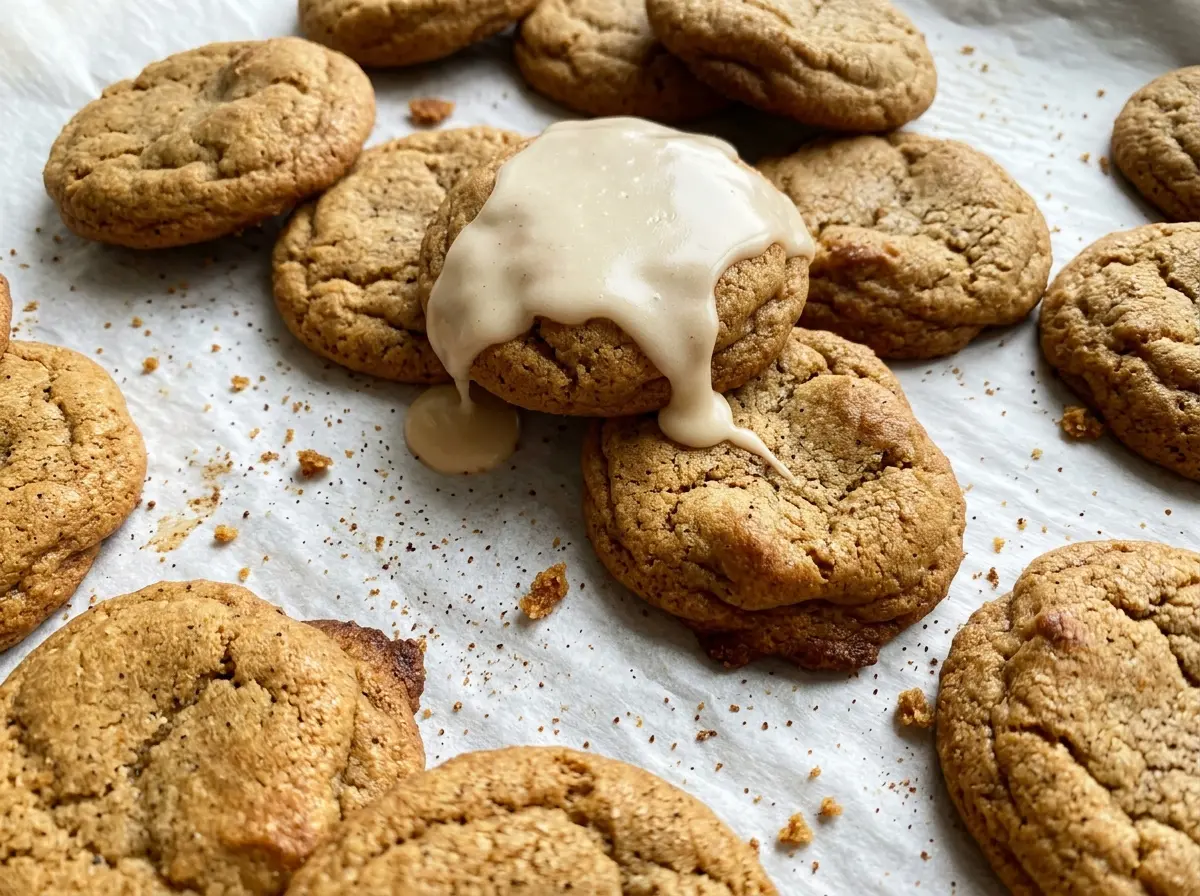
The first clue these gingerbread cookies are ready isn’t a firm center. It’s the edges setting while the middle still looks puffed and a little underbaked. I used to leave cookies in the oven until the centers looked done, and they came out crisp instead of soft. Now I pull them at that just-set edge, and the hot baking sheet takes care of the rest.
For these soft gingerbread cookies with maple glaze, chilling the dough makes the scoops easier to handle and gives the flour time to hydrate. The dough should feel firm enough to roll in sugar without sticking all over your hands. Unsulphured molasses brings the deep gingerbread flavor without the sharp bitterness that blackstrap can add.
Once the cookies are cool, a quick maple glaze adds a smooth, sweet finish. Underneath, they stay tender and warmly spiced, with a delicate sugar crust around each edge.
Kitchen Note
With two pans in the oven, switch their rack positions and rotate them halfway through baking. That small adjustment helps both sheets bake evenly, even when one spot in your oven runs a little hotter.
Save these soft gingerbread cookies with maple glaze for a bake with tender centers, a sugar-dusted edge, and a sweet maple finish.
Why Chilling Gingerbread Dough Helps Keep These Cookies Soft
Molasses makes cookie dough moist and sticky, so freshly mixed dough tends to spread before the centers have time to set. A proper chill firms the butter and makes each scoop much easier to roll in sugar. It also gives the flour time to absorb moisture, so the dough handles more cleanly instead of clinging to your fingers.
That matters with this particular bake because the cookies come out while their centers still look slightly underdone. If the dough goes into the oven warm and loose, the cookies can spread too quickly and turn thin before their edges set. After chilling, the portions hold their shape long enough to bake into soft-centered rounds with a lightly crisp sugar coating. Give the dough the full chill, and use its texture—not just the clock—as your cue: it should be firm enough to scoop and roll without becoming a sticky mess.
What Molasses, Brown Sugar, and Maple Each Bring to These Cookies
- Unsulphured molasses — This gives gingerbread its deep, rounded sweetness. Choose regular unsulphured molasses, not blackstrap, which tastes much more intense and bitter. Mild honey can replace it in the same measure if needed, though the cookies will lose some of that classic molasses depth.
- Light brown sugar — Its moisture helps keep the crumb soft, while its mellow caramel note lets the spices come through. Dark brown sugar works in its place and makes the cookies taste a little more molasses-rich. Pack it firmly when measuring.
- Unsalted butter — Butter adds richness and helps the dough cream up fluffy with the brown sugar. A good everyday butter works well here; there’s no need to seek out a specialty brand. For a dairy-free batch, use stick-style plant butter rather than a soft tub spread.
- Ground ginger and the supporting spices — Fresh, fragrant spices make a noticeable difference in a cookie where ginger leads the flavor. If your ground ginger has been open for years and smells faint, replace it; cinnamon and cloves should smell warm and distinct, too. The listed spice combination gives the cookies their balanced gingerbread character.
- Granulated sugar for rolling — This creates the sparkling, lightly crisp outside that contrasts with the soft middle. Regular granulated sugar is the right choice; finer confectioners’ sugar won’t give the same coating.
- Pure maple syrup — Use real maple syrup for the glaze’s clean maple flavor. Pancake syrup can make the topping taste more like artificial maple candy. Milk loosens the confectioners’ sugar into a drizzle, so add it gradually if you prefer a thicker finish.
From Creamed Butter to a Set Maple Drizzle
Cream the Butter and Sugar Until Fluffy
Beat the softened butter and packed brown sugar in a large bowl with an electric mixer on medium speed for 2–3 minutes. The mixture should look creamy, lighter, and fluffy rather than like damp sand. Beat in the room-temperature egg until combined, then mix in the molasses. If the mixture looks a little uneven after the molasses goes in, scrape the bowl and continue until it’s well blended.
Mix the Dough Without Overworking It
Whisk the flour, baking soda, ginger, cinnamon, cloves, and salt together in a separate bowl so the leavening and spices are distributed. Add the dry mixture to the butter mixture and mix on low just until no dry flour remains. Stop as soon as the dough comes together; prolonged mixing can make the cookies tougher. Cover the bowl and refrigerate the dough for 45 minutes, until it feels firm enough to roll.
Roll, Sugar-Coat, and Bake
Heat the oven to 350°F and line two 18×13-inch baking sheets with parchment paper. Scoop the chilled dough into 24 portions of about 1 1/2 tablespoons each, roll every portion in granulated sugar, and set 12 on each sheet with about 2 inches between them. Bake both sheets for 9–11 minutes at 350°F. Take them out when the edges look set and the centers are puffed and slightly underbaked; baking until the centers look fully firm can leave you with crisp cookies.
Cool Completely Before Glazing
Let the cookies rest on their baking sheets for 5 minutes, then move them to wire racks to cool completely. Whisk the confectioners’ sugar, maple syrup, and milk in a small bowl until the glaze is smooth. Drizzle it over the cooled cookies; warm cookies can make the glaze run and disappear into the surface. Give the topping time to set before stacking or serving.
Three Easy Ways to Change the Spice or Glaze
Make Them Dairy-Free
Use stick-style dairy-free butter in place of the unsalted butter and unsweetened oat milk in place of the milk in the glaze. The cookies will still cream and bake well, though the butter flavor may be a little less rich. Avoid soft tub spreads, which contain more water and can make the dough difficult to handle.
Turn Up the Ginger
For a sharper ginger bite, add another 1/2 teaspoon of ground ginger to the dry ingredients. The cinnamon and cloves will still round it out, but ginger will be more prominent. Keep the other spice amounts unchanged so the flavor stays balanced.
Give the Glaze a Citrus Note
Replace the milk in the glaze with orange juice for a bright citrus note alongside the maple. Whisk it in gradually, since juice can make the icing looser than milk. The finished topping will taste less purely maple-sweet and more fresh and tangy.
Storage and Reheating
- Refrigerator: These don’t need refrigeration; keep them in an airtight container at room temperature for up to 4 days. Refrigeration can make the cookies firmer.
- Freezer: Freeze the unglazed cookies in an airtight container for up to 2 months. Thaw them at room temperature, then add the glaze so it sets neatly.
- Reheating: No reheating is needed. Let chilled cookies come back to room temperature, and don’t microwave glazed cookies or the topping may melt.
Questions That Come Up While Baking These Gingerbread Cookies
Soft Gingerbread Cookies with Maple Glaze
Ingredients
Equipment
Method
- Heat the oven to 350°F and line two 18x13-inch baking sheets with parchment paper.
- Beat the butter and brown sugar in a large bowl with an electric mixer on medium speed for 2–3 minutes, until creamy and fluffy.
- Beat in the egg until combined.
- Beat in the molasses.
- Whisk the flour, baking soda, ginger, cinnamon, cloves, and salt in a medium bowl.
- Add the dry ingredients to the butter mixture and mix on low just until no dry flour remains.
- Cover the dough and refrigerate for 45 minutes, until firm enough to roll.
- Scoop the dough into 24 portions of about 1 1/2 tablespoons each.
- Roll each portion in the granulated sugar.
- Arrange 12 portions on each prepared baking sheet, leaving about 2 inches between them.
- Bake both sheets at 350°F for 9–11 minutes, switching and rotating their rack positions halfway through, until the edges are set and the centers look puffed and slightly underbaked.
- Cool the cookies on the baking sheets for 5 minutes.
- Transfer the cookies to wire racks and cool completely.
- Whisk the confectioners’ sugar, maple syrup, and milk in a small bowl until smooth.
- Drizzle the glaze over the completely cooled cookies.
- Let the glaze set before serving.


