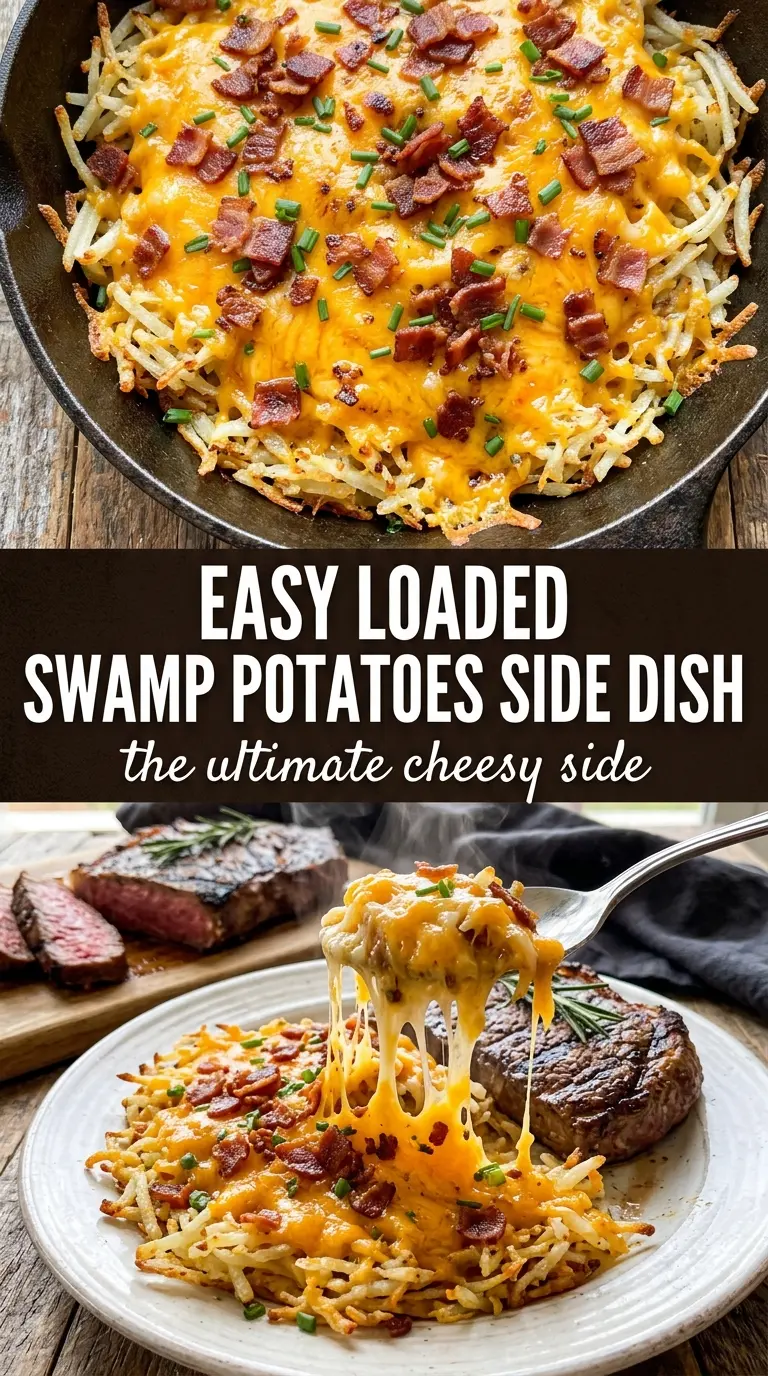
Tender roasted potatoes smothered in a creamy Cajun cheese sauce have a way of disappearing before anything else hits the table. The potatoes stay crisp at the edges long enough to catch the sauce, and the sauce itself lands with just enough heat to keep each bite interesting without drowning out the butter and cheese underneath. It’s the kind of side dish people keep circling back to, spooning up “just a little more” until the pan is bare.
What makes this version work is the two-part approach. The potatoes roast first so they pick up color and dry heat, which keeps them from turning soft under the sauce. Then the cheese goes into a gentle cream base with garlic and Cajun seasoning, so it melts smooth instead of turning grainy. Pepper jack brings the spice, cheddar rounds it out, and the green onions on top give the whole dish a fresh finish.
Below, I’ll walk through the little things that keep the sauce silky and the potatoes from steaming on the pan. I’ve also included a few smart swaps for when you want to dial the heat up or down without losing what makes swamp potatoes worth making in the first place.
The potatoes got those crispy edges I was hoping for, and the cheese sauce stayed smooth instead of turning greasy. I made it for Sunday dinner and the pan was basically scraped clean before I sat down.
Save these cheesy Cajun swamp potatoes for the nights when you want a bold side dish with crispy edges and a sauce that clings to every bite.
The Crispy Edges Have to Happen Before the Cheese Goes On
The biggest mistake with a potato dish like this is rushing the sauce onto pale, soft potatoes. Once the cheese hits, the oven can’t fix a weak roast. You want those baby potatoes browned on the cut sides and tender enough to pierce cleanly with a fork, but still structured enough to hold the sauce without collapsing.
Spacing matters more than people think. If the potatoes are crowded, they steam and turn dull instead of developing that roasted, almost brittle edge that makes the sauce worthwhile. A hot oven and a single layer give you the contrast this dish needs: creamy sauce, roasted potatoes, and enough seasoning on the outside that every bite tastes complete.
What Each Ingredient Is Actually Doing in This Dish
- Baby potatoes — These roast fast and hold their shape better than larger potatoes cut into uneven chunks. Halving them gives more surface area for browning, which is where the flavor starts.
- Olive oil — This helps the seasoning cling and encourages the edges to crisp. A neutral oil works too, but olive oil gives the potatoes a little more character.
- Cajun seasoning — This is the backbone of the dish, so use one you trust. Some blends are saltier or hotter than others, which is why the extra salt is kept modest; if your blend is heavy on salt, reduce the kosher salt a touch.
- Butter, garlic, and heavy cream — The butter carries the garlic flavor, and the cream gives the sauce its body. The key is gentle heat; if the cream boils hard, the sauce can turn oily before the cheese has a chance to melt smoothly.
- Pepper jack and cheddar — Pepper jack brings heat and a little stretch, while cheddar adds a deeper, sharper finish. Freshly shredded cheese melts cleaner than pre-shredded, which often has anti-caking starch that can make the sauce less silky.
- Green onions — Don’t skip them. They cut through the richness and keep the final dish from tasting flat.
Building the Sauce Without Breaking It
Roasting the Potatoes First
Start with a fully preheated 425°F oven and a baking sheet lined with parchment. Toss the halved potatoes until every cut side is coated, then spread them out with space around each piece. If they’re piled up, the moisture trapped underneath will soften them before they brown. Pull them when they’re fork-tender and the cut edges are deep gold.
Warming the Cream Base
Melt the butter over medium heat and cook the garlic just until it smells sweet, about 30 seconds. Garlic goes bitter fast once it starts browning, so keep it moving and don’t let it color. Pour in the cream and bring it to a gentle simmer, not a boil; you’re warming it enough to receive the cheese, not reducing it aggressively.
Melting in the Cheese
Take the pan off the heat before adding the cheese if your burner runs hot. Whisk in the pepper jack and cheddar a handful at a time so each addition disappears before the next goes in. That slow melt keeps the sauce glossy. If it starts to look grainy, the heat was too high; lower it and stir steadily until it comes back together.
Finishing the Dish
Pour the sauce over the potatoes while they’re still hot so it settles into the roasted surfaces instead of sitting on top like a blanket. Add the green onions right before serving. They bring a fresh bite that keeps the whole pan from tasting heavy after the first few scoops.
Three Ways to Adjust Swamp Potatoes Without Losing the Point
Make It Milder for a Mixed Crowd
Use a mild Cajun seasoning or start with half the amount and taste the sauce before pouring it over the potatoes. Pepper jack still gives you enough character without turning the whole dish sharp. The result is creamier and less fiery, but it keeps the same rich, savory backbone.
Dairy-Free Version
Swap the butter for olive oil or a plant-based butter, and use a full-fat unsweetened coconut cream or dairy-free cooking cream in place of the heavy cream. Choose a dairy-free shredded cheese that melts well, not a dry block-style one, or the sauce can turn pasty. The texture won’t be identical, but you’ll still get a rich, spoonable coating with plenty of spice.
A Little Extra Heat
Add a pinch of cayenne to the potatoes before roasting or stir a few dashes of hot sauce into the cream base. That gives the heat a cleaner finish than overloading the dish with more Cajun seasoning, which can push the salt too far. The cheese still stays front and center, but the back of the bite lands hotter.
How to Make It Ahead
Roast the potatoes and make the sauce separately, then store them apart until serving time. The potatoes hold their texture better that way, and the sauce stays smooth instead of tightening up around them in the fridge. Combine them just before serving and warm everything gently.
Storage and Reheating
- Refrigerator: Store in an airtight container for up to 3 days. The potatoes soften as they sit, but the flavor stays strong.
- Freezer: Freezing isn’t ideal once the sauce and potatoes are combined; the dairy can separate and the potatoes turn mealy. If you need to freeze ahead, freeze only the roasted potatoes and make the sauce fresh.
- Reheating: Warm in a covered dish in a 350°F oven until hot, then stir before serving. Microwaving works for leftovers, but do it in short bursts and add a small splash of cream if the sauce has tightened too much.
Questions I Get Asked About This Recipe

Swamp Potatoes
Ingredients
Equipment
Method
- Preheat the oven to 425°F and line a baking sheet with parchment paper.
- Toss the baby potatoes with olive oil, Cajun seasoning, and kosher salt, then spread them in a single layer.
- Roast for 25–30 minutes, until the potatoes are fork-tender and golden at the edges.
- Melt the unsalted butter in a saucepan over medium heat and sauté the garlic for 30 seconds.
- Pour in the heavy cream and bring to a gentle simmer.
- Whisk in the shredded pepper jack cheese and shredded cheddar cheese until melted and smooth.
- Pour the cheese sauce over the roasted potatoes.
- Garnish with green onions and serve immediately.