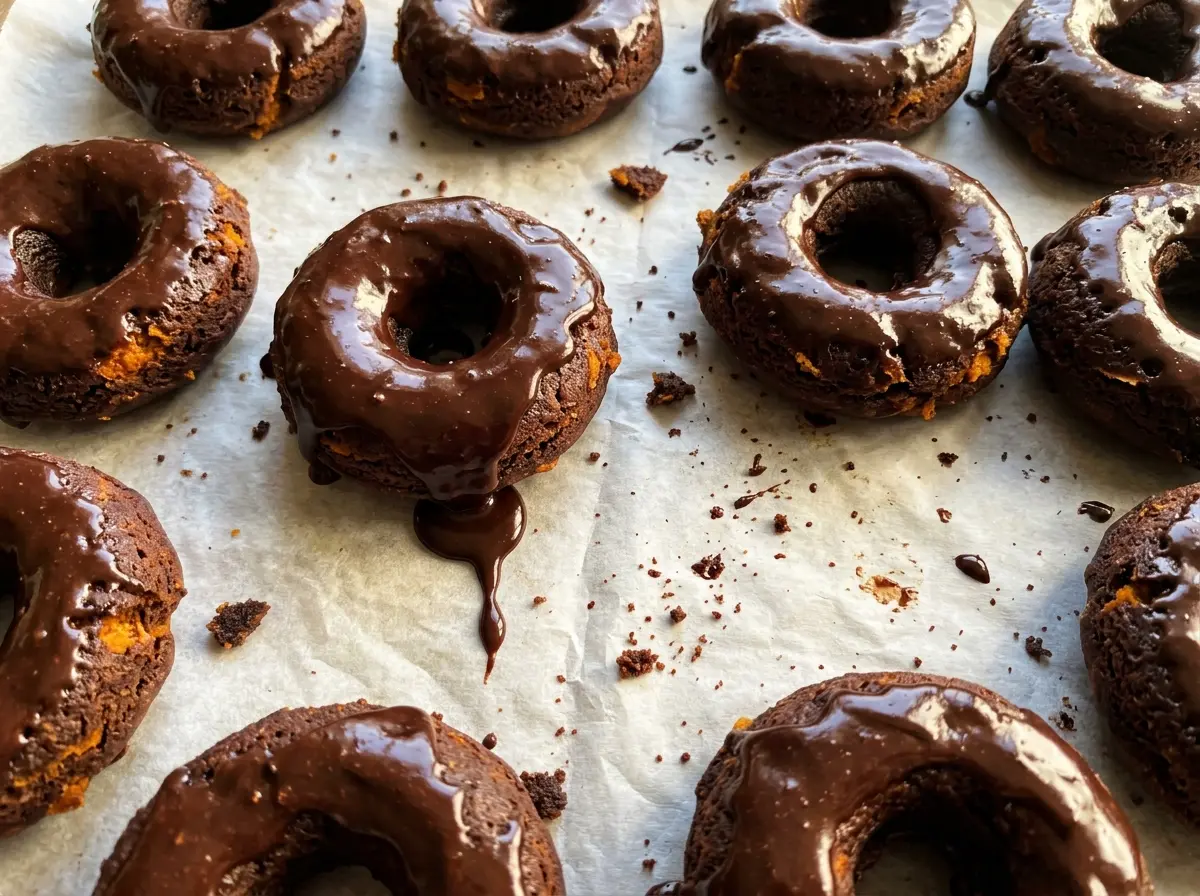
A light press on the top tells you more than a dark-looking crust when these donuts are in the oven. They’re ready when they spring back, leaving a soft chocolate crumb instead of a dry one. Once cooled, the tops take a quick dip in warm semisweet glaze that sets into a smooth, bittersweet shell.
The sweet potato makes the inside tender and gives the chocolate a mellow, almost earthy depth without making the donuts taste like a side dish. I like that the batter comes together in two bowls and bakes in a donut pan, so there’s no hot oil to manage. The contrast is what makes these sweet potato chocolate donuts worth baking: soft cocoa centers under a thin layer of glossy chocolate.
Kitchen Note
Grease the donut cavities carefully, especially around each center post. A missed patch there can make an otherwise perfectly baked donut stick when you lift it from the pan.
Save these sweet potato chocolate donuts for a bake with tender cocoa centers and a smooth semisweet chocolate glaze.
Why a Large Sweet Potato Isn’t a Reliable Measure
Sweet potatoes vary a lot in size, and their moisture varies too. A potato that looks large enough might yield less mash than you expect, while another can leave you with more than the batter needs. For this batter, the useful measure is the cooked, peeled, mashed potato—not the whole potato before it goes in the oven.
That cup of mash brings moisture and body to a batter that also contains cocoa and flour. Too much sweet potato can leave the centers heavy and damp; too little takes away some of the tenderness that makes a baked donut satisfying. Bake the potato until a knife slides easily into the center, then cool, peel, and mash it before measuring. The cooled mash also blends smoothly with the egg and other wet ingredients, rather than making them warm as you mix.
What the Sweet Potato, Cocoa, and Chocolate Each Bring

- Sweet potato — Use plain cooked sweet potato, cooled and mashed until smooth. Baking it whole gives you a soft interior without adding water, and a standard grocery-store sweet potato works well. Measure the mash after peeling; using a whole potato as the measure makes the batter less consistent.
- Unsweetened cocoa powder — Cocoa brings the chocolate flavor into the donut itself, while the sugar keeps its bitterness balanced. A basic unsweetened cocoa powder is fine; you don’t need a premium brand for a baked batter. Dutch-process cocoa also works here, with a rounder, darker taste.
- All-purpose flour — Flour gives the donuts enough structure to hold their shape around the pan’s center post. A regular all-purpose flour is the right everyday choice; measure it without compressing it into the cup. A one-to-one gluten-free baking blend is the most practical swap, though the crumb may be a little more delicate.
- Egg, milk, and neutral oil — The egg helps bind the batter, milk loosens it, and neutral oil keeps the cocoa and sweet potato in front. Any neutral vegetable oil works; there’s no need to use an expensive oil with a pronounced flavor. For a dairy-free version, unsweetened oat milk is an easy replacement for dairy milk.
- Semisweet chocolate and heavy cream — Finely chopped chocolate melts evenly when the hot cream is poured over it. A dependable store-brand bar works; chopping it small matters more than choosing a costly one. Heavy cream makes the glaze smooth and easy to dip, while full-fat coconut milk can stand in for a dairy-free version.
From Roasted Sweet Potato to a Smooth Chocolate Dip
Roast and Measure the Sweet Potato
Heat the oven to 400°F and prick a large sweet potato several times. Set it on a foil-lined baking sheet and bake for 45–60 minutes, until a knife slides easily into the center. Let it cool before peeling and mashing, then measure the mash. The potato needs to be tender all the way through; a firm center won’t mash smoothly into the batter.
Mix the Dry and Wet Ingredients Separately
Reduce the oven to 350°F and grease two 6-cavity donut pans. Whisk the flour, cocoa powder, sugar, baking powder, and salt in a medium bowl. In a large bowl, whisk the cooled sweet potato with the egg, milk, oil, and vanilla until smooth, then fold in the flour mixture just until no dry streaks remain. Stop as soon as the last streak disappears; working the batter longer can make the crumb tougher.
Fill the Pans and Bake to the Spring-Back Cue
Spoon the batter into the donut cavities, filling each about two-thirds full so there’s room for it to rise. Bake for 12–15 minutes, until the donuts spring back when lightly pressed. If a light touch leaves a dent, give them another minute and check again rather than waiting for the tops to look dry. Cool them in the pans for 5 minutes, then transfer them to a wire rack to cool completely.
Make the Glaze and Dip the Cooled Donuts
Put the finely chopped chocolate in a heatproof bowl. Heat the cream in a small saucepan until steaming, pour it over the chocolate, and let it stand for 2 minutes before whisking until smooth. Dip the tops of the completely cooled donuts into the glaze and return them to the rack to set. If the donuts are still warm, the glaze will run rather than settling into an even coating.
Three Simple Ways to Adapt These Chocolate Donuts
Make the batter gluten-free
Replace the all-purpose flour with the same amount of a one-to-one gluten-free baking blend intended for baking. The donuts keep their chocolate-and-sweet-potato flavor, though the crumb can be a touch more fragile, so lift them gently from the pan after their brief cooling rest.
Make the donuts dairy-free
Use unsweetened oat milk in place of the milk and full-fat coconut milk in place of the heavy cream, using the same amounts. Choose dairy-free semisweet chocolate for the glaze. The coconut milk makes the coating a little less classic and adds a mild coconut note, but it still gives you a smooth chocolate dip.
Give the glaze a darker edge
Swap bittersweet chocolate for the semisweet chocolate in the glaze. The coating will taste less sweet and more intensely cocoa-forward, which makes the contrast with the sweet potato crumb stand out. Keep the chocolate finely chopped so it melts evenly in the hot cream.
Storage and Reheating
- Refrigerator: Store glazed donuts in an airtight container for up to 4 days. The cold firms both the crumb and the chocolate coating.
- Freezer: For the best texture, freeze the donuts without glaze, wrapped airtight, for up to 2 months. Thaw them in the refrigerator, then make the glaze and dip before serving.
- Reheating: These are best without reheating. Let a chilled donut sit at room temperature briefly; microwaving can melt the glaze before the center has a chance to warm.
Questions That Come Up When Baking Sweet Potato Chocolate Donuts
Sweet Potato Chocolate Donuts
Ingredients
Equipment
Method
- Heat the oven to 400°F.
- Prick a large sweet potato several times and place it on a foil-lined baking sheet.
- Bake for 45–60 minutes, until a knife slides easily into the center.
- Cool the sweet potato.
- Peel and mash the sweet potato, then measure 1 cup.
- Reduce the oven to 350°F.
- Grease two 6-cavity donut pans.
- Whisk the flour, cocoa powder, sugar, baking powder, and salt in a medium bowl.
- Whisk the mashed sweet potato, egg, milk, oil, and vanilla in a large bowl until smooth.
- Fold in the flour mixture just until no dry streaks remain.
- Spoon the batter into the donut-pan cavities, filling each about two-thirds full.
- Bake for 12–15 minutes, until the donuts spring back when lightly pressed.
- Cool the donuts in the pans for 5 minutes.
- Transfer the donuts to a wire rack to cool completely.
- Put the chopped chocolate in a heatproof bowl.
- Heat the cream in a small saucepan until steaming.
- Pour the cream over the chocolate and let stand for 2 minutes.
- Whisk the chocolate and cream until smooth.
- Dip the tops of the cooled donuts in the glaze.
- Let the glaze set on the rack.


