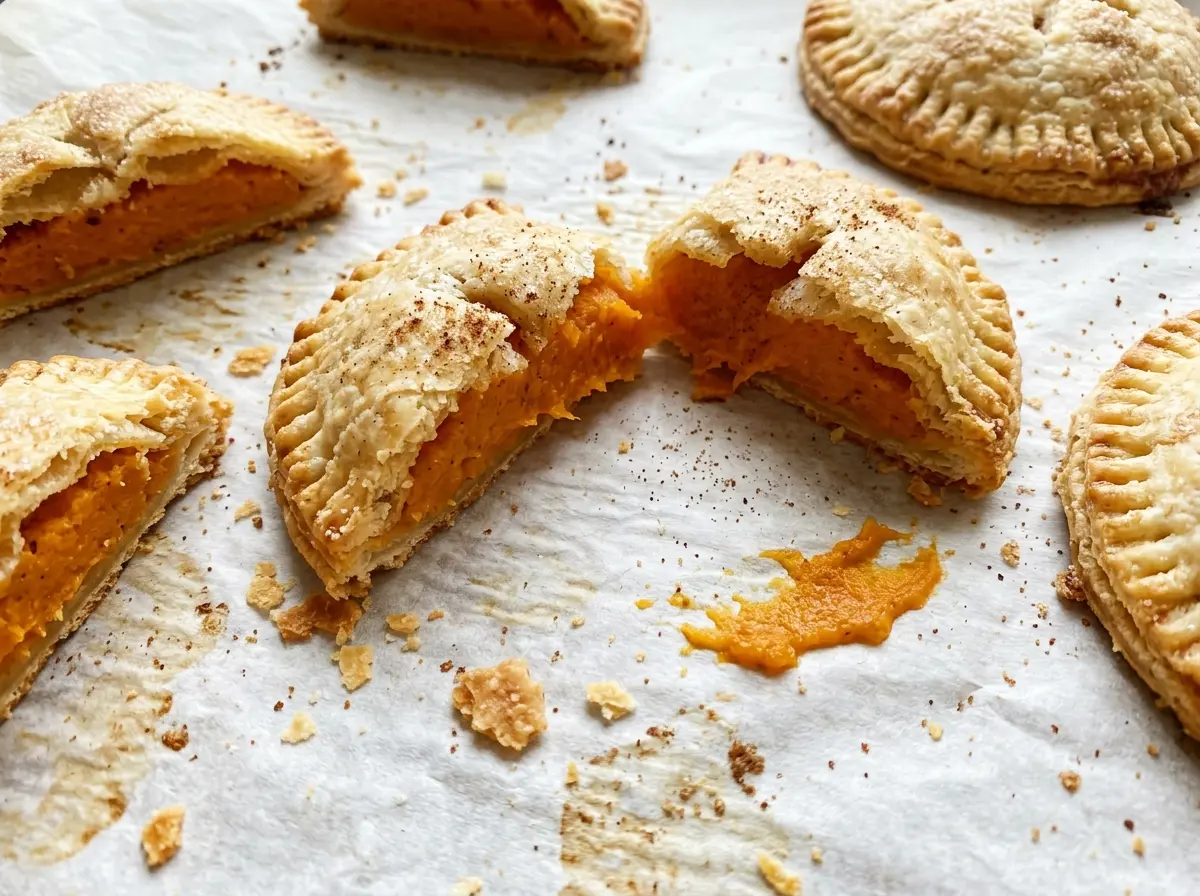
As the egg-brushed tops turn golden, the sweet potato filling stays tucked inside a tender, buttery shell. These sweet potato hand pies are folded and crimped into individual pastries, with cinnamon, nutmeg, brown sugar, and vanilla mixed through the mash. The batch makes eight, which means every pie is neatly portioned before it reaches the table.
The filling is simple, but it needs to be completely cool before it goes onto the pastry. Warm mash softens the dough and makes the edges harder to seal, so I give the sweet potatoes time to cool after baking and let the finished filling cool, too. That small pause makes assembly much less messy.
The pastry is made by cutting cold butter into the flour, then adding just enough ice water to bring the dough together. Once baked, the crust turns golden around a soft, warmly spiced center. These are the kind of hand pies that feel special without needing a fork or a plate.
Kitchen Note
The dough doesn’t need to look smooth before it chills. I stop adding water as soon as a squeeze holds it together; adding more than it needs makes the pastry harder to handle.
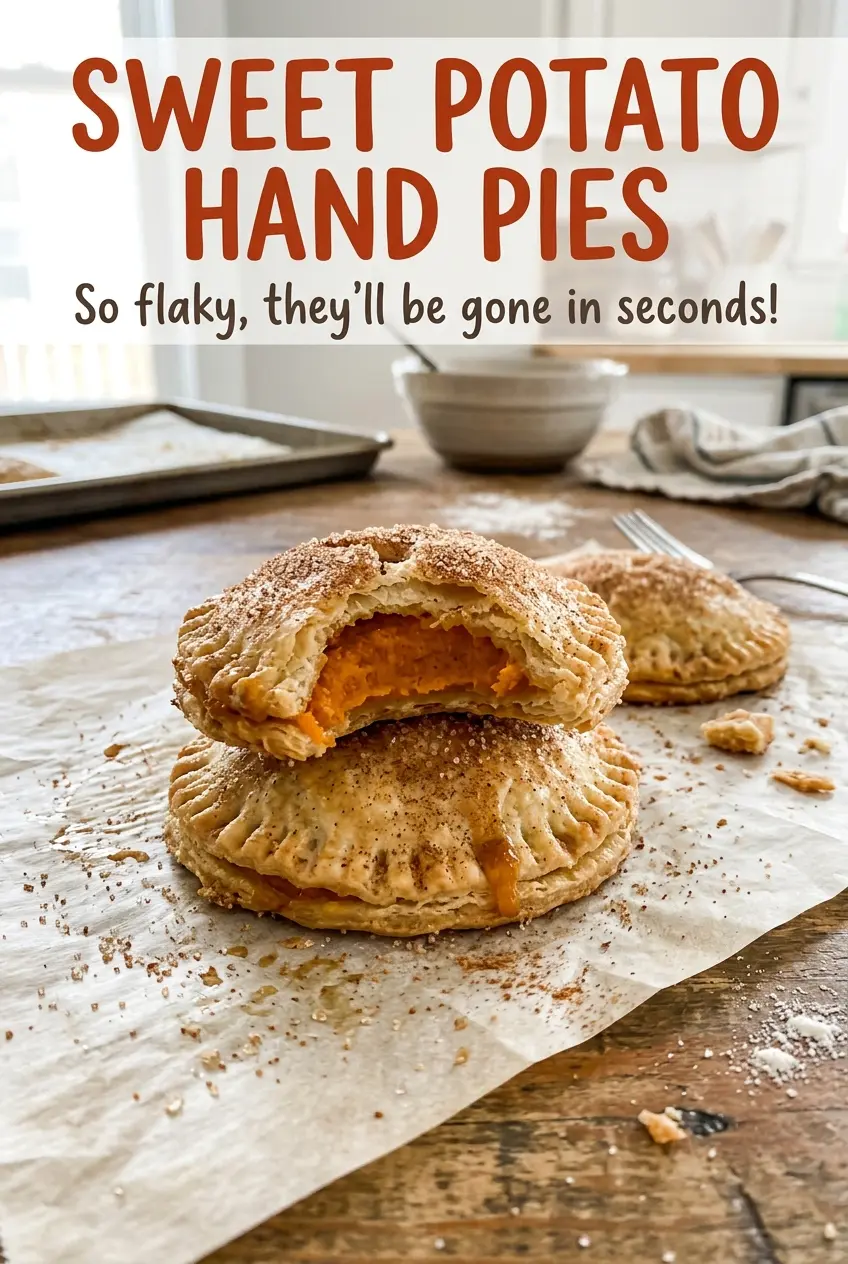
Save these sweet potato hand pies for their flaky pastry and cinnamon-scented filling; the dough can be made ahead and chilled.
Why Pea-Size Butter Makes These Pastries Flaky
Hand-pie pastry has to do two jobs: stay sturdy enough to hold a soft filling, then bake into a tender, layered crust. Cutting cold butter into the flour leaves small pieces distributed through the dough. In the oven, those pieces create pockets between the layers instead of blending completely into the flour. That’s what gives the finished pastry its flaky texture.
If the butter gets worked in until the mixture looks like fine crumbs, the dough loses those distinct pieces and the crust can bake up more dense. Keep the butter cold and stop when most pieces are about pea-size; a few smaller bits are fine. The dough will look rough rather than smooth, which is exactly what you want before adding the ice water. Handle it only enough to bring it together, then divide it into disks and chill. This is pastry, not bread dough, so there’s no benefit to kneading it until elastic.
What the Sweet Potato Filling and Pastry Need From Their Ingredients
- All-purpose flour — It gives the pastry enough structure to fold and crimp around the filling. Stick with all-purpose flour here; a different flour can change how the dough comes together and rolls.
- Unsalted butter — Everyday unsalted butter works well; the cold temperature matters more than choosing a premium brand. Salted butter isn’t a direct swap because the pastry already has fine salt measured into it.
- Sweet potatoes — Use whole sweet potatoes and bake them until a knife slides easily into the centers. Similar-sized potatoes tend to finish at about the same time. There isn’t a direct replacement that gives the filling the same texture.
- Light brown sugar — It sweetens the mash and brings a mild molasses note. Dark brown sugar works in its place in the same quantity, with a deeper molasses flavor.
- Cinnamon and nutmeg — Both ground spices add warmth without competing with the sweet potato. Fresh, fragrant spices make the most difference; if nutmeg isn’t for you, leave it out for a simpler cinnamon filling.
- Vanilla extract and egg — Vanilla rounds out the filling, while the beaten egg brushed on top helps the pastry turn golden. Imitation vanilla can stand in for vanilla extract in the same measure.
From Cold Dough to Golden Hand Pies
Bring the Pastry Together Without Overworking It
Whisk the flour, sugar, and salt in a large bowl, then cut in the cold butter with a pastry cutter or fork until most of the pieces are pea-size. Stir in 6 tablespoons of ice water, then add more a tablespoon at a time until the dough holds together when squeezed. Divide it into 2 disks, wrap them, and chill for 1 hour. If the dough still falls apart when pinched, it needs another small splash of water.
Bake and Mash the Sweet Potatoes
Heat the oven to 400°F and pierce the sweet potatoes a few times with a fork. Set them on a baking sheet and bake for 45 to 60 minutes, until a knife slides easily into the centers. Let them cool until they’re easy to handle, then peel and mash them. Stir in the brown sugar, cinnamon, nutmeg, and vanilla, and let the filling cool completely before assembling the pies.
Roll, Fill, and Crimp Each Pie
Heat the oven to 400°F and line a baking sheet with parchment paper. Roll each dough disk between sheets of parchment until it’s about 1/8 inch thick, then cut out 16 rounds that are 5 inches across; reroll the scraps as needed. Put 3 tablespoons of filling on one half of each round, leaving a 1/2-inch border, then fold the dough over. Press the edges together and crimp them with a fork, then chill the pies on the prepared baking sheet for 15 minutes.
Brush, Vent, and Bake Until Golden
Beat the egg and brush it over the pies, then cut 2 small slits in the top of each one. Bake for 20 to 25 minutes, until the pastry is golden brown. Keep an eye on the color near the end of baking, since that’s the clearest cue that the crust is ready. Cool the pies on the baking sheet for 10 minutes before serving.
Two Small Changes for Different Needs
Make an egg-free finish
Leave off the egg wash. The pastry will look more matte and won’t brown in quite the same way, but you can still fold and crimp the pies as usual. This adaptation removes the egg wash only; the pastry still contains butter.
Scale the batch down to four pies
Halve each ingredient to make a smaller batch. For the egg wash, beat the egg first and use half of it; cut 8 rounds instead of 16, and fill and fold them into 4 pies.
Storage and Reheating
- Refrigerator: Store cooled pies in an airtight container for up to 3 to 4 days. The pastry softens gradually as it sits.
- Freezer: Freeze fully cooled pies in a single layer until firm, then wrap or pack them airtight for up to 2 months. The crust may soften a little after thawing.
- Reheating: Warm them in the oven until heated through to bring back some crispness. A microwave warms the filling, but it makes the pastry soft.
Questions That Come Up While Making Sweet Potato Hand Pies
Sweet Potato Hand Pies
Ingredients
Equipment
Method
- Whisk the flour, sugar, and salt in a large bowl.
- Cut in the butter with a pastry cutter or fork until the pieces are mostly pea-size.
- Stir in 6 tablespoons ice water, adding more a tablespoon at a time until the dough holds together when squeezed.
- Divide the dough into 2 disks, wrap, and chill for 1 hour.
- Heat the oven to 400°F.
- Pierce the sweet potatoes a few times with a fork.
- Bake the sweet potatoes on a baking sheet for 45 to 60 minutes, until a knife slides easily into the centers.
- Cool the potatoes until easy to handle.
- Peel and mash the potatoes.
- Stir in the brown sugar, cinnamon, nutmeg, and vanilla.
- Let the filling cool completely.
- Heat the oven to 400°F.
- Line the baking sheet with parchment paper.
- Roll each dough disk between sheets of parchment to about 1/8 inch thick.
- Cut out 16 rounds, 5 inches across, rerolling scraps as needed.
- Put 3 tablespoons filling on one half of each round, leaving a 1/2-inch border.
- Fold the dough over, press the edges together, and crimp with a fork.
- Chill the pies on the prepared baking sheet for 15 minutes.
- Beat the egg and brush it over the pies.
- Cut 2 small slits in the top of each pie.
- Bake for 20 to 25 minutes, until the pastry is golden brown.
- Cool on the baking sheet for 10 minutes before serving.


