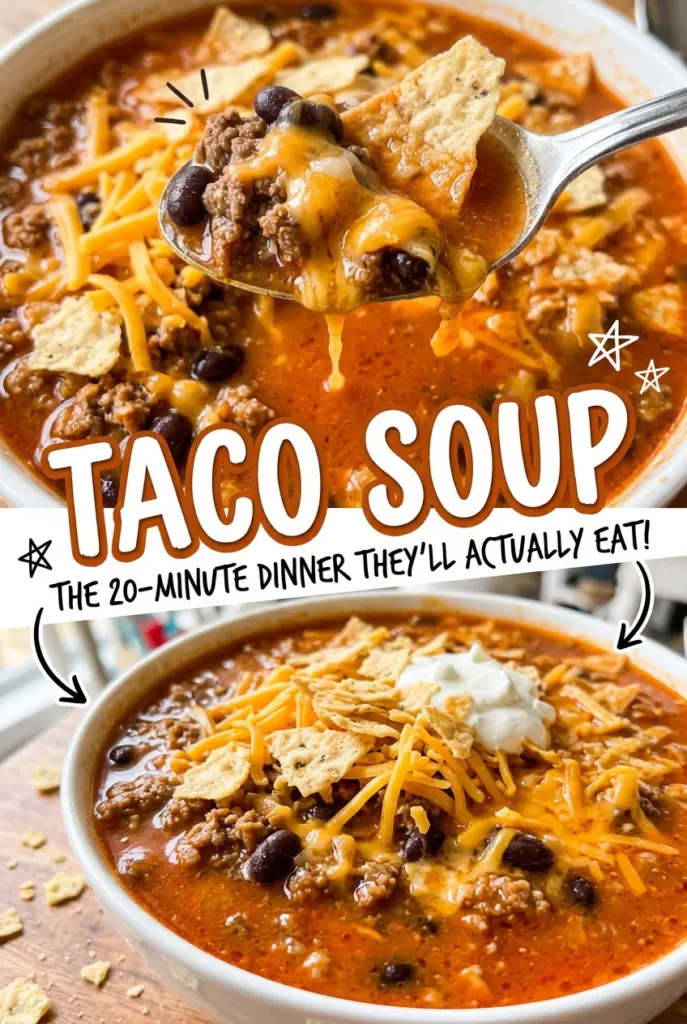

Taco soup lands in that sweet spot between fast weeknight dinner and the kind of bowl people keep going back to for seconds. It’s brothy, hearty, and loaded with the same bold flavors you’d expect from tacos, but everything simmers together into something warmer and more comforting than a tortilla shell can give you. The toppings do the heavy lifting at the end, turning one pot into a meal that tastes different every time you build a bowl.
What makes this version work is the balance. Taco seasoning and ranch mix give the broth its backbone, while Rotel, diced tomatoes, and broth keep it loose enough to spoon but still rich with flavor. Draining the beans and corn keeps the soup from getting muddy, and letting the onion soften in the beef drippings adds a depth you’d miss if you rushed straight to the canned ingredients.
Below, I’ll walk through the one detail that keeps this soup from tasting flat, plus a few smart swaps if you want to stretch it, lighten it up, or make it your own without losing that taco-night feel.
The broth had that taco-seasoning flavor without tasting salty, and the ranch mix gave it this creamy, rounded finish I didn’t expect. I simmered it for the full 20 minutes and the flavors came together perfectly.
Love the bold, hearty bowl and all those topping options? Save this taco soup for the nights when you want dinner to taste like taco night without building individual shells.
The Step That Keeps Taco Soup From Tasting Flat
The biggest mistake with taco soup is treating it like a dump-and-go canned soup. It will cook, but it won’t taste layered. Browning the beef first, then softening the onion in the same pot, gives the broth a deeper savory base before the tomatoes and beans go in.
The other thing that matters is simmer time. Fifteen to twenty minutes is enough for the broth to pick up the seasoning and for the tomatoes to lose that sharp canned edge. If you stop too early, the soup tastes separated, like ingredients sitting in the same bowl instead of a finished dish.
- Browned beef gives the soup its main savory backbone. If you skip draining the fat when there’s a lot in the pot, the broth can taste greasy instead of rich.
- Rotel brings tomato, chile, and acidity in one can. That’s hard to match with plain diced tomatoes unless you add extra green chiles.
- Ranch dressing mix is what rounds out the broth and gives it that familiar taco-soup flavor. A homemade substitute can work, but the packet brings a particular salty-herby balance that’s hard to duplicate exactly.
- Beef broth makes the soup deeper and fuller. Chicken broth works too, but beef broth gives the finished bowl more weight.
What Each Ingredient Is Actually Doing in This Bowl

- Ground beef is the main source of body and flavor. An 80/20 blend gives you enough fat for taste without making the soup heavy, and leaner beef works fine if you add a little oil when the pan looks dry.
- Onion and garlic need that short sauté so they stop tasting raw. The onion should soften and turn translucent before the garlic goes in, because garlic burns fast and turns bitter if it stays on the heat too long.
- Black beans and kidney beans add texture and make the soup feel like a full meal. Drain them first so the broth stays clean and the bean liquid doesn’t dull the seasoning.
- Corn adds little bursts of sweetness that keep the soup from leaning too heavy. Frozen corn works if that’s what you have, and you can add it straight from frozen.
- Cheddar, sour cream, tortilla chips, avocado, and cilantro are not garnish here. They change the bowl. The cheddar melts into the broth, the sour cream softens the spice, and the chips give you the crunch the soup itself doesn’t have.
Building the Bowl in the Right Order
Brown the Beef First
Cook the ground beef in a large pot over medium-high heat until it loses its pink color and starts to pick up a little browning on the bottom. That browned fond is part of the soup’s flavor, so don’t rush to stir constantly. If there’s a lot of fat in the pot after draining, leave just a thin coating behind.
Soften the Onion and Garlic
Add the diced onion to the same pot and cook it for about 3 minutes, scraping up some of the browned bits as it softens. Stir in the garlic for the last minute only; once garlic starts to brown, it can turn sharp and bitter. You want it fragrant, not toasted.
Let the Soup Simmer, Not Boil Hard
Stir in the beans, corn, tomatoes, taco seasoning, ranch mix, and broth, then bring everything to a boil before lowering the heat. A gentle simmer is the goal. If it boils hard for too long, the beans can break down and the broth can taste harsher than it should.
Finish With the Toppings
Taste the soup before serving and add salt and pepper only if it needs them. The seasoning packets already bring salt, so the final adjustment is usually small. Serve it hot with cheddar, sour cream, crushed tortilla chips, jalapeños, cilantro, and avocado so each bowl can be built to taste.
What to Change When You Want a Different Kind of Bowl
Make It a Little Lighter
Swap the ground beef for lean ground turkey or chicken. The soup will taste a little cleaner and less rich, so keep the broth at the full amount and don’t skip the toppings; the cheese and sour cream help replace the roundness you lose from the beef fat.
Make It Gluten-Free
Use a gluten-free taco seasoning and ranch mix, since the packets are the only place gluten usually sneaks in. The rest of the soup is naturally gluten-free, but it’s worth checking broth labels too if you’re cooking for someone sensitive.
Make It Meatless
Leave out the beef and use an extra can of beans, or add crumbled meatless ground if you want a more taco-like texture. Swap in vegetable broth and taste carefully at the end, because meatless versions usually need a little more salt and a bit more seasoning to feel as full.
Stretch It for a Bigger Crowd
Add an extra can of beans or corn and another cup of broth if you need to feed more people. The flavor stays bold, but the soup becomes a little less dense, which is helpful if you’re serving it with cornbread or a big spread of toppings.
Storage and Reheating
- Refrigerator: 4 days. The broth thickens a little as it sits, and the beans soften more, which actually helps the soup taste even better the next day.
- Freezer: It freezes well for up to 3 months. Cool it completely first, then freeze in airtight containers, leaving a little room at the top for expansion.
- Reheating: Warm it gently on the stove over medium-low heat until hot. The common mistake is blasting it on high heat, which can make the beans break apart and the broth reduce too far.
Answers to the Questions Worth Asking
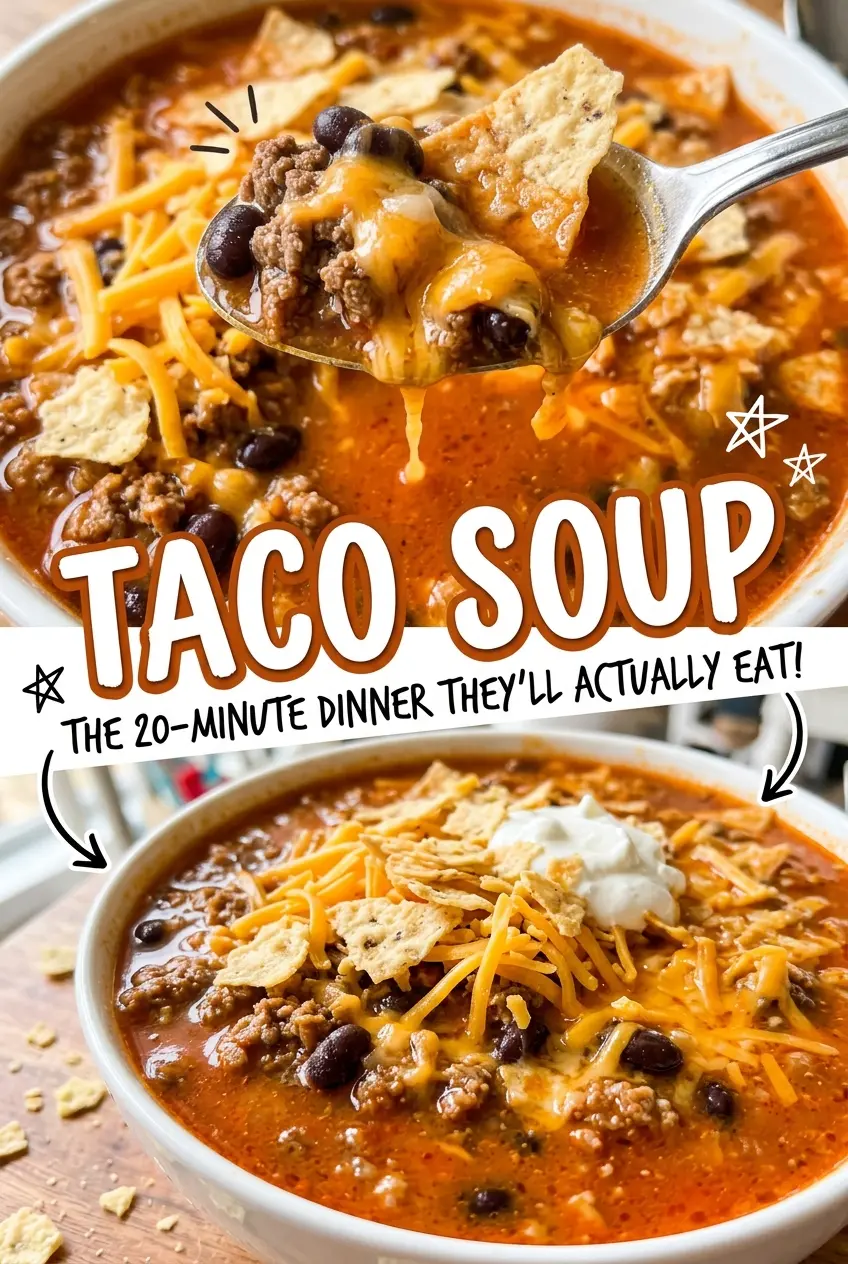
Taco Soup
Ingredients
Equipment
Method
- Brown the ground beef in a large pot over medium-high heat, stirring, then drain the fat.
- Sauté the diced onion in the same pot for 3 minutes, then add the minced garlic and cook for 1 minute.
- Add the black beans, kidney beans, corn, Rotel diced tomatoes with green chiles, diced tomatoes, taco seasoning, ranch dressing mix, and beef or chicken broth; stir to combine until evenly mixed.
- Bring the mixture to a boil, then reduce heat and simmer for 15-20 minutes, stirring occasionally until the broth is hot and slightly thickened.
- Taste and adjust seasoning with salt and pepper, then simmer 2 minutes more if needed for balance.
- Ladle the taco soup into bowls, then top each serving with shredded cheddar, sour cream, crushed tortilla chips, sliced jalapeños, cilantro, and avocado.