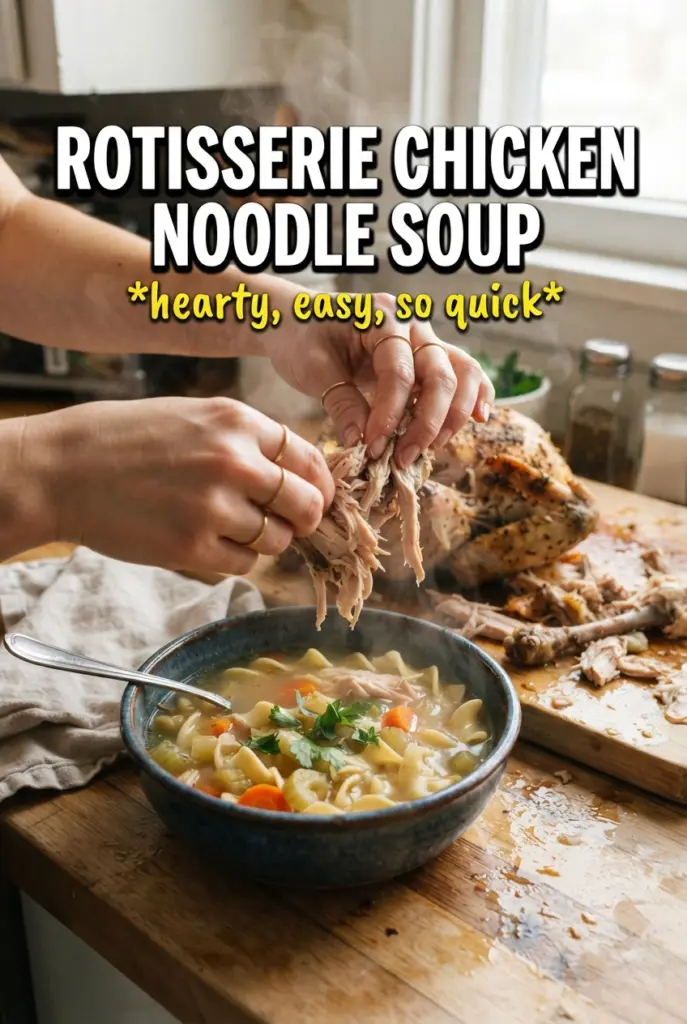

Rotisserie chicken noodle soup earns its place in the weeknight rotation because it tastes like it simmered all afternoon, but it comes together in about half an hour. The broth turns fragrant and savory, the vegetables stay tender without turning mushy, and the chicken brings in that roasted depth you just don’t get from plain poached meat.
The shortcut works because the rotisserie chicken is already seasoned and cooked, so the pot can focus on building flavor instead of spending time coaxing it out of raw ingredients. Sautéing the onion, carrots, and celery first gives the broth a better base, and adding the noodles near the end keeps them from bloating and stealing too much liquid from the pot. A little dried thyme and parsley gives it that classic chicken soup flavor without making you chase down a long ingredient list.
Below, I’ve included the timing that keeps the noodles in good shape, plus a few smart swaps for when you want to stretch the soup a little farther or adjust it for what’s in the fridge.
The broth had a deep homemade taste, and the noodles stayed just right because I added them at the end. My kids actually ate the carrots without complaining, which never happens with soup night.
Save this rotisserie chicken noodle soup for the nights when you want a broth that tastes slow-simmered without standing over the stove all evening.
The Trick to Soup That Tastes Homemade Starts Before the Broth Goes In
With noodle soup, the common failure is bland broth and tired vegetables. A rotisserie chicken gives you a head start, but it still needs a base. Cooking the onion, carrots, and celery in olive oil or butter until they soften and smell sweet builds the backbone of the soup. That step matters more than it looks on paper.
The other mistake is letting the noodles sit in the pot too long. Egg noodles are eager to drink up broth, and if you cook them from the start, they’ll turn soft and the soup will thicken into something closer to stew. Add them after the chicken has had a few minutes in the broth, then pull the pot once they’re just tender.
- Rotisserie chicken — This is the shortcut that makes the soup fast, but pull off the skin before shredding so the broth stays clean and balanced instead of greasy.
- Chicken broth — Use a broth you’d be willing to sip. Since the soup only cooks for a short time, the broth has to do most of the flavor work. If yours tastes flat, add a pinch more salt at the end.
- Egg noodles — These give you that classic cozy texture, but they’re the ingredient most likely to overcook. If you want to hold leftovers for a few days, cook them separately and add them to each bowl.
- Fresh parsley — The garnish isn’t just decoration. It wakes up the broth right before serving and keeps the whole bowl from tasting muted.
What Each Ingredient Is Actually Doing in This Recipe

- Primary ingredient (the star) — Quality matters most. Choose the best you can find.
- Cooking medium (oil, butter, or broth) — This carries flavors and prevents dryness.
- Seasonings (salt, pepper, spices, herbs) — Layer flavors so nothing overpowers. Build depth gradually.
- Aromatics (garlic, onion, herbs) — Cook with fat to bloom flavors. Become the foundation.
- Supporting ingredients — Complement the main ingredient without overpowering it.
- Sauce or liquid (if applicable) — Brings flavors together. Balance richness with acid.
- Acid (lemon, vinegar, wine, or other) — Brightens and prevents flat-tasting results.
- Final finish (garnish, glaze, or sauce) — Prevents one-dimensional taste and adds visual appeal.
The 20 Minutes That Matter Most
Softening the Vegetables First
Warm the olive oil or butter in a large pot, then cook the onion, carrots, and celery until the onion turns translucent and the carrots start to lose their raw edge. You’re not looking for browning here; you want the vegetables to soften and smell sweet. If the pan looks dry before the vegetables are tender, lower the heat instead of letting them scorch.
Building the Broth
Stir in the garlic for about a minute, just until it smells fragrant, then add the broth, thyme, parsley, and garlic powder. Garlic burns fast, so don’t leave it in the hot pot too long before the liquid goes in. Bring everything to a boil to get the flavors moving, then lower it to a steady simmer before the chicken goes back in.
Finishing With Chicken and Noodles
Add the shredded rotisserie chicken and let it simmer for about 10 minutes so the meat picks up some of the broth flavor. Then add the egg noodles and cook just until they’re tender with a little bite left in the center. If you keep cooking after that point, the noodles swell and the broth turns starchy fast. Season at the end, because rotisserie chicken and boxed broth can vary a lot in saltiness.
How to Change It Without Losing the Comfort
Make It Gluten-Free
Swap the egg noodles for a gluten-free noodle that holds its shape in broth, or use rice instead. Gluten-free pasta varies a lot, so pull it when it still has a little firmness; it can go from tender to soft faster than regular noodles.
Add More Vegetables Without Diluting the Flavor
Mushrooms, peas, or chopped spinach can go in near the end. Mushrooms add depth if you sauté them with the onion and carrots, while peas and spinach are best stirred in during the last few minutes so they stay bright.
Stretch It Into a Bigger Batch
Add extra broth and another cup of shredded chicken if you’re feeding a crowd. The one thing to watch is seasoning: a larger pot usually needs more salt than you think, especially after the noodles soak up some of the broth.
Storage and Reheating
- Refrigerator: Store for up to 4 days. The noodles will keep absorbing broth, so expect the soup to thicken.
- Freezer: Freeze the soup without the noodles for the best texture. Noodles tend to go soft after thawing, so add fresh-cooked noodles when you reheat.
- Reheating: Warm it gently on the stove over medium-low heat with a splash of broth or water. Boiling it hard is what turns the noodles mushy and can make the chicken dry out.
Answers to the Questions Worth Asking
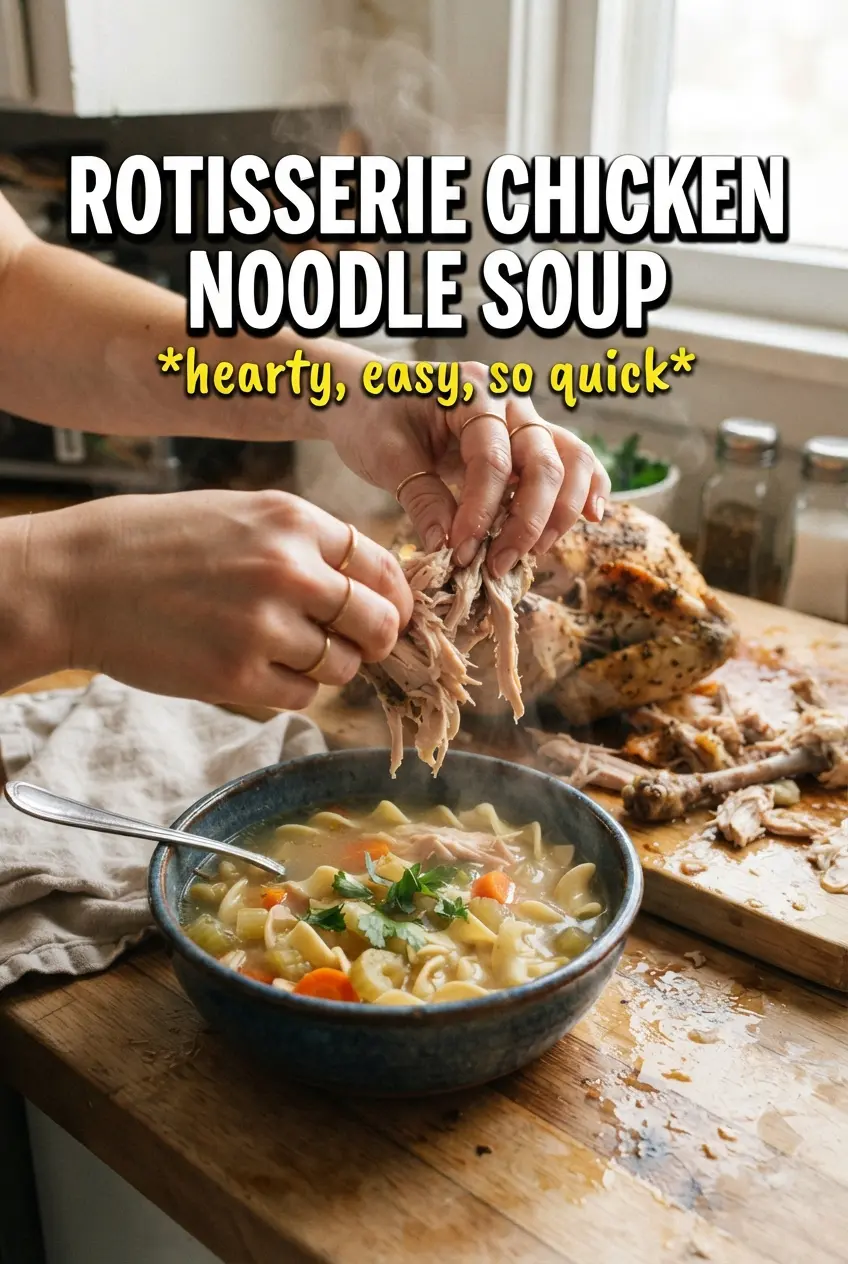
Rotisserie Chicken Noodle Soup
Ingredients
Equipment
Method
- Heat olive oil or butter in a large pot over medium heat and sauté the onion, carrots, and celery for 5 minutes until the onion softens and the carrots start to tenderize.
- Add the minced garlic and cook for 1 minute, stirring, until fragrant but not browned.
- Pour in the chicken broth, then stir in dried thyme, dried parsley, and garlic powder.
- Bring the mixture to a boil, then add the pulled rotisserie chicken and stir to combine.
- Simmer for 10 minutes to let the broth develop flavor.
- Add the egg noodles and cook for 6-8 minutes until tender, stirring occasionally so they don’t stick.
- Season generously with salt and pepper to taste, then garnish with fresh parsley before serving.