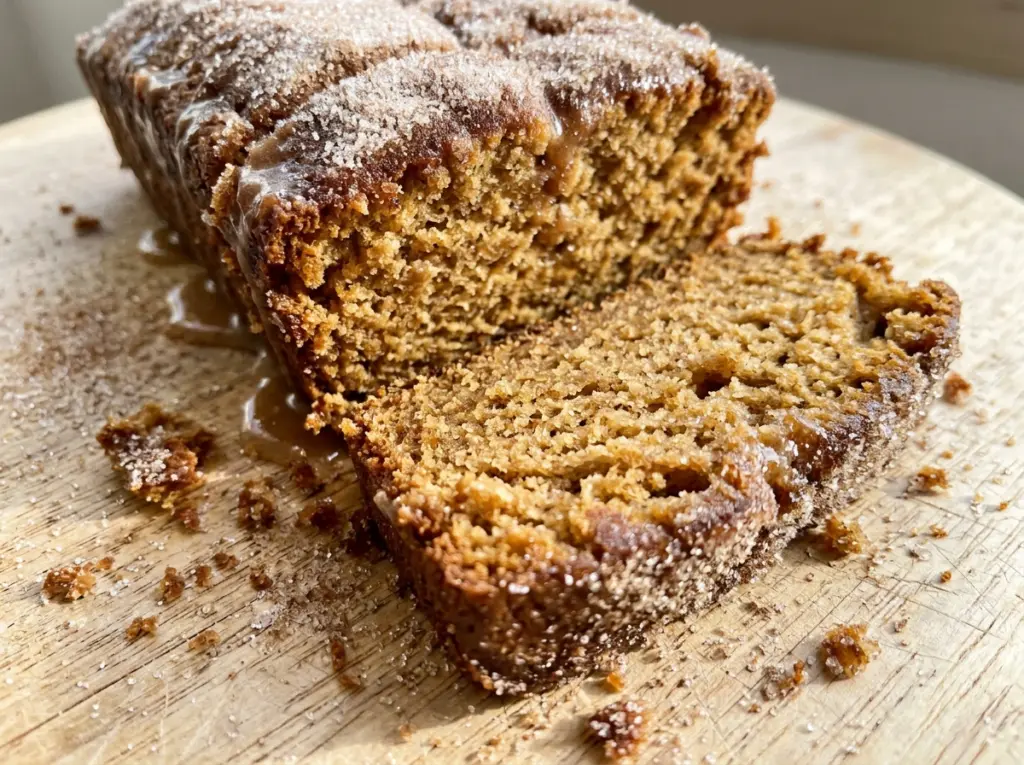

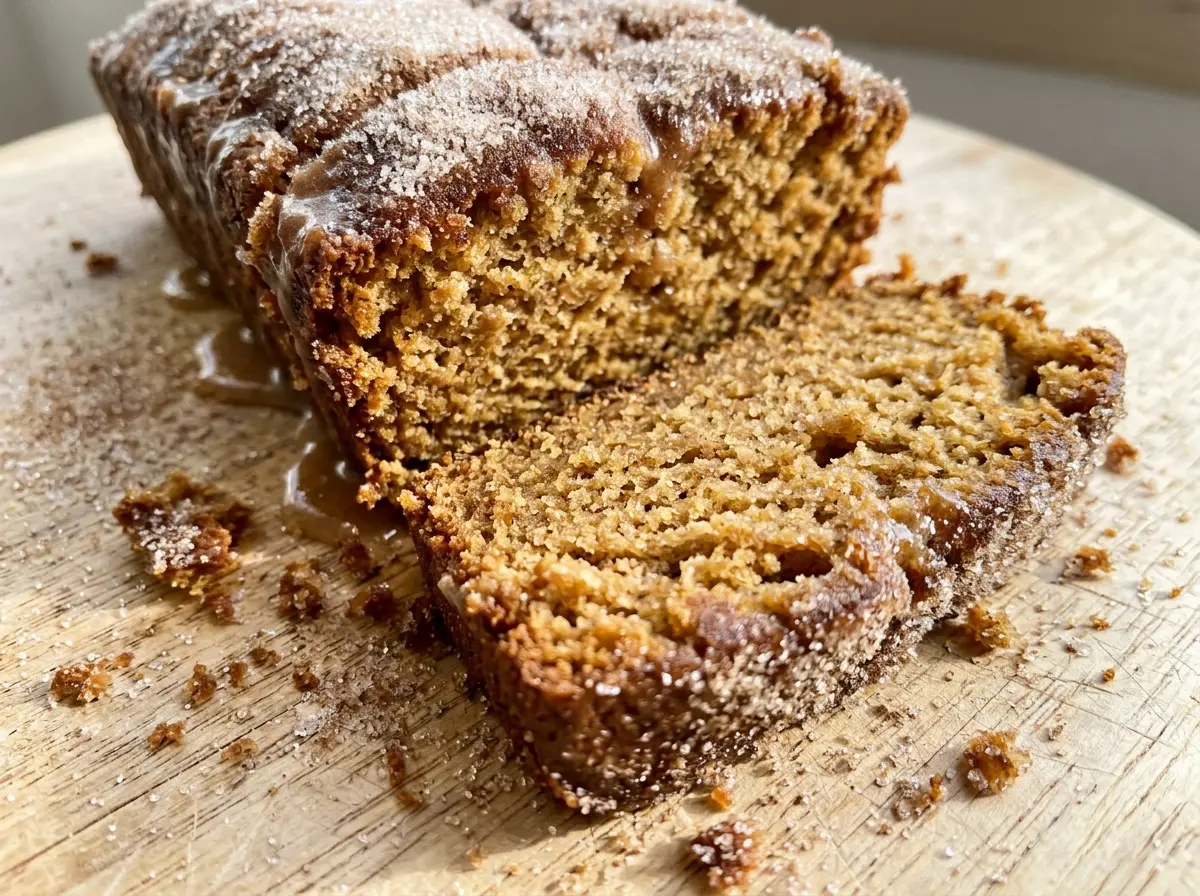
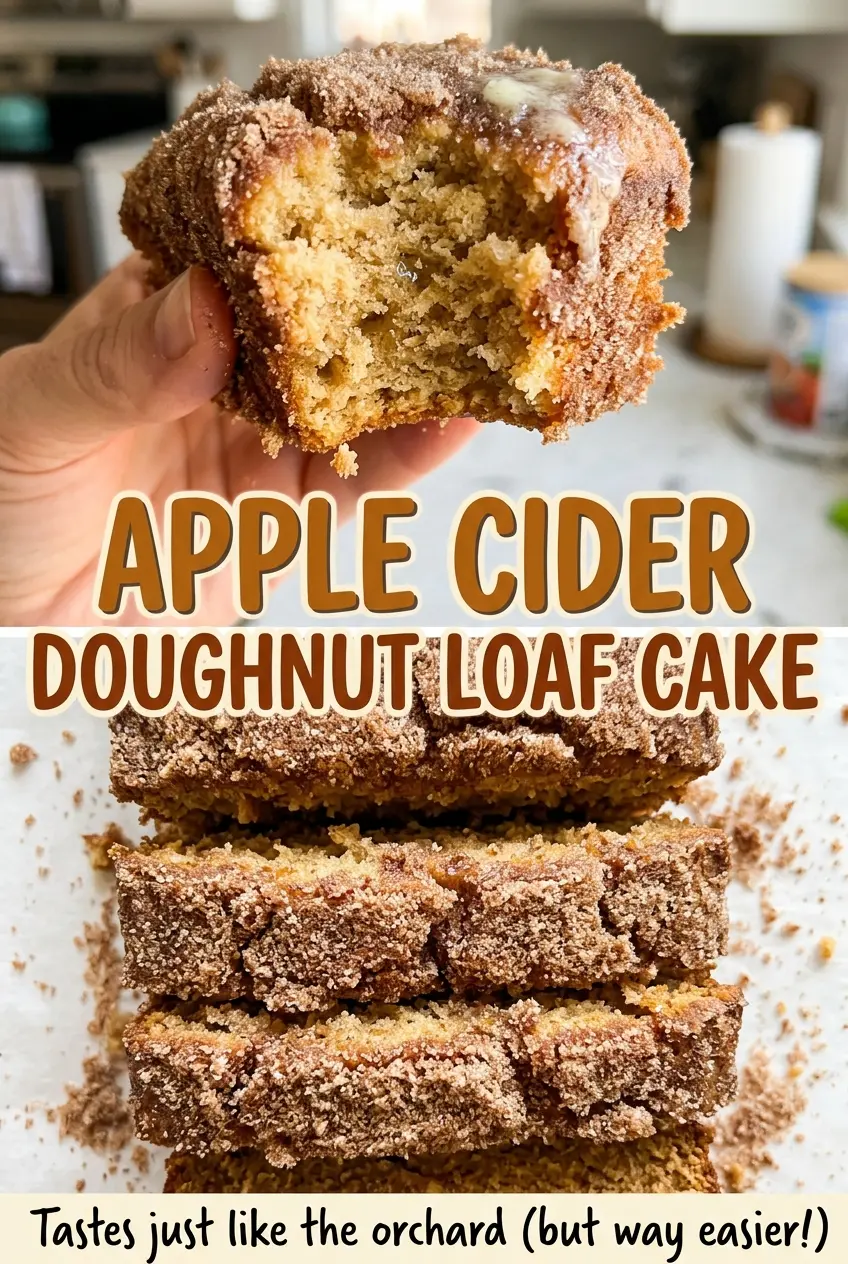
The cinnamon sugar is the first clue that this loaf is borrowing its best idea from a doughnut. Slice into it and you get a tender, buttery crumb with apple cider running through every bite, without frying a thing. I like how the loaf shape makes the cake easy to portion, while the coating over the top and sides gives each slice that familiar doughnut-shop finish.
Reducing the cider before it goes into the batter concentrates its apple flavor, so the finished cake tastes like more than a spiced butter cake. The sour cream keeps the crumb moist, and a quick brush of melted butter gives the cinnamon sugar something to cling to. Let the loaf cool fully before coating it; the sugar stays distinct instead of disappearing into a warm surface.
Kitchen Note
I don’t stop creaming the butter and sugar when they merely look blended. Give them the full 2-3 minutes; the mixture should look light and fluffy before the eggs go in.
Save this Apple Cider Doughnut Loaf Cake for a bake with a tender cider crumb and cinnamon sugar on every side.
Why Reducing the Cider Makes This Taste Like an Apple Cider Doughnut
Unreduced cider brings plenty of liquid to cake batter, but its apple flavor can get lost once it meets flour, butter, eggs, and sour cream. Simmering it down from 1 1/2 cups to 1/2 cup removes water while leaving the cider’s flavor behind. That concentration matters here: the cake has warm spices, but the apple should still be easy to notice.
Don’t stop the reduction while it still looks like a generous pour. The target is 1/2 cup, not simply a darker color or a stronger-smelling saucepan. Too much liquid can leave the crumb heavy, while reducing it to the specified volume gives the batter a concentrated apple base without adding extra moisture.
Give the reduced cider time to cool to room temperature before mixing it with the sour cream. Adding it warm can soften the butter in the creamed mixture and make the batter less even. Once it’s cool, the cider blends smoothly into the dairy, and the apple flavor carries through the loaf rather than sitting in a wet streak.
What Gives This Loaf Its Cider Flavor and Doughnut-Like Crumb
- Apple cider — Choose fresh, nonalcoholic cider with a clear apple aroma. Its concentrated flavor is the heart of the loaf; reducing it after measuring gives you that intensity without thinning the batter.
- All-purpose flour — It gives the cake enough structure to hold its shape as a loaf. Spoon it into the measuring cup and level it rather than packing the cup, which can make the crumb dense. A cup-for-cup gluten-free baking blend is the most useful swap; see the variation below.
- Sour cream — Its acidity and thickness help keep the crumb tender while adding moisture. Plain, full-fat Greek yogurt can stand in at the same amount, though the crumb may be a touch less rich.
- Unsalted butter — Softened butter creams with the sugar to build the cake’s base, and melted butter helps the cinnamon sugar adhere to the cooled loaf. Unsalted butter also lets you control the salt in the batter.
- Eggs and leaveners — Eggs bind the batter and help it set; baking powder and baking soda lift the loaf. Use fresh leaveners for a reliable rise, and bring the eggs to room temperature so they blend into the butter mixture more easily.
- Cinnamon and nutmeg — Cinnamon gives both the cake and its coating the familiar doughnut-shop warmth. Nutmeg adds a quieter, rounded spice note; fresh ground nutmeg has a stronger aroma, but ground nutmeg from the spice rack works well.
How to Build the Batter and Get the Cinnamon Sugar to Stick
Reduce the cider without rushing it
Simmer the apple cider in a 1-quart saucepan over medium heat for 15-25 minutes, until 1 1/2 cups has reduced to 1/2 cup. The exact time depends on the pan and how steadily the cider simmers, so use the volume as your finish line. Take it off the heat and cool it to room temperature before moving on. Warm cider can soften the butter in the batter.
Alternate the wet and dry mixtures
Whisk together the flour, baking powder, baking soda, salt, cinnamon, and nutmeg. Separately, beat the softened butter with the cake sugar, then add the eggs one at a time and beat in the vanilla. Whisk the sour cream and cooled cider together; add that mixture in two additions, alternating with the flour mixture in three additions, beginning and ending with flour. Mix just until combined, because continued beating after the flour goes in can make the crumb tougher.
Bake until the center gives a few moist crumbs
Heat the oven to 350°F and grease a 9×5-inch loaf pan before scraping in the batter. Bake for 50-60 minutes, checking the center with a toothpick; a few moist crumbs are the right cue, while wet batter means it needs more time. Cool the cake in the pan for 15 minutes, then turn it out onto a wire rack. Let it cool completely before adding the topping.
Brush on the butter, then coat the loaf
Melt the reserved butter and mix the topping sugar with the cinnamon in a small bowl. Brush the melted butter over the cooled cake, including its sides, so the sugar has a thin, even layer to cling to. Sprinkle the cinnamon sugar over the top and sides while the butter is still tacky. If you wait until the butter sets, more of the coating will fall away instead of sticking.
Three Practical Ways to Adapt This Apple Cider Loaf
Make it gluten-free with a cup-for-cup blend
Replace the all-purpose flour with the same amount of a cup-for-cup gluten-free baking blend formulated for cakes. Choose one that includes xanthan gum or another binder; without it, the loaf may crumble more when sliced. The texture is usually a little more delicate than the wheat-flour version.
Make a dairy-free version
Use dairy-free baking sticks in place of the butter, including the portion for the coating, and use an equal amount of plain, unsweetened dairy-free sour cream. Pick baking sticks rather than soft tub spread, which can contain more water. The loaf will lose some buttery richness, but the cider and cinnamon still come through.
Let cinnamon lead the spice
Leave out the nutmeg if you prefer a cleaner cinnamon flavor. The loaf will taste less rounded and more directly spiced, but the cinnamon in the batter and the cinnamon-sugar coating still give it its doughnut-like character.
Storage and Reheating
- Refrigerator: Keep the cooled cake covered for up to 5 days. The crumb firms up when chilled, so let a slice come to room temperature or warm it briefly before eating.
- Freezer: Freeze the fully cooled, untopped loaf or individual slices, wrapped tightly and placed in an airtight container, for up to 2 months. Thaw before brushing with melted butter and adding the cinnamon sugar.
- Reheating: Warm an individual slice in the microwave for about 10 seconds, then check it and add a few seconds if needed. Longer heating can dry the crumb and melt away the cinnamon-sugar coating.
Questions That Come Up When Baking This Cider Loaf
Apple Cider Doughnut Loaf Cake
Ingredients
Equipment
Method
- Simmer the apple cider in a 1-quart saucepan over medium heat for 15-25 minutes, until reduced to 1/2 cup, then cool to room temperature.
- Heat the oven to 350°F.
- Grease a 9x5-inch loaf pan.
- Whisk the flour, baking powder, baking soda, salt, 1 teaspoon cinnamon, and nutmeg in a medium bowl.
- Beat the softened butter and 3/4 cup sugar in a large bowl with an electric mixer on medium speed for 2-3 minutes, until light and fluffy.
- Beat in the eggs one at a time, then the vanilla.
- Whisk the sour cream and cooled cider together.
- Add the sour cream mixture to the butter mixture in 2 additions, alternating with the flour mixture in 3 additions and beginning and ending with flour; mix just until combined.
- Scrape the batter into the prepared pan and bake for 50-60 minutes, until a toothpick inserted in the center comes out with a few moist crumbs.
- Cool in the pan for 15 minutes.
- Turn the cake out onto a wire rack and cool completely.
- Melt the reserved 2 tablespoons butter.
- Mix the reserved 1/4 cup sugar with the topping cinnamon in a small bowl.
- Brush the melted butter over the cooled cake.
- Sprinkle the cinnamon sugar over the top and sides.