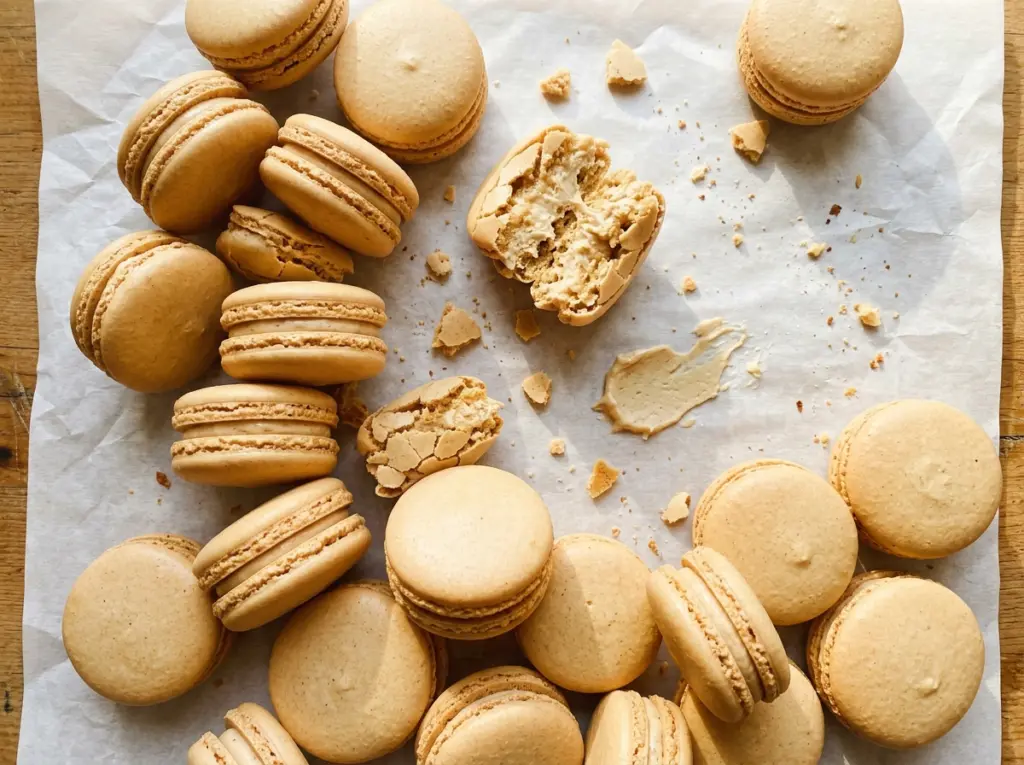

The first thing I check when I lift a macaron shell is whether it releases cleanly from the parchment. If it clings, it usually needs to cool longer; peeling too soon can leave the bottoms behind. These Baileys Irish Cream macarons bring crisp, delicate shells together with a smooth white chocolate ganache that has a gentle Irish cream flavor.
The shell batter needs a little attention as it comes together. I fold the sifted almond flour and powdered sugar into glossy meringue until the batter falls in thick ribbons, then watch for a ribbon to sink back into the surface in about 10 seconds. That cue is more useful than counting folds, because it tells you when the batter can spread into neat rounds without turning runny. Once filled and rested in the refrigerator, the shells soften slightly around the ganache for a tender bite.
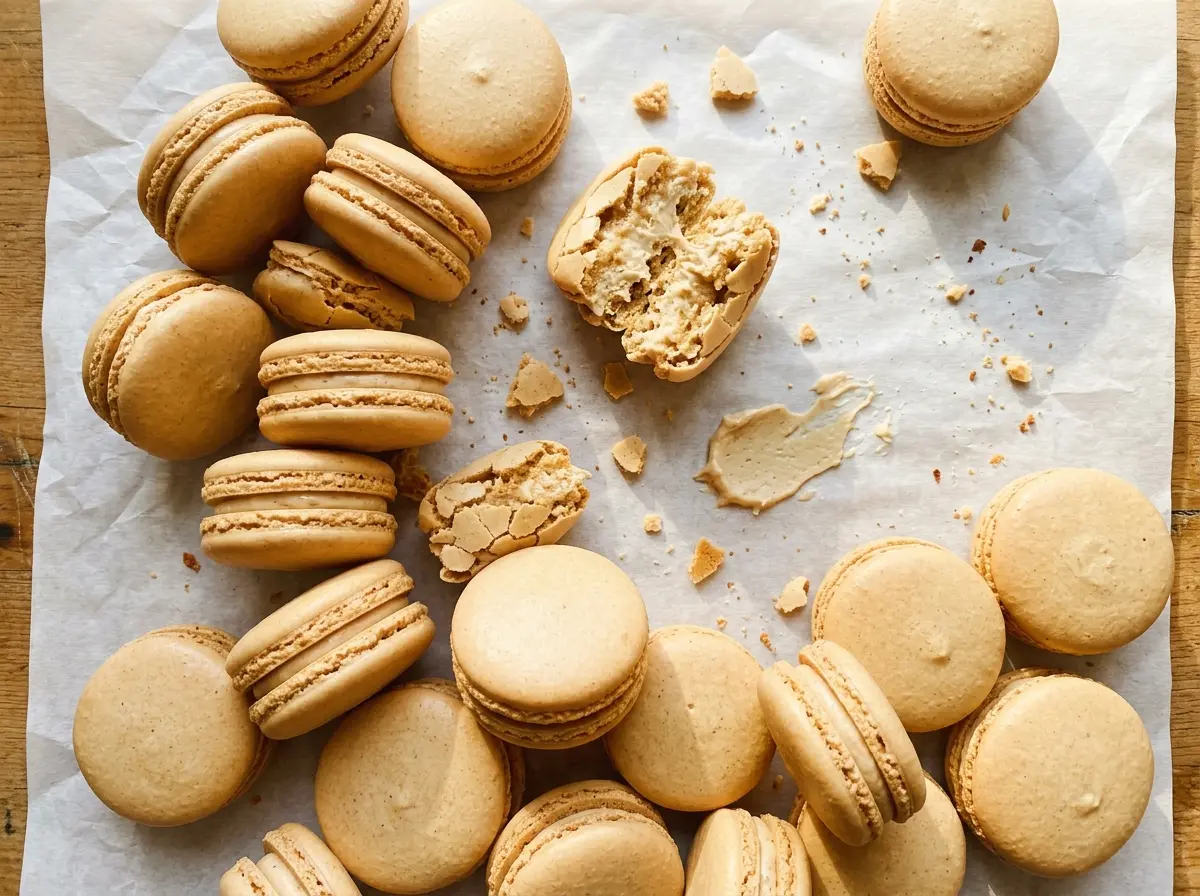
Kitchen Note
The ganache is ready to pipe when it holds its shape instead of running off the spoon. Give it time to thicken in the refrigerator, but don’t wait until it’s too firm to pipe smoothly.
Save these Baileys Irish Cream macarons for a special bake: crisp shells, a creamy white chocolate center, and a gentle Irish cream note.
Why Macaron Batter Needs to Flow, Not Pour
Macarons can look perfectly smooth on the tray and still bake unevenly if the batter is too stiff or too loose. A stiff mixture tends to hold peaks rather than settle into rounds; an overworked mixture spreads thin and loses the body needed to hold its shape. The useful middle ground is a thick ribbon that flows from the spatula and then disappears back into the batter in about 10 seconds.
That timing gives you a practical visual check without relying on a particular number of folds. Fold gently, scraping around the bowl and through the center, and pause to check the batter as it changes. It should move as one smooth ribbon, not drop in clumps or run like a liquid. Then pipe the rounds and tap the baking sheets firmly on the counter. Those taps help release visible air pockets; pop any bubbles that remain with a toothpick before the shells rest.
The drying period matters, too. The piped tops need to feel dry and not stick to a fingertip before the tray goes into the oven. If the surface still feels tacky, give it more time at room temperature rather than baking early. A dry top is the cue to move on; the 30-to-60-minute window can vary with the room.
What the Almond Flour and White Chocolate Bring to These Macarons

- Blanched almond flour — It gives the shells their delicate texture and nutty base. A finely ground flour makes smoother shells than a coarse almond meal, so look for a fine, even texture; sift it with the powdered sugar and press small lumps through the sieve.
- Powdered sugar — It blends with the almond flour into the dry mixture and helps keep the shell texture fine. Sifting is worth the minute it takes, since lumps are difficult to fold evenly into the meringue.
- Egg whites — Room-temperature whites whip into the glossy meringue that gives the shells their structure. The bowl needs to be clean and grease-free; even a greasy film can get in the way of building a stable foam.
- Granulated sugar and cream of tartar — Add the sugar gradually once the whites are foamy, rather than pouring it in all at once. The cream of tartar is included with the whites as they begin whipping; keep it in the formula rather than leaving it out of this particular shell mixture.
- White chocolate — It sets the ganache and gives the filling its creamy sweetness. Finely chop it so the hot cream and Baileys can melt it evenly; a white chocolate whose taste you enjoy matters here because it makes up the body of the filling.
- Heavy cream and Baileys Irish Cream — Together they make the warm liquid that melts the chopped chocolate and gives the filling its signature flavor. Keep the proportions intact for this ganache; changing the liquid balance can affect how firmly it thickens for piping.
The Sequence That Turns Meringue Into Filled Baileys Macarons
Make a smooth, pipeable ganache
Put the finely chopped white chocolate in a heatproof bowl. Warm the heavy cream and Baileys in a small saucepan over medium-low heat until steaming, with tiny bubbles at the edge; don’t let the mixture boil. Pour it over the chocolate and leave it for 3 minutes before stirring until smooth. Refrigerate for 20 to 30 minutes, stirring every 10 minutes, until it thickens enough to pipe.
Build glossy meringue and sift the dry mixture
Heat the oven to 300°F and line two 18×13-inch baking sheets with parchment paper. Sift the almond flour and powdered sugar together, pressing any small lumps through the sieve. In a clean, grease-free bowl, beat the room-temperature egg whites with the cream of tartar until foamy, then gradually add the granulated sugar. Beat on high for 5 to 7 minutes, until the meringue looks glossy and holds stiff peaks.
Fold to ribbons, then pipe even rounds
Fold the almond flour mixture into the meringue until the batter falls in thick ribbons and a ribbon sinks back into the surface in about 10 seconds. Transfer it to a piping bag fitted with a 1/2-inch round tip and pipe 1 1/2-inch rounds, leaving about 1 inch between them. Tap each sheet firmly on the counter to release air bubbles, then pop any visible ones with a toothpick. If the batter is still falling in heavy clumps, keep folding gently and check again rather than piping it too soon.
Dry the shells before baking
Let the piped rounds stand at room temperature for 30 to 60 minutes, until the tops feel dry and don’t stick to a fingertip. Bake one sheet at a time on the center rack for 15 to 18 minutes, rotating the sheet halfway through. The tops should be set, and the shells shouldn’t wobble when lightly nudged. Cool them completely on the sheets for about 20 to 30 minutes before peeling them from the parchment; warm shells are more likely to tear.
Pair, fill, and let the centers mature
Match the cooled shells by size so each macaron sits evenly. Pipe about 1 teaspoon of ganache onto the flat side of half the shells, then top with the remaining shells and press gently until the filling reaches the edges. Keep the pressure light so the delicate tops don’t crack. Refrigerate the filled macarons in an airtight container for at least 12 hours before serving.
Small Changes to the Shell-to-Ganache Balance
A thinner ganache seam
Pipe a little less than the usual teaspoon onto each shell for a more shell-forward bite. The filling will sit in a slimmer layer, so press the top shell only until the ganache reaches the edge instead of squeezing it out.
A fuller center
For a more generous ganache-to-shell ratio, pipe just a touch more onto each shell than the standard portion. Keep the filling inside the edge before adding the top; too much pressure can crack the shells or push the ganache out of the sandwich.
Storage and Serving
- Refrigerator: Keep the filled macarons in an airtight container for up to 3 days. The shells soften around the ganache as they rest.
- Freezer: I keep these refrigerated; freezing isn’t part of this recipe’s storage method.
- Serving: Bring the macarons to room temperature for 20 minutes before serving. Don’t serve them straight from the refrigerator if you want the ganache soft rather than firm.
Questions That Come Up While Making Baileys Macarons
Baileys Irish Cream Macarons
Ingredients
Equipment
Method
- Put the finely chopped white chocolate in a heatproof bowl.
- Heat the heavy cream and Baileys Irish Cream in a small saucepan over medium-low heat until steaming with tiny bubbles at the edge.
- Pour the hot cream and Baileys mixture over the white chocolate and let stand for 3 minutes.
- Stir the white chocolate mixture until smooth.
- Refrigerate the ganache for 20-30 minutes, stirring every 10 minutes, until thick enough to pipe.
- Preheat the oven to 300°F.
- Line two 18x13-inch baking sheets with parchment paper.
- Sift the almond flour and powdered sugar together into a bowl, pressing any small lumps through the sieve.
- In a clean, grease-free bowl, beat the egg whites and cream of tartar until foamy.
- Gradually add the granulated sugar and beat on high for 5-7 minutes, until the meringue is glossy and holds stiff peaks.
- Fold the almond flour mixture into the meringue until the batter flows in thick ribbons and a ribbon sinks back into the surface in about 10 seconds.
- Transfer the batter to a piping bag fitted with a 1/2-inch round tip.
- Pipe 1 1/2-inch rounds onto the prepared sheets, spacing them about 1 inch apart.
- Tap each sheet firmly on the counter and pop visible air bubbles with a toothpick.
- Let the piped shells stand at room temperature for 30-60 minutes, until the tops feel dry and do not stick to a fingertip.
- Bake one sheet at a time on the center rack for 15-18 minutes, rotating the sheet halfway through, until the tops are set and the shells do not wobble when lightly nudged.
- Cool the shells completely on the sheets, about 20-30 minutes.
- Peel the cooled shells off the parchment.
- Pair the shells by size.
- Pipe about 1 teaspoon of ganache onto the flat side of half of the shells.
- Top with the remaining shells and press gently to bring the filling to the edges.
- Store the macarons in an airtight container in the refrigerator for at least 12 hours and up to 3 days.
- Bring the macarons to room temperature for 20 minutes before serving.