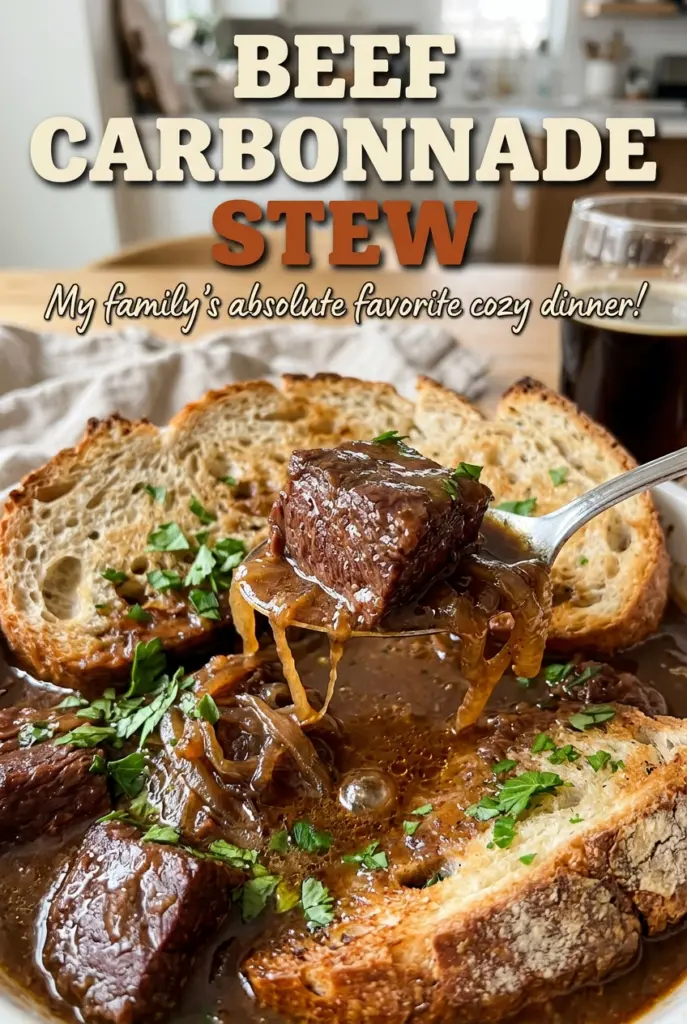

Beef carbonnade stew turns a tough cut of chuck into spoon-tender beef tucked into a dark, onion-rich gravy that tastes like it simmered all afternoon, because it did. The onions cook down until they nearly melt, then the beer and broth pick up every browned bit from the pot and carry that deep, malty flavor through the whole dish. What you end up with is the kind of stew that looks humble in the bowl but eats like a meal people remember.
The key here is patience at the stove before the braise even starts. If the onions stay pale, the broth tastes flat. If the beef isn’t deeply seared, the stew loses that roasted backbone that makes carbonnade stand apart from an ordinary beef stew. The vinegar and Dijon matter, too; they keep the richness from turning heavy and give the sauce a clean, sharp edge that wakes up the whole pot.
Below, I’ll walk through the onion stage that matters most, the beer choice that gives this stew its Belgian character, and the one reheating trick that keeps the beef tender the next day.
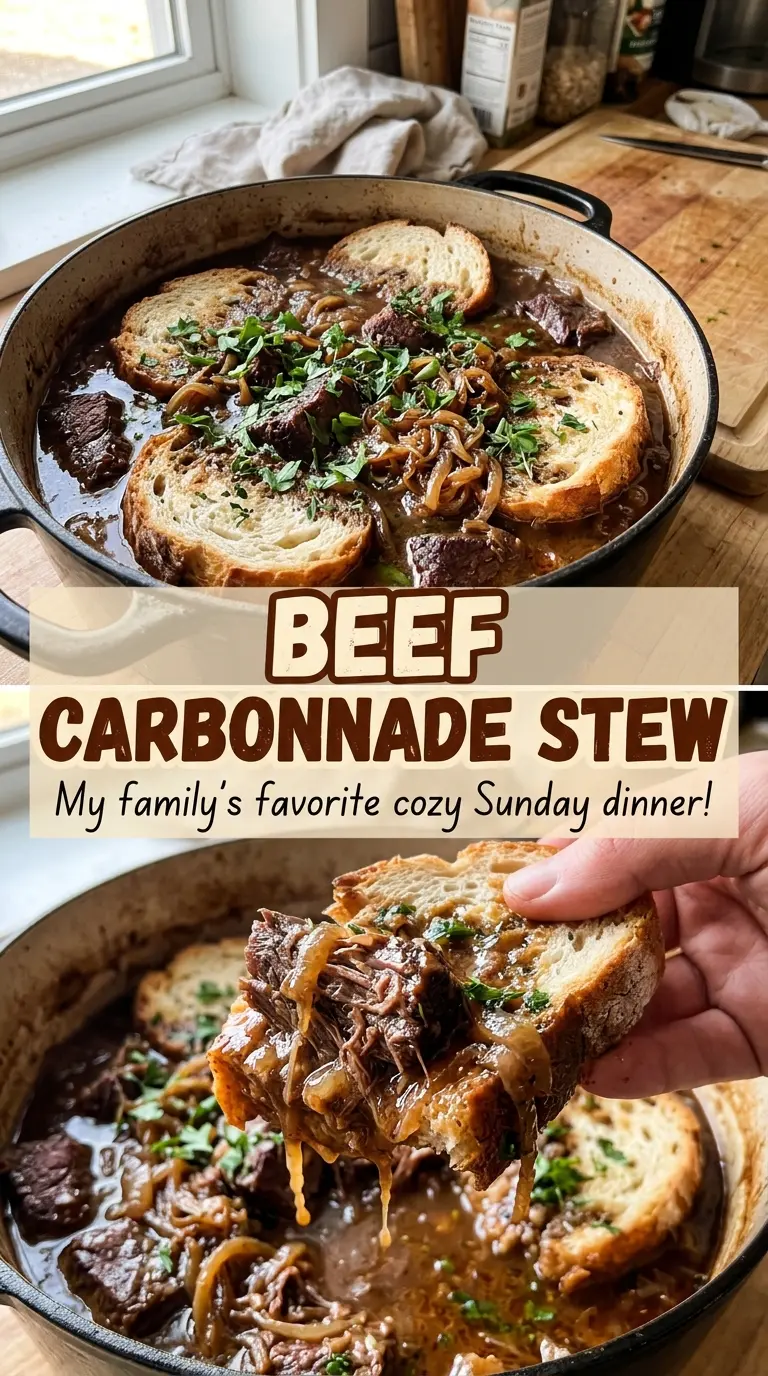
The onions cooked down into this glossy, almost jammy sauce and the beef was fall-apart tender after the full braise. I served it with crusty bread and the pot was scraped clean.
Beef carbonnade stew gets even better after a night in the fridge, and that glossy onion gravy is worth saving.
The Trick Is Not Rushing the Onions
Carbonnade lives or dies on the onion base. If you stop when the onions are just softened, the stew tastes like beef in beer instead of something deeper and more layered. You want them golden, soft enough to collapse when pressed, and cooked long enough that their natural sweetness balances the stout or Belgian ale.
The other common mistake is crowding the pot with beef before the fond has built up. Those browned bits on the bottom are not a nuisance; they’re the backbone of the gravy. Deglazing with beer loosens them cleanly, and the slight bitterness from the ale keeps the finished stew from tasting sugary once the brown sugar and onions do their part.
What Each Ingredient Is Actually Doing in This Dish
- Beef chuck — This is the cut that turns silky with time. Leaner beef won’t give you the same tender texture, and it can dry out before the sauce finishes.
- Dark Belgian ale or stout — The beer gives carbonnade its signature depth. Use something malty and not too bitter; a sharp IPA will fight the sweet onions instead of supporting them.
- Onions — They’re not a background vegetable here. They melt into the sauce and thicken it naturally, so slice them thin and give them the full time they need.
- Dijon mustard and red wine vinegar — These cut through the richness and sharpen the flavor. Don’t skip both; without them the stew can taste flat and heavy.
- Tomato paste — Just a little adds body and a darker savory note. Cooking it briefly with the flour keeps it from tasting raw.
- Flour — It lightly thickens the braising liquid so the sauce clings to the beef. If you need a gluten-free version, use a 1:1 gluten-free flour blend and cook it the same way.
Building the Braise So the Sauce Stays Deep and Glossy
Searing the Beef First
Season the beef well and sear it in batches over high heat until the pieces have a deep brown crust on more than one side. If the pot is crowded, the meat steams and you lose both color and flavor. You’re not cooking it through here; you’re building the savory base that the liquid will later pick up.
Cooking the Onions All the Way Down
Lower the heat and cook the onions slowly until they turn soft, golden, and nearly jammy. This takes patience, and that’s where the flavor comes from. If they start to brown too fast, add a splash of water and scrape the bottom so they soften instead of scorching.
Deglazing and Braising
Stir in the garlic, then the flour, and cook it just long enough to lose the raw taste before pouring in the beer. Scrape the bottom thoroughly; if the fond stays stuck, the sauce misses the deepest part of the flavor. Once the broth, mustard, vinegar, brown sugar, herbs, and beef go back in, bring it just to a boil, then drop it to a gentle simmer and cover it. A hard boil makes the meat tighten up, while a steady low braise turns the chuck tender without drying it out.
Finishing the Sauce
When the beef shreds with a fork and the onions have dissolved into the broth, pull out the thyme and bay leaves. Taste before serving and adjust the salt and pepper at the end, because the beer reduction concentrates as it cooks. Serve it hot with crusty bread for soaking up every bit of the sauce.
Three Ways to Make This Stew Fit What You Need
Gluten-Free Carbonnade
Swap the all-purpose flour for a good gluten-free 1:1 blend and use a gluten-free beer if needed. The stew will still thicken and reduce nicely, though the sauce may be a little less velvety than the wheat-flour version.
Use Stout for a Deeper, Darker Stew
A stout gives the broth a darker color and a more roasted finish. It’s a little less bright than a Belgian ale, so it works best if you want the sauce to lean rich and slightly bitter rather than rounded and malty.
Make It Ahead for Better Texture
Carbonnade tastes even better the next day because the beef reabsorbs some of the sauce and the onion gravy settles in. Cool it completely, refrigerate it overnight, and reheat it gently so the beef stays tender instead of tightening up.
Storage and Reheating
- Refrigerator: 4 days. The sauce thickens as it chills, and the flavor deepens.
- Freezer: Freezes well for up to 3 months in airtight containers. Thaw overnight in the fridge before reheating.
- Reheating: Warm it slowly over low heat with a splash of broth or water if needed. Don’t boil it hard or the beef can dry out and the sauce can turn overly tight.
Answers to the Questions Worth Asking
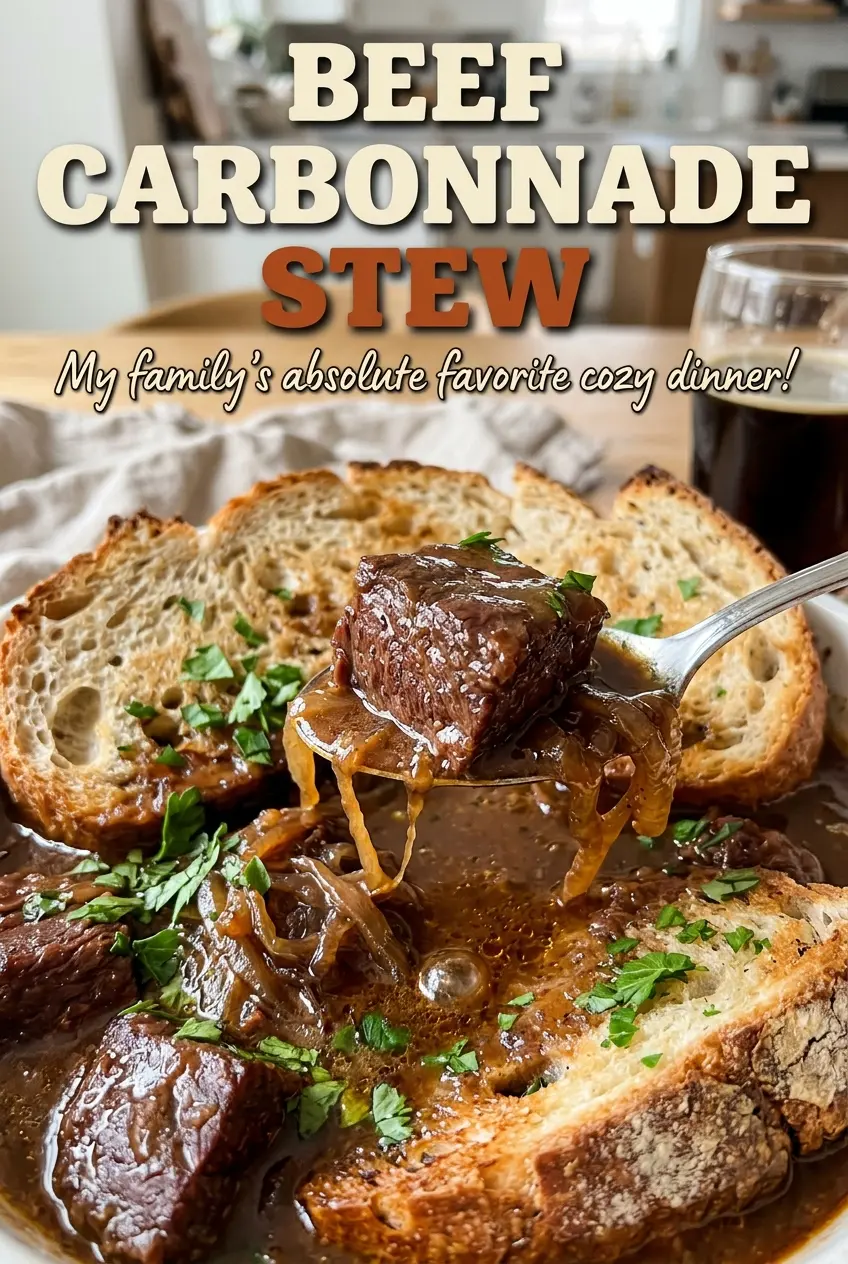
Beef Carbonnade Stew
Ingredients
Equipment
Method
- Season the beef chuck cubes with salt and pepper, then sear in the vegetable oil in a Dutch oven over high heat until deeply browned.
- Transfer the browned beef to a plate while you caramelize the onions.
- Cook the onions in the Dutch oven over medium heat for 20-25 minutes until very soft and golden.
- Add the minced garlic and cook for 1 minute.
- Whisk in the all-purpose flour and cook for 1 minute.
- Pour in the dark Belgian ale or stout beer and deglaze, scraping up all browned bits from the bottom of the pot.
- Add the beef broth, tomato paste, red wine vinegar, brown sugar, Dijon mustard, fresh thyme, bay leaves, and the beef to the Dutch oven.
- Bring to a boil, then reduce heat, cover, and braise for 2 hours, until the beef is very tender.
- Remove the bay leaves and thyme, then season to taste with salt and pepper.
- Serve hot with crusty bread for dipping and soaking the sauce.