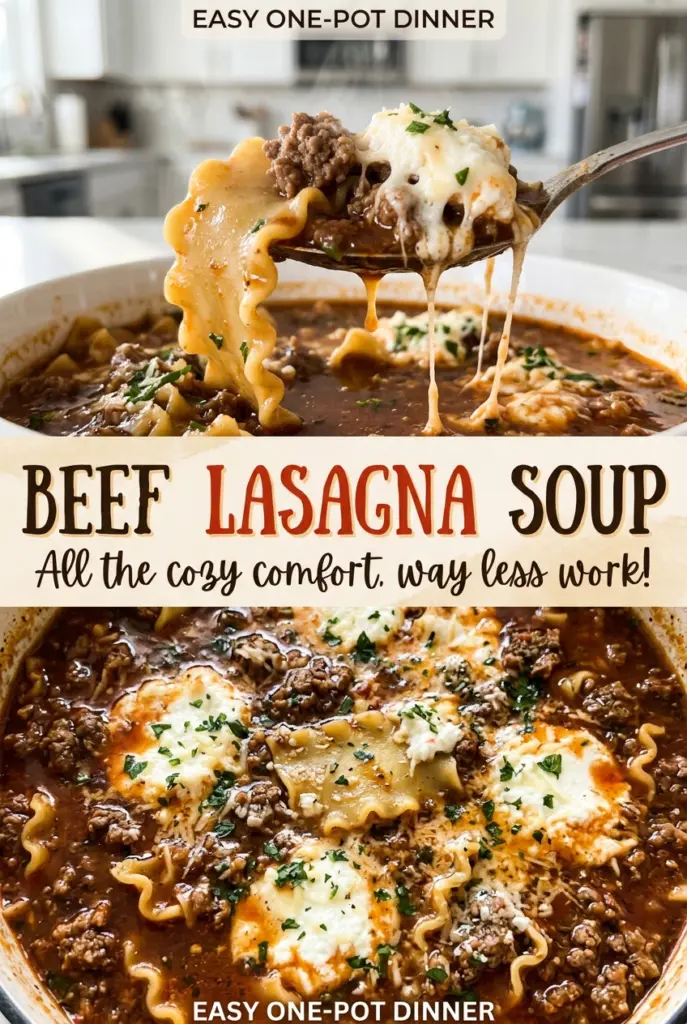

Beef lasagna soup gives you all the comfort of a bubbling pan of lasagna without the layering, baking, or waiting. The broth turns rich and tomatoey, the noodles soften just enough to feel like lasagna pasta, and the cheese dollop melts into the bowl in the best possible way. It eats like a full dinner, but it comes together in the time it usually takes to boil pasta and warm up sauce.
What makes this version work is the way the tomato paste gets cooked with the onion and garlic before the broth goes in. That step deepens the flavor and keeps the soup from tasting thin. Browning the beef first also matters, because those browned bits on the bottom of the pot bring the broth closer to a slow-simmered sauce than a quick weeknight soup.
Below, I’m walking through the one timing detail that keeps the noodles from going mushy, plus the cheese topping that makes each bowl taste finished instead of just assembled.
The noodles stayed tender without falling apart, and the ricotta-mozzarella topping melted right into the broth. My husband went back for a second bowl before I even sat down.
Save this beef lasagna soup for the night you want lasagna flavor, tender noodles, and a creamy ricotta topping without assembling a casserole.
The Shortcut Most Lasagna Soups Miss: Building Tomato Depth Before the Broth
A good lasagna soup tastes layered, not just tomato-based, and the difference comes from what happens before the liquid goes in. If you dump everything into the pot at once, the broth tastes flat and the beef can feel lost. Cooking the tomato paste with the onion and garlic changes that. It darkens, loses its raw edge, and starts to taste like a sauce instead of canned tomatoes in broth.
That same logic is why the beef gets browned first and then left in the pot with the onion. You want a little sticking and browning on the bottom. Once the broth hits, those bits loosen and turn into flavor. This is a fast soup, but it still needs a few minutes of real cooking before the simmer starts.
What Each Ingredient Is Actually Doing in This Soup
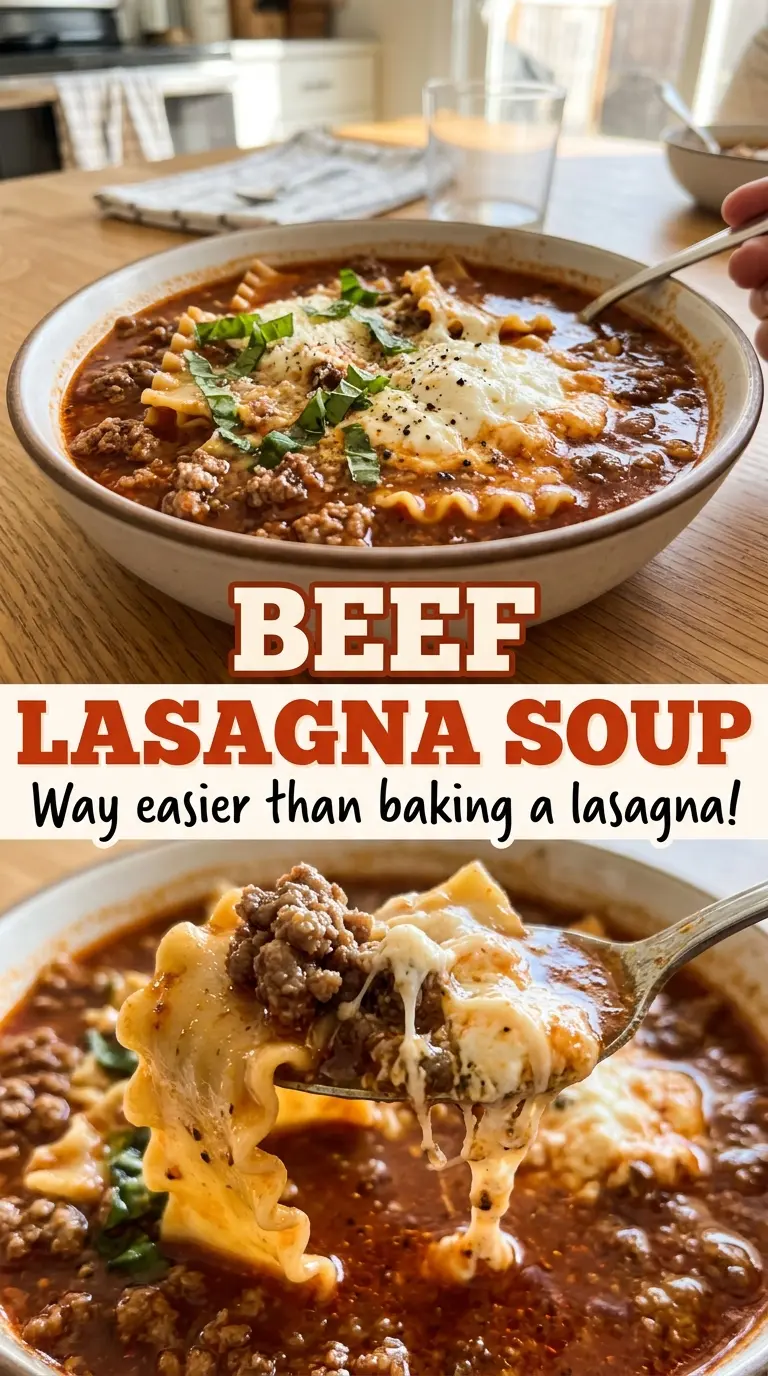
- Lean ground beef — This is the base of the soup, and lean beef keeps the broth from turning greasy. If you only have a fattier package, drain it well after browning so the finished soup stays balanced.
- Tomato paste — This is the ingredient that gives the broth its cooked, almost slow-simmered taste. Let it spend a full 2 minutes with the onion and garlic so it darkens slightly before the liquids go in.
- Crushed tomatoes plus diced tomatoes — The crushed tomatoes build the body of the broth, while the diced tomatoes leave you with some texture. You need both for a soup that feels hearty instead of smooth.
- Broken lasagna noodles — These give the soup its identity, but they also need careful timing. Add them only after the broth is seasoned and simmering, or they’ll overcook and turn soft before the soup is ready.
- Ricotta, mozzarella, and parmesan — This topping is what makes the bowl taste like lasagna instead of tomato soup with pasta. The ricotta gives creaminess, the mozzarella melts into strands, and the parmesan sharpens the whole thing.
The 10 Minutes That Decide Whether the Noodles Stay Tender
Browning the Beef First
Cook the ground beef in a large pot until it loses its pink color and starts to pick up browned spots. If there’s a lot of fat in the pot, drain it off before you move on. You want flavor, not a greasy surface sitting on top of the broth.
Softening the Onion and Cooking the Paste
Use the same pot for the onion so it picks up what the beef left behind. Cook it until it softens and turns translucent, then add the garlic and tomato paste together. The paste should smell sweeter and darker by the end of those 2 minutes; if it still smells raw, the broth will taste sharp.
Building the Broth
Add the crushed tomatoes, diced tomatoes, broth, herbs, and red pepper flakes, then bring everything to a boil. Stir along the bottom of the pot as it heats so nothing catches where the paste was sitting. Once it reaches a boil, drop the heat to a steady simmer; a hard boil makes the noodles rough and can tighten the meat instead of letting the flavors meld.
Cooking the Noodles Without Overdoing Them
Stir in the broken lasagna noodles and simmer until they’re tender, usually 10 to 12 minutes. Stir occasionally because the noodles like to settle and stick to the bottom of the pot. Pull the pot off the heat when the noodles still have a little bite; they’ll keep softening in the hot broth while you ladle the soup into bowls.
Finishing with the Cheese Dollop
Mix the ricotta, mozzarella, parmesan, and basil together, then spoon a generous amount over each bowl. The heat from the soup should soften the cheese into a creamy topping without fully disappearing into the broth. If you add it directly to the pot, it can clump instead of giving you those rich, cheesy spoonfuls.
Three Useful Ways to Change This Up Without Losing the Lasagna Feel
Make it lighter with turkey or chicken
Swap the beef for ground turkey or chicken if you want a lighter soup. You’ll lose a little richness, so add an extra spoonful of tomato paste and don’t skimp on the parmesan topping; that’s what keeps the bowl from tasting thin.
Make it gluten-free with a sturdy pasta swap
Use a gluten-free lasagna noodle or another sturdy gluten-free pasta shape that can hold up in broth. Cook it just until tender, because gluten-free pasta can go from firm to mushy fast if it sits too long in the hot soup.
Make it dairy-free with a different finish
Skip the ricotta-mozzarella dollop and finish each bowl with a spoonful of dairy-free ricotta or a little olive oil and chopped basil. The soup itself still has the same hearty tomato-beef backbone; you’re just trading the creamy top layer for a lighter finish.
Make it spicier without changing the base
Increase the red pepper flakes or serve with extra at the table. The broth takes heat well because the tomato and cheese soften it, so you can push the spice a little more than you would in a plain tomato soup.
Storage and Reheating
- Refrigerator: 3 to 4 days. The noodles will keep absorbing broth, so expect the soup to thicken as it sits.
- Freezer: Freeze the soup base without the noodles if you can. Pasta gets softer after freezing and reheating, so cook fresh noodles when serving for the best texture.
- Reheating: Warm it gently on the stovetop over medium-low heat, adding a splash of broth or water if it has thickened. Don’t boil it hard again or the noodles can break down and the meat can turn dry.
Answers to the Questions Worth Asking
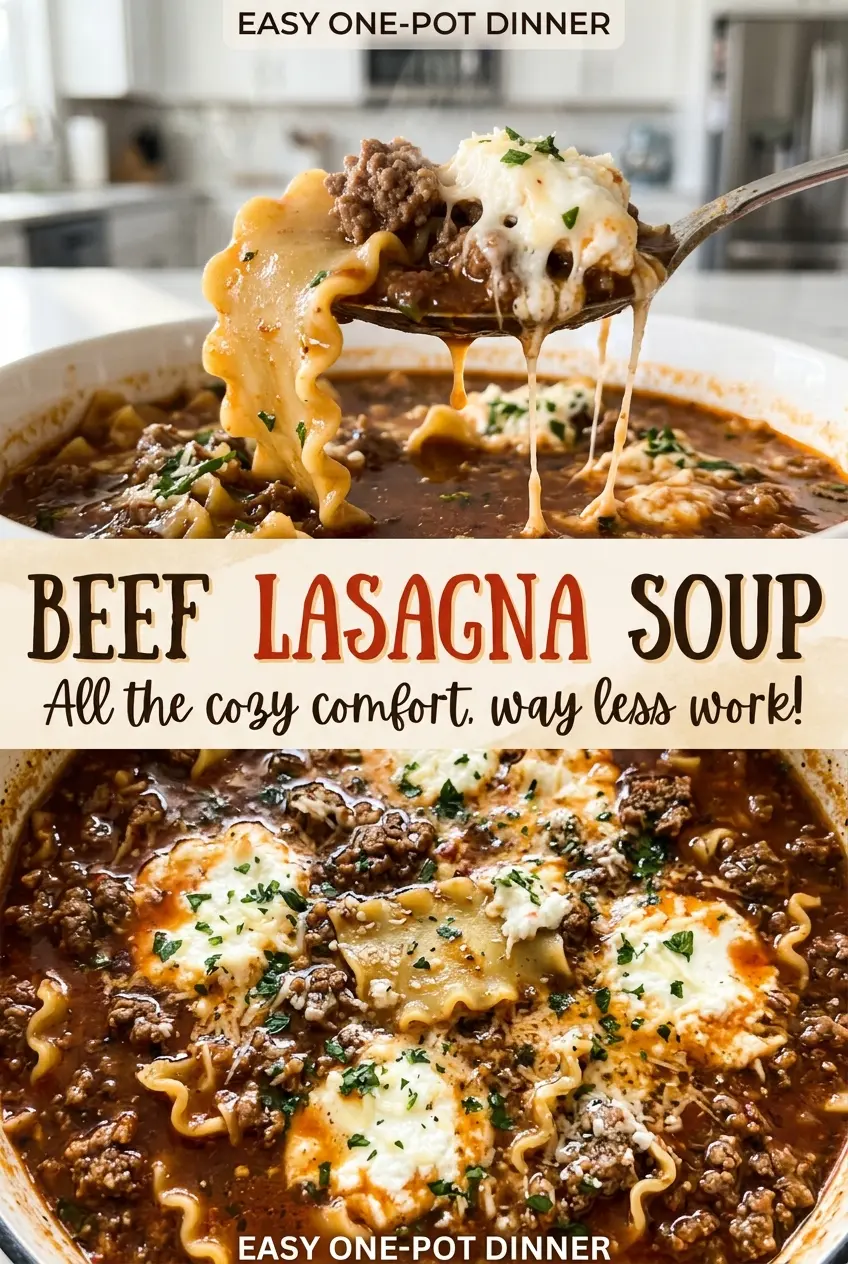
Beef Lasagna Soup
Ingredients
Equipment
Method
- Brown the ground beef in a large pot over medium-high heat until cooked through, then drain the fat.
- Sauté the onion in the same pot for 4 minutes, then add the garlic and tomato paste and cook for 2 minutes.
- Add the crushed tomatoes, diced tomatoes, beef broth, Italian seasoning, dried basil, dried oregano, red pepper flakes, and black pepper, then bring the mixture to a boil.
- Add the broken lasagna noodles, reduce the heat to a simmer, and cook for 10-12 minutes until the noodles are tender.
- Season with salt to taste and stir occasionally to prevent the noodles from sticking.
- Mix the ricotta, shredded mozzarella, parmesan, and fresh basil into a thick cheese dollop.
- Serve the soup in bowls and top each one with a very generous spoonful of the cheese dollop so it starts melting into the hot broth.