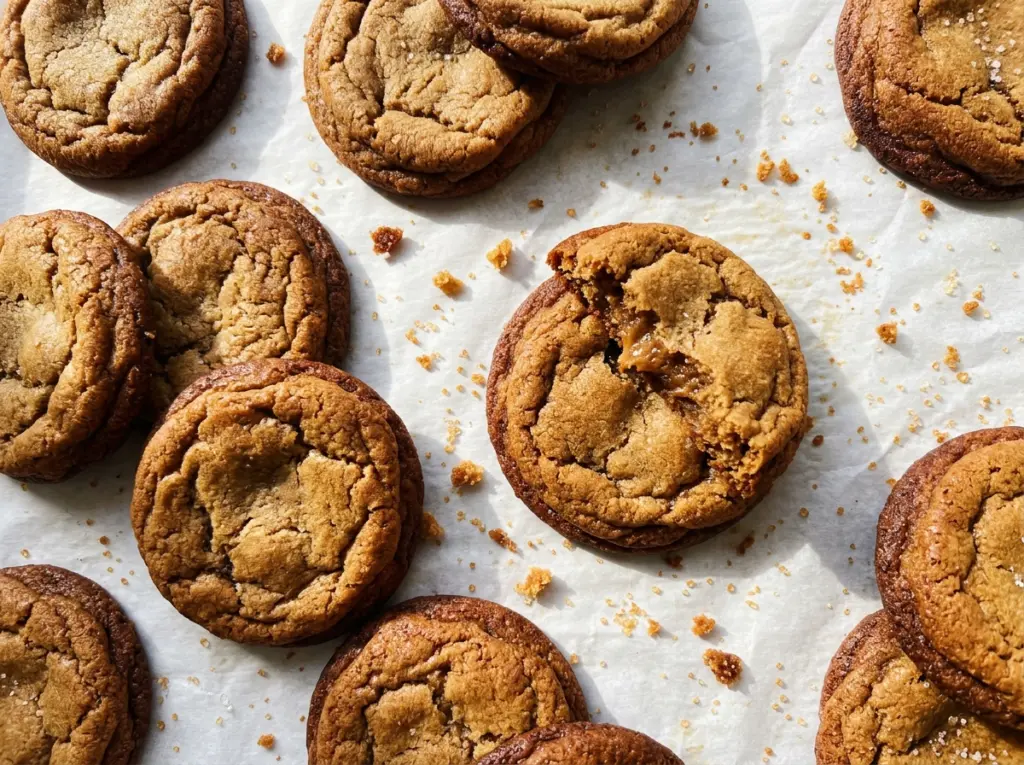

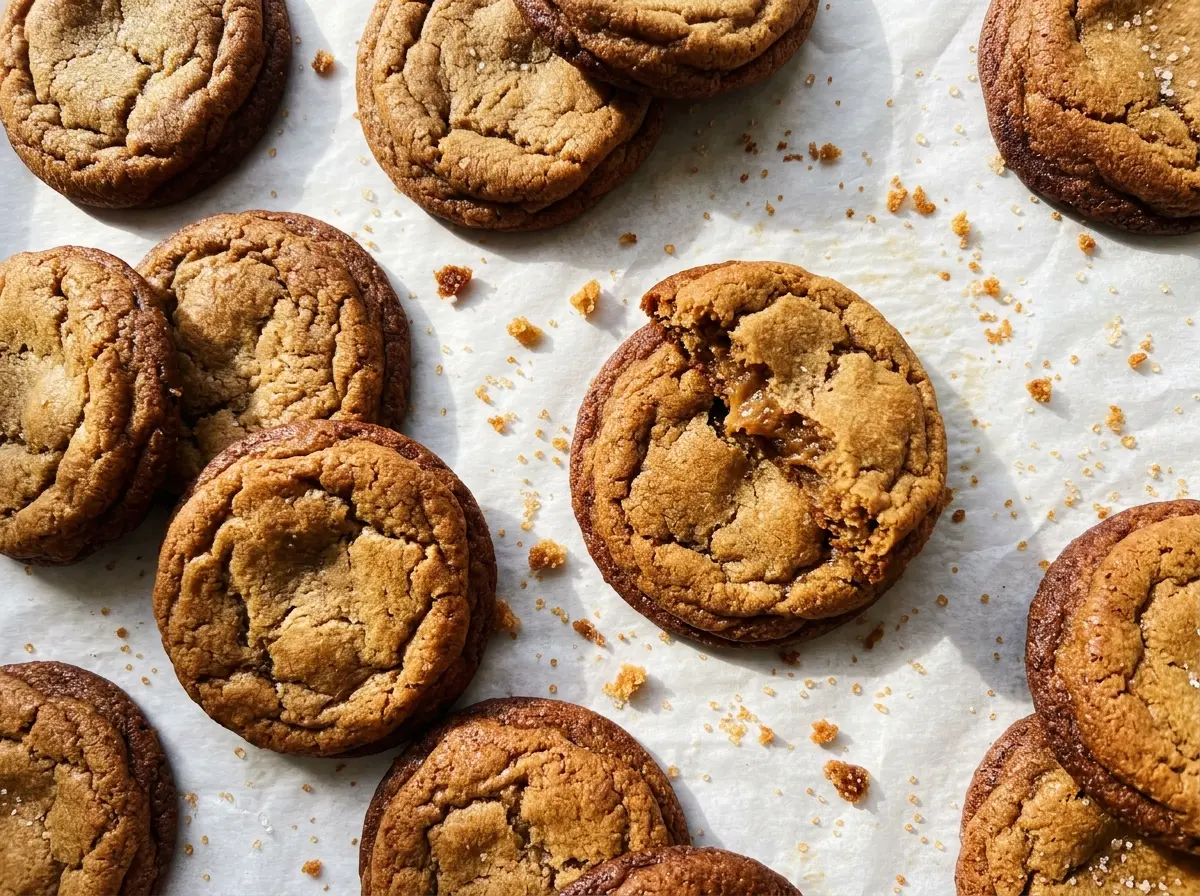
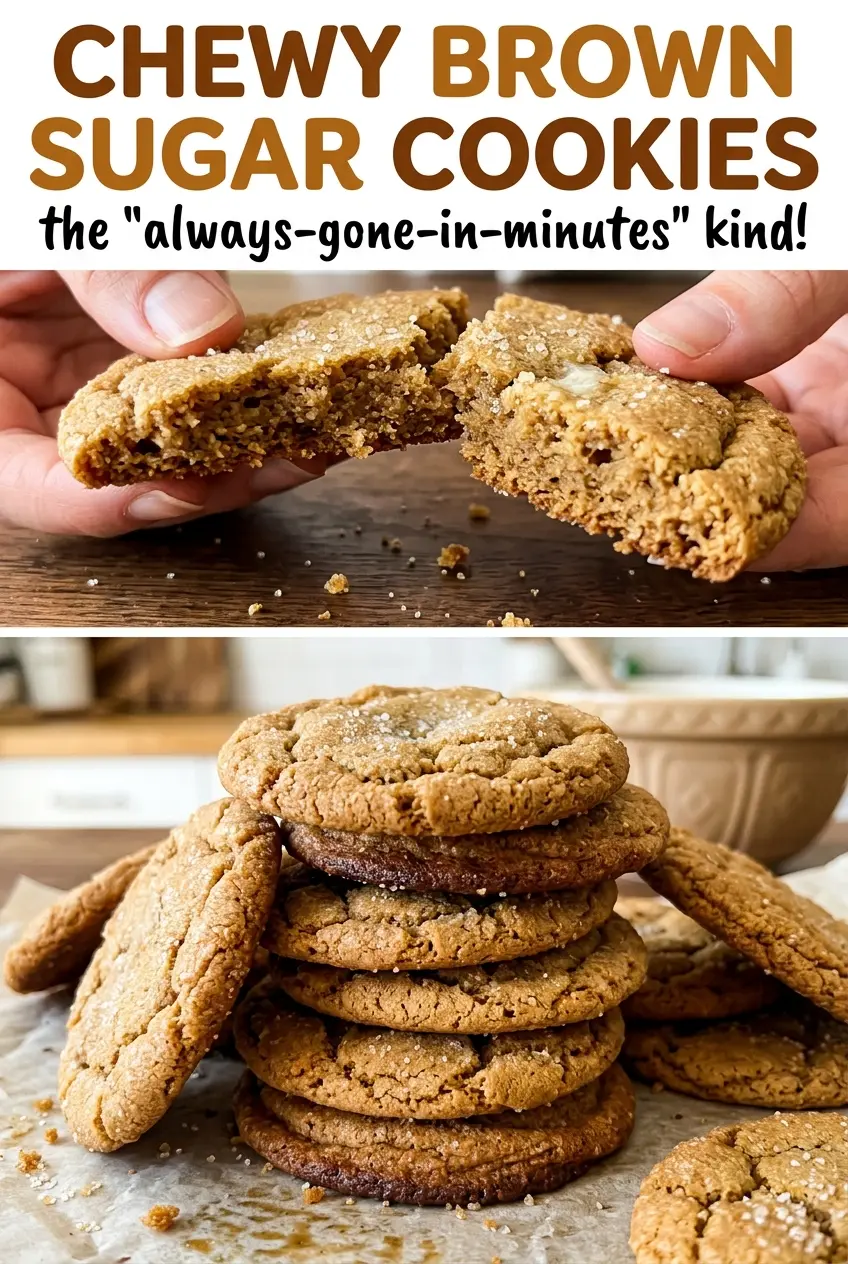
When these cookies come out of the oven, the edges look set and lightly browned, but the centers still seem a little too soft to trust. That’s exactly where you want them. They firm up as they cool, keeping the middle chewy instead of baking into a crisp, dry cookie. I make these Chewy Brown Sugar Cookies when I want a simple dough that gives me that soft center without needing a long list of add-ins.
The combination of packed light brown sugar and one extra egg yolk does a lot of the work. The sugar brings moisture and a gentle molasses note, while the yolk makes the dough richer. I also chill the dough before scooping, which makes it easier to portion and helps the cookies bake up evenly. You’ll get 24 cookies, with lightly golden edges and a soft, bendy middle.
Kitchen Note
I like to scoop the dough as soon as it has chilled, while it’s still easy to portion. If you wait until it feels very firm, let it sit briefly at room temperature so the scoop can move through it without compressing the dough.
Save these Chewy Brown Sugar Cookies for a bake when you want soft centers, golden edges, and a dough that’s easy to portion.
Why the Extra Egg Yolk Helps Keep These Cookies Chewy
These cookies use a whole egg and an additional yolk, rather than two whole eggs. That distinction matters: the yolk adds richness without bringing in the extra white, so the baked cookie stays tender instead of turning bready. Paired with brown sugar, it gives the center its soft, chewy character.
Brown sugar also behaves differently from granulated sugar in a cookie dough. Its molasses content brings moisture and a deeper, less sharp sweetness. The packed sugar blends into the softened butter to make a smooth, fluffy base, and the added yolk rounds out that texture. You don’t need to add extra flour to make the dough feel more manageable; the short chill firms it up before it goes onto the baking sheets.
That balance is why the doneness cue matters as much as the ingredients. The edges should look set and lightly browned while the centers still look slightly soft. A cookie that looks fully firm in the oven has already gone too far for the chewy middle these are meant to have.
What the Brown Sugar, Butter, and Egg Yolk Bring to the Dough
- Unsalted butter — Softened butter beats smoothly with the sugar, giving the dough its fluffy starting texture. Use butter that yields when pressed but isn’t melted; melted butter won’t cream in the same way. Unsalted butter also lets the salt in the dough stay consistent.
- Packed light brown sugar — The molasses in brown sugar contributes moisture and that warm, rounded sweetness. Pack it firmly into the measuring cup so the amount is consistent. For a deeper molasses flavor, dark brown sugar works in its place in the same measure, though the cookies will taste more robust.
- Large egg and egg yolk — Bring both to room temperature before mixing so they blend into the butter mixture without making it look lumpy. The yolk adds richness and supports the chewy texture; leaving it out changes the balance of the dough.
- All-purpose flour — It gives the cookies enough structure to hold their shape while the centers stay tender. Spoon flour into the measuring cup and level it rather than packing it down; too much flour can make the dough stiff and the baked cookies less chewy. For a gluten-free version, use a cup-for-cup gluten-free baking blend made for cookies, following the adaptation below.
- Vanilla extract — It rounds out the brown sugar flavor. A familiar brand of vanilla extract is fine here; there’s no need for a specialty bottle to get a clear vanilla note.
- Baking soda — This is the leavener that helps the cookies spread and brown. Check that it’s fresh if it has been open in the pantry for a long time; stale baking soda may leave the cookies flatter and less evenly baked.
From Fluffy Butter to Soft-Centered Cookies
Cream the Butter and Brown Sugar
Heat the oven to 350°F and line two 18×13-inch rimmed baking sheets with parchment paper. In a large bowl, beat the softened butter and packed brown sugar with a mixer on medium speed for 2 minutes. The mixture should look smooth and fluffy, with no large streaks of butter. If the butter is cold, it won’t blend evenly; give it time to soften rather than trying to beat it into submission.
Blend in the Eggs, Then the Dry Ingredients
Beat in the room-temperature egg and egg yolk until they’re combined, then mix in the vanilla. In a separate bowl, whisk the flour, baking soda, and salt together so the leavener and salt are distributed. Add that mixture to the butter bowl and mix on low just until no dry streaks remain. Stop as soon as the flour disappears; mixing longer can make the cookies tougher.
Chill and Portion the Dough
Cover the dough and refrigerate it for 30 to 45 minutes. This gives the dough time to firm before scooping, so the portions are easier to handle and less likely to slump as soon as they hit the pan. Scoop it into 1 1/2-tablespoon portions and arrange 12 on each prepared sheet, leaving about 2 inches between them. Crowding the portions leaves too little room for the cookies to spread.
Bake to the Soft-Center Cue
Bake for 10 to 12 minutes, watching for lightly browned, set edges and centers that still look slightly soft. Don’t wait for the centers to look completely firm in the oven; they continue setting on the hot baking sheets. Let the cookies cool on the sheets for 5 minutes, then transfer them to a wire rack to cool completely. Moving them too soon can break the soft cookies before they have had a chance to set.
Three Swaps That Change These Brown Sugar Cookies
Use Dark Brown Sugar for a Deeper, Toastier Sweetness
Replace the packed light brown sugar with the same measure of packed dark brown sugar. The cookies keep their chewy texture, but the stronger molasses taste comes through more clearly. It’s a straightforward change when you want a less delicate, more caramel-like flavor.
Make a Gluten-Free Batch with a Cup-for-Cup Blend
Use a gluten-free baking blend labeled as a direct replacement for all-purpose flour, measuring it cup for cup. Choose a blend intended for cookies and containing a binder, such as xanthan gum, so the dough holds together. The texture may be a little more delicate than the all-purpose version, so let the cookies cool on the baking sheets before transferring them.
Make Them Dairy-Free with Stick-Style Baking Butter
Replace the unsalted butter with the same measure of stick-style dairy-free baking butter, not a tub spread. The dough will still cream with the sugar, though the flavor will be less buttery and the spread can vary by brand. Keep the same chilling and baking cues, and watch the first tray closely for browning.
Storage and Reheating
- Refrigerator: These cookies don’t need refrigeration. Keep them in an airtight container at room temperature for up to 5 days; chilling can make them firm sooner.
- Freezer: Freeze completely cooled cookies in an airtight container for up to 3 months. Thaw them at room temperature before serving.
- Reheating: Warm a cookie in a 300°F oven for 3 to 4 minutes if you’d like it soft again. Avoid heating it for too long, which can dry the edges and make the center tough.
Questions That Come Up When Baking These Cookies
Chewy Brown Sugar Cookies
Ingredients
Equipment
Method
- Heat the oven to 350°F.
- Line two 18x13-inch rimmed baking sheets with parchment paper.
- In a large bowl, beat the softened unsalted butter and packed light brown sugar with a mixer on medium speed for 2 minutes, until smooth and fluffy.
- Beat in the egg and egg yolk until combined.
- Mix in the vanilla extract.
- In a separate bowl, whisk together the all-purpose flour, baking soda, and salt.
- Add the flour mixture to the butter mixture and mix on low just until no dry streaks remain.
- Cover the dough and refrigerate for 30 to 45 minutes.
- Scoop the dough into 1 1/2-tablespoon portions.
- Arrange 12 portions on each prepared baking sheet, spacing them about 2 inches apart.
- Bake for 10 to 12 minutes, until the edges are set and lightly browned and the centers still look slightly soft.
- Let the cookies cool on the baking sheets for 5 minutes.
- Transfer the cookies to a wire rack to cool completely.