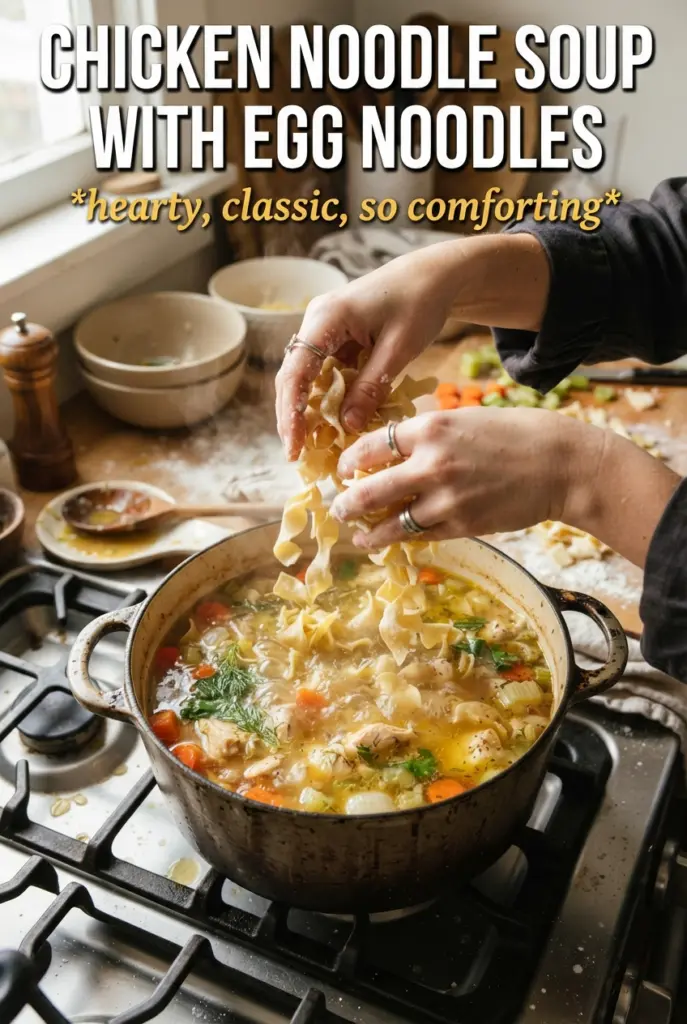

Wide egg noodles change chicken noodle soup from plain and brothy to something with real body. They hold onto the golden broth, stay tender without turning brittle, and give every spoonful the kind of soft, satisfying bite that makes a second bowl feel inevitable. The chicken stays shredded and plentiful, the vegetables keep their shape, and the dill at the end lifts the whole pot without taking it over.
The trick here is building the flavor in layers instead of tossing everything in at once. Sautéing the onion, carrots, and celery first gives the broth a sweeter, rounder base, and adding the noodles only after the chicken is cooked keeps them from soaking up too much liquid and going bloated. Egg noodles cook fast, so once they go in, the soup needs your full attention.
Below, I’ve included the small timing details that keep the noodles from getting mushy, plus a few easy swaps if you need to work with what’s in the pantry.
The noodles stayed tender without falling apart, and the broth had that homemade taste that usually takes all day. I used the dill at the end like you said, and it made the soup taste fresh instead of flat.
Creamy broth, tender chicken, and wide egg noodles that stay perfectly spoonable — save this chicken noodle soup for the kind of dinner that needs to feel soothing without much work.
The Reason the Egg Noodles Go In Last
The biggest mistake with chicken noodle soup is letting the noodles sit in the pot too long. Egg noodles are thirsty, and once they start cooking in hot broth, they keep pulling in liquid. If you add them too early, the broth turns starchy and the noodles swell past the point of comfort before the chicken is even shredded.
Cooking the chicken first gives you two wins at once: the meat stays juicy, and the broth gets a head start on flavor from the vegetables, herbs, and any bits that settle into the pot. Once the chicken comes out, the soup can boil again before the noodles go in, which helps them cook quickly and evenly instead of going gummy on the outside and underdone in the middle.
What the Broth, Chicken, and Dill Are Each Doing Here

- Chicken breast — Lean breast meat cooks quickly and shreds into clean, tender pieces. If you prefer darker meat, use boneless thighs and add a few extra minutes; they bring a little more richness, but breast keeps this soup lighter and more classic.
- Chicken broth — This is the backbone of the soup, so use one you’d happily sip on its own. A low-sodium broth gives you room to season properly at the end, which matters because the noodles and chicken will mute saltiness as they cook.
- Wide egg noodles — These are the texture driver. Wide noodles stand up to simmering better than thin pasta and give the soup that familiar, soft chew. If all you have are standard egg noodles, cut the cook time by a minute or two and watch them closely.
- Fresh dill — Dry dill won’t give the same bright finish. Stir it in at the very end so it stays fresh and grassy instead of disappearing into the broth.
- Carrots, celery, and onion — This trio builds the base of the broth. Dice the onion small and slice the carrots and celery evenly so they soften at the same rate and don’t turn one-note or mushy.
How to Keep the Broth Clear and the Noodles Tender
Softening the vegetables first
Start with the olive oil, onion, carrots, and celery in a large pot over medium heat. You want the onion to turn translucent and the carrots to just begin softening, not browning hard on the bottom. That first five minutes pulls sweetness out of the vegetables and keeps the finished broth from tasting flat.
Simmering the chicken gently
Add the garlic for a minute, then pour in the broth, herbs, garlic powder, and chicken. Bring the pot to a boil, then lower the heat so the soup barely simmers. If it boils hard, the chicken can turn stringy before the center is cooked through. A gentle simmer keeps the meat tender and gives the broth time to absorb the aromatics.
Shredding before the noodles go in
Pull the chicken out once it’s cooked through and shred it while it’s still warm enough to handle. Return it to the pot before adding the noodles so the meat finishes absorbing flavor. Then bring the soup back up to a boil and cook the egg noodles until they’re tender but still have a little spring in the center. If they sit even a few minutes too long, they’ll keep softening in the hot broth.
Finishing with dill and seasoning
Stir in the fresh dill after the noodles are done, not before. The heat is enough to release its aroma without cooking it into silence. Taste the broth at the end and season generously with salt and pepper; soup always needs more salt than people expect, especially after the noodles go in.
How to Adapt This for Different Kitchens and Different Eaters
Use chicken thighs for a richer bowl
Boneless thighs work well if you want more richness and a slightly softer shred. They take a few minutes longer than breast, but they stay forgiving if the soup simmers a little too long. The broth will taste fuller, especially if your store-bought stock is on the lighter side.
Make it gluten-free without losing comfort
Swap in a gluten-free egg-style noodle or a sturdy rice noodle, but cook it separately if the package says it softens quickly. Many gluten-free pastas break down faster in broth, so keeping them out of the pot until serving gives you a cleaner texture and prevents the soup from turning thick.
Use leftover cooked chicken
If you already have cooked chicken, skip the long simmer and add the shredded meat near the end. Let the vegetables and broth simmer first so the base has time to develop, then stir in the chicken just long enough to warm through. This keeps the meat from drying out and cuts the total time down fast.
Storage and Reheating
- Refrigerator: Store for up to 4 days. The noodles will keep soaking up broth, so expect the soup to thicken as it sits.
- Freezer: Freeze the broth, chicken, and vegetables without the noodles for best texture. Cook fresh noodles when you reheat it, or the pasta will turn soft and swollen after thawing.
- Reheating: Warm it gently on the stove over medium-low heat until steaming. If it looks too thick, add a splash of broth or water before it comes to a simmer, not after the noodles have already started falling apart.
Questions I Get Asked About This Recipe
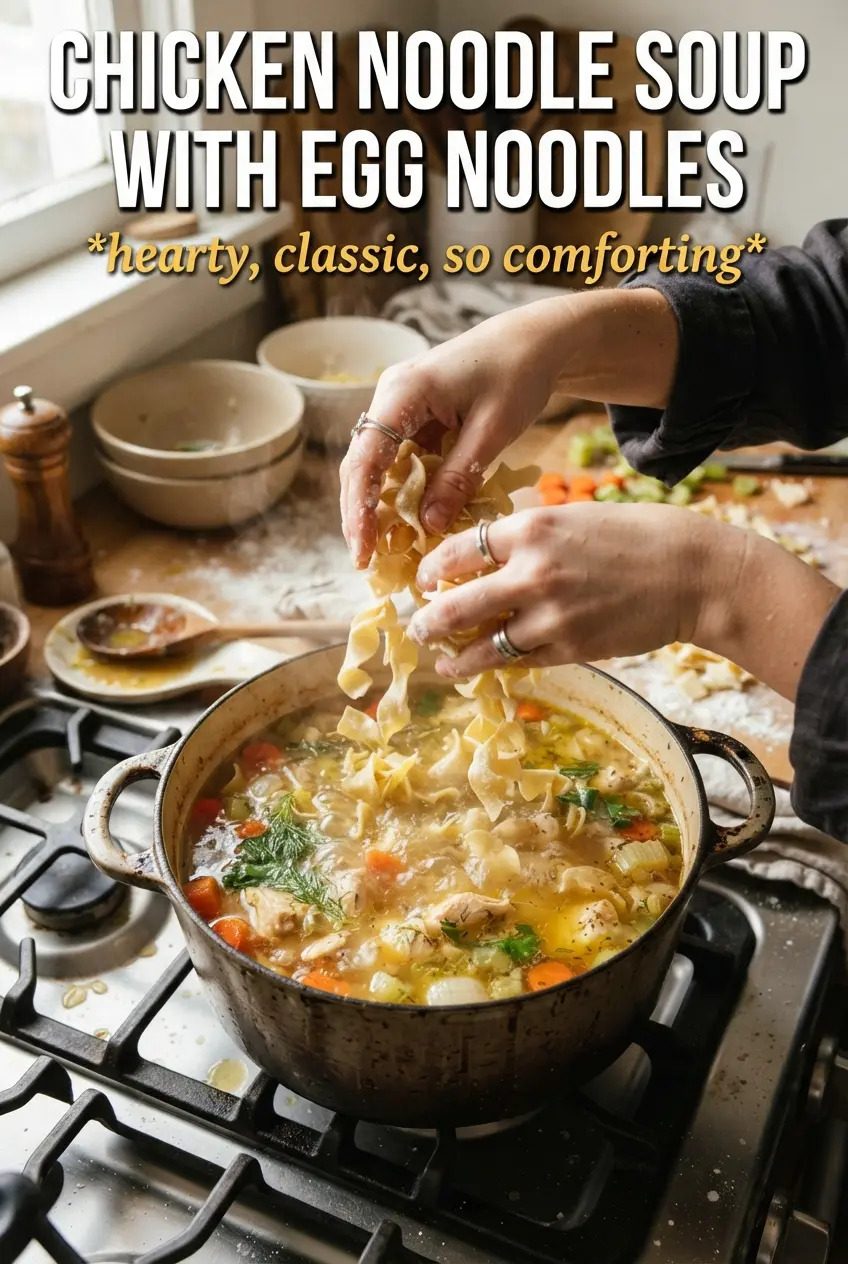
Chicken Noodle Soup With Egg Noodles
Ingredients
Equipment
Method
- Heat the olive oil in a large pot over medium heat, then sauté the onion, carrots, and celery for 5 minutes, stirring occasionally until slightly softened (visual cue: onion looks translucent and carrots/celery start to brighten).
- Add the garlic and cook for 1 minute, stirring until fragrant (visual cue: garlic smells toasty but does not brown).
- Add the chicken broth, dried thyme, dried parsley, garlic powder, and chicken breast, then bring to a boil (visual cue: steady bubbling across the surface).
- Reduce heat to a simmer and cook for 18-20 minutes until the chicken is cooked through (visual cue: chicken registers done and no longer looks pink inside).
- Remove the chicken from the pot, shred it, and return it to the soup (visual cue: shredded chicken disperses through the broth).
- Bring the soup back to a boil, then add wide egg noodles and cook for 7-8 minutes until tender but not mushy (visual cue: noodles soften while still holding their shape).
- Stir in the fresh dill, then season generously with salt and pepper to taste (visual cue: flecks of green dill distribute evenly and the broth tastes balanced).