

Deep, golden chicken broth changes this soup from something ordinary into the kind of bowl people remember. The noodles stay tender, the chicken stays shredded and satisfying, and the vegetables taste like they had time to give up their best flavor instead of just floating around in salted water. Homemade broth gives the whole pot a richness and body that boxed stock just can’t fake.
The reason this version works is patience in the right place. The broth starts with chicken pieces, aromatics, and a little apple cider vinegar, which helps pull more collagen and flavor from the bones as it simmers. Straining the broth before adding the fresh vegetables keeps the finished soup clear and clean-tasting, and cooking the noodles separately in the broth at the end keeps them from turning mushy.
Below, I’ll walk through the small details that matter most, including how to keep the broth from tasting flat and the best way to reheat leftovers without wrecking the noodles.
The broth turned out so rich and golden, and the egg noodles stayed perfectly tender instead of bloated. My husband kept going back for “just one more bowl.”
Save this chicken noodle soup with homemade broth for the nights when you want a deeply savory bowl with real body and tender noodles.
The Reason This Broth Tastes Deeper Than Store-Bought Soup
Most chicken noodle soups taste thin because the broth was never given enough time with the bones. This version starts with chicken pieces instead of just boneless meat, which means the pot has a chance to pick up body, not only flavor. The vinegar looks small on the ingredient list, but it helps loosen more richness from the bones during the simmer, and that difference shows up in the final bowl.
The other thing that matters is when you add the fresh vegetables and noodles. If they go in too early, the carrots go soft and the noodles drink up too much broth. Cooking them near the end keeps the soup lively: the carrots still have a little bite, the celery stays present, and the noodles hold their shape instead of turning pasty.
What Each Ingredient Is Actually Doing in This Soup
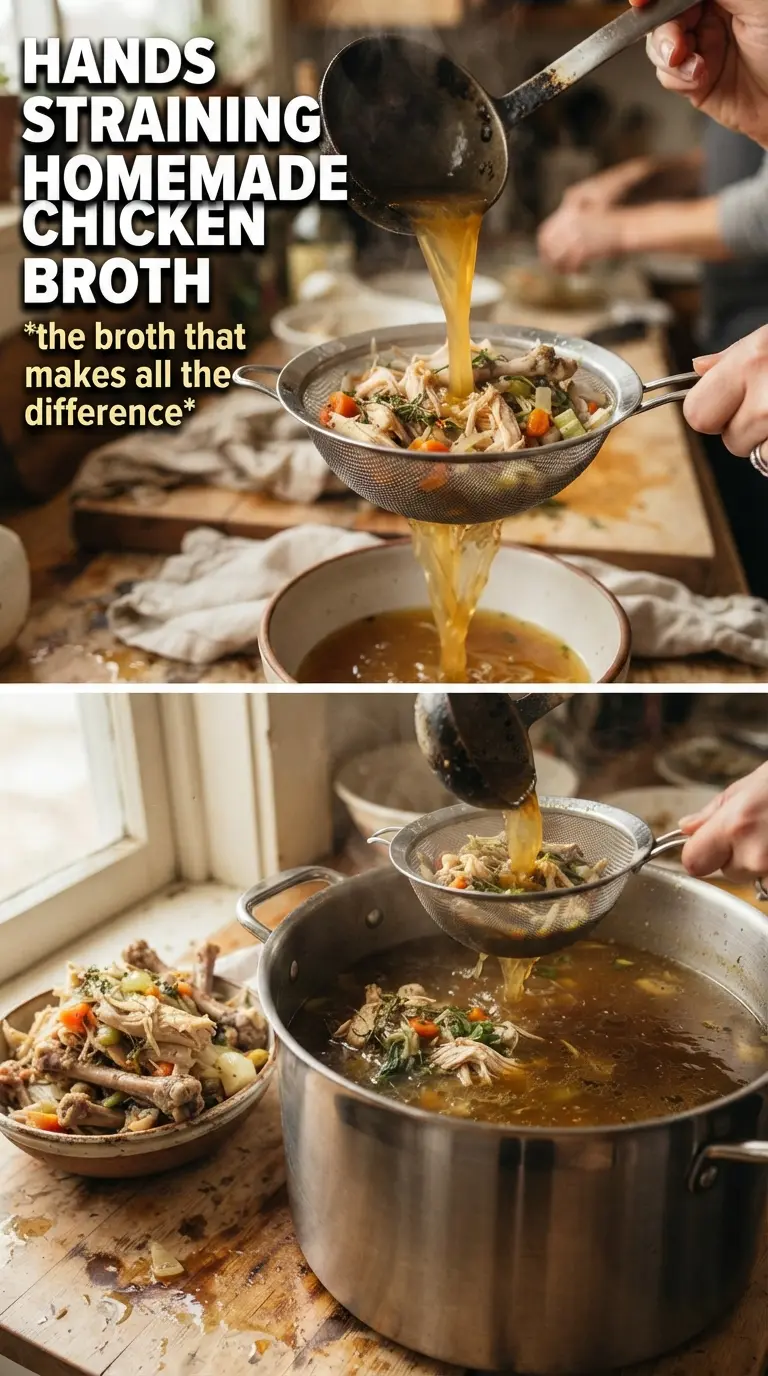
- Chicken pieces — Backs, necks, or a whole chicken all work because the bones are what give the broth its body. If you use a whole chicken, pull off the cooked meat after simmering and save it for the soup.
- Apple cider vinegar — This doesn’t make the broth taste sour. It helps extract more collagen and mineral depth, which is why the broth feels fuller after a long simmer.
- Onion, carrots, celery, and garlic — These build the base flavor. Rough chopping is perfect for the broth because they’re strained out later, but the soup vegetables should be sliced smaller so they cook evenly and fit on a spoon.
- Wide egg noodles — These are the right choice for a classic chicken noodle soup because they catch broth without falling apart fast. If you swap in another noodle, use one with enough structure to hold up for a few minutes in the pot.
- Fresh parsley — Add it at the very end. It wakes up the broth and keeps the soup from tasting heavy after all that simmering.
How to Build the Broth and Keep the Noodles from Going Soft
Starting the Stock
Put the chicken pieces, rough-cut vegetables, bay leaves, vinegar, and cold water into a large pot and bring everything up to a boil together. The cold start helps pull flavor from the bones gradually instead of shocking the pot. Once it boils, skim off the foam on top; that foam is normal, but leaving it in makes the broth look muddy and taste a little blunt.
The Long Simmer
Turn the heat down so the pot stays at a gentle simmer, not a hard boil. You want a few lazy bubbles breaking the surface, not a rolling boil that breaks the broth apart and clouds it. Let it go for 1 1/2 to 2 hours until the broth smells rich and the chicken meat is easy to pull from the bones.
Straining and Seasoning
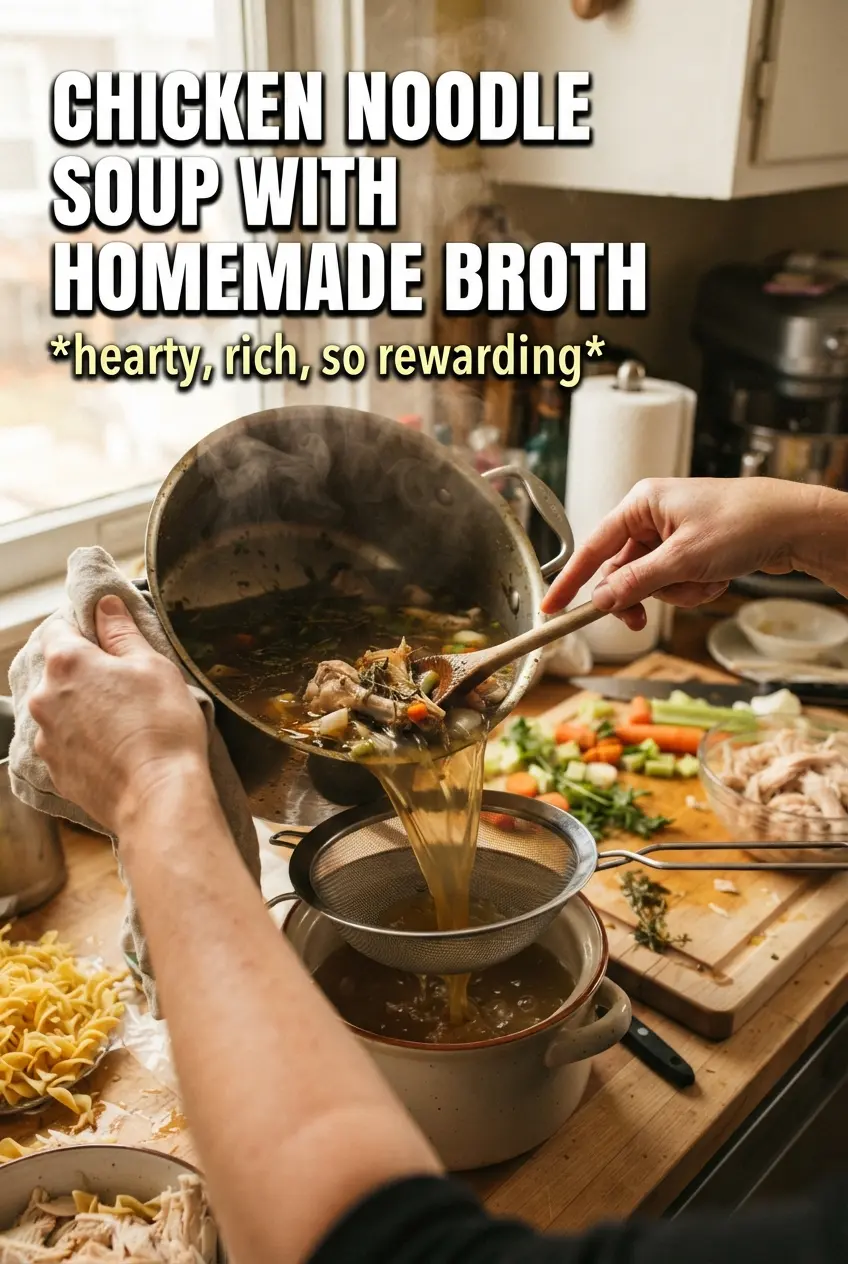
Strain the broth through a fine mesh sieve, then season it with salt before you build the soup. If the broth tastes flat at this stage, the finished soup will taste flat too. This is also the moment to rescue any usable chicken from the bones so you don’t waste the best meat.
Cooking the Soup Vegetables and Noodles
Bring the strained broth back to a simmer in the same pot and add the fresh carrots, celery, and onion. Cook them until the onion softens and the carrots are just tender, then add the noodles and cook only until they’re springy and cooked through. If the noodles sit in the pot too long, they keep absorbing broth even after the heat is off.
Finishing the Bowl
Stir in the shredded chicken and parsley at the end, then taste again and season generously with salt and pepper. Chicken noodle soup almost always needs more salt than people expect, especially once the noodles go in. The finished broth should taste clear, savory, and strong enough to hold up under the noodles and vegetables.
How to Adapt This for Different Needs and Leftovers
Use a Whole Chicken for More Meat
If you want a heartier soup, start with a whole chicken instead of just backs and necks. You’ll get a fuller broth plus plenty of meat to shred into the finished pot, which is useful when you want this to eat like a main dish.
Gluten-Free Version
Swap the egg noodles for a gluten-free noodle that can handle simmering, or use rice noodles and add them right before serving. Rice noodles soften faster than egg noodles, so they’re best if you plan to eat the soup immediately.
Dairy-Free by Default
This soup is already dairy-free as written, which is one reason it tastes clean and bright instead of heavy. Keep the broth well seasoned and finish with plenty of parsley so it still feels complete without any cream or butter.
Storage and Reheating
- Refrigerator: 4 days. The noodles will keep absorbing broth, so the soup gets thicker as it sits.
- Freezer: The broth and chicken freeze well, but the noodles don’t. Freeze the soup without the noodles, then cook fresh noodles when you reheat it.
- Reheating: Warm it gently on the stove over medium-low heat until steaming. If the pot boils hard, the noodles can turn bloated and the chicken can dry out.
Answers to the Questions Worth Asking
Chicken Noodle Soup With Homemade Broth
Ingredients
Equipment
Method
- Add chicken pieces, carrots, celery, onion, garlic, bay leaves, apple cider vinegar, and cold water to a large pot and bring to a boil over high heat. Once boiling, skim off any foam for a clearer broth.
- Reduce heat to a gentle simmer and cook for 1.5 to 2 hours, uncovered or partially covered. Keep the broth at a steady low bubble to extract maximum flavor and body.
- Strain the broth and season it with salt, discarding solids. Reserve any shredded chicken from the bones for later.
- Bring the strained broth back to a simmer in the same pot. Keep it simmering so the vegetables cook evenly.
- Add sliced carrots, sliced celery, and diced onion to the simmering broth. Cook for 10 minutes, until the vegetables begin to soften.
- Add wide egg noodles and cook for 6 to 8 minutes at a steady simmer. Stir occasionally so the noodles don’t stick.
- Stir in the shredded chicken and fresh parsley, then season generously with salt and pepper. Turn off the heat and let the soup sit briefly so flavors settle before serving.