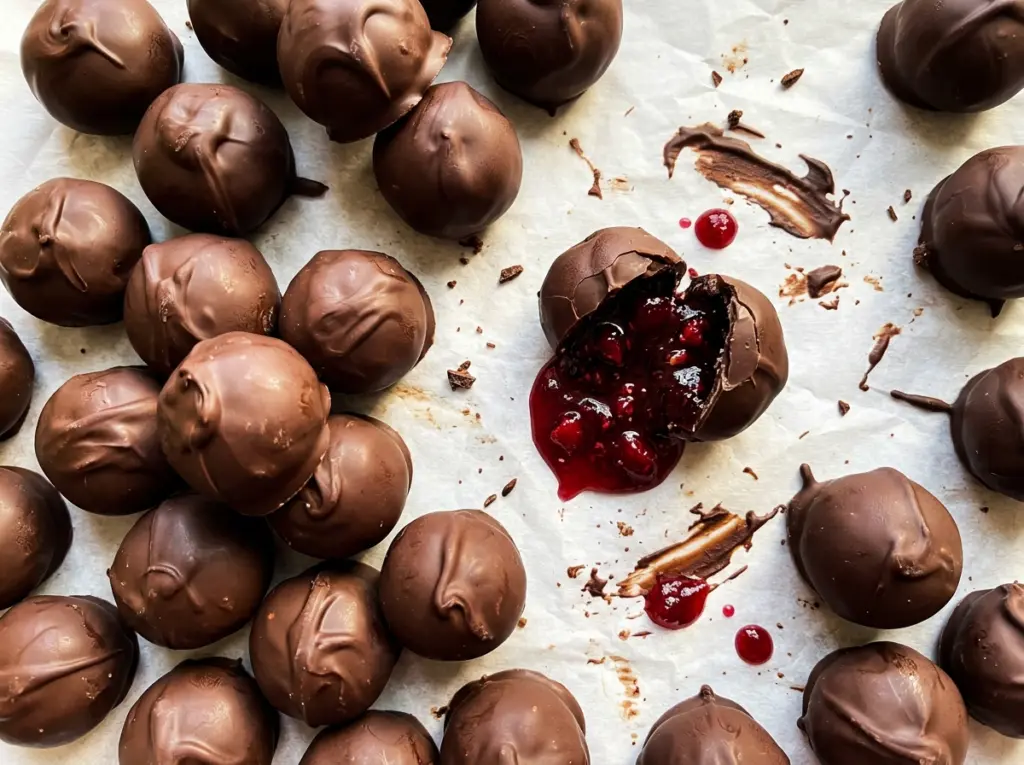

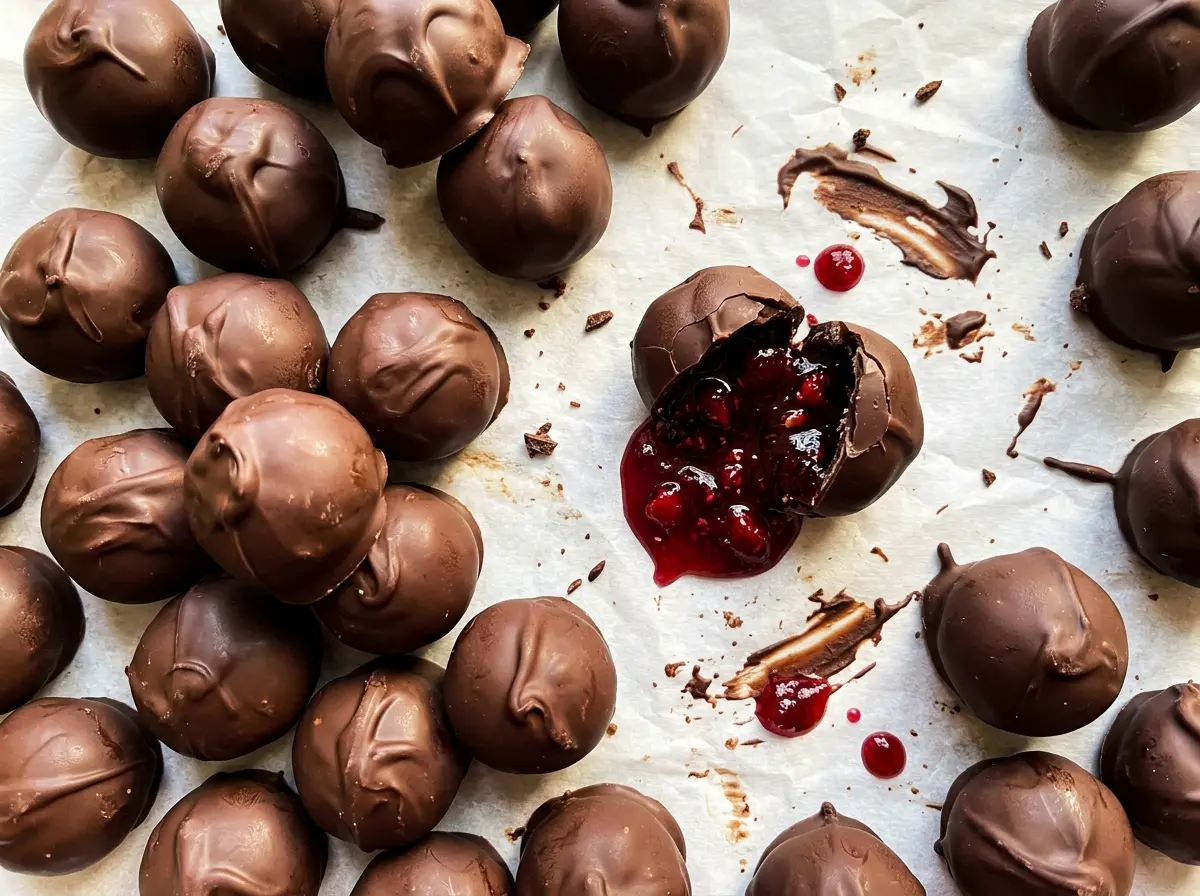
When the cranberries start snapping in the saucepan, the kitchen smells sharp and fruity, and the berries quickly collapse into a thick, ruby-colored sauce. I puree that mixture until smooth, then turn it into bite-size chocolate covered cranberry sauce pieces with a semisweet shell. They have the sweet-tart center of cranberry sauce, but you can pick them up like candy.
The part that makes the centers sliceable is powdered gelatin stirred into the hot cranberry puree. The sauce needs time to chill and firm before you cut it, and a short stay in the freezer helps those squares hold their shape while you dip them. Once the chocolate sets, each piece has a smooth coating around a tender, tangy middle.
Kitchen Note
After five minutes in the cold water, the bloomed gelatin should look thick and spongy, not like dry powder floating on top. That texture tells you it has absorbed the water and is ready to dissolve evenly into the cranberry puree.
Save Chocolate Covered Cranberry Sauce for a candy tray: tangy cranberry centers wrapped in a set semisweet chocolate shell.
Why These Cranberry Centers Set Like Candy Instead of Spoonable Sauce
A thick cranberry reduction by itself still behaves like sauce. It clings to a spoon, but it won’t hold a clean square once you lift it from the pan. Gelatin changes that texture: after the puree chills, it becomes a firm slab you can cut and dip. The result is tender rather than chewy, with enough structure to sit inside a chocolate coating.
The two parts of the method do different jobs. Simmering the berries with sugar cooks them until they burst and the mixture thickens; pureeing makes the fruit smooth. The gelatin then helps that puree set during refrigeration. Skipping the full chill leaves the center too soft to cut neatly, while rushing straight from the pan to the chocolate would make dipping messy. Give the slab time to become firm all the way through before you portion it.
This balance is what keeps the pieces recognizably cranberry-forward. The fruit is still tart, the sugar rounds it out, and semisweet chocolate gives the outside a deeper cocoa flavor without turning the whole bite into a chocolate candy.
What the Cranberries, Gelatin, and Chocolate Each Bring

- Fresh cranberries — Their natural sharpness gives the center its cranberry bite, and cooking them until they burst makes them easy to puree. Choose berries that look plump rather than shriveled; since they’re cooked and blended, a bag of ordinary fresh cranberries works well.
- Unflavored powdered gelatin — This is what turns the puree into a sliceable center. Bloom it in cold water before adding it, and use unflavored gelatin so it sets the fruit without adding another taste. There isn’t a simple one-for-one swap for other setting agents in this formula.
- Granulated sugar — It balances the cranberries’ tartness and dissolves into the simmering fruit. Plain granulated sugar keeps the color and flavor clean; brown sugar would add a molasses note and darken the centers.
- Semisweet chocolate — Chopped chocolate melts into a coating with a pleasant cocoa flavor that plays well against the fruit. Use chocolate you like eating on its own; the coating is a prominent part of every bite.
- Coconut oil — A little oil loosens the melted chocolate, making it easier to dip each square and let excess coating run off. It also helps the coating spread smoothly; leaving it out makes the chocolate thicker and more cumbersome to work with.
From Thick Cranberry Puree to a Neat Chocolate Shell
Cook the berries until the sauce thickens
Sprinkle the gelatin over the cold water in a small bowl and leave it to bloom for 5 minutes. In a 3-quart saucepan, combine the cranberries, sugar, and water, bring them to a boil over medium heat, then simmer for 10 to 12 minutes. Stir occasionally as the berries burst and the mixture thickens. Don’t stop while whole berries are still holding their shape.
Puree, set, and chill the cranberry layer
Take the saucepan off the heat and puree the cranberry mixture with an immersion blender until smooth. Stir in the bloomed gelatin until it’s fully dissolved; you shouldn’t see visible flecks of gelatin. Line an 8×8-inch pan with parchment, pour in the puree, and refrigerate it for at least 4 hours. The slab needs to feel firm before you lift it out and cut it.
Cut the slab and firm the squares
Lift the chilled cranberry slab from the pan using the parchment, then cut it into 1-inch squares. Arrange the squares on a parchment-lined baking sheet with a little space between them. Freeze them for 20 minutes before dipping. If the centers feel soft or start losing their square shape, give them the full freeze rather than trying to coat them early.
Dip and chill until the chocolate sets
Combine the chopped semisweet chocolate and coconut oil in a microwave-safe bowl. Microwave in 20-second intervals, stirring between each one, until the mixture is smooth. Dip each frozen square, let excess chocolate drip back into the bowl, and place it on the lined baking sheet. Refrigerate the pieces for 15 minutes, until the coating is set.
Two Chocolate Swaps for a Different Finish
Use bittersweet chocolate for a sharper cocoa edge
Replace the semisweet chocolate with the same amount of bittersweet chocolate and keep the coconut oil. The coating will taste less sweet, which makes the tart cranberry center stand out more.
Make the coating dairy-free
Use dairy-free semisweet chocolate in place of the semisweet chocolate, keeping the coconut oil and cranberry centers the same. The finished pieces keep their sweet-tart contrast, though the coating’s texture can vary a little between chocolate brands.
Try a white chocolate shell
Swap in white chocolate for the semisweet coating and keep the coconut oil. It makes a sweeter, creamier-tasting shell, so the cranberry’s tartness comes through in a different way.
Storing and Serving the Candies
- Refrigerator: Keep the finished pieces in an airtight container for up to 4 days. The centers stay tender, and the chocolate remains firm while chilled.
- Freezer: Freeze the pieces in a single layer, then transfer them to an airtight container with parchment between layers for up to 1 month. Thaw them in the refrigerator to limit condensation on the chocolate.
- Serving: Serve them chilled or take them out shortly before serving. The cranberry centers soften as they sit out, so don’t leave the pieces in a warm spot for an extended stretch.
Questions That Come Up When Making Chocolate-Covered Cranberries
Chocolate Covered Cranberry Sauce
Ingredients
Equipment
Method
- In a small bowl, sprinkle the gelatin over the cold water and let it bloom for 5 minutes.
- Combine the cranberries, sugar, and 1/2 cup water in a 3-quart saucepan, then bring to a boil over medium heat.
- Simmer for 10 to 12 minutes, stirring occasionally, until the berries have burst and the mixture is thick.
- Remove the pan from the heat and puree the cranberry mixture with an immersion blender until smooth.
- Stir in the bloomed gelatin until fully dissolved.
- Line an 8x8-inch pan with parchment paper and pour in the cranberry mixture.
- Refrigerate for at least 4 hours, until firm.
- Lift the cranberry slab from the pan and cut it into 1-inch squares.
- Arrange the squares on a parchment-lined baking sheet and freeze for 20 minutes.
- Melt the chocolate and coconut oil in a microwave-safe bowl in 20-second intervals, stirring between intervals, until smooth.
- Dip each frozen cranberry square in the chocolate and let the excess drip back into the bowl.
- Place each dipped square on the lined baking sheet.
- Refrigerate the pieces for 15 minutes, until the chocolate is set.