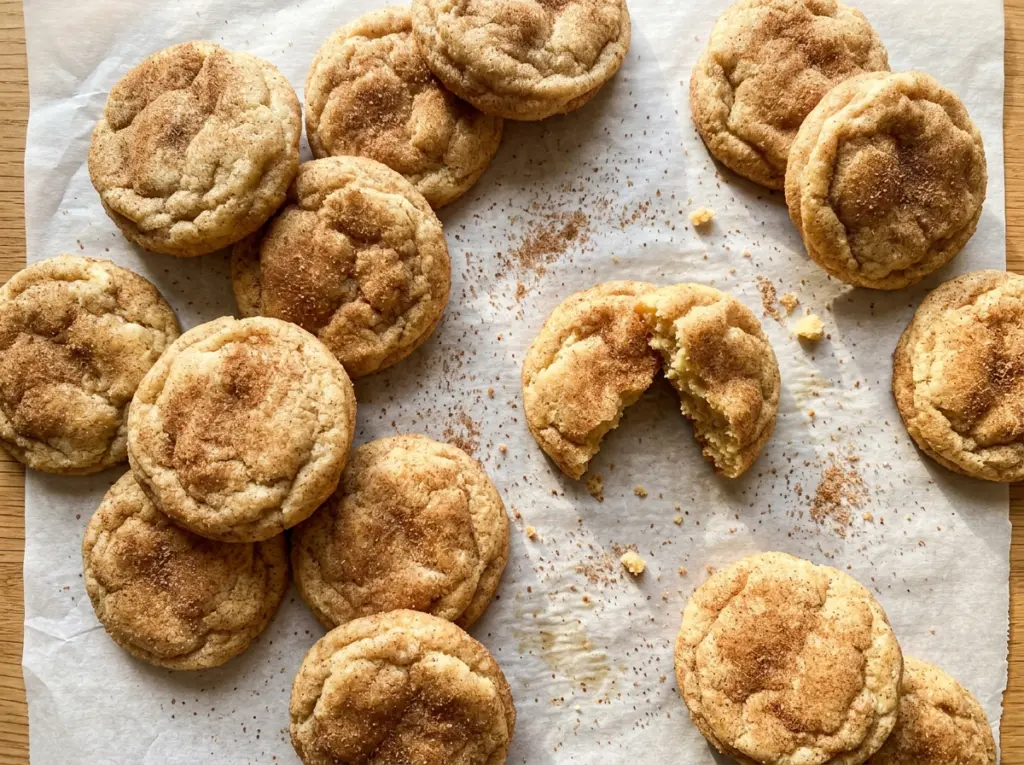

The mixer changes the dough before anything goes into the oven: butter, cream cheese, and sugar turn pale and fluffy, and the bowl starts to smell faintly sweet and tangy. That’s the moment I look for with these cinnamon cream cheese cookies, because a smooth, even base gives the finished cookies their tender bite instead of a dense center.
They’re not quite snickerdoodles and not quite plain sugar cookies. Cream cheese brings a gentle tang, while the cinnamon sugar gives each cookie a thin, fragrant coating. The dough is soft after mixing, so chilling it for an hour makes the portions much easier to roll without changing the simple, soft-cookie texture.
I bake one sheet at a time and pull it when the edges have set and the bottoms are lightly golden. After a short rest on the warm pan, the cookies lift cleanly and settle into soft centers beneath their cinnamon-sugar tops.
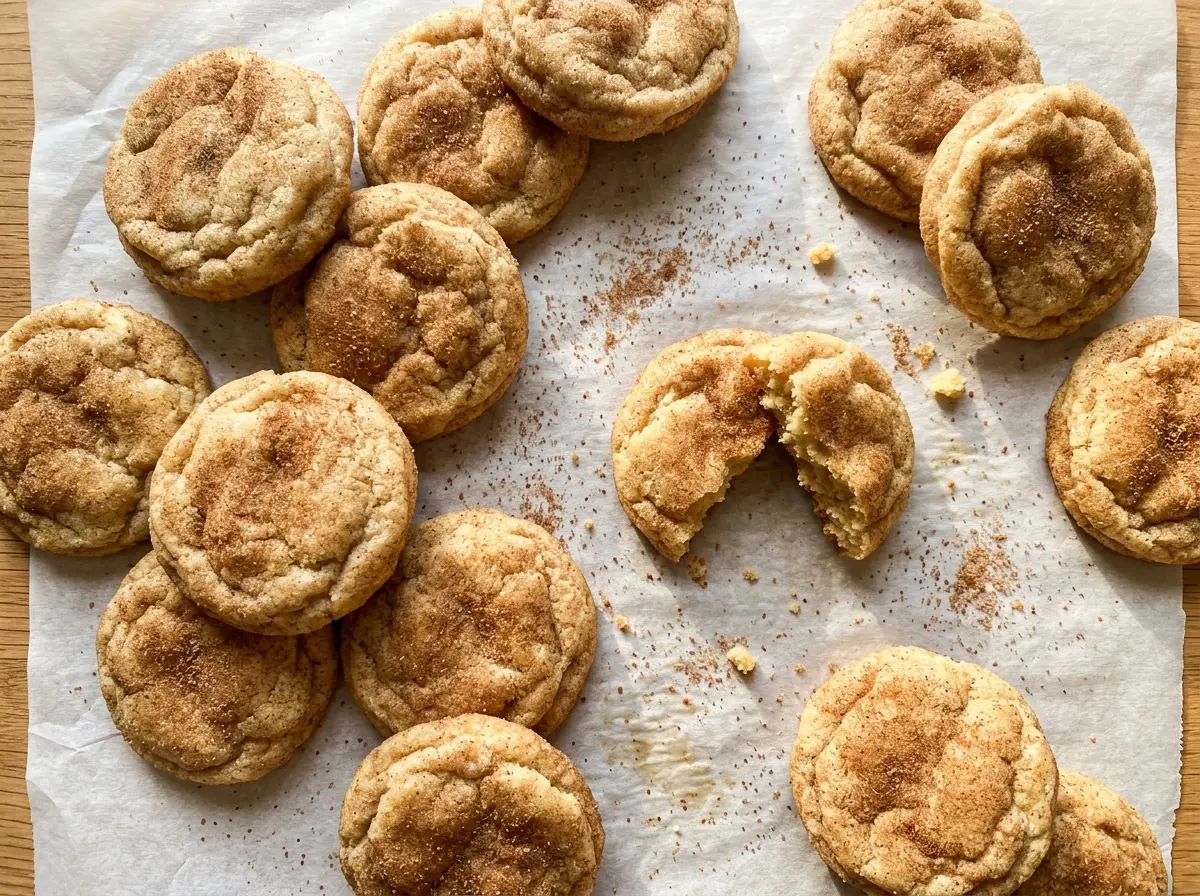
Kitchen Note
Give the butter, cream cheese, and sugar the full two minutes on medium speed. The mixture should look smooth and fluffy, not like separate soft pieces; that’s the texture I want before the egg goes in.
Save these cinnamon cream cheese cookies for a soft, tangy cookie with a cinnamon-sugar finish and a dough that’s easy to portion after chilling.
Why These Aren’t Just Snickerdoodles With Cream Cheese
The cinnamon coating may bring snickerdoodles to mind, but the dough has a different balance. Cream cheese gives the cookies a mild tang and a soft, rich texture, while the simple cinnamon-sugar coating stays familiar and crisp at the edges. There’s no cream of tartar in this dough, so I don’t expect the sharper tang or chew associated with some snickerdoodles.
That distinction matters when you judge the dough and the bake. The mixed dough is soft, not firm enough to roll right away; chilling is part of the method, not a sign that something went wrong. In the oven, the edges set before the centers lose all their softness, so waiting for every bit of the middle to look firm can take the cookies past their best texture. Use the edge and bottom color as your cues, then let the hot baking sheet finish the job during the brief cooling rest.
The cinnamon sugar belongs on the outside, where it gives each bite a little spice before you reach the tender cookie. Keeping the coating separate from the dough preserves that clear contrast instead of making the whole cookie taste uniformly cinnamon-heavy.
What the Cream Cheese and Cinnamon Sugar Each Bring

- Cream cheese — It brings the dough its characteristic slight tang and tender richness. Use softened cream cheese so it blends smoothly with the butter; whipped or spreadable cream cheese isn’t a good stand-in because its texture and moisture can differ. I wouldn’t swap in a lower-fat version and expect the same result.
- Unsalted butter — Butter gives the cookies their familiar buttery base, and using unsalted butter keeps the added kosher salt in the dough under control. Softening it before mixing helps it cream evenly. Salted butter is not a direct swap here unless you also adjust the salt, so unsalted is the straightforward choice.
- Granulated sugar — The sugar creamed into the dough helps create a light, smooth base, while the separate sugar in the coating gives the surface its sweet crunch. Keep the two portions separate; the coating is mixed with cinnamon in its own small bowl.
- Large egg — The egg binds the dough and helps it hold together after the flour is added. Bring it to room temperature if you can, which helps it combine with the creamed mixture without chilling that mixture abruptly.
- All-purpose flour — This gives the soft dough enough structure to scoop and roll once chilled. Measure it without packing it into the cup, since excess flour can make the cookies dry and harder to roll. A direct gluten-free flour swap isn’t dependable in this dough.
- Ground cinnamon and vanilla — Fresh-smelling cinnamon makes the coating more aromatic, but an ordinary pantry cinnamon works well. Vanilla rounds out the dough’s sweetness; a standard vanilla extract is all you need.
From Fluffy Dough to Set Edges: The Three Stages That Matter
Cream the base before adding the flour
Beat the softened butter, cream cheese, and sugar on medium speed until the mixture is smooth and fluffy, about two minutes. Scrape the bowl if ingredients are clinging to the sides, so the mixture becomes even throughout. Beat in the egg and vanilla until combined. Add the flour, baking powder, and kosher salt on low speed, stopping as soon as no dry flour remains; mixing longer can make the cookies tougher.
Chill until the portions roll cleanly
Cover the bowl and chill the dough for one hour, until it feels firm enough to roll. If it sticks heavily to your fingers as you scoop, give it more time to firm up rather than working extra flour into it. Stir the granulated sugar and cinnamon together in a small bowl while the dough chills. Scoop the dough into 24 portions of about one tablespoon each, then roll each portion into a ball.
Coat, bake, and let the pan finish the cookies
Heat the oven to 350°F and line two large baking sheets with parchment paper. Roll each ball in the cinnamon sugar and set the cookies about two inches apart; the space keeps them from crowding as they bake. Bake one sheet at a time for 10 to 12 minutes, looking for set edges and lightly golden bottoms. Let the cookies rest on the baking sheet for five minutes before moving them to a wire rack, since they’re delicate while hot.
Two Small Changes for a Different Cinnamon Cream Cheese Cookie
Make part of the batch cinnamon-free
For a milder finish, leave some of the rolled dough balls out of the cinnamon-sugar coating and bake them alongside the coated cookies. You’ll get the same tender cookie with a simple sugared surface, plus the cinnamon version from the same batch. Keep the uncoated cookies spaced the same way on the parchment.
Shape a thinner, wider cookie
After rolling a portion into a ball, gently flatten it before coating if you prefer a wider cookie with less height. The thinner shape will bake differently from the rounded version, so watch the edges and lightly golden bottoms rather than relying only on the clock. The classic rounded shape gives you a thicker, softer-looking center.
Storage and Reheating
- Refrigerator: Store completely cooled cookies in an airtight container for up to five days. Chilling firms their texture, so let them sit at room temperature before serving.
- Freezer: Freeze fully cooled cookies in an airtight freezer-safe container for up to two months, separating layers with parchment if needed. Thaw at room temperature in the covered container.
- Reheating: These cookies are best at room temperature, so reheating isn’t necessary. Microwaving can soften the cinnamon-sugar coating and make the cookies too warm and tender to handle.
Questions That Come Up While Making These Cookies
Cinnamon Cream Cheese Cookies
Ingredients
Equipment
Method
- In a large bowl, beat the butter, cream cheese, and 1 cup sugar with an electric mixer on medium speed until smooth and fluffy, about 2 minutes.
- Beat in the egg and vanilla until combined.
- Mix in the flour, baking powder, and salt on low speed just until no dry flour remains.
- Cover the bowl and chill the dough for 1 hour, until firm enough to roll.
- Heat the oven to 350°F.
- Line 2 large baking sheets with parchment paper.
- In a small bowl, stir together the 1/4 cup sugar and cinnamon.
- Scoop the dough into 24 portions, about 1 tablespoon each.
- Roll each portion into a ball.
- Roll each ball in the cinnamon sugar.
- Arrange the cookies about 2 inches apart on the prepared baking sheets.
- Bake one sheet at a time for 10 to 12 minutes, until the edges are set and the bottoms are lightly golden.
- Let the cookies cool on the baking sheet for 5 minutes.
- Transfer them to a wire rack to cool completely.