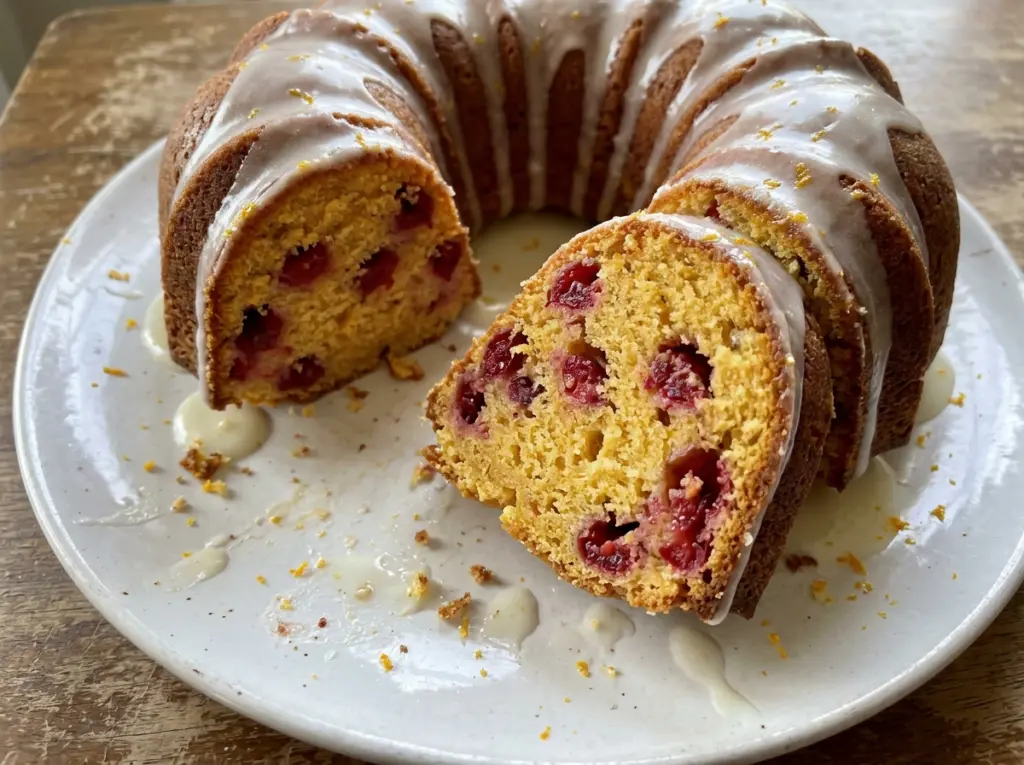

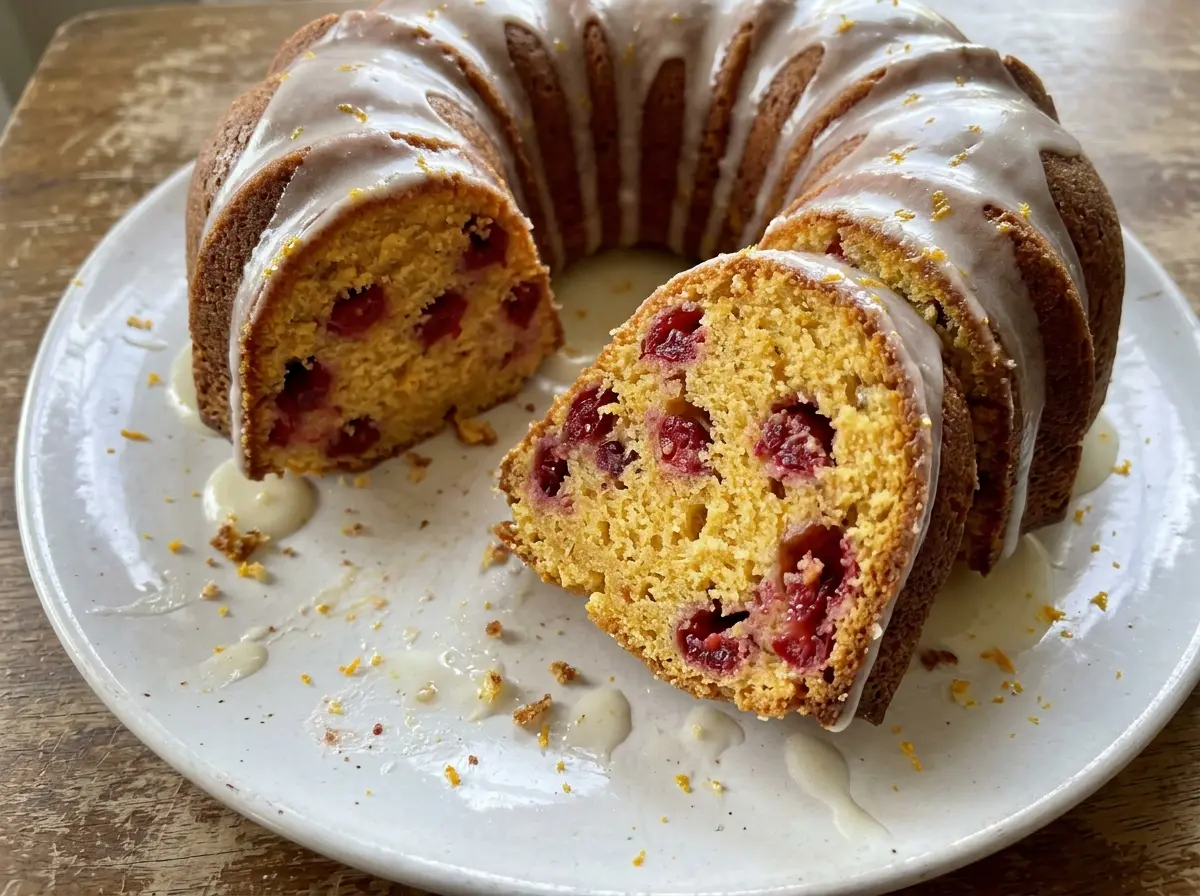
When the cake starts to pull away from the sides of the Bundt pan, the kitchen smells like orange peel and warm butter. The cranberries make each slice a little different, with tart pockets cutting through the soft, sweet crumb. That’s what I want from this Cranberry Orange Bundt Cake: plenty of citrus, berries in every slice, and a glaze that sets in a thin, bright layer.
The batter gets its orange flavor from both finely grated zest and fresh juice. Zest brings the fragrant oils; juice adds a gentle citrus tang and moisture. I fold the chopped cranberries in at the end so they stay distinct instead of streaking through the batter, then let the cake cool completely before the glaze goes on. The finished cake has a tender crumb, sharp cranberry bites, and a clean orange finish.
Kitchen Note
Give the cake its full 15-minute rest in the pan before turning it out. Inverting it too soon can leave pieces behind, while waiting until it’s completely cold makes the release less reliable.
Save this Cranberry Orange Bundt Cake for a bright citrus crumb, tart cranberry bites, and a glossy orange finish.
Why Chopping the Cranberries Changes Every Slice
Whole cranberries are large enough to create a few intense, sour pockets in an otherwise sweet cake. Roughly chopping them spreads those tart bites throughout the batter, so you get cranberry in more slices rather than an occasional whole berry. It also makes the cake easier to portion neatly once it’s baked.
Keep the pieces uneven but not huge. They don’t need to be minced; small, rough chunks hold their shape and give the crumb little bursts of fruit. Fold them in gently after the flour and sour cream mixtures are combined. That last gentle fold helps distribute the berries without turning the batter pink or working it more than it needs.
This balance matters with the orange, too. The fruit should punctuate the cake, not take it over. Chopped cranberries bring their own tartness, while the zest and glaze carry the sweeter, fragrant citrus notes.
What Orange Zest Adds That Orange Juice Can’t

- Orange zest and fresh juice — The zest carries the strongest orange aroma, while juice gives the batter and glaze their citrus tang. Grate only the colored outer peel; the white pith underneath tastes bitter. Fresh juice makes the citrus taste lively, and the recipe’s extra juice lets you adjust the glaze gradually.
- Sour cream — It brings moisture and a slight tang that keeps the rich cake from tasting flat. Use it at room temperature so it blends smoothly with the creamed butter. For a dairy-free version, use plain dairy-free sour cream and plant-based butter sticks; the crumb may be a little less rich.
- Unsalted butter — Softened butter traps air as it’s beaten with sugar, which helps give this Bundt cake a tender, lifted crumb. Let it soften until it yields when pressed but isn’t oily or melted. Butter quality matters for its flavor, but a standard unsalted baking butter works well.
- Cranberries — Fresh or frozen cranberries both work here. Choose firm berries when buying fresh; frozen berries are a useful option when fresh ones aren’t available. Roughly chop either kind before folding them in, and skip sweetened dried cranberries, which won’t bring the same sharp, juicy contrast.
- All-purpose flour — It gives the cake enough structure to hold its shape in the pan. Measure it without packing it down; too much flour can leave the crumb dry and heavy. Baking spray with flour is also worth using for the pan because it coats the detailed curves more reliably than an uneven film of plain grease.
Building a Tender Crumb Without Overmixing
Coat the Bundt Pan and Combine the Dry Ingredients
Heat the oven to 350°F and coat a 10- to 12-cup Bundt pan thoroughly with baking spray with flour, including the center tube and every groove. Whisk the flour, baking powder, baking soda, and salt together in a medium bowl so the leaveners are distributed throughout. Set the bowl aside before you start creaming the butter.
Cream the Butter, Sugar, and Eggs
Beat the softened butter and granulated sugar with an electric mixer on medium speed for about 3 minutes, until the mixture looks light and fluffy rather than dense. Add the room-temperature eggs one at a time, beating after each addition, then mix in the orange zest and vanilla. If the mixture looks slightly uneven after an egg goes in, keep mixing just until it comes together before adding the next one.
Alternate the Flour and Sour Cream Mixtures
Whisk the sour cream and orange juice together in a small bowl. Add the flour mixture to the butter mixture in three additions, alternating with the sour cream mixture in two additions, and begin and end with flour. Mix just until the last flour disappears; beating longer can make the cake’s crumb tougher.
Fold, Fill, and Bake
Fold in the roughly chopped cranberries, then spread the batter evenly in the prepared pan. Bake for 55 to 65 minutes, until a toothpick inserted near the center comes out clean and the cake begins to pull away from the sides of the pan. Start checking near the shorter end of the range, since Bundt pans and ovens can vary.
Cool Before Glazing
Cool the cake in the pan for 15 minutes, then invert it onto a wire rack and let it cool completely. Whisk the powdered sugar with the orange juice until smooth, adding more juice a teaspoon at a time if it needs to be pourable. Drizzle the glaze over the fully cooled cake and let it set before slicing.
Three Ways to Adapt This Cranberry Orange Cake
Make It Dairy-Free
Replace the butter with plant-based butter sticks and the sour cream with plain dairy-free sour cream, using the same amounts. Choose a baking-style stick rather than a soft tub spread so the fat behaves more like butter when creamed. The cake will still carry the orange and cranberry well, though the crumb may be a little less rich.
Leave Off the Orange Glaze
Serve the cake plain if you prefer a less sweet finish. You’ll still get orange from the zest and juice in the batter, with tart cranberries in each slice; the top just won’t have the thin, sugary citrus layer.
Choose Fresh or Frozen Cranberries
Use fresh cranberries for a firm, juicy bite or frozen ones when that’s what you have on hand. Either way, roughly chop them before folding them into the batter. Frozen berries make the cake convenient to bake outside fresh-cranberry season without changing its tart, fruit-filled character.
Storage and Reheating
- Room temperature: Keep the covered cake at room temperature for up to 3 days. The glaze may soften slightly as it sits.
- Freezer: Freeze the unglazed cake or individual slices, wrapped tightly, for up to 2 months. Thaw at room temperature, then glaze if you froze the cake without it.
- Reheating: This cake is best served at room temperature, so let chilled slices stand out briefly before serving. Avoid warming the whole glazed cake; heat can make the glaze run.
Questions That Come Up When Baking This Bundt Cake
Cranberry Orange Bundt Cake
Ingredients
Equipment
Method
- Heat the oven to 350°F.
- Thoroughly coat a 10- to 12-cup Bundt pan with baking spray with flour.
- In a medium bowl, whisk together the flour, baking powder, baking soda, and salt.
- In a large bowl, beat the butter and granulated sugar with an electric mixer on medium speed until light and fluffy, about 3 minutes.
- Beat in the eggs one at a time, then mix in the orange zest and vanilla extract.
- In a small bowl, whisk together the sour cream and orange juice.
- Mix the flour mixture into the butter mixture in three additions, alternating with the sour cream mixture in two additions, beginning and ending with the flour; mix just until combined.
- Fold in the cranberries.
- Spread the batter evenly in the prepared pan.
- Bake for 55 to 65 minutes, until a toothpick inserted near the center comes out clean and the cake begins to pull away from the sides of the pan.
- Cool the cake in the pan for 15 minutes.
- Invert it onto a wire rack and cool completely.
- Whisk the powdered sugar with 2 tablespoons orange juice until smooth, adding more juice a teaspoon at a time if needed for a pourable consistency.
- Drizzle the glaze over the completely cooled cake.
- Let the glaze set before serving.