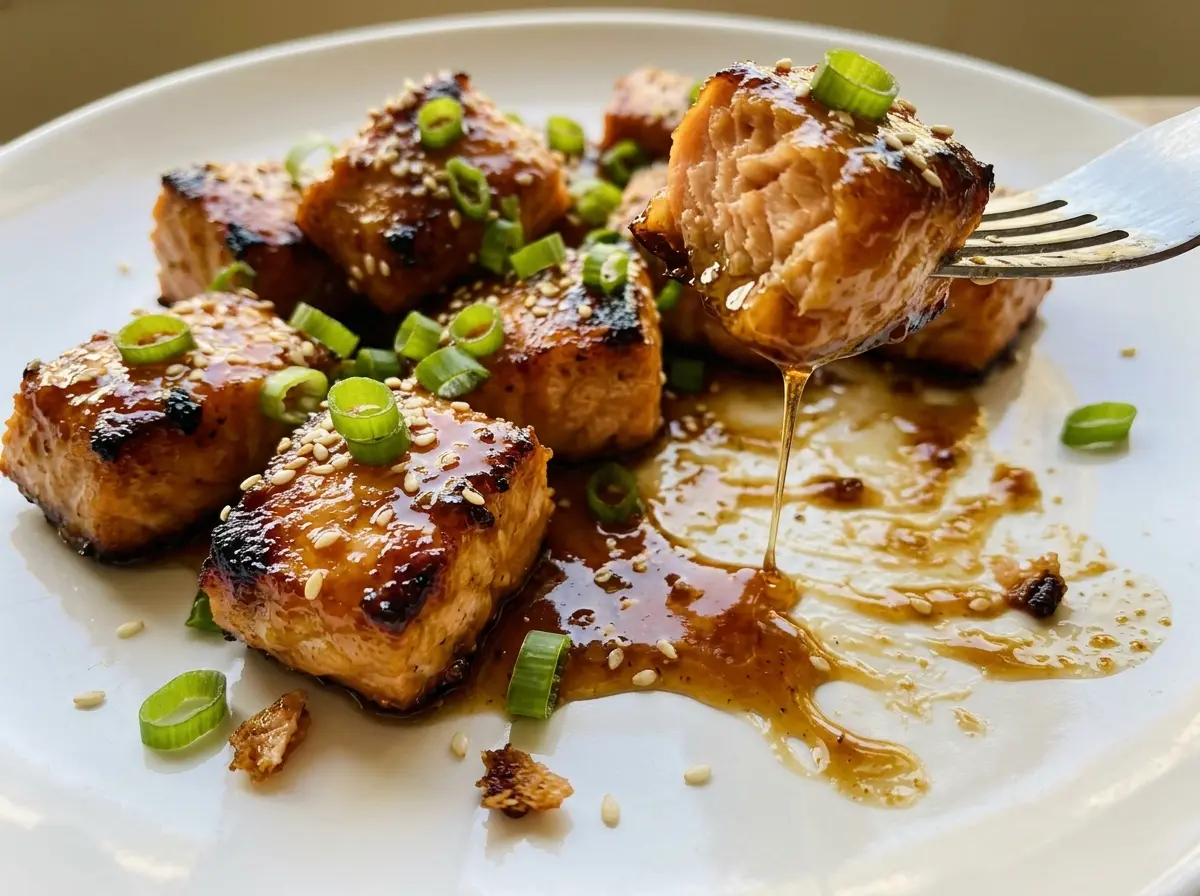
When the salmon cubes hit the hot skillet, the cornstarch coating starts turning crisp at the edges while the centers stay tender. The trick is giving the pieces room instead of piling them in; that’s why I cook Crispy Honey Garlic Salmon Bites in two batches. The sauce comes together in the same skillet afterward, so the honey, garlic, and savory bits from the salmon all end up clinging to the finished bites.
Honey brings a rounded sweetness, and rice vinegar keeps the glaze from tasting heavy. Soy sauce gives it savory depth, while the quick simmer thickens everything just enough to coat the salmon. I keep the final toss brief so the crisp outside doesn’t sit in sauce longer than it needs to. You get tender salmon, a lightly crisp coating, and a shiny honey garlic glaze in every bite.
Kitchen Note
Pat the salmon dry before the cornstarch goes on. If the surface is damp, the coating can turn pasty instead of settling into a fine, even layer.
Save these Crispy Honey Garlic Salmon Bites for a quick dinner with crisp-edged salmon and a glossy sweet-savory glaze.
Why the Honey Glaze Goes on After the Salmon Turns Crisp
Honey can go from glossy to scorched quickly in a hot skillet. Cooking the salmon first keeps the sweet sauce out of the pan while the coating is crisping, and it means you can judge the fish on its own instead of trying to brown it through a layer of glaze. Once the salmon is cooked, the sauce needs only a brief simmer to bubble and thicken.
That order also helps preserve the contrast that makes these bites worth making. The cornstarch coating browns against the skillet, while the sauce stays smooth rather than baking onto the fish during a longer cook. The two batches matter for the same reason: salmon needs contact with the pan to brown. If the skillet is crowded, pieces release moisture and soften instead of crisping. A 12-inch nonstick skillet gives the bites room to cook in a single layer, then gives the sauce a clear pan to reduce in.
Think of the glaze as the finish, not the cooking liquid. The salmon is cooked before it meets the sauce, and a gentle toss brings the flavors together without turning the coating soggy.
What the Salmon, Cornstarch, and Sauce Ingredients Each Bring

- Skinless salmon — Salmon with a firm, fresh-smelling flesh holds together when cut and turned in the skillet. Cutting it into even 1-inch cubes helps the pieces brown and finish at a similar pace. There isn’t a direct substitute that gives the same rich, tender bite.
- Cornstarch — This creates the light coating that turns crisp without a thick breading. It’s worth using rather than swapping in flour, which browns differently and won’t give quite the same delicate shell. Toss until the cubes have a thin, even dusting instead of clumps.
- Honey, soy sauce, garlic, and rice vinegar — Honey gives the sauce its gloss and sweetness; soy sauce adds salt and savoriness, and rice vinegar cuts through both. Freshly minced garlic gives the short-simmered sauce a distinct bite. If you need a gluten-free option, use gluten-free tamari in place of the soy sauce in the same amount; the sauce will taste a little deeper and less sharp.
- Neutral oil — The oil helps the salmon brown without adding a strong flavor of its own. Avocado oil and canola oil both work, so use either one you already keep on hand. A strongly flavored oil would compete with the honey garlic glaze.
Searing the Salmon Before the Glaze Can Soften It
Coat the Cubes Evenly
Cut the skinless salmon into 1-inch cubes, then pat each piece dry with paper towels. Toss with the cornstarch, kosher salt, and black pepper until the coating looks even. Break up any visible cornstarch clumps with your fingers or a gentle turn through the bowl. An even coating gives the outside a consistent texture instead of a few floury patches.
Brown the First Batch
Heat 1 tablespoon of neutral oil in a 12-inch nonstick skillet over medium-high heat until it shimmers. Add half the salmon in a single layer, leaving a little space between the pieces. Turn them as they brown, rather than stirring continuously, and cook until the outsides are crisp and the centers reach 145°F; this takes 5 to 7 minutes. If the pieces are pale, give them more time in contact with the skillet before turning.
Finish the Second Batch
Move the cooked salmon to a plate, add the remaining tablespoon of oil, and cook the rest of the cubes the same way. Keep the second batch in a single layer, too; crowding it makes browning harder to achieve. Check for crisp exteriors and 145°F centers rather than relying on color alone. Transfer the finished pieces to the plate while you make the glaze.
Simmer the Glaze and Toss Briefly
Whisk the honey, soy sauce, minced garlic, and rice vinegar in a small bowl, then pour the mixture into the skillet. Simmer over medium heat for 1 to 2 minutes, until it’s bubbling and slightly thickened. Return the salmon and gently toss for about 30 seconds, just long enough to coat the cubes. Serve promptly while the coating still has some crispness.
Three Practical Ways to Adapt These Salmon Bites
Make the Sauce Gluten-Free
Replace the soy sauce with the same amount of gluten-free tamari. The glaze keeps its savory balance, with a slightly rounder taste. Choose tamari labeled gluten-free if you’re cooking for someone who needs to avoid gluten.
Keep the Salmon Crispier
Cook the sauce until it thickens, but don’t toss the salmon through it. Arrange the bites on a plate and spoon the glaze over them just before serving, or serve the glaze alongside. You’ll get more crisp coating in each bite, though the glaze won’t cover every surface as evenly.
Double the Batch for Eight
Double every ingredient, but keep the salmon in single-layer batches in the 12-inch skillet. With twice as much fish, you’ll need four batches to give the cubes room to brown. Make the doubled sauce after the salmon is cooked, then coat the bites in batches so they don’t sit soaking in the glaze.
Storage and Reheating
- Refrigerator: Refrigerate leftovers within 2 hours in a covered container and eat within 3 to 4 days. The coating will soften as it sits in the glaze.
- Freezer: Freeze cooled bites in an airtight freezer-safe container for up to 2 to 3 months. The salmon remains safe when kept frozen, though thawed bites won’t be as crisp.
- Reheating: Warm gently in a covered skillet over low heat until the leftovers reach 165°F. High heat can scorch the honey glaze before the salmon warms through.
Questions That Come Up While Making Honey Garlic Salmon Bites
Crispy Honey Garlic Salmon Bites
Ingredients
Equipment
Method
- Pat the salmon dry with paper towels.
- Toss the salmon with the cornstarch, salt, and pepper until evenly coated.
- Heat 1 tablespoon of the oil in a 12-inch nonstick skillet over medium-high heat until shimmering.
- Cook half the salmon in a single layer, turning the pieces as they brown, until crisp on the outside and 145°F in the center, 5 to 7 minutes; transfer to a plate.
- Add the remaining 1 tablespoon oil and cook the remaining salmon in the same way, then transfer it to the plate.
- Whisk the honey, soy sauce, garlic, and rice vinegar in a small bowl.
- Pour the mixture into the skillet and simmer over medium heat until bubbling and slightly thickened, 1 to 2 minutes.
- Return the salmon to the skillet and gently toss to coat in the sauce, about 30 seconds, then serve promptly.