

Clear, golden broth, tender shredded chicken, and soft egg noodles make stovetop chicken noodle soup one of those meals that disappears fast. It tastes like it took all afternoon, but the whole pot comes together in about 50 minutes, with the vegetables doing the first layer of flavor and the chicken finishing the broth with extra body. The trick is keeping the broth at a gentle simmer once the chicken goes in, so the meat stays juicy instead of stringy.
I like this version because it starts with a simple vegetable base and uses dried thyme, garlic powder, onion powder, and a little celery seed to build depth without needing a long list of ingredients. The noodles go in near the end so they stay tender instead of bloated, and the chicken gets shredded only after it’s fully cooked, which keeps the pieces soft and clean-tasting. If you’ve ever had chicken noodle soup that turned cloudy, mushy, or flat, this method fixes all three problems.
The broth stayed clear and the noodles were perfect even after reheating the next day. I added the celery seed and it gave the soup a deeper homemade taste without making it heavy.
Save this stovetop chicken noodle soup for the nights when you want a clear, comforting broth with tender noodles and shredded chicken in one pot.
The Trick to Clear Broth and Tender Noodles
Chicken noodle soup goes wrong in two common places: the broth boils too hard, or the noodles sit in the pot too long. A hard boil can turn the broth murky and make the chicken tough around the edges, while overcooked noodles swell up and steal too much liquid. The fix is simple. Keep the chicken at a steady simmer, not a rolling boil, and add the noodles only after the chicken has been shredded and returned to the pot.
The vegetables at the beginning matter more than people think. Onion, carrots, and celery need a few minutes in the oil so they soften and release their sweetness before the broth goes in. That quick sauté gives the soup a rounder base, and the dried thyme plus celery seed make the broth taste like it simmered longer than it did.
What Each Ingredient Is Actually Doing in This Soup
- Chicken breast — This gives you clean, shredded pieces that hold up well in broth. Thighs work too if you want a richer result, but breasts keep the soup lighter and faster to finish.
- Chicken broth — This is the backbone of the soup, so use one that tastes good on its own. If yours is bland, the soup will be bland no matter how much seasoning you add.
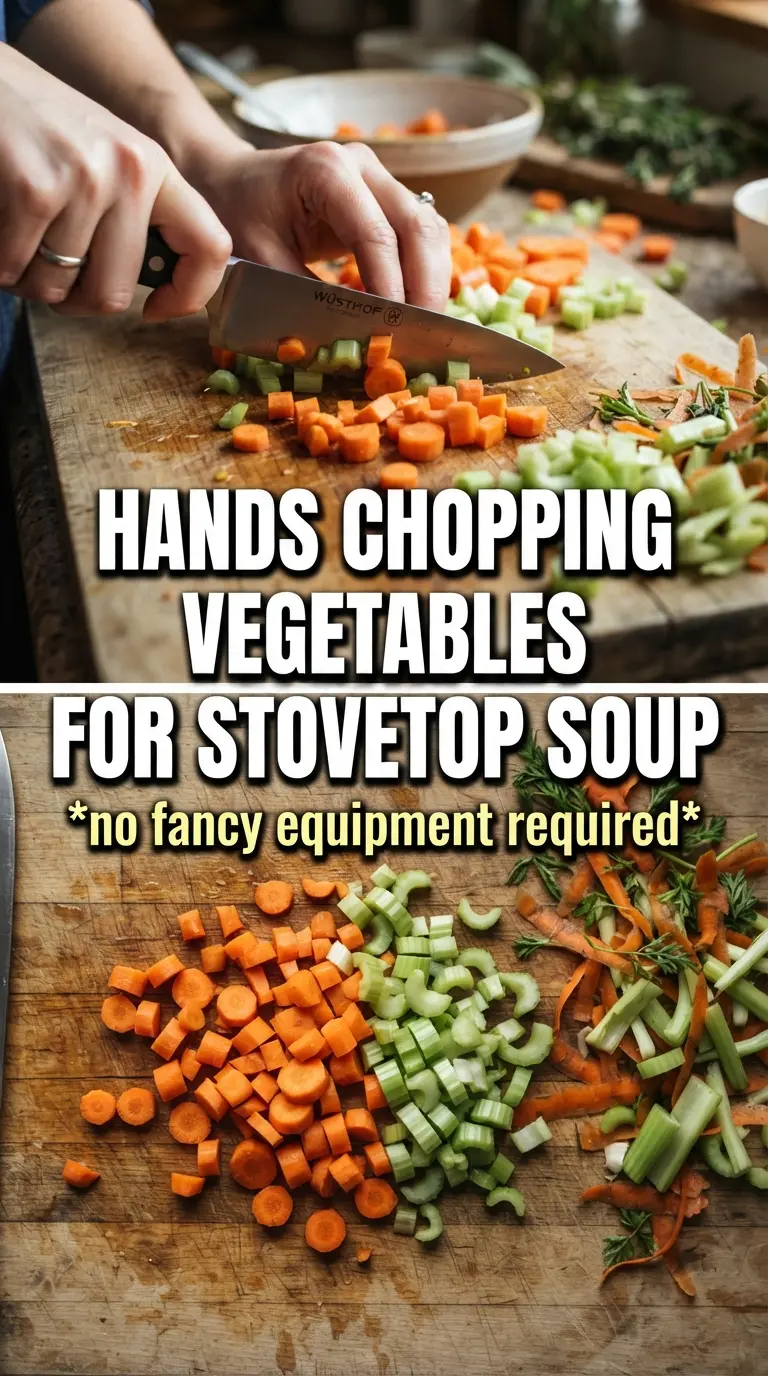
- Carrots, celery, and onion — This trio builds sweetness, aroma, and body. Cutting them into similar pieces helps them cook evenly so you don’t end up with crunchy celery beside soft carrots.
- Dried thyme, garlic powder, onion powder, and celery seed — These are the quiet flavors that make the broth taste developed without needing hours on the stove. Celery seed is optional, but it adds a deeper chicken-soup note that fresh celery alone won’t give you.
- Egg noodles — These are best added near the end because they absorb broth fast. If you plan to store leftovers, cook them just until tender so they don’t go mushy when reheated.
Building the Soup in the Right Order
Softening the Vegetables First
Warm the olive oil over medium heat, then add the onion, carrots, and celery. Cook them for about 5 minutes until the onion looks translucent and the edges of the vegetables start to soften. If the heat is too high, the onion will brown before the carrots even begin to release flavor, and the base of the soup will taste uneven. You want a gentle sizzle, not aggressive frying.
Letting the Chicken Poach in the Broth
Add the garlic for just a minute, then pour in the broth and seasonings before adding the chicken breasts. Bring the pot to a boil, then reduce it to a steady simmer so the chicken cooks through without getting dry. After 18 to 20 minutes, the breasts should be opaque all the way through and easy to shred. If the soup keeps boiling hard, the chicken will tighten up and the broth can turn cloudy.
Adding the Noodles at the End
Pull the chicken out, shred it with two forks, and bring the soup back to a boil before adding the egg noodles. Cook them 6 to 8 minutes, just until tender with a little bite left in the center. Once they’re soft, return the chicken to the pot and season generously with salt and pepper. This last seasoning step matters because broth brands vary a lot, and the soup usually needs more salt than people expect.
How to Change This Soup Without Losing What Makes It Good
Use chicken thighs for a richer bowl
Swap in boneless, skinless thighs for a deeper, slightly richer flavor. They stay tender even if they simmer a little longer, so this is a good move if you want a more robust soup with less risk of dryness.
Make it dairy-free and gluten-free
This soup is naturally dairy-free, so there’s nothing to change there. For gluten-free soup, use certified gluten-free egg noodles or swap in rice noodles, but add them carefully because some gluten-free noodles break down faster than wheat noodles.
Make the broth thicker and more filling
If you want a heartier soup, simmer the vegetables a few extra minutes before adding the broth and use a little less liquid. That gives the finished bowl a fuller, stew-like feel without changing the flavor of the base.
Storage and Reheating
- Refrigerator: Store in an airtight container for up to 4 days. The noodles will keep soaking up broth, so the soup gets a little thicker by day two.
- Freezer: The broth and chicken freeze well, but noodles turn soft after thawing. For best results, freeze the soup without noodles and cook fresh noodles when you reheat it.
- Reheating: Reheat gently on the stove over medium-low heat until steaming, adding a splash of broth or water if needed. Microwave reheating works too, but stir halfway through so the noodles warm evenly and don’t get gummy at the edges.
Answers to the Questions Worth Asking

Stovetop Chicken Noodle Soup
Ingredients
Equipment
Method
- Heat 2 tablespoons olive oil in a large heavy-bottomed pot over medium heat, then add the onion, carrots, and celery. Sauté for 5 minutes, stirring occasionally, until the vegetables soften.
- Add the garlic and cook for 1 minute. Stir just until fragrant so it doesn’t brown.
- Add 8 cups chicken broth, dried thyme, garlic powder, onion powder, and celery seed. Bring to a boil and stir to combine.
- Place the 1.5 pounds chicken breast into the pot and return to a boil. Keep at a steady boil so the chicken starts cooking through.
- Reduce heat to a simmer and cook for 18-20 minutes until the chicken is fully cooked. You should see no pink in the center when cut.
- Remove the chicken from the pot and shred it with two forks. Break into bite-size pieces and set aside.
- Bring the soup back to a boil, then add the egg noodles. Cook for 6-8 minutes until tender, stirring once or twice.
- Return the shredded chicken to the pot. Simmer just until warmed through.
- Season generously with salt and pepper to taste. Garnish with fresh parsley and serve hot.