Juicy watermelon, sweet blueberries, and salty feta land on the plate with the kind of contrast that wakes up everything else on the table. The fruit stays cold and crisp, the cheese gives you little creamy bites, and the lime-honey dressing pulls it all together without burying the freshness. It tastes light, but it never feels boring.
What makes this version work is restraint. The dressing is just enough to gloss the fruit, not soak it, and the flaky sea salt at the end sharpens the watermelon instead of making it taste flat. Mint matters here too. Tear it instead of chopping it so you get clean herbal notes instead of bruised bitterness.
Below, I’ve included the one detail that keeps this salad from turning watery, plus a few smart swaps if you need to work with what’s in the fridge.
I served this on a hot afternoon and it disappeared fast. The lime-honey dressing was just enough, and the feta stayed crumbly instead of melting into the fruit.
Save this watermelon blueberry feta salad for the days when you want a no-cook side that stays bright, salty-sweet, and refreshing.
The Trick to Keeping This Salad Bright Instead of Watery
The biggest mistake with fruit salads is dressing them too early or using fruit that’s already giving off a lot of juice. Watermelon is the main culprit. Once it sits with salt and acid, it starts to release liquid fast, which can wash out the feta and leave you with a puddle at the bottom of the platter. That’s why this salad should be assembled right before serving.
The other thing that helps is serving it on a platter instead of tossing it in a bowl. A bowl traps the juice. A platter lets the fruit stay more defined, and the feta sits on top instead of dissolving into the dressing. If your watermelon is especially ripe, blot the cubes lightly with a paper towel before you build the salad.
What Each Ingredient Is Actually Doing in This Dish
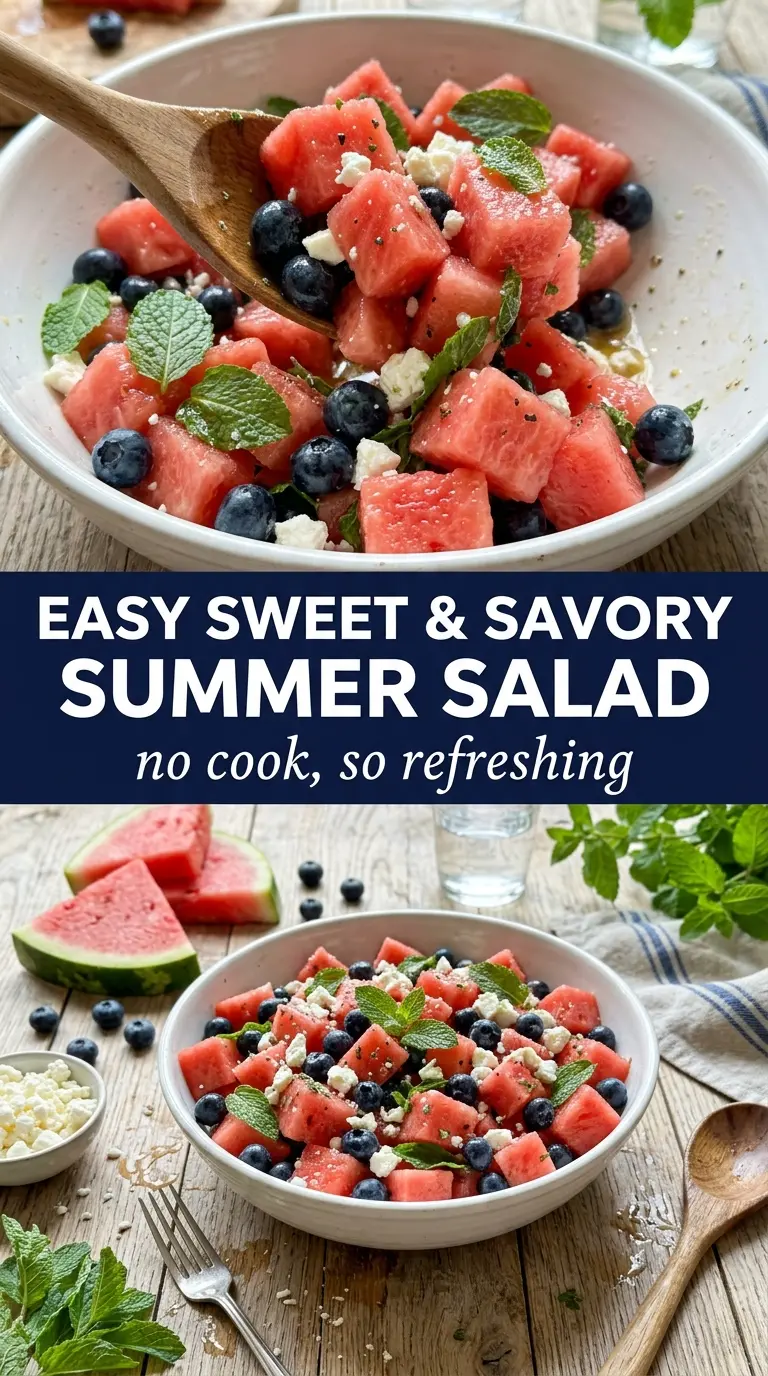
- Watermelon — This is the base, so choose a melon that smells sweet and feels heavy for its size. Seedless cubes work best because they’re easy to eat and hold their shape. If the melon is bland, the whole salad will taste flat no matter how good the dressing is.
- Blueberries — These add a firmer bite and a deeper sweetness that keeps the salad from tasting one-note. Use fresh blueberries here; frozen ones turn soft and bleed color. If yours are large, leave them whole so they pop against the melon.
- Feta — Salty feta is what turns this from fruit plate to salad. Buy a block and crumble it yourself if you can, since pre-crumbled feta is often drier and less creamy. A sheep’s milk feta gives the cleanest tang, but any good feta works.
- Mint — Mint brings the fresh edge that ties the fruit and cheese together. Tear the leaves right before serving so they stay aromatic. Chopped mint bruises faster and can taste a little harsh.
- Lime juice and honey — The lime wakes up the fruit, and the honey softens the sharpness just enough to make the dressing round. You don’t need much. Too much dressing drowns the fruit, so whisk it until it’s emulsified and use a light hand when you drizzle.
- Flaky sea salt — This is the finishing move. It sharpens the watermelon and makes the sweetness taste fuller. Regular table salt won’t give you the same clean crunch, so use flaky salt if you have it.
How to Build the Salad So the Fruit Stays Crisp
Lay Down the Fruit First
Spread the watermelon cubes across a large serving platter and tuck the blueberries into the gaps. The goal is an even layer, not a mound, so the dressing can touch everything without pooling underneath. If the fruit is crowded, the feta ends up sliding off and the salad turns messy fast.
Whisk a Light Dressing
Stir the olive oil, lime juice, and honey together until the mixture looks glossy and slightly thickened. You want it to cling in thin ribbons, not separate into an oily slick. If the honey won’t blend, warm it for a few seconds before whisking. That small step helps the dressing coat the fruit instead of sitting in patches.
Finish With Feta, Mint, and Salt
Scatter the feta over the top, then drizzle on the dressing and finish with torn mint and flaky salt. Don’t toss the salad hard or the watermelon will collapse and the feta will break down. Serve it immediately while the fruit is cold and the mint is still bright.
How to Adapt This for Different Tables and Different Diets
Dairy-Free Version
Skip the feta and add sliced avocado or toasted pumpkin seeds for contrast. You’ll lose the salty tang, so add a little extra flaky salt and a squeeze more lime to keep the salad balanced. It won’t taste the same, but it still lands in that fresh-sweet-savory place.
Using Strawberries Instead of Blueberries
Sliced strawberries work well if you want a softer, more floral sweetness. They release more juice than blueberries, so slice them right before assembling and serve the salad immediately. The result is a little juicier and less crisp.
Making It Sweeter or Brighter
If your fruit is especially sweet, reduce the honey by half and lean harder on the lime. If it tastes a little flat, add another small drizzle of honey and a pinch more salt. The balance should taste clean, not syrupy.
Storage and Reheating
- Refrigerator: Best eaten right away, but leftovers keep for about 1 day in a covered container. The fruit will soften and release juice.
- Freezer: Don’t freeze this salad. The watermelon and blueberries turn mushy once thawed, and the feta loses its texture.
- Reheating: No reheating needed. If the salad sits, drain off excess liquid and add a fresh pinch of mint and salt before serving the leftovers.
Answers to the Questions Worth Asking
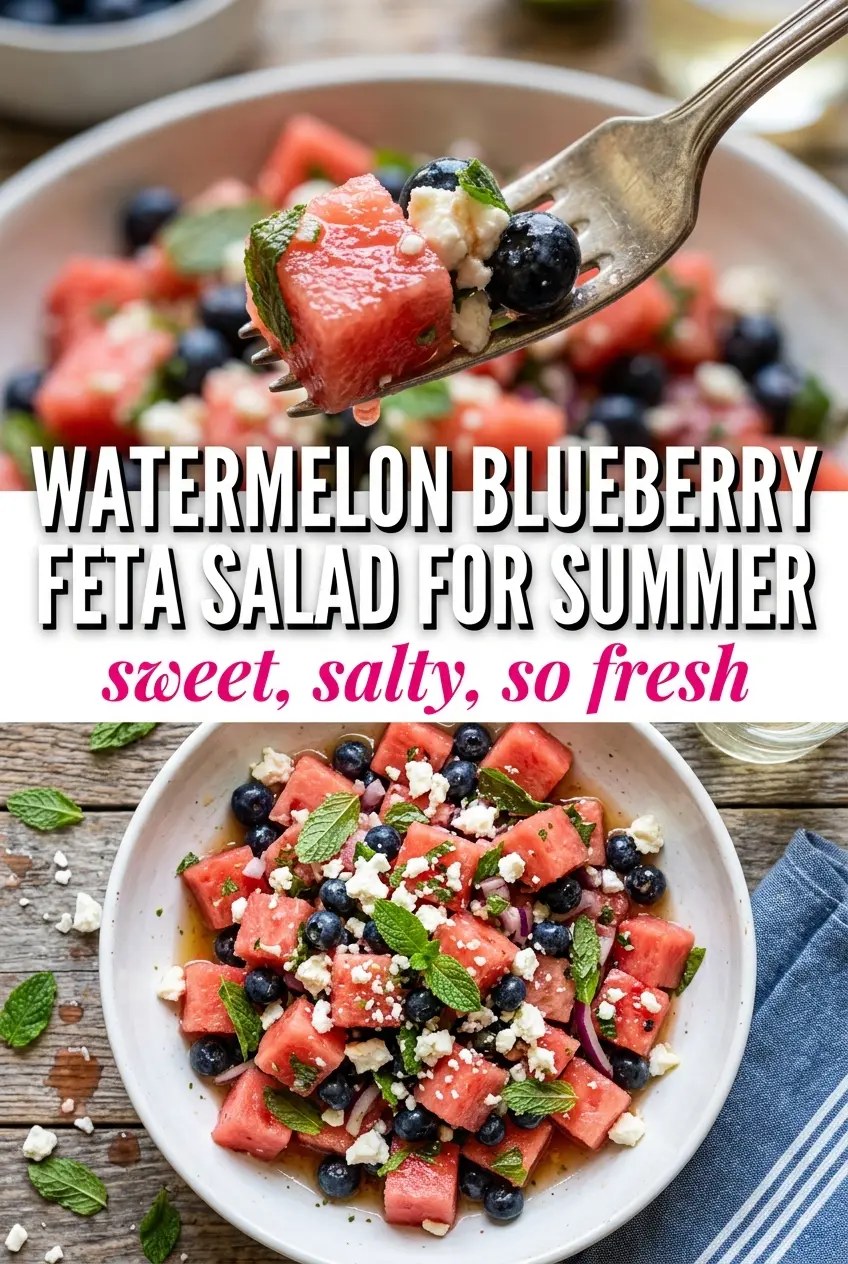
Watermelon Blueberry Feta Salad
Ingredients
Method
- Arrange the watermelon cubes and blueberries on a large serving platter.
- Scatter the crumbled feta evenly over the fruit.
- Top with fresh mint leaves and flaky sea salt.
- Whisk together the olive oil, lime juice, and honey in a small bowl until smooth and combined.
- Drizzle the dressing evenly over the salad.
- Serve immediately for the best texture and flavor.