

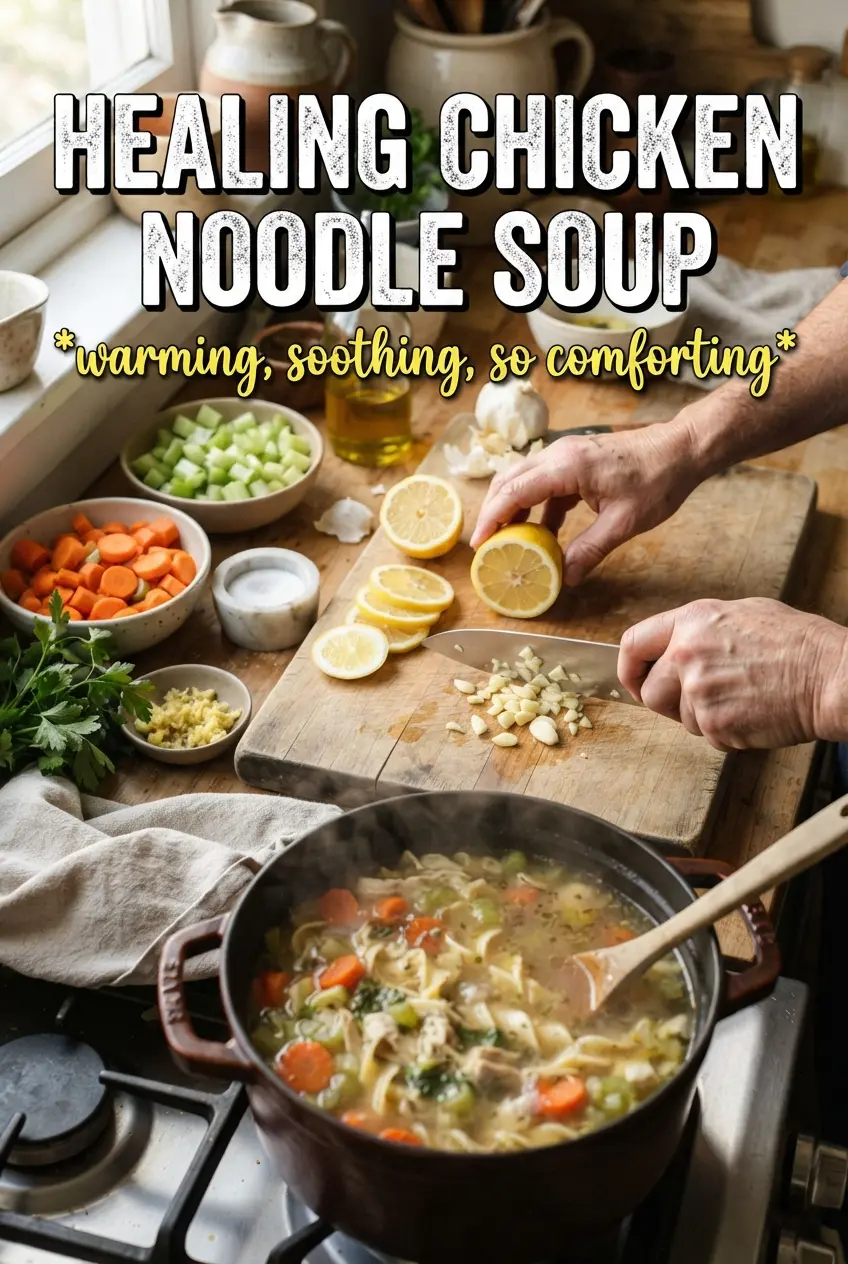
Golden broth, tender shredded chicken, and soft egg noodles make this chicken noodle soup the kind of bowl people reach for when they want something warm, steadying, and simple to eat. The turmeric, ginger, garlic, and lemon give it a bright edge that keeps it from tasting flat or heavy, and the kale or spinach adds just enough green to make every spoonful feel complete.
What makes this version work is the layering. The chicken simmers right in the broth, which builds flavor without extra steps, and the aromatics soften long enough to turn the pot fragrant before the noodles go in. A little apple cider vinegar and honey at the end wake everything up in a way that salt alone can’t. That final squeeze of lemon matters too; it keeps the broth tasting clean instead of dull after all that simmering.
Below you’ll find the technique that keeps the chicken tender, the noodles from going mushy, and the broth balanced enough to taste good even on day two. There’s also a note on the best way to reheat it so the noodles don’t steal all the broth.
The broth turned out so clear and comforting, and the chicken shredded beautifully after 30 minutes. I loved the lemon and apple cider vinegar at the end because it kept the soup from tasting too heavy.
Save this turmeric-ginger chicken noodle soup for the days when you want a bright, brothy bowl that feels soothing without being bland.
The Broth Tastes Flat When You Skip the Acid at the End
Chicken noodle soup gets muddy fast when everything simmers together for too long without a bright finish. The lemon juice and apple cider vinegar aren’t there to make the soup sour; they lift the broth so the ginger, garlic, and turmeric read cleanly instead of blending into one tired note. If your soup ever tastes like it needs “something,” it’s usually acid, not more salt.
The other mistake is rushing the chicken. Bone-in thighs bring more flavor than boneless pieces, and they stay juicy through the long simmer. By the time they shred easily, the broth has picked up enough body to taste like it cooked for hours, even though it hasn’t.
What Each Ingredient Is Actually Doing in This Pot

- Bone-in chicken thighs — These give the broth more depth than boneless chicken and stay tender after a 30-minute simmer. If you only have boneless thighs, use them, but shorten the simmer slightly so they don’t turn stringy.
- Fresh ginger and garlic — This is the backbone of the soup’s warmth. Fresh ginger matters here; dried ginger won’t give the same bright, clean bite. Mince the garlic and grate the ginger finely so they melt into the broth instead of floating in bits.
- Turmeric — It adds color and a gentle earthy note that makes the broth feel restorative. It’s not a spice you should use to replace lemon or salt, but it does give the soup that golden look and a subtle depth that plain chicken soup doesn’t have.
- Kale or spinach — Kale holds its texture better in leftovers, while spinach turns softer and more delicate right away. Use spinach if you want a lighter finish, or kale if you plan to reheat the soup later.
- Egg noodles — They soak up broth fast, which is great if you’re eating the soup right away. If the pot will sit for a while, cook them just until tender so they don’t keep absorbing liquid and go bloated.
Building the Soup So the Chicken Stays Tender and the Noodles Don’t Collapse
Start With Everything Except the Acid
Combine the chicken, vegetables, broth, turmeric, thyme, pepper, and cayenne in a large pot and bring it up to a boil, then turn it down to a steady simmer. You want small bubbles moving across the surface, not a hard boil that tears the chicken apart before the broth has time to develop. The pot should smell savory and a little spicy before the chicken even finishes cooking.
Simmer Until the Meat Releases Easily
Let the chicken cook for about 30 minutes, until it pulls apart with almost no resistance and the carrots are soft at the edges. If the broth is boiling aggressively, the chicken will get dry on the outside before it’s ready in the middle. Bone-in thighs are forgiving, but they still taste better when the simmer stays gentle.
Shred the Chicken and Return It to the Pot
Lift the chicken out, shred the meat, and discard the bones and skin. Put the chicken back into the broth so it can pick up the seasoning already in the pot. If the chicken seems bland at this stage, the answer is not more cooking time; it’s usually the final seasoning after the acid goes in.
Cook the Noodles Last
Add the egg noodles and cook them just until tender, usually 6 to 8 minutes. They should be soft but still hold their shape, with no chalky center. If you cook them too long, they’ll keep swelling after the heat is off and soak up broth you wanted in the bowl.
Finish With Greens, Acid, and Sweetness
Stir in the kale and cook until it wilts, then add the lemon juice, apple cider vinegar, and honey. Taste again before salting; the broth should taste bright, balanced, and rounded, not flat or sharp. A final handful of parsley and an extra squeeze of lemon at the table brings the whole bowl into focus.
How to Adapt This Soup Without Losing the Thing That Makes It Work
Make It Dairy-Free and Gluten-Free Without Changing the Flavor
This soup is naturally dairy-free, so the only real swap is the noodles. Use certified gluten-free egg noodles or rice noodles if you need to avoid wheat. Rice noodles soften faster, so add them near the end and watch them closely or they’ll break down in the broth.
Use Chicken Breast When That’s What You Have
Chicken breast works, but it doesn’t give the broth the same richness. If you use it, simmer until just cooked through and pull it out sooner than thighs so it stays juicy. The soup will still be comforting, but the broth will taste a little lighter.
Make It Heartier With More Vegetables
You can add diced parsnips, mushrooms, or more celery without upsetting the balance. Add firmer vegetables with the carrots so they have time to soften, and tuck mushrooms in during the last 15 minutes so they don’t disappear into the broth. The soup becomes more substantial without losing its clean finish.
Storage and Reheating
- Refrigerator: 4 days. The noodles will keep absorbing broth, so expect the soup to thicken as it sits.
- Freezer: Freeze the broth, chicken, and vegetables without the noodles for best results. Noodles turn soft and swollen after thawing, so add a fresh batch when you reheat.
- Reheating: Warm gently on the stove over medium-low heat until steaming. If the soup has thickened in the fridge, add a splash of broth or water before heating so the noodles don’t turn gummy.
Answers to the Questions Worth Asking
Healing Chicken Noodle Soup
Ingredients
Equipment
Method
- Combine bone-in chicken thighs, carrots, celery, onion, garlic, ginger, chicken broth, turmeric, dried thyme, black pepper, and cayenne in a large pot. Bring to a boil over high heat, then lower to a gentle simmer.
- Simmer for 30 minutes until the chicken is very tender. Keep the liquid at a steady simmer for the clearest broth.
- Remove the chicken, shred the meat, and discard bones and skin. Return the shredded chicken to the pot.
- Add egg noodles and simmer for 6-8 minutes until tender. Stir occasionally so the noodles don’t stick.
- Stir in kale and cook for 3 minutes until wilted. Keep heat at a simmer so the greens stay vibrant.
- Stir in lemon juice, apple cider vinegar, and honey, then season with salt to taste. Taste and adjust salt before serving.
- Serve hot with extra lemon wedges and fresh parsley. Spoon broth over noodles for an even turmeric-ginger color in every bowl.